
Dry hair does not just look dull. It feels rough, tangles at the ends, snaps when you brush it, and drinks up conditioner without ever feeling soft for long. If that sounds familiar, a regular conditioner is not enough. Dry hair needs a mask: a thicker, richer treatment that stays on long enough to put moisture back in and seal the cuticle so it stays there.
The difference is concentration and time. A conditioner works in two or three minutes. A mask is built to sit for five to fifteen minutes, with more conditioning agents, butters and oils that smooth the hair shaft. Used once or twice a week, the right mask can make dry hair feel softer, look shinier, and break less. Used badly, it can leave hair heavy, limp, and greasy at the roots.
Below are nine hair masks worth considering in 2027, from rich salon formulas to affordable drugstore options. Each one is described by what it is good at, what to watch for, and who it suits best.
Key takeaways
- Dry hair needs moisture and sealing in equal measure: humectants pull water in, but butters and oils are what keep it there.
- Look for shea butter, ceramides, squalane, argan oil and hyaluronic acid, and avoid heavy silicones if your hair goes limp easily.
- Apply a mask to the mid-lengths and ends, not the roots, and leave it on for five to fifteen minutes for the full effect.
- Use a mask once a week for moderately dry hair and twice a week for very dry, bleached or heat-damaged hair.
- No mask repairs split ends or reverses chemical damage permanently, and a mask that leaves hair coated, sticky or heavy is the wrong match, not a sign it is working.
What dry hair actually needs
Dry hair is hair that has lost moisture and, just as importantly, lost the ability to hold on to it. The outer layer of each strand, the cuticle, should lie flat like roof tiles, keeping moisture in and reflecting light. When hair is dry, the cuticle lifts and frays, moisture escapes, light scatters instead of reflecting, and the hair looks dull and feels rough. Heat styling, bleaching, colouring, sun, salt water and overwashing all lift the cuticle and strip the natural oils that protect it.
A good mask works on both problems. Humectants such as glycerin and hyaluronic acid draw water into the hair shaft. Emollients such as shea butter, argan oil and squalane smooth the cuticle and coat the strand, slowing moisture loss. Ceramides help fill gaps in the cuticle, which is why they appear in so many repair-focused formulas. A little protein can help, but too much makes dry hair feel stiff and straw-like.
That is why the best mask for dry hair is rarely the richest one on the shelf. A mask that is too heavy weighs fine hair down and leaves it looking greasy by lunchtime. A mask that is too light does nothing for thick, coarse hair. The right choice depends on your hair type, how damaged it is, and how much time you have. A five-minute mask you use every week beats a twenty-minute ritual you never get round to.
How we chose these masks and what to look for
Look first at the formula, not the fragrance. Shea butter, ceramides, squalane and argan oil are the ingredients that consistently help dry hair, and they should appear near the top of the ingredient list. Hyaluronic acid and glycerin add hydration, which matters for hair that feels dry rather than just damaged. If your hair is also bleached or coloured, look for bond-building ingredients such as bis-aminopropyl diglycol dimaleate, which helps reconnect broken bonds inside the strand.
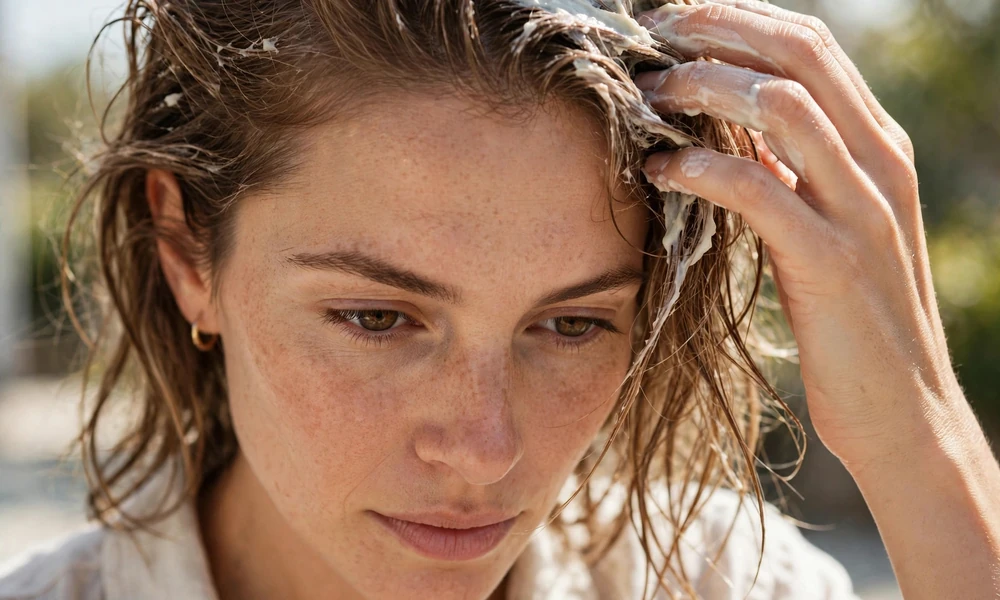
Look next at the texture and the rinse. A thick, buttery mask suits thick or coarse hair and hair that has been bleached, while a lighter cream suits fine or wavy hair that goes limp easily. Rinse with lukewarm water, not hot, because hot water lifts the cuticle again. A cool final rinse helps the cuticle lie flat, which is what gives the shine.
Finally, look at how the mask fits your routine. A mask that needs fifteen minutes and a shower cap is realistic on a Sunday, less so on a weekday. A five-minute mask you use twice a week will do more than a deep treatment you use once a month. Our guide to the best hydrating hair masks covers lighter, moisture-first options, while the masks below are chosen specifically for hair that feels dry, rough and thirsty.
The 9 best hair masks for dry hair 2027
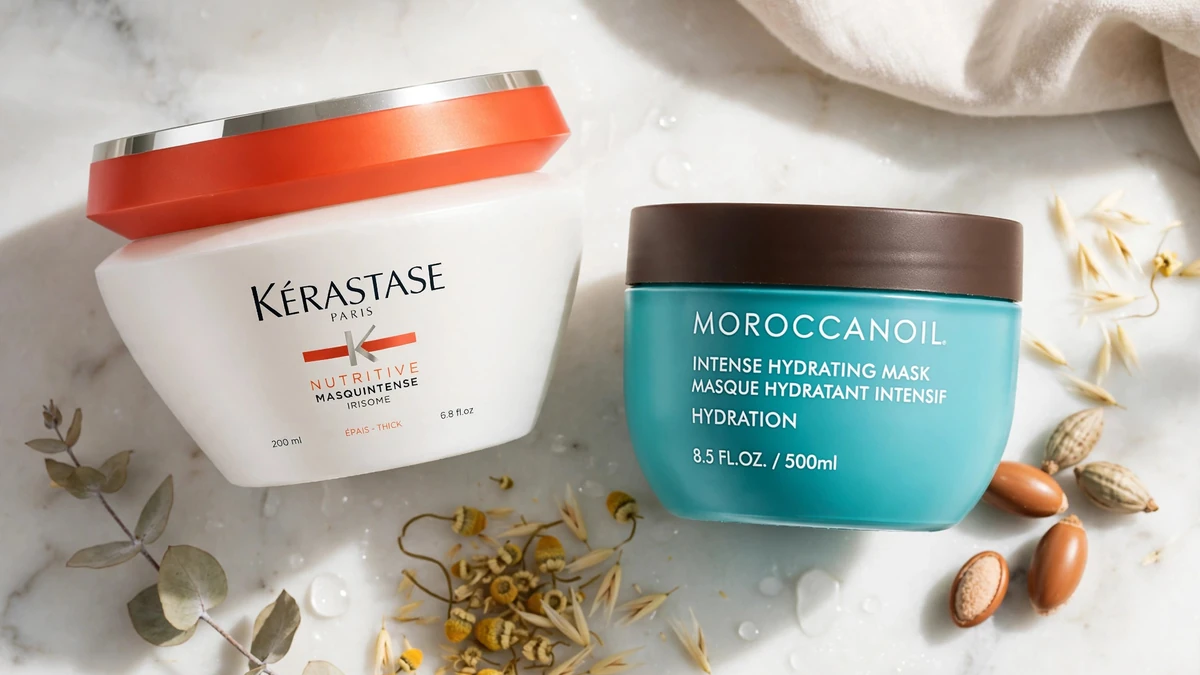
Kérastase Nutritive Masquintense
What we like: A rich, buttery mask built for very dry hair, with ceramides and plant-based lipids that leave thick hair noticeably softer after one use. What to consider: Too heavy for fine hair, and it needs a full ten minutes to work properly. Key ingredients: Ceramides, plant-based lipids, niacinamide. Hair type: Thick, coarse, very dry. Size: 200 ml. Cruelty-free: No.
This is the mask to reach for when your hair feels like straw. It is unapologetically rich, and on thick or coarse hair that richness is exactly the point. Use a small amount and give it the full ten minutes.
Moroccanoil Intense Hydrating Mask
What we like: Argan oil and linseed extract in a creamy texture that absorbs well, with a warm, familiar scent and a reliable result on dry, colour-treated hair. What to consider: The scent is strong, and fine hair can feel coated if you use too much. Key ingredients: Argan oil, linseed extract, glycerin. Hair type: Dry, colour-treated, medium to thick. Size: 250 ml. Cruelty-free: Yes.
A dependable all-rounder for dry, colour-treated hair. It softens without stripping, and five minutes is enough, which makes it one of the easiest masks to fit into a weekly routine.
Olaplex No.8 Bond Intense Moisture Mask
What we like: Bond-building technology plus moisture, so it helps hair that is both dry and damaged from bleach or heat, with a light texture that rinses clean. What to consider: It is a treatment, not a daily conditioner, and using it too often can make hair feel over-soft. Key ingredients: Bis-aminopropyl diglycol dimaleate, ceramides, squalane. Hair type: Dry, bleached, heat-damaged. Size: 100 ml. Cruelty-free: Yes.
If your dryness comes from bleach or heat, this is the most useful mask on the list. It works on the structure of the hair as well as the surface, so damaged hair feels stronger after a few uses, not just softer.
Briogeo Don’t Despair, Repair! Deep Conditioning Mask
What we like: A clean-beauty favourite with rosehip oil, algae extract and B vitamins, rich enough for very dry hair but without silicones or sulphates. What to consider: Premium price for the size, and it needs five to ten minutes to deliver. Key ingredients: Rosehip oil, algae extract, B vitamins. Hair type: Dry, damaged, all textures. Size: 236 ml. Cruelty-free: Yes.
This is the mask for people who want a rich treatment without silicones. It feels substantial and works well on hair that is dry from colouring, heat, or simply neglect.
Amika Soulfood Nourishing Mask
What we like: Jojoba seed oil and sea buckthorn in a thick, whipped texture that makes dry hair feel silky, with a light, pleasant scent and a good price for the size. What to consider: Very thick, so it needs thorough rinsing, and it can weigh down fine hair. Key ingredients: Jojoba seed oil, sea buckthorn, shea butter. Hair type: Dry, thick, wavy or curly. Size: 250 ml. Cruelty-free: Yes.
A generous mask that suits thick and wavy hair especially well. The whipped texture spreads easily, so you use less than you think, and the softness lasts until the next wash.
Shu Uemura Ultimate Reset Extreme Restoration Mask
What we like: A salon-grade mask with Japanese rice extract that restores softness to very dry, brittle hair, with a smooth texture and a little going a long way. What to consider: One of the most expensive masks here, and it is more than fine hair needs. Key ingredients: Japanese rice extract, ceramides, squalane. Hair type: Very dry, brittle, thick. Size: 200 ml. Cruelty-free: No.
When dry hair has become brittle and snaps easily, this is the mask that feels most like a repair. It is a treat rather than an everyday buy, and a small amount is enough, so the jar lasts longer than the price suggests.
Davines NOUNOU Hair Mask
What we like: A nourishing mask with tomato extract and vitamin E, made for bleached and heavily treated hair, with a creamy texture and a clean, professional feel. What to consider: The tube is smaller than most, and it is best for hair that is genuinely damaged, not just a little dry. Key ingredients: Tomato extract, vitamin E, glycerin. Hair type: Dry, bleached, heavily treated. Size: 250 ml. Cruelty-free: Yes.
A good choice for hair that has been through a lot: bleach, frequent colour, daily heat. It is not the flashiest mask on the shelf, but it is one of the most consistent for hair that needs real nourishment.
Living Proof Restore Mask Treatment
What we like: A lightweight treatment that strengthens and softens without weighing hair down, with a clean rinse that suits hair that goes limp easily. What to consider: Less rich than the buttery masks, so very coarse hair may want something heavier. Key ingredients: Amino acids, plant-based emollients, glycerin. Hair type: Dry, fine to medium, easily weighed down. Size: 235 ml. Cruelty-free: Yes.
This is the mask for dry hair that is also fine. Most rich masks are too much for it, but this one adds moisture and strength without the heaviness.
SheaMoisture Manuka Honey & Mafura Oil Intensive Hydration Hair Masque
What we like: Manuka honey, mafura oil and shea butter at a drugstore price, deeply moisturising for very dry, curly or coily hair, with a generous jar. What to consider: Very rich and quite heavy, so it is not for fine or straight hair, and it needs a good rinse. Key ingredients: Manuka honey, mafura oil, shea butter. Hair type: Very dry, curly, coily. Size: 340 g. Cruelty-free: Yes.
The best value on this list for very dry, curly or coily hair. It is thick and rich, and on hair that drinks up moisture, it delivers softness that lasts for days.
Which hair mask is right for your dry hair
Start with your hair type. Thick, coarse or curly hair can take the richest masks here, such as the Kérastase Masquintense or the SheaMoisture masque, and will benefit from the full ten to fifteen minutes. Fine or wavy hair needs a lighter touch: Living Proof Restore or Olaplex No.8 add moisture without flattening it. If your hair is both dry and bleached, a bond-building mask such as Olaplex No.8 or Davines NOUNOU is the smarter first buy.
Think about how you wash, too. If you wash every day, a mask once a week is usually enough, applied after shampooing on towel-dried hair so it is not diluted by dripping water. If you wash two or three times a week, you can mask every wash day. Our guide to how to wash your hair properly explains the order that makes a mask work hardest: shampoo, squeeze out excess water, apply the mask to the lengths, comb through, wait, then rinse.
Finally, be honest about how much time you have. A mask that needs fifteen minutes and a shower cap is a Sunday treatment, while a five-minute mask you use every week will do more than a deep treatment you use once a month. Consistency matters more than intensity.
The caveats that matter
A hair mask is a treatment, not a repair. It can make dry hair feel softer, look shinier and break less, but it cannot fix split ends, rejoin a broken strand, or undo chemical damage permanently. Split ends need a trim, and bleach damage needs time, gentle handling, and a bond-building product used consistently.
| Detail | What is known |
|---|---|
| What dry hair needs | Moisture plus sealing: humectants to draw water in, butters and oils to keep it there |
| Best ingredients | Shea butter, ceramides, squalane, argan oil, hyaluronic acid, glycerin |
| Where to apply it | Mid-lengths and ends only; avoid the roots unless the product says otherwise |
| How long to leave it on | Five to fifteen minutes, following the product instructions |
| How often to use it | Once a week for moderately dry hair; twice a week for very dry or damaged hair |
| Who should go lighter | Fine or wavy hair that goes limp; choose a lightweight mask and use less product |
| What it does not do | It does not repair split ends or reverse chemical damage permanently |
| When to stop | If hair feels coated, sticky or heavy after rinsing, or the scalp becomes irritated |
If your scalp is irritated, flaky or sore, or you have a skin condition such as eczema or psoriasis, be careful with rich or fragranced masks near the scalp. Apply to the lengths only, rinse thoroughly, and speak to a dermatologist or your clinician if irritation persists.
Checklist: choosing a hair mask for dry hair honestly
Use these checks before you buy, and again after two weeks of use.
- Check the ingredients: shea butter, ceramides, squalane or argan oil near the top of the list.
- Check the texture: rich and buttery for thick hair, lighter cream for fine hair that goes limp.
- Check the size and price: a mask you use weekly should be affordable enough to replace, not a one-off treat.
- Patch-test first: apply to a small section for one use and check how your hair feels after drying.
- Apply it right: mid-lengths and ends, comb through, leave for five to fifteen minutes, rinse with lukewarm water.
- Judge it after three uses: softer, shinier and less tangled means it works; heavy, coated or greasy means it is the wrong match.
Frequently asked questions
How often should I use a hair mask for dry hair?
Once a week is enough for moderately dry hair. If your hair is very dry, bleached or heat-damaged, twice a week is better. More than that can leave hair over-soft and limp, so watch how it feels.
Should I apply a hair mask to wet or dry hair?
Apply it to clean, damp hair after shampooing, with excess water squeezed out. Some masks can also be used on dry hair before washing as a pre-wash treatment, but follow the product instructions.
Can I leave a hair mask on overnight?
Only if the product says you can. Most masks are designed for five to fifteen minutes, and leaving them on overnight can over-soften the hair and irritate the scalp.
Why does my hair feel greasy after a mask?
Usually because the mask was too rich for your hair type, applied to the roots, or not rinsed thoroughly. Use less product, keep it on the lengths and ends, and rinse until the hair feels clean. If it still feels greasy, switch to a lighter mask. A guide to the best hair oils can help you match the product weight to your hair type.
Do hair masks work on curly hair?
Yes, and curly hair often benefits most, because its shape makes it harder for natural oils to travel down the strand. Rich, buttery masks suit curly and coily hair well. Apply generously to the lengths and rinse thoroughly.
Can a hair mask fix split ends?
No. A mask can make split ends look smoother and feel less rough for a few days, but it cannot rejoin them. The only fix for split ends is a trim. A mask helps by reducing breakage, so fewer new split ends form.
The bottom line
The best hair mask for dry hair in 2027 is not the richest or the most expensive. It is the one that matches your hair type, that you will use every week, and that leaves your hair softer and shinier without weighing it down. For thick or very dry hair, a rich mask such as the Kérastase Masquintense or the SheaMoisture masque is a strong choice. For fine hair, a lighter option such as Living Proof Restore or Olaplex No.8 is the smarter start.
Choose one mask, use it consistently for three weeks, protect your hair from heat and sun, and judge it on how your hair looks and feels after drying, not on how rich it feels in the jar.