A beehive is a tall, teased updo that depends on friction. The hair is backcombed section by section, smoothed over the top, and pinned into a shape that has to hold its height for hours. Oil is the natural enemy of that friction, which is why most people assume the two do not mix. Used badly, oil is exactly the enemy: it flattens the tease, darkens the crown, and sends the whole shape sliding down by lunchtime.
Used well, though, a little oil is what makes a beehive look finished instead of dusty. A thin layer of the right oil on the outer surface smooths the flyaways, adds a soft sheen, and stops the ends from looking frayed, all without reaching the teased interior where the height lives.
Below are nine oils worth considering for a beehive in 2027, from a light coconut hair oil that costs a few dollars to a slow Ayurvedic treatment oil for a weekly ritual.
Key takeaways
- A beehive needs oil on the surface only, never inside the teased sections, or the height collapses.
- Light, fast-absorbing oils suit a beehive best; thick castor-style oils belong on the ends, in tiny amounts.
- Apply oil to the lengths before teasing, then smooth a single drop over the finished surface.
- Fine hair needs the lightest oils, while thick or coarse hair can carry a richer one without looking greasy.
- No oil will hold a beehive up on its own, and an oil applied at the roots of a teased crown will pull the shape down.
What a beehive is and why oil matters
A beehive is built from the inside out. The stylist takes sections at the crown, pushes a comb down toward the roots to create a cushion of tangled hair, then brushes the top layer smooth over that cushion and pins the sides into place. The height comes from that hidden cushion, and the cushion only works because the hairs grip each other. Anything slippery inside the cushion weakens the grip.
That is why the first rule of oil and beehives is about placement. Oil on the outer surface is a finishing step. Oil combed through the roots before backcombing is a mistake, because the comb will slide through the hair instead of catching it, and the tease will not hold.
The second thing oil does for a beehive is visual. A teased updo has a lot of surface area, and every stray hair shows against it. A light oil tames those strays and gives the surface a gentle glow, which reads as polished rather than stiff.
How we chose these oils and what to look for
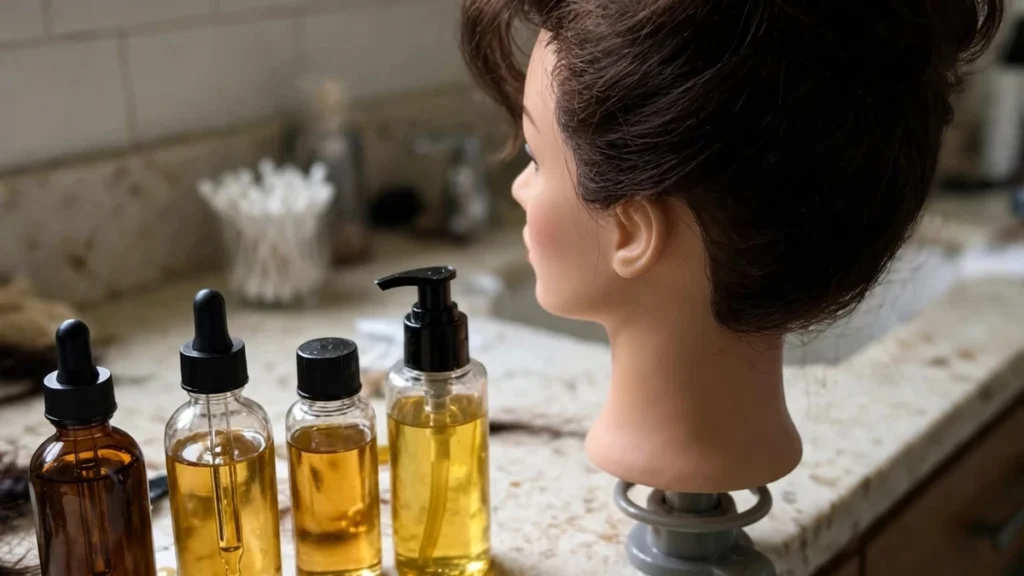
Start with the weight of the oil, because that decides how it will behave on a tall style. A beehive wants an oil that disappears into the hair and leaves shine behind, not an oil that sits on the surface as a visible film. Thin, dry oils such as jojoba, sweet almond, and light argan suit this job. Thick oils such as castor can still work, but only on the very ends, and only in a quantity you could fit on a fingertip.
Look next at the scent and the residue. A beehive sits close to the face, so a strong fragrance stays with you all day, and a heavy oil can transfer onto a collar or a hat. A mild or neutral scent is safer, and an oil that absorbs within a few minutes is safer than one that stays wet. Our guide to hair oils for victory rolls makes the same point about vintage rolls, because a rolled style and a beehive share the same problem: the shape is the star, and the oil must stay invisible.
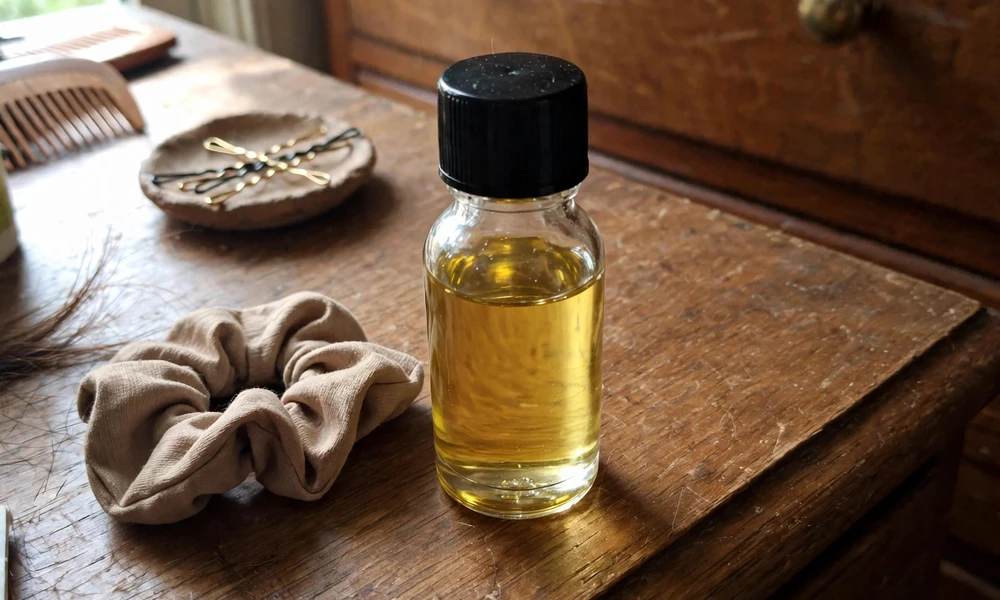
Finally, check the bottle itself, and whether it lets out a single drop at a time. A beehive finishing step uses one or two drops, so a dropper, a pump, or a narrow spout matters more than it does for a weekly treatment. A wide-mouth jar invites you to pour too much, and too much is the one error that undoes a beehive fastest. A small, controlled bottle is worth paying for here, even if the oil inside is inexpensive.
The 9 best hair oils for beehive 2027
Parachute Advansed Coconut Hair Oil
What we like: A light coconut-based hair oil with added vitamin E, in a bottle that costs very little, and a texture that sinks into the lengths quickly without leaving a wet look.
What to consider: It is lighter than a pure coconut oil, so very dry hair may want a second drop on the ends, and the scent is a plain coconut note that some people find too simple. Best For: Fine hair that needs shine without weight. Price Range: $4–$6. Standout Feature: The lightest coconut option in this list, at the lowest price.
This is the oil to reach for when the beehive is already up and you only want the surface to catch the light.
Bajaj Almond Drops Hair Oil
What we like: An almond oil with vitamin E that spreads evenly, smells softly nutty rather than sweet, and leaves straight or wavy hair looking smooth rather than coated.
What to consider: The almond scent lingers near the face, and the oil is thin enough that it can run if you pour instead of dropping it. Best For: Everyday smoothing on straight or wavy hair. Price Range: $7–$9. Standout Feature: A thin almond oil that smooths without adding bulk to the shape.
Almond oil has been a hairdressing staple for decades because it behaves: it adds slip where you want it and disappears where you do not.
Khadi Natural Amla & Bhringraj Hair Oil
What we like: An Ayurvedic blend built on amla and bhringraj, with a herbal scent that fades quickly, and a formula aimed at the scalp and roots rather than the surface.
What to consider: It is a treatment oil, not a finishing oil, so it belongs in a pre-wash routine rather than on a finished beehive, and the herbal scent is stronger in the bottle than on the hair. Best For: Thinning hair that needs a scalp-first oil. Price Range: $10–$13. Standout Feature: Amla and bhringraj in one bottle, aimed at the roots.
Use this one the night before, as a scalp massage oil, and wash it out before you build the beehive.
Desert Essence Organic Jojoba Oil
What we like: A single-ingredient organic jojoba oil, cold-pressed and fragrance-free, that behaves like the skin’s own sebum and absorbs faster than almost any other oil here.
What to consider: It has no scent at all, which some people miss, and a little goes a long way, so a dropper is essential to avoid using too much. Best For: Sensitive scalps that react to heavy oils. Price Range: $14–$17. Standout Feature: One ingredient, no fragrance, and the fastest absorption in the list.
Jojoba is the safest oil for a beehive worn near the face, because it rarely irritates skin and never leaves a greasy halo on the forehead.
Sky Organics Castor Oil
What we like: A pure, cold-pressed castor oil that is thick and sealing, in a large bottle that lasts for months, and a reliable choice for dry ends that split and fray.
What to consider: It is the heaviest oil in this list, so it must stay on the last inch of hair and off the crown entirely, and it needs warming between the palms before it will spread. Best For: Dry ends that need sealing before styling. Price Range: $18–$21. Standout Feature: The thickest, most sealing oil here, for ends only.
Castor oil is a specialist in a beehive routine, not an all-rounder. Used on the ends the night before, it keeps the tips from looking ragged when they are tucked and pinned.
Aura Cacia Sweet Almond Oil
What we like: A pure sweet almond oil with a faint nutty scent, a thin texture that brushes through easily, and a bottle size that suits regular use without going stale.
What to consider: People with tree-nut sensitivities should avoid it, and the oil is light enough that very coarse hair may need a richer second step on the ends. Best For: Frizz-prone hair that needs a light finish. Price Range: $22–$26. Standout Feature: A clean, single-ingredient almond oil with no added fragrance.
Sweet almond oil is the middle ground of this list: lighter than castor, richer than jojoba, and easy to dose.
Pura D’Or Organic Argan Oil
What we like: A USDA organic argan oil, cold-pressed and unscented, that adds a clear shine to dark hair and softens coarse texture without weighing the crown down.
What to consider: Argan oil can look shiny rather than glossy if you use too much, so start with one drop, and the price climbs quickly for the larger bottles. Best For: Colour-treated hair that needs softness and shine. Price Range: $27–$31. Standout Feature: Certified organic argan oil with no added scent.
Argan is the classic finishing oil for a reason, and a beehive shows it off well: the tall, smooth surface catches the light, and a single drop of argan makes that surface look deliberate rather than accidental.
L’anza Keratin Healing Oil Treatment
What we like: A keratin-based treatment oil that smooths heat-styled hair, reduces the rough texture that teasing can leave behind, and leaves the lengths feeling repaired rather than coated.
What to consider: It is a treatment product with a premium price, so it suits a weekly routine better than a daily one, and the scent is a salon-style floral that not everyone loves. Best For: Heat-styled hair that needs repair and smoothness. Price Range: $33–$38. Standout Feature: Keratin in the formula, aimed at hair damaged by heat and teasing.
Teasing is rough on the cuticle, and a keratin oil is the repair step that makes the next beehive easier to build.
Kama Ayurveda Bringadi Intensive Hair Treatment Oil
What we like: A sesame-based Ayurvedic treatment oil with indigo, bhringraj, and amla, made for a slow scalp massage, with a herbal scent that suits a ritual rather than a rush.
What to consider: It is the most expensive oil here and the slowest to use, since it works best left on for an hour or overnight, and it is far too heavy for a finished beehive. Best For: A weekly pre-wash ritual for dry, dull hair. Price Range: $40–$46. Standout Feature: A traditional multi-herb formula for a slow, weekly treatment.
This is the oil for the day before, not the day of. Massaged into the scalp and left to work, it leaves the hair softer and more willing, which is what a tall, teased style needs from its foundation.
Which oil suits your hair type
Fine hair should stay with the lightest oils in this list: the Parachute coconut oil, the Bajaj almond oil, or the Desert Essence jojoba oil. Fine hair shows grease fastest, and a beehive on fine hair has the least grip to lose, so the oil must be nearly invisible.
Thick or coarse hair can carry more. The Pura D’Or argan oil and the Aura Cacia sweet almond oil both add the softness that coarse hair needs, and the ends can take a fingertip of Sky Organics castor oil without looking wet.
Colour-treated hair needs an oil that will not strip or dull the colour. The argan and jojoba oils are the safest choices here, and both are unscented, which helps if the scalp is sensitive after colouring. Our guide to hair oils for halo braids covers the same colour-care question for a braided style, and the answer is the same: light, unscented, and used sparingly.
The caveats that matter
Oil and height are in tension, and the tension is the whole story of this article. The beehive’s height depends on dry, grippy hair inside the tease, and oil removes grip. A single careless handful at the crown will undo an hour of teasing.
| Detail | What is known |
|---|---|
| Best first oil | A light jojoba or almond oil, one drop, on the outer surface only |
| Where oil goes | On the lengths before teasing, and on the finished surface after pinning |
| Where oil never goes | Inside the teased cushion at the crown, or on the roots before backcombing |
| Best oil for fine hair | Parachute Advansed coconut oil or Desert Essence jojoba oil, one drop only |
| Best oil for dry ends | Sky Organics castor oil on the last inch, warmed between the palms |
| Best weekly treatment | Kama Ayurveda Bringadi or Khadi amla and bhringraj, pre-wash |
| What to avoid | Pouring from the bottle, oiling the roots, or using a heavy oil on the crown |
| What oil does not do | It does not hold a beehive up, and it cannot rescue a tease that has already fallen |
If your scalp is irritated, flaking, or broken, skip the oil and the teasing both until the skin calms down. A beehive is a demanding style, and an unhappy scalp will not thank you for backcombing over it. Our guide to hair oils for afro puffs makes the same point for a different style: the scalp comes first, and the style comes second.
Checklist: choosing a hair oil for beehive honestly
Use these checks before you buy, and again before you style.
- Check the weight: the oil should absorb within a few minutes and leave shine, not a wet film.
- Check the bottle: a dropper or narrow spout matters, because a beehive finish uses one or two drops.
- Check the scent: a mild or neutral scent suits a style that sits close to the face all day.
- Check the placement: plan where the oil goes before you pick it up, and keep it off the crown.
- Check the ends: seal dry tips the night before, so the finished shape has nothing frayed to hide.
- Check the scalp: if it is sore or flaking, postpone the beehive and the teasing until it settles.
Frequently asked questions
Can I put oil on a finished beehive?
Yes, but only on the outer surface, and only one drop warmed between your palms. Smooth it lightly over the crown and sides to catch flyaways. Never push oil into the teased interior, because the height will drop.
Will oil make my beehive fall flat?
It will if it reaches the teased cushion or the roots. Oil on the surface and the ends does not affect the height, because the grip inside the tease stays dry. Keep the two zones separate and the shape holds.
Which oil is best for fine hair in a beehive?
A very light oil such as jojoba or a light coconut hair oil, used one drop at a time. Fine hair shows grease fastest, so the lightest option and the smallest amount are the safest combination.
Can I use castor oil on a beehive?
Only on the very ends, and only the night before or before you start teasing. Castor oil is too heavy for the surface of a finished beehive, and it will make the crown look wet if it gets there.
Should I oil my hair before teasing it?
A tiny amount on the lengths can help, because it makes the hair smoother and easier to brush over the tease. Keep it off the roots entirely, and let it absorb for a few minutes before you pick up the comb.
How do I remove oil from a beehive without wrecking it?
You do not, really. A beehive is a one-day style, so take it down gently at night, brush the tease out from the ends upward, and wash the oil out with a normal shampoo. Never try to re-tease oily hair the next day.
The bottom line
The best hair oil for a beehive in 2027 is not the richest or the most expensive. It is the lightest oil you can use in the smallest amount, placed where it adds shine and kept away from where it removes grip. A drop of jojoba or almond oil on the surface, a fingertip of castor oil on the ends the night before, and a weekly treatment oil for the health of the hair underneath will do more than any single expensive bottle.
Start with the lightest oil that suits your hair type, keep it off the crown, and judge the result in a photograph rather than in the mirror.