A French braid asks more of your hair than almost any other style. Each section is picked up, crossed over, and held in place while your hands keep moving, and any frizz, flyaway, or dry patch shows up along the parting line. That is why hair oil matters so much for this braid in particular. A few drops, used in the right place and in the right amount, give the strands enough slip to move smoothly, enough weight to lie flat, and enough shine to make the finished braid look deliberate rather than rushed.
The wrong oil, or too much of the right one, can undo all of that. A heavy oil makes the crown look greasy within an hour, while a very light oil can disappear before you have finished the second section. The best oils for French braids sit in the middle. They smooth the surface of the hair without coating it, they hold flyaways down without stiffening the braid, and they wash out cleanly so the next braid starts fresh.
Below are nine hair oils worth considering in 2027 for French braids, from affordable drugstore staples to richer treatment oils, chosen for how they behave on hair that is about to be braided. Each one is described by what it is good at, what to watch for, and who it suits best, so you can choose with your braid in mind, not just a bestseller list.
Key takeaways
- A French braid needs oil for slip and hold, not for soaking the hair: a few drops smoothed over the lengths and the crown is usually enough.
- Lightweight oils suit fine and straight hair, while richer oils suit thick, curly, or very dry hair that needs more weight to lie flat.
- Apply oil before you start braiding, and keep a single drop in reserve for the finished braid and any flyaways.
- French braids show grease at the crown first, so keep oil away from the roots and the parting line.
- No oil fixes a braid that is pulled too tight or started on tangled hair, and an oil that leaves your hair limp or sticky is the wrong match, not a sign to use more.
What makes a hair oil work for a French braid
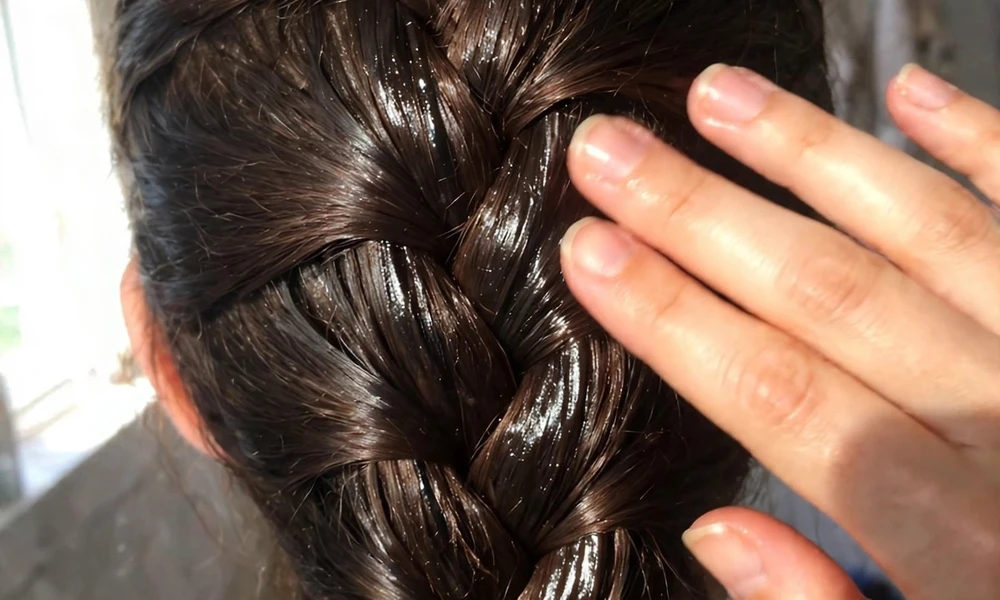
A French braid is a three-strand braid that picks up new hair as it travels down the head, which means the hair is under gentle tension the whole time. Dry hair resists that tension. It catches, it frizzes at the edges, and it slips out of the sections you have just formed. Oil changes the surface of each strand, smoothing the cuticle so sections slide past each other instead of snagging. The result is a braid that forms faster, holds its shape longer, and shows a clean, even pattern instead of a fuzzy one.
The second job of oil in a French braid is control at the edges. The hairline, the nape, and the parting are where short hairs escape first, and they are also the places where a braid looks untidy the soonest. A small amount of oil pressed over those areas with the palms keeps the edges lying flat without the stiffness of gel or the crunch of hairspray.
The third job is protection. Braiding puts repeated, small stress on the same strands, especially at the points where sections cross. Hair that is dry and brittle is more likely to snap under that stress, and the breakage shows up as short, sticking-out pieces along the braid. Oil does not make hair unbreakable, but well-moisturised hair bends more easily and breaks less often.
How we chose these oils and what to look for
Look first at weight. A French braid needs an oil that disappears into the hair and leaves the surface smooth, not one that sits on top and looks wet. Lightweight oils based on squalane, camellia, or a light silicone blend suit fine hair and straight hair, because they add slip without flattening the braid. Richer oils based on argan, coconut, or castor suit thick, curly, or coily hair, because that hair needs more weight to stay in the sections and more moisture to stop the edges from frizzing.
Look next at how the oil behaves on second-day hair. Many French braids are worn on hair that was washed the day before, when the roots are starting to look oily but the lengths are dry. An oil that is too rich will make the crown look greasy, while an oil that is too light will not tame the lengths.
Finally, look at the scent and the bottle. You will be working with the oil close to your face, and a strong fragrance can be tiring by the end of the day. A pump or a dropper gives you far more control than an open bottle, and control is everything when the difference between a neat braid and a greasy one is a single drop. Our guide to what a hair oil actually is explains the difference between a finishing oil, a treatment oil, and a scalp oil, which helps here, because a French braid mainly needs a finishing oil, not a scalp treatment.
The 9 best hair oils for French braids of 2027
L’Oréal Paris Elvive Extraordinary Oil
What we like: A light, affordable oil that smooths frizz and adds shine without weighing fine hair down, with a pump that makes it easy to dispense one drop at a time.
What to consider: It is lighter than a treatment oil, so very dry or coarse hair may need a second drop on the lengths. Best for: Fine to medium hair, everyday braids. Material: Camellia and sunflower oils. Price range: Around $8. Standout feature: The pump gives precise control over the amount.
OGX Renewing Argan Oil of Morocco
What we like: A familiar argan-based oil that softens the lengths, tames the hairline, and leaves a gentle shine that suits the woven pattern of a French braid.
What to consider: It is richer than a light finishing oil, so use one drop on fine hair and keep it off the roots. Best for: Medium to thick hair, dry lengths. Material: Argan oil. Price range: Around $9. Standout feature: Reliable softness at a low price.
Fable & Mane HoliRoots Hair Oil
What we like: A pre-wash treatment oil that leaves hair noticeably softer and easier to section, with a warm, gentle scent that fades quickly once the braid is done.
What to consider: It is designed as a treatment rather than a finishing oil, so use it before washing, not as a last step on a finished braid. Best for: Dry, brittle hair that snags during braiding. Material: Ashwagandha and castor oils. Price range: Around $36. Standout feature: Makes dry hair easier to section and braid.
K18 Molecular Repair Hair Oil
What we like: A lightweight oil that smooths frizz and adds shine while helping damaged hair feel stronger, without the heavy, coated feeling some repair oils leave behind.
What to consider: Premium price, and it works best on hair that is already damaged or chemically treated. Best for: Bleached, coloured, or heat-damaged hair. Material: Squalane and botanical oils. Price range: Around $65. Standout feature: Smoothing and repair in one light oil.
Oribe Gold Lust Nourishing Hair Oil
What we like: A rich but fast-absorbing oil that gives thick and curly hair the weight it needs to lie flat in a French braid, with a soft, polished finish.
What to consider: It is one of the richer oils here, so fine hair should use half a drop, and the price is high. Best for: Thick, curly, or coarse hair. Material: Argan, jasmine, and edelweiss oils. Price range: Around $58. Standout feature: Weight and shine for hair that resists braiding.
Shu Uemura Essence Absolue Nourishing Protective Oil
What we like: A camellia-based oil that adds slip and shine to the lengths, protects against heat and friction, and leaves almost no residue on the hands or the hair.
What to consider: It is a salon-priced oil, and very dry hair may need a richer oil underneath it. Best for: Straight and wavy hair that needs slip. Material: Camellia oil. Price range: Around $69. Standout feature: Clean slip with almost no residue.
Bread Beauty Supply Everyday Gloss Hair Oil
What we like: A lightweight oil made for textured hair that smooths the lengths, defines the braid pattern, and keeps the edges lying flat without stiffness.
What to consider: It is lighter than a heavy sealing oil, so very coarse hair may need a cream underneath it first. Best for: Curly and coily hair, textured braids. Material: Kakadu plum and safflower oils. Price range: Around $24. Standout feature: Shine and edge control for textured hair.
Pattern Jojoba Oil Blend
What we like: A simple, fragrance-light jojoba blend that mimics the hair’s own oils, smooths the lengths, and keeps the braid soft rather than stiff.
What to consider: It is a plain, single-purpose oil, so it does not add the polish of a silicone-based finishing oil. Best for: Sensitive scalps, fragrance-free routines. Material: Jojoba oil blend. Price range: Around $20. Standout feature: Gentle, simple, and easy to layer.
Ceremonia Aceite de Moska
What we like: A scalp-friendly oil that softens the lengths, calms the hairline, and leaves the braid looking smooth and healthy, with a light, pleasant scent.
What to consider: It is richer than a light finishing oil, so use it sparingly on fine hair and keep it away from the parting. Best for: Dry scalps and dry lengths, protective braiding. Material: Babassu and castor oils. Price range: Around $34. Standout feature: Softness for both the scalp and the lengths.
Which oil suits your hair type and braid style
Fine, straight hair needs the lightest touch. A single drop of a camellia or squalane-based oil, warmed between the palms and smoothed over the lengths, is usually enough. Anything heavier will show at the crown within an hour, and the braid will look limp rather than neat. If the ends are dry, add half a drop to the ends only, and leave the crown alone.
Thick, wavy, or curly hair can take more oil, and usually needs it. Two to three drops, worked through the lengths before you start, give the sections enough weight to stay together and enough moisture to stop the edges from frizzing as the braid travels down. For coily hair, a richer oil such as argan or babassu works well, and a light oil can be layered on top at the end for shine.
The braid style matters too. A single French braid down the back shows the crown and the parting, so oil should stay light at the top and richer at the ends. Double French braids, one on each side, put more stress on the hairline, so a drop pressed over the edges with the palms is worth more than extra oil through the lengths. Our roundup of the best hair oils for braids covers the wider braid family, and many of the same oils work here, but a French braid rewards lighter application than a loose plait, because the picked-up sections show every bit of excess.
The caveats that matter
Hair oil helps a French braid, but it does not replace good technique. A braid started on tangled hair will still snag, a braid pulled too tight will still hurt, and a braid built on dirty, product-heavy hair will still look dull.
| Detail | What is known |
|---|---|
| How much to use | One to three drops for most hair; half a drop more for very thick or dry hair |
| Where to apply it | Lengths and ends first, then a light pass over the crown and edges |
| Where not to apply it | Directly on the roots or the parting line, where grease shows first |
| When to apply it | Before braiding for slip, and one drop after for flyaways and shine |
| Best for fine hair | Lightweight camellia or squalane oils, one drop only |
| Best for thick or curly hair | Richer argan, babassu, or castor-based oils, two to three drops |
| Who should patch-test first | Anyone with a sensitive scalp or a history of reactions to fragrance or nut oils |
| What it does not do | It does not fix a braid that is too tight, started on tangled hair, or built on heavy buildup |
If your scalp is sensitive, patch-test a new oil on a small area behind the ear before using it across the crown. Nut-based oils, including argan and babassu, can cause reactions in people with nut allergies, so check the ingredient list first and choose a jojoba or squalane oil if you are unsure.
Checklist: choosing a hair oil for French braids
Use these checks before you buy, and again before you braid.
- Check the weight: light for fine hair, richer for thick, curly, or very dry hair.
- Check the applicator: a pump or dropper gives you the control a French braid needs.
- Check the scent: you will work close to your face, so a light or neutral scent is easier to live with.
- Start with one drop: warm it between your palms, smooth it over the lengths, and add more only if the hair still catches.
- Keep it off the roots: apply to the lengths and ends first, then a light pass over the crown.
- Wash it out properly: oil that builds up over several braids makes the next braid greasy, so clarify when the hair starts to feel coated.
Frequently asked questions
Should I oil my hair before or after a French braid?
Both, in small amounts. Oil the lengths before you start, so the sections slide and the hair does not snag. Then use a single drop on your palms after the braid is done, to smooth flyaways and add shine along the pattern.
How much oil is too much for a French braid?
If the crown looks wet, the parting looks dark, or the braid feels heavy within an hour, you used too much. Start with one drop next time, and add half a drop only to the ends if they still look dry.
Can I French braid second-day hair with oil?
Yes, and it often works better than freshly washed hair, because second-day hair has more grip. Use the oil on the lengths and ends only, and keep it away from the roots, which are already starting to look oily.
Which oil is best for a French braid on curly hair?
A richer oil such as argan or babassu usually works best, because curly hair needs more weight to stay in the sections and more moisture to stop the edges from frizzing. Layer a light oil on top at the end if you want extra shine.
Will hair oil make my French braid slip out?
It can, if you use too much or apply it to the roots. Oil the lengths, not the scalp, and keep the sections firm as you braid. A light oil in the right amount adds grip rather than taking it away, because the hair stops catching and starts moving smoothly.
How do I get hair oil out after a French braid?
Wash as usual with shampoo, massaging the scalp well, and rinse thoroughly. If the hair still feels coated after one wash, a second shampoo or a clarifying wash will remove the buildup. Our roundup of hair oils for top knots uses the same light-oil approach, and the same wash-out advice applies there too.
The bottom line
The best hair oil for a French braid in 2027 is not the richest or the most expensive. It is the one that matches your hair’s weight, that you can apply in a single controlled drop, and that leaves the braid looking neat rather than greasy. For fine hair, a light camellia or squalane oil is usually the right choice. For thick, curly, or very dry hair, a richer argan or babassu oil will do more of the work.
Choose one oil, use it sparingly before you braid and once more after, and judge it on how the braid looks at the end of the day, not in the first five minutes. That is the honest way to get the benefit oil brings to a French braid, without the greasy crown that makes people give up on it.