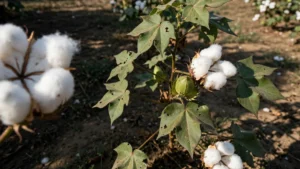
A cotton field in full bloom looks like snow that forgot how to melt. Row after row of white bolls opens under a wide sky, and the air smells of dry earth, warm leaves, and something faintly clean, like fresh linen left on a line. For a long time it belonged only to the people who worked it. A small number of working cotton farms now welcome guests properly, with comfortable rooms, good food, and days built around the crop itself rather than around a spa menu.
A luxury cotton farm retreat is not a hotel that happens to sit near a field. It is a working farm where cotton is the point. You stay in a farmhouse, a converted barn, or a small lodge at the edge of the rows. You walk the fields in the morning when the bolls are still cool, watch the harvest machines work, and learn how a plant becomes thread. The luxury is in the setting, the quiet, the food from the farm kitchen, and the time to slow down, not in gold taps or a concierge desk.
Below are nine cotton farm retreats worth considering in 2027, from a harvest stay on the Texas High Plains to a slow-travel farm lodge in the Fergana Valley. Each one is described by what it does well, what to watch for, and who it suits best, so you can choose a farm that fits the trip you actually want, not just the prettiest photograph.
Key takeaways
- A luxury cotton farm retreat is a working farm stay, not a resort near a field — the crop, the harvest, and the farm kitchen are the trip.
- Timing matters more than anything else: visit when the bolls are open, usually late summer into autumn, or the fields are green rows and little else.
- Choose farms that grow cotton themselves and welcome guests into the work, rather than farms that only use cotton as a backdrop.
- Expect dust, heat, and early mornings, and pack clothes you can wash easily.
- No cotton farm stay is a polished resort, and a farm that promises one is probably not a working farm at all.
What a luxury cotton farm retreat actually is
A cotton farm retreat is a stay on a farm where cotton is grown, harvested, and often ginned on site or nearby. The best ones keep the farm working first and the guest rooms second. That order matters. When the farm comes first, your day has a shape: a walk through the rows at first light, breakfast from the farm kitchen, a morning watching the pickers or the gin, an afternoon to rest, and an evening meal with the family or the farm team. When the guest rooms come first, you get a country hotel with a field outside the window, and the cotton is decoration.
The rooms themselves vary. Some farms have restored farmhouses with wide verandas and simple, comfortable bedrooms. Others have converted barns, small cottages, or lodges built from local stone and timber. What they share is a lack of fuss. Beds are good, bathrooms are clean and hot, and the food is local and generous. You will not find a lobby, a lift, or a minibar. You will find a porch, a kettle, and a view of white rows running to the horizon.
The days are built around the crop. In boll season, that means walking the rows, learning to tell an open boll from a closed one, and watching the harvest. Outside boll season, it means planting, irrigation, soil work, and the slower rhythms of a farm. Some farms run ginning demonstrations, spinning workshops, or weaving visits with local makers. Ask about them before you book.
How we chose these retreats and what to look for
Look first at whether the farm grows cotton itself. A real cotton farm stay should be able to tell you how many acres it plants, which varieties it grows, and when its harvest falls. If the farm cannot answer those questions, it is probably a rural hotel with a field nearby. Ask, too, whether guests are welcome in the fields and at the gin. A farm that keeps guests behind a fence is a farm that is selling a view, not a stay.

Look next at the season. Cotton bolls open over several weeks, and the best window is short. In the northern hemisphere, that usually means late August through October, depending on the region. Arrive too early and the fields are green and unopened. Arrive too late and the harvest is done and the rows are bare. A good farm will tell you honestly which week is best. Our guide to luxury lavender farm retreats makes the same point about bloom windows, because farm stays live or die by their seasons.
Finally, look at the practical details. How far is the farm from the nearest town, and how do you get there? Is there a transfer, or do you need your own car? What does the price include — meals, field walks, gin visits, or only the room? A farm stay that is clear about these things is usually a farm stay that is well run. A farm stay that is vague about them is usually not.
The 9 best luxury cotton farm retreats of 2027
A white-field harvest stay on the Texas High Plains
What we like: Endless white rows under a huge sky, a proper harvest to watch, and a farmhouse stay run by a family that has grown cotton for generations. The mornings are cool, the light is extraordinary, and the gin visit is the real thing, not a display. What to consider: The High Plains are remote, the wind is constant, and the harvest window is short, so dates matter. Best for: Travellers who want the full harvest experience. Style: Working farmhouse, simple and warm. Price range: Mid to high, approximately $250 to $450 a night, meals often included. Standout feature: Walking the rows at dawn while the pickers work.
A boutique cotton estate in the Mississippi Delta
What we like: Deep history, rich soil, and a beautiful old estate house with wide verandas, set among fields that have grown cotton for two centuries. The food is superb, and the storytelling is honest about the region’s past. What to consider: The Delta is humid, the mosquitoes are real, and the history is heavy, so come prepared for both. Best for: Travellers who want history with their harvest. Style: Restored estate house, gracious and calm. Price range: High, approximately $350 to $600 a night, meals often included. Standout feature: Supper on the veranda with the fields white behind you.
A heritage farm stay in Georgia’s Black Belt
What we like: A small, family-run farm with a restored farmhouse, a garden that feeds the kitchen, and a harvest that guests can genuinely join. The pace is slow, the welcome is warm, and the cotton is grown with care. What to consider: The farm is small, so rooms are few and dates go quickly. Best for: Couples and solo travellers who want a quiet, personal stay. Style: Family farmhouse, simple and welcoming. Price range: Mid, approximately $200 to $350 a night, breakfast included. Standout feature: Picking bolls by hand alongside the farm team.
A desert cotton retreat in Arizona
What we like: Cotton grown under desert light, with irrigation channels, adobe buildings, and evenings so clear the stars feel close. The contrast between white bolls and red earth is striking, and the farm runs excellent gin and spinning visits. What to consider: The heat is serious, even in autumn, and the farm is a long drive from the nearest city. Best for: Travellers who love desert landscapes and big skies. Style: Adobe farm lodge, cool and quiet. Price range: Mid to high, approximately $280 to $480 a night. Standout feature: White bolls against red desert earth at sunset.
A family-run cotton farm in the San Joaquin Valley, California
What we like: A large, well-run family farm with comfortable cottages, excellent farm-to-table food, and a harvest that runs with impressive precision. The farm also grows almonds and tomatoes, so the table is varied. What to consider: The valley can be hazy and hot, and the farm is working hard during harvest, so the atmosphere is busy rather than hushed. Best for: Families and first-time farm stay guests. Style: Comfortable farm cottages, relaxed and practical. Price range: Mid, approximately $220 to $380 a night. Standout feature: A farm table dinner with food from the same fields you walked that morning.
A riverside cotton stay in the Nile Delta, Egypt
What we like: Egyptian cotton at its source, grown on rich river soil, with a beautiful old farmhouse, slow boat trips on the canals, and a weaving visit that shows where the thread goes next. What to consider: The heat, the mosquitoes, and the need for a good local guide and transfer, which the farm can arrange. Best for: Travellers who care about cotton as a craft. Style: Old farmhouse by the water, elegant and unhurried. Price range: Mid to high, approximately $250 to $500 a night, meals included. Standout feature: Seeing Egyptian cotton picked, ginned, and woven in the same region.
A cotton and silk farm retreat in the Aegean, Turkey
What we like: Cotton fields near the Aegean coast, combined with a silk workshop, a beautiful stone farmhouse, and some of the best food in the region. The sea is close, so you can swim in the afternoon and walk the fields in the morning. What to consider: The harvest falls in the hottest weeks, and the coast is busy in summer. Best for: Travellers who want fields in the morning and the sea in the afternoon. Style: Stone farmhouse, bright and airy. Price range: High, approximately $300 to $550 a night. Standout feature: Cotton in the morning, the Aegean in the afternoon.
A cotton farm lodge in the Punjab, India
What we like: A working farm lodge with real harvest work, warm hospitality, superb Punjabi food, and a chance to see cotton in the region that grows more of it than almost anywhere else. The fields are vast and the welcome is generous. What to consider: The heat and the dust are intense, the roads are rough, and a local driver is essential. Best for: Adventurous travellers who want the real scale of cotton farming. Style: Farm lodge, simple and sturdy. Price range: Mid, approximately $150 to $300 a night, meals included. Standout feature: The sheer scale of the white fields at harvest.
A slow-travel cotton stay in the Fergana Valley, Uzbekistan
What we like: A quiet, slow farm stay in a beautiful valley, with cotton fields, mulberry trees, silk workshops, and a guesthouse run by a family who love sharing their craft. The pace is unhurried and the setting is remarkable. What to consider: The valley is remote, English is limited, and transfers need arranging in advance. Best for: Slow travellers and craft lovers. Style: Family guesthouse, calm and traditional. Price range: Low to mid, approximately $120 to $250 a night, meals included. Standout feature: Cotton and silk in the same valley, from field to loom.
Which cotton farm retreat is right for you
If this is your first farm stay, start with California or Georgia. Both are welcoming, well organised, and easy to enjoy without any farming knowledge. The days are gentle, the food is good, and the farm teams are used to guests who are learning.
If you want the harvest at its most dramatic, choose Texas or the Punjab. Both offer scale, real harvest work, and fields that seem endless. They suit travellers happy to be out in the fields.
If you want a trip that pairs the farm with something else, choose Turkey for the sea in the afternoon, or Egypt for the full journey from plant to woven cloth. A sunflower farm retreat offers a similar mix of field and landscape.
The caveats that matter
Cotton farm stays are real farms, and real farms have dust, insects, early mornings, and weather that does not ask your opinion. The best trips come from travellers who expect that and pack for it. Listen to the farm team, stay clear of machinery, and do not wander into fields alone.
| Detail | What is known |
|---|---|
| Best season | Late summer into autumn, when the bolls are open; exact weeks vary by region |
| What to expect | Working farms, simple comfortable rooms, farm food, early mornings, dust and heat |
| Who should book early | Anyone visiting in harvest season, when rooms are few and dates go fast |
| What to pack | Light, washable clothes, closed shoes, a hat, sunscreen, and insect repellent |
| What to ask before booking | Whether the farm grows cotton itself, what the harvest dates are, and what is included |
| Transfers | Most farms are remote; arrange a car or a farm transfer before you travel |
| What it is not | Not a resort, not a spa, and not a polished hotel with a field outside |
| Who should think twice | Travellers with severe dust or pollen allergies, or anyone who dislikes early starts |
If you have a dust or pollen allergy, talk to the farm before you book and bring your medication. Harvest season is dusty by nature, and cotton grows in hot places, so plan your days around the early morning and the late afternoon.
Checklist: choosing a cotton farm retreat honestly
Use these checks before you book, and again before you travel.
- Check the farm grows cotton itself: ask how many acres it plants and when its harvest falls.
- Check the season: visit when the bolls are open, not when the fields are green or bare.
- Check what is included: meals, field walks, gin visits, and transfers should be clear before you pay.
- Check the journey: confirm how you get from the nearest town to the farm, and who drives.
- Pack for the farm: light, washable clothes, closed shoes, a hat, sunscreen, and insect repellent.
- Book early for harvest weeks: rooms are few, the window is short, and the best dates go first.
Frequently asked questions
When is the best time to visit a cotton farm retreat?
When the bolls are open, which is usually late summer into autumn in the northern hemisphere. The exact weeks vary by region, so ask the farm for its harvest dates before you book.
Do I need farming experience to enjoy a cotton farm stay?
No. The farms in this guide welcome guests who have never set foot on a farm. The farm team will show you what to do, and you can take part as much or as little as you like. Curiosity matters more than experience.
Are cotton farm retreats suitable for children?
Often yes, especially the larger family farms in California and Georgia, which are used to children. Children need to stay with an adult in the fields.
What should I wear on a cotton farm?
Light, washable clothes, closed shoes, and a hat. Long sleeves help against sun and dust, and a light scarf is useful in the fields. Leave anything white, delicate, or expensive at home, because farm dust gets everywhere. Our guide to luxury countryside retreats has similar packing advice, because rural stays share the same practical rules.
Can I buy cotton or cloth directly from the farm?
Often yes. Many farms sell raw cotton, yarn, or cloth made locally, and some have small shops or weaving visits. Ask the farm before you travel, and leave room in your bag, because handwoven cloth is heavier than it looks.
How long should I stay on a cotton farm?
Three to four nights is ideal. Three nights gives you a full harvest day, a gin visit, and a slow day to enjoy the farm itself.
The bottom line
The best luxury cotton farm retreat in 2027 is not the grandest or the most expensive. It is the one that grows cotton itself, welcomes you into the work, and is honest about its season. Texas and the Punjab offer the harvest at its most dramatic, and Georgia and California offer the gentlest first stay.
Choose a farm that fits the trip you want, book for the boll season rather than for a convenient date, and pack for dust, heat, and early mornings. Do that, and you will come home with an understanding of cotton that no shop or museum can give you, and with the memory of a white field under a wide sky.