

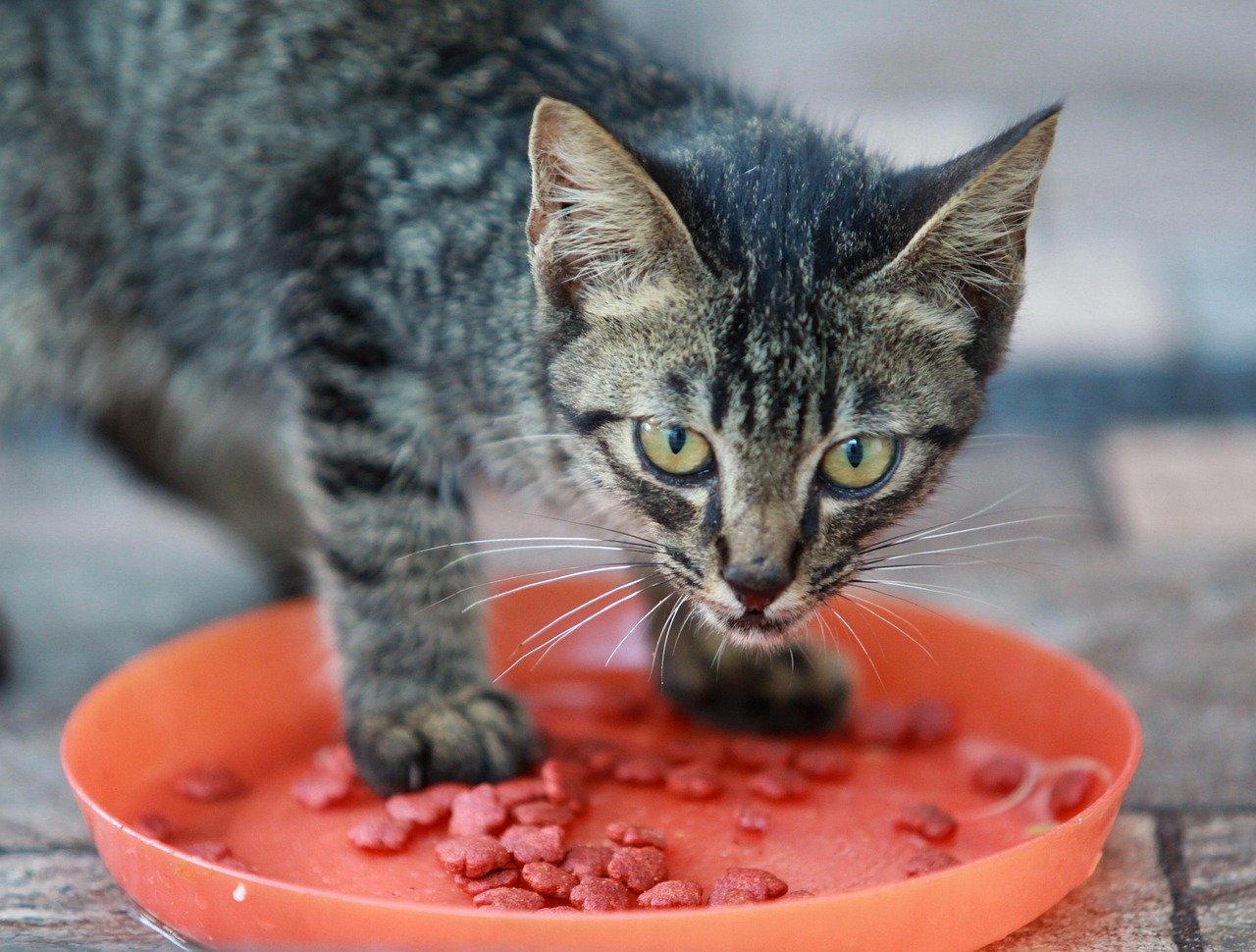
What should you feed a kitten that seems to grow an inch overnight and treats mealtime like a competitive sport? That question sends most new cat owners down a confusing aisle of bags and cans, each one promising shinier fur, stronger bones, and a happier life. The truth is less dramatic and more useful: the best kitten food is the one that meets a recognized growth standard, matches your kitten’s appetite and digestion, and fits the way you actually live. (Indian food by region people actually eat across india)
This guide breaks down what the labels mean, where the real differences lie between wet and dry, how much and how often to feed, and the mistakes that trip up even careful owners. No hype, no miracle claims, just the practical stuff that helps a kitten thrive.
Why Kittens Need Their Own Food
Kittens are not small cats. They are growing animals with energy and nutrient demands that scale far higher per kilogram of body weight than an adult cat’s. Every meal is doing construction work: building bone, muscle, brain tissue, and a immune system from scratch. That is why a food formulated for adults is not simply a smaller portion of the right thing. It is the wrong tool for the job.
Veterinary consensus, reflected in life-stage feeding guidance, is straightforward: feed kittens food labeled for growth, and switch to adult maintenance food once they have finished growing. Most cats reach that point somewhere around ten to twelve months, though larger breeds may take longer. The exact timing matters less than the principle. Growth food for growth, adult food for adulthood. (Sullivans island sc locals guide beaches forts food)
One more thing worth knowing up front: kittens have small stomachs and fast metabolisms. They cannot eat a day’s worth of calories in two sittings the way an adult cat can. That single fact shapes almost every feeding decision below.
Read the Label Before You Compare Brands
Here is where most buying decisions are won or lost. The front of a bag is marketing. The back is regulation, sort of.
In the United States, a food claiming to be complete and balanced should state which nutritional profile it meets. Foods labeled for growth or all life stages are formulated to meet the stricter growth and reproduction standards. Foods labeled maintenance only are not built for kittens. This is the single most useful filter you can apply in the store: find the life-stage statement, and if it says maintenance, put it back.
Terms like natural, premium, and similar broad marketing words are largely unregulated. They sound useful, but they are not held to a defined standard the way complete and balanced claims are. A food can be good and still use those words, or use them heavily and be mediocre. Do not let them drive the decision.
| Label term | What it actually means | How much weight to give it |
|---|---|---|
| Complete and balanced | Meets a defined nutrient profile for a stated life stage | High, check the life stage |
| Growth / all life stages | Formulated for kittens | High, this is what you want |
| Maintenance | Formulated for adult cats only | Skip for kittens |
| Natural / premium / similar broad terms | Largely unregulated marketing terms | Low, treat as decoration |
| Grain-free | Contains no grains, not inherently better | Neutral, see the caution below |
A practical tip from people who have raised litters: photograph the label panel in the store and read it at home. The print is tiny, the aisle lighting is bad, and the life-stage statement is often buried under three lines of cheerful copy.
Wet Food, Dry Food, or Both?
This is the great kitten food debate, and the honest answer is that both formats can be complete and balanced. The differences that matter are practical, not nutritional superiority.
Wet food brings water with it, which supports hydration, and many kittens find it highly palatable. It is also more expensive per calorie and does not keep once opened, so it demands more attention. Dry food is convenient, shelf-stable, and can be left out briefly, but it delivers very little moisture. Some kittens do fine on dry alone; others clearly drink too little and benefit from added wet meals.
The middle path works well for most households: a base of dry food for convenience plus one or two wet meals a day for hydration and variety. That combination also protects against a common trap, which is a kitten who becomes so fixed on one texture that switching later becomes a battle. Offering both early builds flexibility.
If you want to go deeper on how food choices affect a cat’s skin and coat condition, the connection between diet and a healthier barrier is worth understanding, and it applies to kittens too as their coat develops. (Food reduce dry skin eat softer stronger barrier)
How Much and How Often to Feed a Kitten
Portion guidance on the label is a starting point, not a prescription. Kittens vary enormously in size, activity, and growth rate, and the number on the bag assumes an average cat that does not exist.
Feeding frequency follows a fairly predictable arc:
- Up to about three to four months, offer roughly four small meals a day.
- From around four to six months, drop to three meals a day.
- By around six months, most kittens do well on two meals a day.
Some owners leave dry food available between meals for young kittens, which suits their small stomachs. Others prefer timed meals because it makes portion control and weight monitoring easier. Both approaches are defensible. What matters is that the kitten is gaining steadily, has energy, and produces normal stool.
Weigh your kitten weekly on a kitchen scale and write it down. A kitten gaining weight steadily is usually eating about right; one that plateaus or loses needs a vet visit, not a bigger bowl. Growth charts exist as reference tools for tracking, but they are not feeding instructions, and no chart knows your individual kitten.
Common Mistakes That Undermine Good Intentions
Even owners who buy excellent food can trip on execution. These are the recurring ones.
Switching foods abruptly. A sudden change disrupts digestion and produces loose stool that gets blamed on the new food. Transition over seven to ten days, mixing increasing proportions of the new food into the old.
Free-feeding without limits. Leaving a full bowl out all day works for some kittens and backfires for others. It makes it hard to notice a drop in appetite, which is one of the earliest signs a kitten is unwell.
Overloading treats. Treats are fine in small amounts, but they should stay a minor share of daily calories. A kitten filling up on treats is a kitten not eating balanced food.
Ignoring the water bowl. Cats are famously poor drinkers. Wet food, a wide bowl, and fresh water in a few spots around the house all help. If a kitten ever seems dehydrated or unwell, understanding how rehydration actually works is useful background, though a vet visit comes first.
Chasing every trend. Grain-free formulas became popular, and a federal investigation into a possible link between certain grain-free dry diets and a heart condition in dogs ran for several years without establishing cause. That remains genuinely unresolved rather than settled in either direction. For kittens, the sensible position is that grain-free is not automatically better, and a food meeting the growth profile with a manufacturer who employs qualified nutritionists is the safer bet.
What to Look For in a Manufacturer
The label tells you what is in the food. It does not tell you who designed it or how carefully. That is where manufacturer questions come in, and they are worth asking.
Look for a company that employs a full-time qualified nutritionist, owns or closely controls its own manufacturing, and can explain its formulation process. Veterinary nutrition guidance recommends exactly this kind of scrutiny alongside life-stage feeding. A brand that answers these questions clearly is telling you something. A brand that dodges them is also telling you something.
This is also where the experience of long-time cat owners is worth borrowing. People who have raised many kittens tend to care less about the front of the bag and more about consistency: a food the kitten eats reliably, digests well, and that stays available and affordable month after month. That is not glamorous advice, but it is the advice that holds up.
Raw and Home-Prepared Diets: Proceed Carefully
Raw and home-cooked diets for kittens carry documented risks, both from pathogens and from nutrient imbalance. Getting the calcium-to-phosphorus ratio wrong in a growing kitten can cause real skeletal harm, and it is easy to do without realizing. Veterinary bodies generally advise caution or against these diets unless they are formulated with a board-certified veterinary nutritionist.
If an owner is committed to home preparation, the responsible path is a formulated recipe from a qualified professional, followed precisely, with regular veterinary check-ins. Improvising a kitten’s diet from internet recipes is one of the few genuinely dangerous moves in this whole area.
Conclusion
The best kitten food is not the most expensive bag or the one with the boldest claims. It is a food labeled for growth or all life stages, from a manufacturer that can explain how it was made and who designed it, fed in small frequent meals and transitioned slowly. Add weekly weight checks, a clean water bowl, and a willingness to offer both wet and dry, and you have covered nearly everything that actually moves the needle. Kittens grow fast, but the fundamentals of feeding them well are refreshingly simple. Get the label right, watch the kitten rather than the marketing, and adjust as they grow.
Frequently Asked Questions
Can I feed my kitten adult cat food?
Not as a steady diet. Adult maintenance foods are not formulated for the higher energy and nutrient demands of growth. A single accidental meal is not a crisis, but kittens should eat food labeled for growth or all life stages until they finish growing, usually around ten to twelve months.
Is wet food better than dry food for kittens?
Neither is inherently better. Both can be complete and balanced if labeled for growth. Wet food adds water, which helps hydration; dry food is more convenient and shelf-stable. Many owners feed a mix of both, which covers hydration and convenience at once.
How often should I feed a kitten?
Roughly four small meals a day up to about three to four months, three meals from around four to six months, then two meals a day. Young kittens have small stomachs, so frequent smaller meals suit them better than two large ones.
Do kittens need grain-free food?
No. Grain-free is not automatically better, and the evidence linking certain grain-free dry diets to heart disease in dogs remains unresolved rather than proven. A food meeting the growth nutrient profile matters far more than whether it contains grains.
How do I switch my kitten to a new food?
Slowly, over seven to ten days. Mix a small amount of the new food into the old, increasing the proportion each day. A gradual transition prevents the digestive upset and loose stool that abrupt switches commonly cause.
When should I switch my kitten to adult food?
Most cats finish growing around ten to twelve months, though larger breeds may take longer. At that point, transition gradually to a maintenance food. If you are unsure whether your kitten has finished growing, ask your vet at a routine visit.














