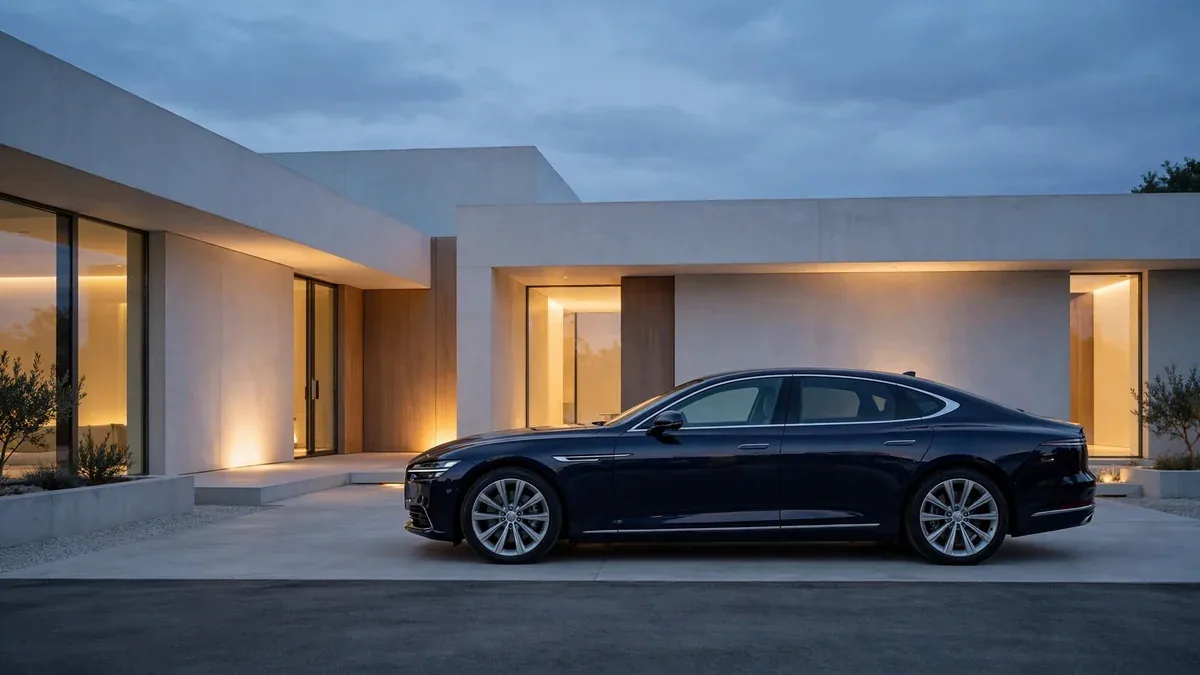

Best Luxury Car Brands in 2027: Comfort, Craft and Confidence
The best luxury car brands do more than move you from one place to another. They change how the journey feels: the hush when the door closes, the seat supporting you on a long drive, the calm of a cabin that filters the world out. In 2027, the leading brands compete on quieter cabins, smarter driver assistance, richer materials and electric range — the differences are more about character than raw speed.
Choosing between them is rarely a question of which brand is objectively best. A Mercedes-Benz S-Class and a Porsche 911 are both luxurious, but in entirely different ways: one is built around serenity, the other around precision and driver engagement. A Lexus rewards you with reliability, while a Rolls-Royce exists in a world of its own. The right brand depends on how you drive and what you notice behind the wheel.
This guide compares the leading luxury car brands of 2027 side by side — strengths, compromises, flagship models and the ownership realities that matter after the showroom shine fades. It is written for buyers who want a clear, honest picture before spending serious money, whether that means a first luxury purchase or a step up.
Key takeaways
- The best luxury car brands split into two camps — comfort-first marques such as Mercedes-Benz, Lexus and Rolls-Royce, and driver-focused ones such as BMW and Porsche — and the best choice depends on which camp matches how you drive.
- Quiet cabins, seat comfort and driver-assistance quality now matter more than horsepower, because every leading brand already offers more performance than public roads can use.
- Electric models from Mercedes-Benz, BMW, Audi, Genesis and Porsche have closed the gap on petrol equivalents for range and refinement, but charging access and real-world range still vary widely.
- Genesis offers the strongest value, pairing flagship-level equipment with a lower price and a longer warranty than its German rivals.
- Caveat: no luxury brand is cheap to own — depreciation, insurance, servicing and parts vary sharply between brands, and a lower purchase price does not always mean a lower total cost over five years.
What this guide covers
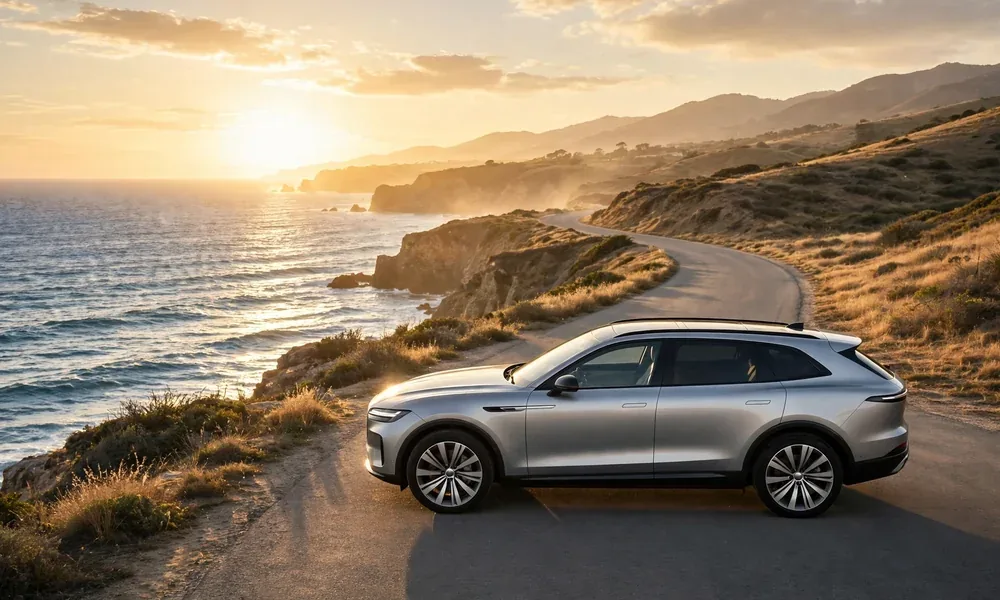
This guide covers the eight luxury car brands that matter most to buyers in 2027: Mercedes-Benz, BMW, Audi, Lexus, Porsche, Genesis, Rolls-Royce and Bentley. Together they account for the overwhelming majority of luxury car sales worldwide, and each offers a distinct answer to what luxury means on four wheels.
For each brand you will find an honest summary of what it does well and where it asks you to compromise, plus the models that best show its character — from the Mercedes-Benz S-Class and BMW 7 Series to the Lexus LS, the Porsche Panamera, the Genesis G90, the Rolls-Royce Ghost and the Bentley Flying Spur. The luxury SUV matters too: the GLS, X7, Q8, LX, Cayenne, GV80 and Bentayga are now the default luxury purchase for many buyers.
To narrow the field to individual cars, our roundup of the best luxury cars of 2027 compares nine standout models in detail. This guide sits one level up: it helps you choose the marque first, so the model choice that follows is easier.
How we chose
We ranked these brands on the factors that shape real ownership. Cabin quality and noise insulation came first, because quiet is the luxury you notice every day. Next came ride comfort and seat design, followed by driver assistance, infotainment, powertrain refinement and the breadth of the range. We also weighed reliability data, warranty coverage and ownership costs: depreciation, insurance and servicing. Finally, we considered the dealer experience and the sense that a car was designed as a whole.
Electric models were judged on the same criteria, with real-world range, charging speed and refinement added. Where a brand’s electric range is still developing, we say so plainly.
What to look for
It helps to know what separates a genuinely luxurious car from an expensive one. Sit in the seat for twenty minutes, not two. Drive over imperfect roads: a luxury car should absorb broken surfaces without a thud reaching the cabin. Listen for wind noise at motorway speed. Then look at the total cost — insurance, servicing, tyres and resale value.
1. Mercedes-Benz
Mercedes-Benz remains the benchmark for the traditional luxury sedan. The S-Class is the car other flagships are measured against: a whisper-quiet cabin, massaging seats, limousine rear space and a ride that smooths rough roads into a distant rumour. The GLS and GLE cover the SUV side.
What We Like: The most complete flagship sedan in the class; superb materials and ambient lighting; the capable MBUX system with excellent voice control; a deep range across sedans, SUVs and electric models.
What to Consider: Options are expensive and quickly add thousands; the touchscreen-heavy interior divides opinion; reliability is good rather than class-leading.
2. BMW
BMW builds luxury cars for people who enjoy driving. The 7 Series is a full-size flagship that still feels alert and precise, while the 5 Series remains the sweet spot: comfortable, quick and composed on a winding road. The i7 and i5 bring the same character to electric power.
What We Like: The best driving dynamics among mainstream luxury brands; the i7 is a superb electric flagship; iDrive is one of the easiest infotainment systems to use while driving; the X7 and X5 are excellent family luxury SUVs.
What to Consider: The ride can feel firmer than a Mercedes-Benz; the 7 Series front styling is divisive; option pricing is high; rear-seat space in smaller models is less generous than in a Lexus.
3. Audi
Audi’s strength is consistency: beautifully built interiors, quattro all-wheel drive and a restrained design language. The A8 is a quiet, spacious flagship that undercuts its German rivals on price while matching them on cabin quality. The e-tron GT is one of the most desirable electric luxury cars on sale.
What We Like: Interiors that feel precision-engineered, with excellent fit and finish; quattro all-wheel drive as standard on most models; the e-tron GT is a genuinely exciting electric car; a superb digital cockpit.
What to Consider: The driving experience is competent rather than thrilling, with less steering feel than a BMW; the A8 trails the S-Class for rear-seat theatre; the electric range is narrower than Mercedes-Benz’s.
4. Lexus
Lexus is the quiet achiever of the luxury world. The LS sedan and the LX and RX SUVs are built around a simple promise: nothing should ever go wrong, and everything you touch should feel considered. Its hybrid powertrains are among the most refined and efficient in the segment, and the latest models — including the electric RZ and the new RX and GX — show a brand that has found its design confidence.
What We Like: Outstanding reliability and build quality; hybrid powertrains that are smooth, quiet and economical; calm, beautifully finished cabins; a long warranty and strong dealer service reputation.
What to Consider: Infotainment, though much improved, still lags BMW’s iDrive; the LS is ageing beside the newest S-Class and 7 Series; performance is adequate rather than exciting.
5. Porsche
Porsche is the only luxury brand whose sports cars and family cars credibly share the same DNA. The 911 remains the defining sports car of the luxury world, while the Panamera is the driver’s choice among large luxury sedans and the Cayenne and Macan are the most engaging luxury SUVs you can buy.
What We Like: The most engaging driving experience of any luxury brand; the Taycan is one of the best electric cars of any kind; exceptional build quality; strong residual values, particularly for the 911.
What to Consider: The most expensive brand on this list to buy into, with a long and costly options list; rear-seat and boot space are tighter than in a Mercedes-Benz; servicing and parts are premium-priced.
6. Genesis
Genesis is the newest brand on this list and, in many ways, the most interesting. Hyundai’s luxury division has gone from unknown to award-winning in less than a decade, and the G90 flagship sedan and GV80 SUV now compete with the S-Class and GLE on cabin quality while undercutting them substantially on price. The Electrified G80 and GV60 show its electric ambition.
What We Like: Flagship-level cabins and equipment at a price well below German rivals; the G90 is a genuine rival to the S-Class for rear-seat comfort; the longest warranty in the segment, with included servicing.
What to Consider: The dealer network is still smaller than established rivals; brand prestige and resale values are still catching up; the range is narrower, with no sports car or performance division.
7. Rolls-Royce
Rolls-Royce occupies a category of its own. The Ghost is the entry point — a vast, near-silent sedan whose ride seems to erase the road entirely. The Spectre, the brand’s first electric car, is arguably the most natural Rolls-Royce ever built: electric power suits a marque whose defining quality has always been silence.
What We Like: The quietest, most refined cabins in the world; materials and craftsmanship no other manufacturer matches; the Spectre proves electric power and Rolls-Royce are a natural pairing; a ride quality that remains the industry benchmark.
What to Consider: Prices start at several times those of a Mercedes-Benz S-Class; running costs, insurance and servicing are in a different league; the cars are very large, which limits where they can comfortably go.
8. Bentley
Bentley sits between the German luxury brands and Rolls-Royce: more driver-focused than a Rolls-Royce, more opulent than a Mercedes-Benz. The Flying Spur is a grand touring sedan with a choice of V8 or W12 power, a hand-stitched cabin and a ride that blends comfort with surprising agility. Plug-in hybrid versions of the Flying Spur and Bentayga point the way to the brand’s electric future.
What We Like: Hand-finished interiors with a warmth and character that feel distinctively British; the Flying Spur and Continental GT combine grand-touring comfort with real performance; the Bentayga is a superb ultra-luxury SUV.
What to Consider: Prices and running costs are far above mainstream luxury brands; fuel economy is poor by modern standards, even in hybrid form; technology trails the newest German flagships.
Background
The modern luxury car was largely invented in Germany. Mercedes-Benz traces its origins to the first petrol automobile in 1886, and the S-Class has defined the flagship sedan for more than fifty years. BMW built its reputation on the sporting sedan, Audi on quattro all-wheel drive, and Porsche on the 911 — in continuous production since 1963.
The last thirty years have widened the field. Lexus arrived in 1989 with the LS 400, a car that embarrassed its German rivals on refinement and reliability. Genesis is the latest challenger, following the same playbook with a modern, electric-aware twist. Rolls-Royce and Bentley have survived by becoming more exclusive — hand-built cars for a small number of buyers.
Electric power is the biggest change the luxury market has faced in decades, and it suits luxury cars well: silent, smooth and instantly responsive. Mercedes-Benz, BMW, Audi, Porsche and Genesis have all launched credible electric flagships, and Rolls-Royce’s Spectre may be the most convincing yet, because silence was always the brand’s defining quality. Luxury travel and luxury cars have always gone together — our St Barts travel guide covers an island built around the same unhurried philosophy.
The caveats that matter
No luxury brand is without compromise, and the most expensive mistake is buying on badge alone. The table below summarises the ownership realities that show up after the new-car excitement has faded.
| Brand | Biggest strength | Main compromise | Ownership cost |
|---|---|---|---|
| Mercedes-Benz | Flagship comfort and technology | Expensive options | High |
| BMW | Driving dynamics | Firmer ride than rivals | High |
| Audi | Build quality and design | Less engaging to drive | High |
| Lexus | Reliability and hybrids | Less exciting performance | Moderate |
| Porsche | Driver engagement | Highest purchase prices | Very high |
| Genesis | Value and warranty | Smaller dealer network | Moderate |
| Rolls-Royce | Unmatched refinement | Extreme cost and size | Very high |
| Bentley | Craftsmanship and character | Poor fuel economy | Very high |
Depreciation deserves a closer look than most buyers give it. A car that holds its value well can cost less over five years than a cheaper rival that loses value quickly. Porsche’s 911 and Lexus models tend to hold value best; large flagship sedans lose value fastest, because the second-hand market for them is small. Get an insurance quote before you buy, not after — the difference between brands can be thousands a year.
Checklist
- Test-drive at least three brands back to back on the same roads, and judge the seat and cabin noise before the acceleration.
- Compare the five-year cost — price, insurance, servicing, tyres and resale value — not just the monthly payment.
- Check the warranty in detail: length, mileage limit, included servicing, and whether roadside assistance and a courtesy car are covered.
- Drive the exact model and engine you plan to buy, with the options fitted — base models and fully loaded press cars can feel like different vehicles.
- Confirm electric range and charging speed for your real journeys, not the headline figure.
- Ask about the dealer: servicing location, courtesy car policy, and warranty claims — and a luxury stay should feel as considered as the car that brought you there, as our guide to Hotel Emma in San Antonio shows.
FAQ
Which luxury car brand is the best overall?
There is no single best brand — it depends on what you value. Mercedes-Benz is the most complete all-rounder, with the strongest flagship sedan and the widest range. BMW is the best choice for drivers who enjoy driving. Lexus leads on reliability and low running costs, Genesis on value. Rolls-Royce and Bentley sit above the rest on craftsmanship, but at a price that puts them in a different category.
Which luxury car brand is the most reliable?
Lexus leads independent reliability surveys, with fewer reported problems than any other luxury brand and a long record of durable hybrids. Genesis also scores well, and Porsche’s reliability is strong for a performance brand. The German brands are good rather than outstanding, partly because of their complexity.
Are electric luxury cars worth it in 2027?
For most buyers, yes. Electric luxury cars are quieter, smoother and cheaper to run than their petrol equivalents, and models such as the EQS, i7, e-tron GT, Taycan and Spectre are among the best cars their brands make. The case weakens if you regularly drive long distances without reliable fast charging, or tow heavy loads.
Which luxury brand offers the best value for money?
Genesis, by a clear margin. Its G90 and GV80 offer flagship-level cabins, equipment and warranty coverage at prices well below equivalent German models. Lexus is the next best value, because its reliability and strong resale values keep the total cost of ownership down.
Is Rolls-Royce worth the price over a Mercedes-Benz S-Class?
On measurable qualities — speed, technology, fuel economy — no. On the qualities Rolls-Royce sells — silence, materials, craftsmanship and the feeling of being in something hand-built — there is no substitute. The S-Class is the rational choice; a Rolls-Royce is bought for reasons that have little to do with rationality, and its buyers know that.
Should I buy a luxury SUV or a luxury sedan?
Choose the sedan for the lowest cabin noise, the best ride quality and the most elegant proportions — the S-Class, 7 Series, LS and G90 are all at their best as sedans. Choose the SUV for the higher seating position, extra space and easier entry and exit. The best luxury SUVs — the GLS, X7, Q8, LX, Cayenne, GV80 and Bentayga — are now so refined that the comfort gap to a sedan is smaller than ever.
The bottom line
The best luxury car brands in 2027 offer more choice, and more genuine quality, than ever before. Mercedes-Benz remains the benchmark for comfort, BMW for driving pleasure, Lexus for reliability, Porsche for engagement, Genesis for value, and Rolls-Royce and Bentley for unmatched craftsmanship. Any of the eight brands here can be the right answer — the question is which of their strengths matches the way you actually live with a car.
Drive at least three of them before you decide, judge them on the seat, the silence and the total cost rather than the badge, and compare the ownership proposition as carefully as the car itself. The right luxury brand is not the most expensive or the most famous one. It is the one that still feels right on the thousandth drive, long after the first impression has faded.
Meet Our Experts
Our editorial team covers luxury cars, travel and lifestyle, drawing on published specifications, independent reviews and ownership data. Articles are reviewed for accuracy and updated as new models arrive.
Why Trust BrassSmile
BrassSmile covers luxury living — cars, travel, fashion, beauty and homes — with the same standard across every guide: specific, accurate and practical, with no sponsored rankings and no external links. We compare brands on the factors that shape real ownership, and say plainly where a brand asks you to compromise.
Sources
Manufacturer specifications from Mercedes-Benz, BMW, Audi, Lexus, Porsche, Genesis, Rolls-Royce and Bentley; independent reviews from Car and Driver, MotorTrend, Autocar, Top Gear, What Car? and Edmunds; reliability data from J.D. Power and Consumer Reports.