
Best Luxury Curtains Brands for Beautifully Dressed Windows
The best luxury curtains brands turn a window from an afterthought into the centrepiece of a room. A well-made curtain does far more than block light: it softens hard edges, adds height and movement, frames a view, and gives a space the finished quality that separates a decorated room from a designed one. The difference between an ordinary panel and a genuinely luxurious one is visible the moment it hangs — in the weight of the fabric and the evenness of the folds.
Luxury in window treatments is not only about price. The strongest brands share a few qualities: honest, high-grade fabrics such as Belgian linen, silk, and cotton velvet; careful construction with proper lining and hand-finished hems; and a made-to-measure approach that fits the exact window rather than forcing a standard size to do.
This guide looks at eight brands that consistently deliver that standard, from heritage textile houses to modern custom-workroom services. Each earns its place for a different reason, so the right choice depends on your room, your window, and how involved you want to be.
Key takeaways
- Luxury curtains are defined by fabric quality, lining, and made-to-measure fit — not by a logo or a high price alone.
- Belgian linen, silk, and cotton velvet are the fabrics most luxury brands build their reputations on, and each behaves differently in light and over time.
- Fullness matters: panels roughly two to two-and-a-half times the width of the window give the generous folds that read as luxurious.
- Professional measuring is worth it for tall, wide, or bay windows, where a small error becomes very visible.
- No single brand is best for every window — lead times and fabric ranges vary widely, and the most beautiful options often need the most patience.
What this guide covers
This guide covers the brands that define the luxury end of the curtain market: the companies whose fabrics, construction, and service are consistently praised by interior designers and homeowners. It focuses on full-length, made-to-measure or generously sized ready-made panels for living rooms, bedrooms, and dining rooms.
We look at what each brand does best, what it asks you to compromise on, and which kind of home and window each one suits. The guide also explains the practical decisions that matter as much as the brand name: fabric weight, lining, heading style, length, and hardware. For the wider picture, our guide to luxury home decor and designer pieces for every room sets out the principles that make individual choices hang together.
How we chose
We chose these eight brands on the factors that determine how a curtain performs in a home: fabric quality and range, construction, the accuracy of the made-to-measure service, and honest pricing and lead times — favouring brands with a long record in interior textiles and newer services known for consistent tailoring.
Fabric was the first filter. A luxury curtain brand should offer natural fibres with a clear provenance — Belgian or European linen, silk, cotton velvet, and high-quality wool blends — and should send samples so the cloth can be judged in the room itself.
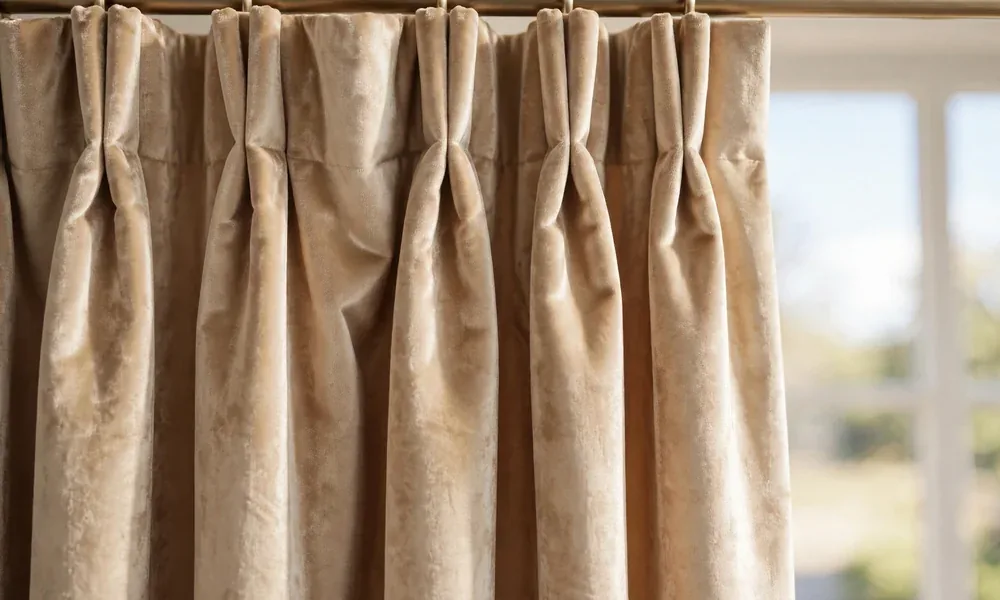
Construction was the second filter. The details that separate a good curtain from a great one are mostly invisible when the panel is hanging: a lining that protects the face fabric from sun damage, a weighted hem that keeps the drop straight, and pleats spaced evenly and stitched to hold their shape. We favoured brands that describe their construction openly and publish clear measuring guidance and realistic lead times.
What to look for
Before the brand profiles, it helps to know what you are judging. The most important quality in a luxury curtain is the fabric itself: its weight, its weave, and how it falls. Hold a sample up to the light, let it drape over your hand, and look at it in the room at different times of day.
Lining is the second decision. A standard cotton lining adds body and protects the face fabric from sun damage; blackout lining adds privacy and darkness for bedrooms; interlining gives the full, plush drape of the best traditional workrooms. Heading style comes next: pinch pleats are the classic tailored choice, wave headings suit modern tracks, and rod pockets lean more casual. Finally, consider length — luxury curtains typically graze the floor or pool very slightly.
The Shade Store
What We Like: A made-to-measure specialist with a wide fabric library — linens, velvets, and sheers in hundreds of colours — plus free swatches and clear measuring guidance.
What to Consider: The range can overwhelm, and the result depends on the fabric you choose: entry-level options lack the feel of the premium cloths. Lead times run several weeks.
Background: It grew from a family window-treatment business in the United States into a leading custom curtain retailer, with showrooms in major cities and a strong online service.
Caveats: Prices rise steeply with premium fabrics and linings, so a quote can far exceed the headline figure. Returns on custom orders are limited.
Hunter Douglas
What We Like: An engineering-led brand whose drapery includes well-constructed sheers and lined panels. Its motorised track systems are among the most reliable available — a real advantage for tall windows.
What to Consider: The brand is primarily a blinds and shades company, so its curtain range is narrower and less fashion-led than a dedicated drapery house. The best options are usually sold through dealers.
Background: Hunter Douglas is a Dutch-founded global company with a long history in window coverings, sold through authorised dealers who measure and install. Its strength is precision manufacturing and dependable hardware.
Caveats: Dealer pricing varies, so quotes for the same job can differ noticeably between showrooms. Motorisation adds cost and needs power planning, easiest during a renovation.
Restoration Hardware (RH)
What We Like: RH curtains are known for generous proportions and a restrained palette of Belgian linen, washed cotton, and velvet. The heavy, relaxed drape suits large rooms and tall windows, and the oversized scale is hard to match.
What to Consider: The aesthetic is specific: calm, neutral, and understated. If you want pattern, strong colour, or a formal pleated look, RH offers little, and unusual windows may need alteration.
Background: Restoration Hardware began as a hardware and home-furnishings retailer and grew into a luxury lifestyle brand with large gallery showrooms. Its window treatments mirror its furniture: oversized, neutral, and built around natural materials.
Caveats: Prices are firmly at the luxury end, and the neutral palette limits colour choice. Delivery for larger or custom sizes can be long, and heavy fabrics need sturdy hardware and professional hanging.
Kravet
What We Like: A trade textile house with one of the deepest fabric libraries in the industry, including silks, damasks, embroidered linens, and performance fabrics. Its workroom-made curtains offer a level of choice consumer brands rarely match.
What to Consider: Kravet sells primarily to the design trade, so homeowners usually buy through an interior designer. That brings expert guidance but adds cost and an extra step.
Background: Founded in New York in 1918, Kravet is a family-owned company supplying fabrics, wallcoverings, and trims to designers worldwide. Its collections are a reference point for the interior design profession.
Caveats: Buying through the trade can make pricing opaque, and lead times depend on fabric availability and the workroom. The most beautiful fabrics are often the most delicate.
Schumacher
What We Like: Schumacher is famous for pattern. Its archive includes some of the most recognisable prints in interior design, from bold geometrics to classic florals, made to be the focal point of a room.
What to Consider: Pattern is a commitment. A strong print needs a room that can carry it, and matching a pattern across wide panels adds fabric and cost. Its plain fabrics are good but not the draw.
Background: Founded in 1892, F. Schumacher & Co. is one of the oldest and most respected textile houses in the United States, supplying fabrics and wallcoverings to designers for more than a century.
Caveats: Like Kravet, Schumacher is a trade brand, so most homeowners buy through a designer. Patterned fabrics cost more per metre, and pattern matching adds to the total fabric required.
Pottery Barn
What We Like: The most accessible route into well-made curtains, with ready-made panels in linen, cotton, and velvet, plus a custom service for non-standard windows. Quality is consistent and returns are straightforward.
What to Consider: It is not a luxury house in the same sense as the trade brands, and the fabrics rarely have the depth and weight of the finest linens or silks. Popular colours and sizes sell out.
Background: Pottery Barn is a long-established American home-furnishings retailer, part of the Williams Sonoma group, with stores across the United States and a large online business. Its curtains coordinate with its furniture and bedding ranges.
Caveats: Ready-made panels come in set lengths, so a perfect floor-grazing drop may need hemming. Custom orders take longer and cost more, narrowing the gap with specialist brands.
Serena & Lily
What We Like: A light, coastal-influenced sensibility: airy linens, soft sheers, and gentle patterns that suit bright rooms. Its custom service offers a good range of headings and linings.
What to Consider: The aesthetic is distinctively relaxed and coastal, which suits some homes perfectly and others not at all. Its fabric range is narrower than the big custom houses, and pale colours show marks.
Background: Founded in California, Serena & Lily grew from a nursery-design business into a full home brand known for its light-filled, beach-house style and coherent vision of relaxed luxury.
Caveats: Light fabrics and pale colours need more frequent cleaning, and the look can feel repetitive if the whole house follows the same palette. Custom orders cannot be returned.
West Elm
What We Like: Modern, well-priced curtains with a contemporary eye — clean lines, textured weaves, and a good range of velvets and linens. Its custom service covers unusual sizes.
What to Consider: The fabrics are mid-weight and practical rather than opulent, and the range leans modern, so traditional or highly formal rooms may be better served elsewhere. Some lines are seasonal.
Background: West Elm, also part of the Williams Sonoma group, was launched as a modern-design counterpart to Pottery Barn, emphasising contemporary furniture and accessible design. Its window treatments follow the same brief.
Caveats: The lighter fabrics may need blackout lining for bedrooms, which adds cost. Standard lengths may need adjustment for a truly tailored finish.
Background
Curtains have marked a well-appointed home for centuries, and the craft behind them has changed little: the best workrooms still cut, line, and pleat by hand. What has changed is access — made-to-measure curtains, once the preserve of clients with a decorator, are now available through online services that send samples, guide measuring, and deliver finished panels to the door.
That wider access has also made the market harder to read. A curtain photographed in a bright studio can hide thin fabric, uneven pleats, and a lining that will yellow in a year. The brands that have lasted tend to be the ones that are transparent about how their curtains are made. The same care that goes into choosing a luxury bedroom comforter in the right weight and fill applies here: natural materials, honest construction, and a fit that suits the room will always outlast a bargain.
The other change is motorisation. Quiet electric tracks, once a feature of hotels and very large houses, are now a realistic option for tall windows. They add cost and need power, but they protect heavy panels from daily wear. If you are renovating, plan the power and the track before the plastering is finished.
The caveats that matter
Every luxury curtain involves a trade-off. The table below puts the practical differences between the eight brands side by side.
| Brand | Best for | Buying route | Fabric range | Lead time | Watch out for | Price level |
|---|---|---|---|---|---|---|
| The Shade Store | Custom panels, wide choice | Online and showroom | Very wide | Several weeks | Costs climb with premium cloth | Mid to high |
| Hunter Douglas | Motorised, tall windows | Authorised dealer | Moderate | Several weeks | Dealer pricing varies | High |
| Restoration Hardware | Oversized linen panels | Gallery and online | Narrow, neutral | Weeks to months | Limited colour and pattern | High |
| Kravet | Exceptional fabric choice | Through a designer | Extensive | Depends on workroom | Opaque trade pricing | High |
| Schumacher | Statement pattern | Through a designer | Extensive, pattern-led | Depends on workroom | Pattern matching adds cost | High |
| Pottery Barn | Accessible quality | Store and online | Wide | Days to weeks | Standard lengths may need hemming | Mid |
| Serena & Lily | Light, coastal rooms | Store and online | Moderate | Weeks | Pale fabrics mark easily | Mid to high |
| West Elm | Modern apartments | Store and online | Moderate | Days to weeks | Lighter fabrics need lining | Mid |
A few caveats apply to every brand. Sunlight is the main enemy of curtain fabric: south-facing windows will fade even good cloth, and lining is the best protection you can buy. Silk is the most vulnerable — beautiful, but it needs lining and a room out of harsh sun. Velvet is heavy, needs a strong track or rod, and shows pressure marks where it is handled. Linen wrinkles, which is part of its character.
Lead times are the other honest caveat. True made-to-measure curtains are cut and sewn to order, and that takes weeks. If your timeline is tight, a ready-made panel from a good retailer is a better choice than a rushed custom order. The wider world of luxury home goods and distinctive decor rewards the same patience: the pieces that last are rarely the ones bought in a hurry.
Checklist
- Order fabric samples first and look at them in the room, in daylight and in the evening.
- Measure the width and the drop twice, and decide the finished length before ordering.
- Choose the lining for the room: blackout for bedrooms, standard lining for living spaces.
- Check that your rod or track can carry the weight of the fabric, especially for velvet and interlined panels.
- Allow two to two-and-a-half times the window width in fabric for generous, even folds.
- Confirm the lead time and the returns policy in writing before you pay.
FAQ
How much should luxury curtains cost?
There is no single figure: price depends on fabric, window size, lining, and whether panels are made to measure. Ready-made panels from good retailers are the most affordable route; fully custom curtains in premium fabric for a large window can cost several times more.
What is the best fabric for luxury curtains?
It depends on the room. Belgian linen is the most versatile — it drapes beautifully, suits most styles, and ages well. Silk has the most lustre but needs lining and sun protection. Cotton velvet gives the richest fall and suits bedrooms.
Should curtains touch the floor?
In most luxury interiors, yes. Panels that just graze the floor look tailored and intentional, and a very slight puddle suits relaxed linen and velvet. Curtains that stop well above the floor look unfinished unless the window sits above furniture or a radiator.
Is blackout lining worth it?
For bedrooms, usually yes. Blackout lining gives darkness and privacy, adds weight that improves the drape, and protects the face fabric from sun damage. In living rooms a standard lining is often better, keeping the panel lighter and easier to draw.
Can I hang heavy velvet curtains on a standard rod?
Not always. Heavy velvet and interlined panels need a rod or track rated for their weight, with brackets spaced closely enough to prevent sagging. A slim decorative rod may bend or pull out of the wall under a wide velvet panel.
How do I clean luxury curtains?
Follow the care guidance for the specific fabric, because silk, linen, and velvet all need different treatment. Most luxury curtains should be dry-cleaned, and regular gentle vacuuming with an upholstery attachment removes dust between cleans.
The bottom line
The best luxury curtains brands respect the craft: honest fabrics, careful construction, and a fit measured to the window rather than guessed. The Shade Store and Pottery Barn make custom and ready-made quality widely accessible, Hunter Douglas solves tall and motorised windows, RH delivers oversized linen drama, and Kravet and Schumacher offer a fabric range nobody else can match. Serena & Lily and West Elm round out the list for lighter, more modern rooms.
Choose the fabric first, the lining second, and the brand third — and order samples before you order curtains. A panel that suits your light, your room, and your window will look luxurious whatever the label. Measure well, allow for the lead time, and invest in hardware that can carry the weight.
Meet Our Experts
Our home and interiors coverage is written and reviewed by our in-house editorial team, including editors specialising in interior design, textiles, and luxury living.
Why Trust BrassSmile
BrassSmile covers the world of luxury living — homes, travel, fashion, beauty, and the brands behind them — with guides that prioritise honest assessment over promotion. We name the compromises as well as the strengths, and we do not accept payment for placement in our guides.
Sources
The Shade Store; Hunter Douglas; Restoration Hardware; Kravet; F. Schumacher & Co.; Pottery Barn; Serena & Lily; West Elm; Architectural Digest; Elle Decor; House Beautiful.