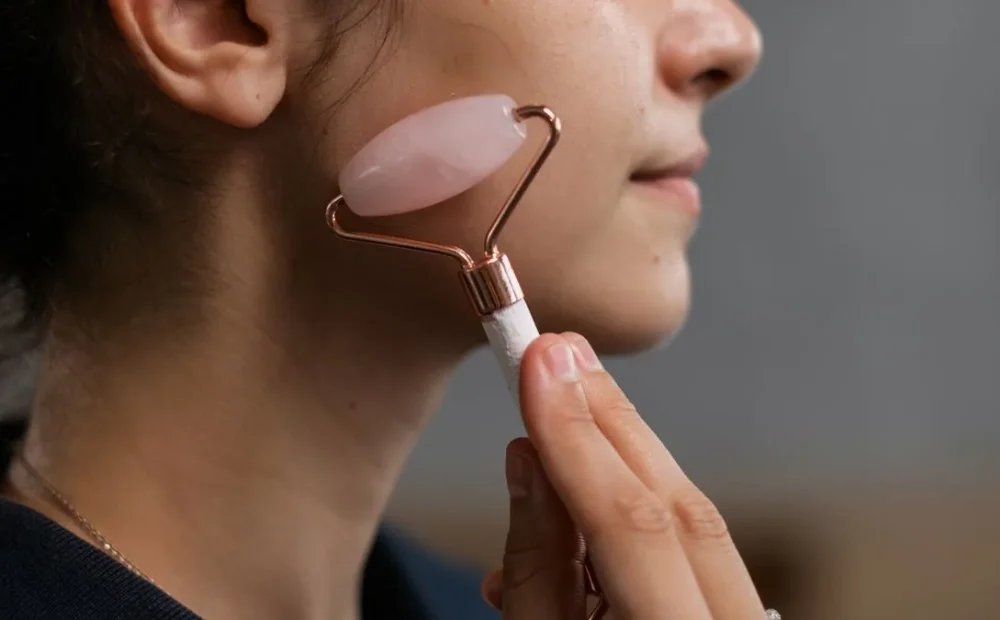
A face roller is a small handheld skincare tool with one or two smooth, spinning heads on a handle. You glide it across your face in slow, upward strokes, usually over serum or facial oil, and the heads turn as they move so the tool rolls instead of dragging. It needs no power and no charging.
Most rollers look alike, but the category is wider than the green stone version that started the trend. Heads can be jade, rose quartz, amethyst, stainless steel, or a gel-filled barrel you chill in the freezer. Some are double-ended, with a large head for the cheeks and a small one for under the eyes.
This guide explains what a face roller is, the main types on sale in 2027, what it can and cannot do, and how to use one. The short version: it is a pleasant massage tool that cools the skin, gives a brief glow, and softens morning puffiness. It is not a treatment for wrinkles, and no roller changes the structure of your face.
Key takeaways
- A face roller is a handheld tool with smooth spinning heads, rolled over the face in upward, outward strokes over serum or facial oil.
- Rollers come in stone, metal, and chilled gel versions; the material decides how cold it feels.
- The real effects are temporary: cooler skin, a brief glow, and less visible morning puffiness for an hour or two.
- Use light pressure and clean the heads after every use, because a dirty roller can spread oil and bacteria across your face.
- No face roller lifts, tightens, or reshapes skin, and no stone adds any benefit beyond the massage itself.
What a face roller actually is
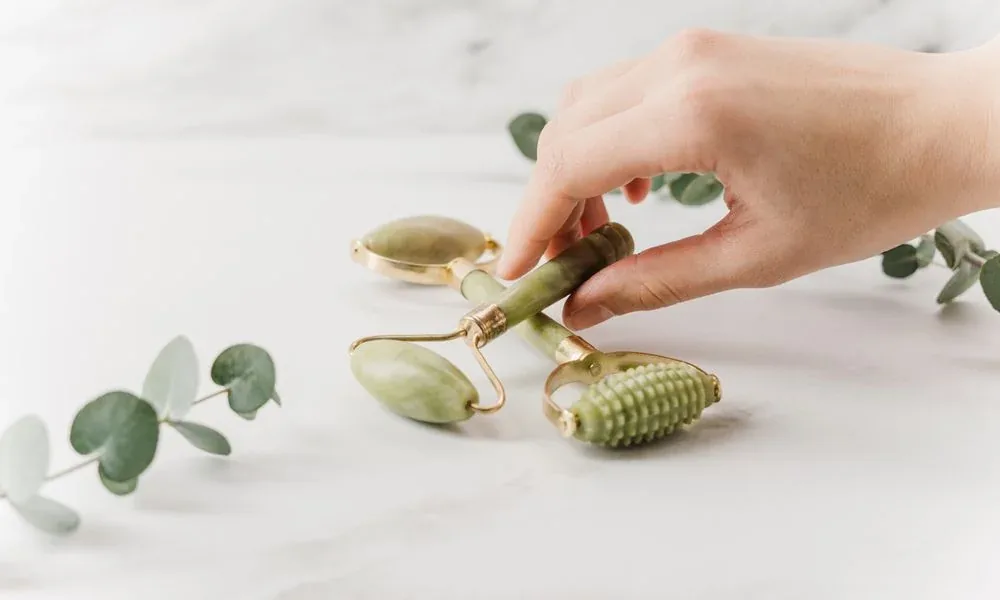
A face roller has three parts: a handle, a metal frame, and heads that spin freely on small pins. The large head covers the cheeks, jaw, and forehead. On a double-ended roller, the small head fits under the eyes and around the nose.
The heads fall into three families. Stone heads, cut from jade, rose quartz, or amethyst, feel cool for a minute or two, then warm up. Metal heads, usually stainless steel or zinc alloy, stay cool longer and are the easiest to wash. Gel or ice rollers have a barrel you store in the freezer, so they stay cold for a whole session and are the strongest option for de-puffing.
What a face roller is not matters too. It is not a derma roller, which is covered in tiny needles and punctures the skin, and the two should never be confused. It is not a powered device either: no vibrations, currents, or heat settings. A face roller does one small job, and judging it honestly means judging that job, not the promises on the box.
The main types of face roller
Choosing a face roller means choosing a material first, because that decides the feel, the upkeep, and the price. The rolling action is the same in every type.
Stone rollers
Stone rollers are the classic version, with heads cut from jade, rose quartz, or amethyst. They are smooth, naturally cool, and the prettiest option on a vanity. Their weakness is the build: cheap ones can have rough seams, wobbly frames, or heads that chip if dropped.
Metal rollers
Metal rollers use stainless steel or zinc alloy heads, sometimes with a cooling gel core. They are heavier than stone and hold a chill far longer. They are also the most practical: metal does not chip, it washes clean with soap and water, and it lasts for years.
Ice and gel rollers
Ice rollers have a barrel filled with water and gel that you keep in the freezer. They stay cold for ten minutes or more, making them the best choice for visible morning puffiness, tired eyes, or flushed skin. They are bulkier than other rollers, and the cold can be too much for very sensitive skin.
Textured rollers
Textured rollers have ridged or studded heads meant to give a firmer massage. They feel more stimulating than a smooth roller, and some people enjoy the sensation on the jaw and neck. They are the least gentle option, though, and not a good first roller.
What it can and cannot do
A face roller does three things reliably. First, the cold heads lower the temperature of the skin, which makes puffiness look less obvious, especially around the eyes. Second, the rolling motion is a gentle massage, which increases blood flow and leaves a brief glow. Third, it helps spread the serum or oil underneath it more evenly. Those effects fade within an hour or two, but they are real.
What it cannot do is the longer list. A face roller does not lift or tighten skin, reshape the jawline, shrink pores, erase wrinkles, or clear acne. It does not stimulate collagen in any meaningful way, and it does not push skincare ingredients deeper into the skin. The lymphatic drainage claim on many boxes is also overstated: gentle massage may encourage fluid movement, but no study has shown lasting drainage. If you enjoy the ritual, the tool is worth owning. If you are buying it to change your face, save your money.
The stone itself deserves a plain word. Sellers of crystal rollers often claim rose quartz calms the skin or jade detoxifies. None of those claims has scientific support. The stone is a smooth, cool surface, and that is all it needs to be. If you prefer a flat stone you press and scrape rather than roll, our guide to what gua sha is explains the difference.
How to use a face roller
Start with clean skin and a clean roller. Wash your face, apply a few drops of face serum or facial oil, and roll while the skin is still slippery. Never roll on dry skin: the heads will drag and irritate. If you want extra cold, keep the roller in the fridge.
Work in short, upward and outward strokes, and let the weight of the tool do the work. Start at the centre of the chin and roll toward the ear, then from the nose outward across the cheek, then from the inner brow upward across the forehead. Use the small head under the eyes, rolling gently from the inner corner outward, with almost no pressure. Finish by rolling down the sides of the neck toward the collarbone. Five to ten strokes per area is enough.
Pressure is where most people go wrong. A face roller is not a deep-tissue tool, and pressing hard does not make it work better. It bruises delicate skin, breaks surface capillaries, and leaves redness that lasts longer than any glow. Light, even pressure is correct. Once a day, in the morning when puffiness is at its worst, is enough. It fits neatly into a morning skincare routine, right after serum and before moisturiser and sunscreen.
Cleaning is the step people skip, and it is the one that matters most. Rinse the heads with warm water and a drop of gentle soap after every use, dry them fully, and store the roller somewhere clean and dry. Never share a roller, and stop using it if a head chips or cracks. A well-kept metal roller can last for years; a stone roller lasts as long as its frame stays firm and its heads stay smooth.
Face roller vs jade roller vs gua sha
The names overlap. A face roller is the whole category. A jade roller is one member of it, defined by its material. Gua sha is a different tool, a flat stone used for scraping strokes rather than rolling.
| Detail | What is known |
|---|---|
| Face roller | The whole category: spinning heads on a handle, in stone, metal, or gel. |
| Jade roller | One type of face roller, with heads cut from jade; cool at first, warms quickly. |
| Gua sha | A flat stone scraped across the skin, not rolled; firmer pressure, steeper learning curve. |
| Best for puffiness | An ice or metal roller, chilled, used in the morning for a few minutes. |
| Best for relaxation | Any smooth roller used slowly with light pressure; the ritual matters most. |
| Easiest to clean | Metal rollers, which wash with soap and water and cannot chip like stone. |
| Biggest risk | Pressing too hard, rolling on dry skin, or using a dirty or chipped roller. |
| What none of them do | Lift, tighten, or reshape the face, erase wrinkles, or replace proven skincare. |
Checklist before you buy
- Roll the heads on the back of your hand first: they should turn smoothly and silently, with no grinding or wobble.
- Run a fingertip over the heads and the frame, checking for rough seams, chips, or sharp edges that could scratch skin.
- Choose the material for your habits: metal for durability and easy cleaning, stone for the look, gel if puffiness is your main concern.
- Pick a double-ended roller if you want the small head for under the eyes; a single large head is fine for cheeks and forehead.
- Check the frame is firmly fixed: a loose head that rattles or falls out is the most common sign of a cheap roller.
- Keep the receipt until you have used it for a week, so a faulty roller can go back without an argument.
Frequently asked questions
Do face rollers really work?
They work for the small things they are designed to do: cooling the skin, giving a brief glow, and making morning puffiness look less obvious for an hour or two. They do not lift or reshape the face. Think of a face roller as a pleasant massage tool, not a treatment.
Should I use a face roller before or after moisturiser?
Roll after serum or facial oil and before moisturiser. The roller needs a slippery layer to glide, and serum gives it exactly that. Rolling on bare, dry skin causes dragging and irritation.
Can I use a face roller every day?
Yes, once or twice a day is fine, as long as the pressure stays light and the roller is clean. Morning is the most useful time, when puffiness is at its worst. If your skin feels sore or stays red for hours after rolling, take a break and check your pressure.
Is a metal face roller better than a stone one?
Metal is better for durability, hygiene, and staying cold, while stone is better if you love the look and the traditional feel. Neither is better at the actual rolling, because the motion is the same. If you want one roller to last, stainless steel is the practical choice.
Do I need to put my face roller in the fridge?
You do not need to, but it helps. A cold roller de-puffs more visibly than a room-temperature one. An ice roller must live in the freezer to work at all. Avoid the freezer for stone rollers: extreme cold can make some stones brittle.
Can a face roller damage my skin?
It can, if it is used badly. Pressing hard can bruise delicate skin and break tiny blood vessels, and a chipped head can scratch. Rolling over active acne, eczema, a rosacea flare-up, or sunburn can also make things worse. Use light pressure, keep the roller clean, and skip it when your skin is unhappy.
The bottom line
A face roller is a simple, inexpensive tool that does a small job well. It cools the skin, gives a brief glow, softens morning puffiness, and turns a rushed routine into a slower, more pleasant one. Those modest benefits are real, and they earn the roller a place on the bathroom shelf.
Choose by material and build, not by crystal claims. A smooth, silent, firmly fixed roller will serve you far better than a pretty one that wobbles or chips. Use it lightly, over serum, for five minutes in the morning, wash it after every use, and enjoy it as a small daily ritual.
Note: This guide is general information, not medical advice. If you have a skin condition or are unsure whether facial massage is safe for you, check with a dermatologist first.
Meet Our Experts
Our beauty editors cover skincare tools full-time, testing each product in real morning and evening routines before writing about it.
Why Trust BrassSmile
We describe tools as we find them, including their limits. When the evidence for a benefit is thin, we say so.
Sources
Byrdie, Allure, and published dermatology guidance on facial massage and skin barrier care.