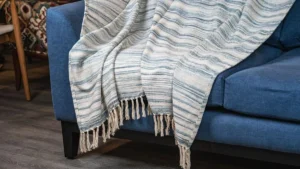
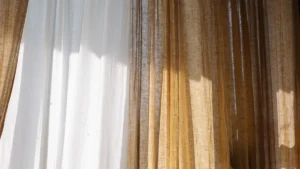
Best Luxury Linen Curtains 2027
Linen curtains are the quietest luxury in a room. They do not shine like velvet or command attention like silk. Instead, they soften a window the way good light softens a photograph: gently and unevenly, without ever looking staged. A well-chosen pair gives a room air, texture, and calm heavier fabrics cannot imitate, while letting daylight in.
The trouble is that linen is not one fabric either. Pure flax linen, washed linen, linen blends, and sheer linen voile look similar on a screen and behave very differently once hanging: one falls in soft folds, another holds a crisper line, a third lets so much light through that it is decoration rather than a curtain. Add weight, weave, lining, and heading style, and a simple purchase turns into small decisions that matter more than the colour you picked first.
This guide covers the nine linen curtain styles that earn their place in a luxury home in 2027, what each does best and where it falls short, and the checks that separate a panel you will love for a decade from one you will replace in a year.
Key takeaways
- Linen earns its luxury reputation from texture and light, not shine — a good panel filters daylight softly and falls in relaxed, uneven folds.
- Pure Belgian linen drapes best, washed linen is the softest and most forgiving, and a linen blend suits sunny or busy rooms where pure linen would fade.
- Fullness of about two to two-and-a-half times the window width makes linen look generous rather than flat.
- Lining decides the performance: unlined linen is for light and air, while a blackout or cotton lining delivers privacy and darkness.
- No linen is crease-proof or fade-proof — wrinkles and a relaxed drape are part of the fabric, and anyone wanting a crisp, perfect finish should choose something else.
What this guide covers
This guide covers linen curtains for luxury homes: full-length panels for living rooms, bedrooms, and dining rooms, plus shorter and sheer styles for kitchens and studies. It is organised by style and purpose rather than by brand, because the same fabric behaves differently as a voile, a blackout-lined panel, or a floor-pooling drape, and the right choice depends on the room first.
Each pick below is described the way you would judge it in person: how it hangs, how it handles light, what it asks in care, and which window suits it. For wider context, our roundup of the best luxury curtains brands sets out the makers at the top end.
How we chose
We judged every style on what decides whether linen looks luxurious once hanging: the drape, the evenness of the weave, the hand feel, and how the fabric responds to light across a day. A linen that looks flat at noon and grey at dusk fails, however good it looked in a photograph. We also weighed weight, lining, creasing, shrinkage, and care.
We favoured styles that suit real homes rather than showrooms, and where a style demands more care, we say so plainly. Linen is honest: it will not pretend to be crisp, nor hide a bad measurement.
The best luxury linen curtains in 2027
1. Best overall: pure Belgian linen floor-length panels
What we like: Belgian linen is the benchmark every other linen is judged against. Long-fibred and tightly woven, it falls in deep, even folds with a dry, cool hand feel.
What to consider: It is the most expensive style here, and it creases — the wrinkles are part of the look, but not for everyone — and heavyweight panels need a strong rod.
2. Best for bedrooms: washed linen blackout-lined panels
What we like: Washed linen arrives pre-softened, with the relaxed feel pure linen takes months to develop. A blackout lining turns it into a genuine sleep aid, blocking morning light and muffling street sound.
What to consider: These are the heaviest linen panels here and need the sturdiest hardware, and the lining hides the back of the cloth — buy from a maker whose lining is sewn cleanly.
3. Best for airy living rooms: sheer linen voile panels
What we like: Sheer linen voile is linen at its lightest. It filters sunlight into a soft glow, keeps the view, and moves with the slightest breeze.
What to consider: Voile offers almost no privacy after dark, when interior light turns it transparent, and it snags easily — keep it away from rough plaster and pet claws.
4. Best for texture: slubbed linen with a relaxed drape
What we like: Slubbed linen keeps the thick-and-thin threads of the flax visible, giving the cloth a handmade, tactile quality flat weaves cannot match.
What to consider: The slubs are uneven by design, so two panels can look slightly different in strong light. Check both together before hanging; the variation is the point, not a fault.
5. Best for small windows: café-length linen panels
What we like: A café-length panel covers the lower half of a window, giving privacy at eye level while leaving the top open to sky and light, and never gets in the way of a sink, desk, or sill full of plants.
What to consider: Short curtains are less forgiving of a wrong length, so measure the drop precisely and keep the heading simple — too long looks like a mistake, too short looks unfinished.
6. Best for dining rooms: tailored linen with pinch pleats
What we like: Pinch pleats give relaxed linen a tailored structure, so the panels hold even folds and a straight drop, and the heading makes the window look finished for formal evenings.
What to consider: Pleated panels need more fabric than flat ones, so the cost rises with the width, and the pleats need steaming after hanging.
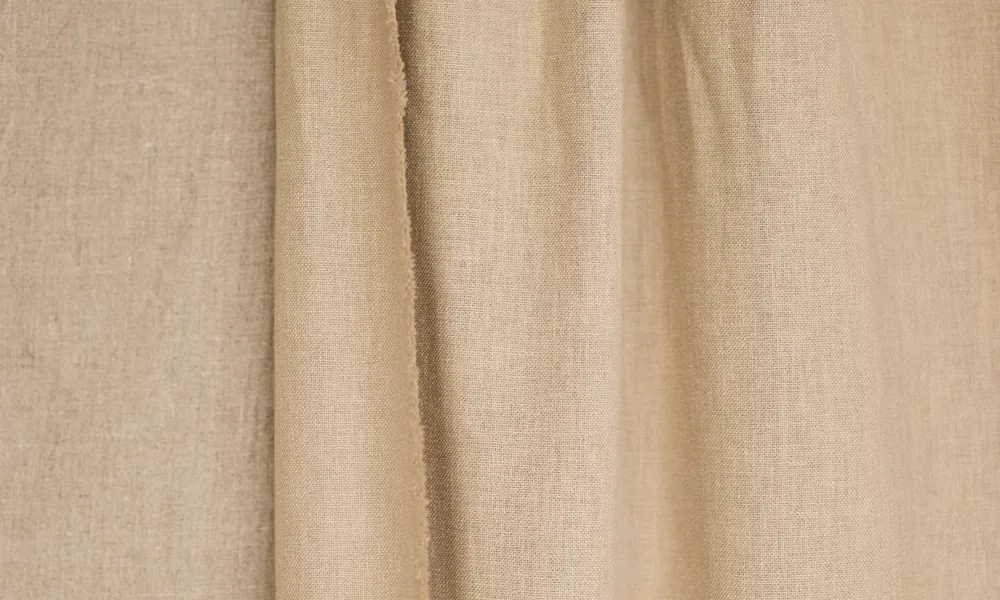
7. Best for relaxed coastal homes: undyed natural linen panels
What we like: Undyed linen keeps the warm, oatmeal tone of the flax itself. In a coastal or country home it sits comfortably with pale wood, white walls, and sea light.
What to consider: Undyed linen shows marks and sun softening more honestly than dyed cloth, and can yellow in strong, constant sun. Line sun-facing panels.
8. Best for privacy without darkness: medium-weight linen privacy panels
What we like: A medium-weight linen, heavier than voile but lighter than blackout, gives daytime privacy while keeping the room bright — softly veiled from the street, daylight still coming through.
What to consider: The balance is narrow — too light and it is voile, too heavy and the room dims — so order a swatch and check it at midday and dusk.
9. Best for formal rooms: stonewashed linen with a weighted hem
What we like: Stonewashing softens linen until it drapes like a much more expensive cloth, and a weighted hem keeps the drop straight, giving linen the gravity it usually lacks in a formal room.
What to consider: Stonewashed linen is softer and less hard-wearing than unwashed cloth, so it suits rooms used gently, and the weighted hem adds cost and weight — check the rod rating first.
Linen, explained: the fibres and weaves behind the look
Linen is a fibre, not a finish. It is woven from flax, stronger than cotton, cooler to the touch, and naturally uneven — slubs where the thread thickens, and a dry hand feel that softens with every wash. Good linen improves with age; cheap linen, usually a short-fibred cloth or thin blend sold as pure, stays stiff and fades unevenly.
The weave decides how the curtain behaves: a loose, open weave makes a sheer voile, while a heavier twill or dense weave makes a privacy or blackout-ready panel. A blend, usually with cotton or a little viscose, drapes more smoothly and creases less, but loses some of linen’s dry texture. If you want the real thing, the label should say 100% linen.
Weight is the number to ask for: lightweight linen, around 150 grams per square metre, suits voiles and café panels; medium linen, around 200 to 250 grams, suits most living rooms; heavyweight linen, around 300 grams and above, is where the drape turns properly generous. Hold a swatch to a light: if you can see the bulb clearly through it, it will not give you privacy.
The comparison that helps most buyers is with velvet, the other classic luxury curtain fabric: velvet wins on warmth, darkness, and drama; linen wins on light and air. Our guide to the best velvet curtains for luxury homes covers that fabric in detail.
The caveats that matter
Linen rewards realistic expectations — know the trade-offs before you buy.
| Detail | What is known |
|---|---|
| Creasing | Linen creases by nature. Wrinkles soften with hanging and steaming, but never disappear entirely. |
| Sun fading | All linen softens in strong sun; undyed and pale colours show it most. Line sun-facing panels. |
| Shrinkage | Linen can shrink when washed, especially in hot water. Buy pre-washed cloth and follow the label. |
| Privacy | Unlined linen gives little privacy after dark. Choose a lining or heavier weight for street-facing windows. |
| Weight | Full-length lined linen is heavier than it looks. Use a metal rod and brackets fixed into solid wall. |
| Cleaning | Most linen is machine-washable on a gentle cycle, but heavy or lined panels often need a professional. |
| Length | Floor-length panels should just kiss the floor or pool slightly; panels stopping short look unfinished. |
| Cost over time | Cheap linen looks tired within a year; a well-made panel costs more upfront and far less per year. |
Checklist: before you buy linen curtains
- Measure the window width, then multiply by two to two-and-a-half for fullness — never order panels the window’s width.
- Measure the drop from rod to floor in three places — floors and rods are rarely level.
- Order a swatch and check it in the room at morning, noon, and evening, and from outside at night.
- Check the fibre content on the label — 100% linen behaves differently from a blend.
- Decide the lining before you order: unlined for light, cotton for body, blackout for bedrooms.
- Hang the panels, let them settle for days, then steam out creases rather than ironing.
Frequently asked questions
Are linen curtains worth the extra cost?
For a room you spend time in, yes. Linen filters light beautifully and softens with age; the cost is wasted only when the fabric is thin, the panels too narrow, or the weight wrong for the window.
Do linen curtains block light completely?
No. Linen alone filters light rather than blocking it, which is why people love it in living rooms. For full darkness, choose blackout-lined panels that overlap the frame so light cannot leak around the edges.
How do I clean linen curtains?
Shake them out and vacuum gently with a soft upholstery attachment, and steam to lift creases. Most unlined linen can be machine-washed on a gentle, cool cycle, but heavy or lined panels should go to a professional cleaner.
Will linen curtains fade in sunlight?
Yes, over time; undyed and pale linen softens fastest. In a south-facing room, choose a dyed medium-weight linen or add a lining.
What length should linen curtains be?
Full-length panels should just touch the floor or pool one or two inches. Sill-length and café-length panels suit kitchens and windows with furniture beneath them. Avoid the length that stops a few inches above the floor.
Can linen curtains work in a formal home?
Yes, if you keep the styling tailored: a pinch-pleat or wave heading, a weighted hem, and a single confident colour. Linen adds warmth and texture to formal rooms without pattern or clutter, and our guide to how to create a luxury living room shows how these details sit within a complete scheme.
The bottom line
The best luxury linen curtains in 2027 are the ones that suit the room they hang in. Pure Belgian linen suits living rooms, washed linen with blackout lining earns its keep in bedrooms, sheer voile belongs on bright windows, and stonewashed linen with a weighted hem is the answer for a formal room. Match the weight to the light, the lining to the purpose, and the length to the floor.
Buy the swatch before the panels, measure twice, and choose hardware that can carry the weight. Linen ages forgivingly and rewards the care it asks for.
Note: Fabric care and light-blocking claims vary by maker and lining; check the care label and product details for the exact panels you buy, and measure your own windows rather than relying on standard sizes.
Meet Our Experts
Our home and interiors editors review window treatments and soft furnishings for BrassSmile, judging fabrics by hand feel and drape.
Why Trust BrassSmile
We describe fabrics as they hang, not as they photograph, and we flag the care and fading trade-offs of every style.
Sources
Maker and retailer fabric guides on linen care, lining, and measuring.