
Seychelles is not a safari destination in the usual sense, and that is exactly what makes it worth a trip. There are no lions, no elephants, and no savanna game drives. What there is, spread across 115 islands in the Indian Ocean, is one of the most unusual collections of wildlife on earth: giant Aldabra tortoises that outlive their keepers, coco de mer palms that grow nowhere else, black parrots in a prehistoric forest, and reefs where whale sharks glide past in the open water.
A luxury safari in Seychelles is therefore a different kind of journey. It is island-hopping by boat and small plane, private guides on nature reserves, and lodges where the luxury is seclusion rather than scale. The best trips combine two or three islands, a marine reserve, and a forest walk, with enough time on a quiet beach to make the travelling feel unhurried rather than packed.
Below are nine luxury safaris in Seychelles worth considering in 2027, from an expedition to the remote Aldabra Atoll to a gentle tortoise and mangrove walk on Curieuse Island. Each one is described by what it does well, what to watch for, and who it suits best, so you can choose a trip that matches how you like to travel, not just a brochure photo.
Key takeaways
- Seychelles has no Big Five and no savanna game drives; a safari here means giant tortoises, rare birds, prehistoric forests, and marine life.
- The best trips combine two or three islands by boat or small plane, with a private guide, rather than staying on one island the whole time.
- Aldabra is the most extraordinary destination in the archipelago, but it is remote, expensive, and only reachable by expedition boat.
- Travel between November and April for the calmest seas and the best whale shark sightings, and between May and October for the driest hiking weather.
- Seychelles is not a budget destination, many reserves limit daily visitors, and the best lodges and permits need booking months ahead.
What a luxury safari in Seychelles actually is
Seychelles sits alone in the Indian Ocean, about 1,500 kilometres east of Kenya, and its isolation is the reason its wildlife is so strange. The islands were never connected to a continent, so the plants and animals that arrived by sea and wind evolved in their own direction. The result is a set of species found nowhere else: the coco de mer, with the largest seed in the plant kingdom; the Seychelles black parrot; the jellyfish tree; and the Aldabra giant tortoise, one of the largest land tortoises in the world.
A safari here is therefore built around reserves and islands rather than game drives. On land, that means guided walks through Vallée de Mai on Praslin, a UNESCO World Heritage site, tortoise encounters on Curieuse, and bird sanctuaries on Cousin and Aride. At sea, it means snorkelling and diving in marine national parks, where turtles, rays, reef sharks and, in season, whale sharks are regular sights.
Luxury in Seychelles means privacy and access. A private guide, a small boat, a lodge with its own beach, and a permit to a reserve that limits visitors all matter more than a five-star lobby. The islands are small, the distances are short, and the best experiences are the quiet ones: a tortoise crossing the path in front of you, a black parrot calling overhead, a reef shark sliding past in clear water.
How we chose these safaris and what to look for
Look first at the islands. Mahé, Praslin and La Digue are the main islands, with the most lodges and the easiest connections, and they suit a first trip. The outer islands, Aldabra, Silhouette, Cousin, Aride, are harder to reach and more rewarding, and they suit travellers who have been before or who want something genuinely remote.
Look next at the guide and the group size. A private guide changes everything on a small island, because they know where the tortoises feed, which trail the black parrots use, and when the tide is right for snorkelling. Small groups, ideally under ten people, also matter, because many reserves limit daily visitors and a crowded trail ruins the quiet that makes Seychelles special. Our guide to luxury safaris explains why a private guide and a small group are worth paying for, and the same logic applies here.
Finally, look at the season and the price. November to April brings calm seas and the best whale shark sightings, but also more rain. May to October is drier and better for hiking, but the sea is rougher and whale sharks are scarcer. Prices are high across the board, and the best lodges and Aldabra permits need booking months ahead, so plan early and be honest about your budget before you fall in love with an itinerary.
The 9 best luxury safaris in Seychelles of 2027
Aldabra Atoll Giant Tortoise Safari
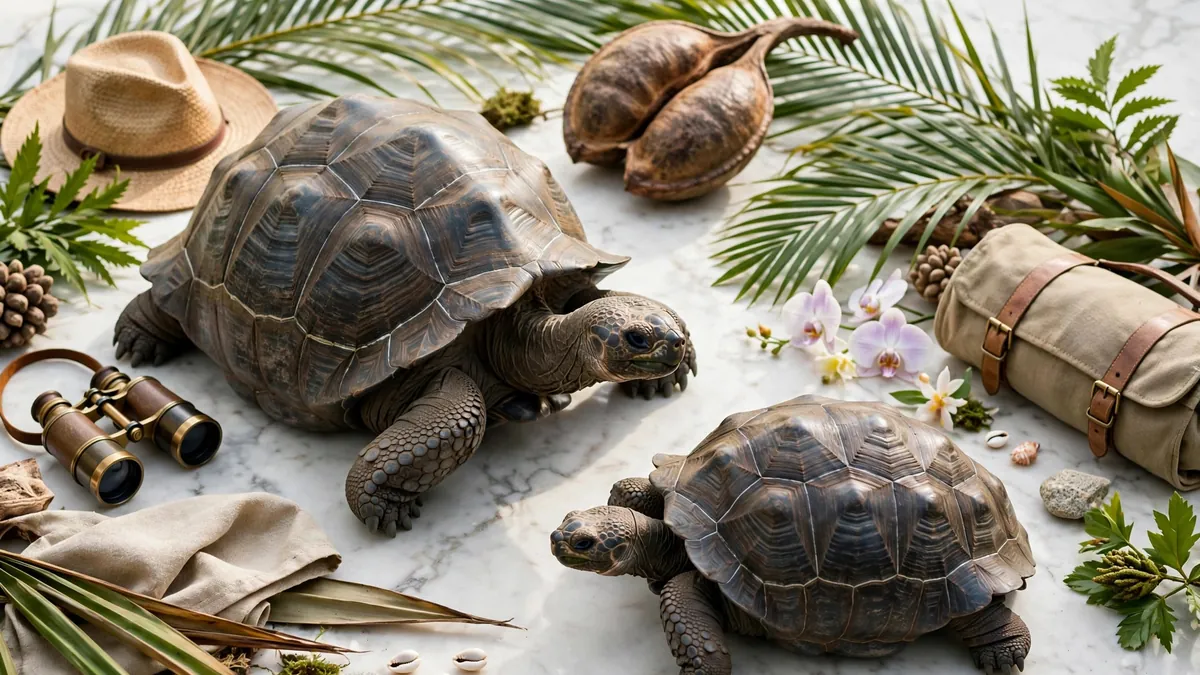
What we like: The most extraordinary wildlife destination in Seychelles, a remote atoll with more than 100,000 giant tortoises, untouched lagoons, and no permanent human settlement. What to consider: Very expensive, only reachable by expedition boat, and trips are limited to a handful of departures a year. Location: Aldabra Atoll, outer islands. Best for: Serious wildlife travellers and once-in-a-lifetime trips. Price range: Very high. Standout feature: The tortoise population, the largest in the world, living entirely wild.
Vallée de Mai Coco de Mer Safari
What we like: A guided walk through a UNESCO-listed palm forest on Praslin, home to the coco de mer and the rare Seychelles black parrot, with a canopy that feels prehistoric. What to consider: The reserve limits daily visitors, so book ahead, and the trails are short, so combine it with a beach or a boat trip. Location: Praslin Island. Best for: First-time visitors and nature lovers. Price range: Mid to high. Standout feature: The coco de mer palms, which grow nowhere else on earth.
Curieuse Island Tortoise and Mangrove Safari
What we like: A short boat ride from Praslin to an island where giant tortoises roam freely, with a mangrove boardwalk, a granite coastline, and a barbecue lunch on the beach. What to consider: It is a popular day trip, so go early or book a private boat, and there is little shade on the beach. Location: Curieuse Island, near Praslin. Best for: Families and anyone who wants to meet a tortoise up close. Price range: Mid. Standout feature: The free-roaming tortoises, which wander the paths and the beach without fences.
La Digue Island Cycling and Beach Safari
What we like: A slow, car-free island best explored by bicycle, with granite boulders at Anse Source d’Argent, a tortoise sanctuary at L’Union Estate, and quiet coves that are hard to reach any other way. What to consider: The island is small and the main beach is busy by midday, so start early and bring sun protection. Location: La Digue Island. Best for: Couples and slow travellers. Price range: Mid. Standout feature: Anse Source d’Argent, one of the most photographed beaches in the world.
Sainte Anne Marine National Park Snorkelling Safari
What we like: A boat trip from Mahé to a protected marine park with clear water, coral gardens, green turtles, and reef sharks, with a glass-bottom boat option for non-swimmers. What to consider: Visibility depends on the sea conditions, and the park is busiest on weekends. Location: Sainte Anne Marine National Park, off Mahé. Best for: Snorkellers and families. Price range: Mid. Standout feature: The green turtles, which are regular visitors to the shallow reefs.
Silhouette Island Rainforest Safari
What we like: A mountainous, little-visited island with cloud forest, endemic birds, and a single luxury lodge, reached by boat from Mahé in under an hour. What to consider: The hiking is steep and the island is quiet, so it suits walkers rather than beach-only travellers. Location: Silhouette Island. Best for: Hikers and travellers who want seclusion. Price range: High. Standout feature: The cloud forest, the most intact mountain forest in Seychelles.
Cousin Island Bird Sanctuary Safari
What we like: A tiny island nature reserve with some of the best birdwatching in the Indian Ocean, including the Seychelles magpie-robin and the white-tailed tropicbird, with a strict daily visitor limit. What to consider: Visits are weekday mornings only, numbers are capped, and the island closes for breeding season. Location: Cousin Island, near Praslin. Best for: Birdwatchers and conservation-minded travellers. Price range: Mid to high. Standout feature: The magpie-robin, brought back from the edge of extinction on this island.
Whale Shark and Manta Ray Safari
What we like: A boat trip from Mahé to swim with whale sharks and manta rays in the open ocean, with experienced guides and a strict code of conduct that keeps the animals safe. What to consider: Whale sharks are seasonal, roughly August to November and March to May, and sightings are never guaranteed. Location: Open water off Mahé. Best for: Confident swimmers and bucket-list travellers. Price range: High. Standout feature: Swimming alongside a whale shark, the largest fish in the ocean.
The most thrilling safari in Seychelles, and the least predictable. Book it as part of a longer trip, so a missed sighting does not define the holiday.
Seychelles Grand Circuit Honeymoon Safari
What we like: A ten-day circuit combining Mahé, Praslin and La Digue, with a private guide, a forest walk, a marine park day, and a tortoise encounter, plus a beachfront lodge on each island. What to consider: The most expensive trip on this list, and it needs booking months ahead. Location: Mahé, Praslin and La Digue. Best for: Honeymoons and once-in-a-lifetime trips. Price range: Very high. Standout feature: The combination, which covers the best of Seychelles in a single, unhurried journey.
The trip to book if you want the whole archipelago in one go. It is not cheap, but it is the most complete Seychelles safari you can take. Our guide to honeymoon destinations explains why a slow, multi-island trip works better than a single resort stay, and Seychelles is the perfect example.
Which Seychelles safari is right for your trip
Start with how much time you have. A single island and a day trip, such as Curieuse or Sainte Anne, suits a short stay or a first visit. Two or three islands with a private guide suits a week, and the grand circuit needs ten days to feel unhurried. Seychelles rewards slow travel, because the best experiences, a tortoise on a quiet path, a black parrot overhead, a turtle on a reef, cannot be rushed.
Then consider what you want to see. Tortoises are easiest on Curieuse and Aldabra, birds are best on Cousin and in Vallée de Mai, and marine life is best in Sainte Anne and on the whale shark trips. If you are travelling with children, Curieuse and Sainte Anne are the gentlest options. If you are a confident swimmer, the whale shark trip is the one to build your dates around. Our guide to luxury safari lodges is a useful companion here, because the lodge you choose shapes the whole trip in Seychelles more than the itinerary alone.
Finally, think about the season. November to April brings calm seas and the best whale shark sightings, but also more rain and higher prices. May to October is drier and better for hiking, but the sea is rougher and whale sharks are scarcer. There is no bad month in Seychelles, only a better month for what you want to do.
The caveats that matter
Seychelles is a wonderful destination, but it is not a cheap one, and it is not a place to plan at the last minute. Flights, lodges, permits and inter-island transfers all cost more than most travellers expect, and the best options sell out months ahead. It is also a fragile environment. Many reserves limit visitors, some islands close for breeding season, and a respectful, low-impact approach is not optional.
| Detail | What is known |
|---|---|
| What a safari means here | Tortoises, rare birds, prehistoric forests and marine life, not Big Five game drives |
| Best months for calm seas | November to April, with the best whale shark sightings in the shoulder months |
| Best months for hiking | May to October, drier and cooler, but the sea is rougher |
| How to travel between islands | Boat or small plane; book transfers in advance, especially to the outer islands |
| Visitor limits | Many reserves cap daily numbers; Cousin Island is weekday mornings only |
| Health and safety | Use reef-safe sunscreen, drink bottled water, and take malaria advice for outer-island trips |
| What to budget for | Flights, lodges, permits, guides and transfers are all priced at a premium |
| What it does not offer | No lions, elephants or savanna game drives; this is an island wildlife destination |
If you are travelling to the outer islands, check health advice before you go, carry sun protection and insect repellent, and respect the reserve rules. A tortoise may look slow and unbothered, but it is a wild animal, and a nesting beach is not a place to wander after dark.
Checklist: planning a Seychelles safari honestly
Use these checks before you book, and again before you travel.
- Choose your islands first: Mahé, Praslin and La Digue for a first trip, the outer islands for a return visit.
- Book a private guide: they know where the wildlife is, when the tide is right, and how to keep the trip quiet.
- Book early: the best lodges, Aldabra departures and Cousin Island permits sell out months ahead.
- Match the season to your goal: calm seas and whale sharks from November to April, dry hiking from May to October.
- Pack for the islands: reef-safe sunscreen, a light rain jacket, good walking shoes, and a dry bag for boat trips.
- Respect the reserves: keep your distance from wildlife, stay on the trails, and follow the guide’s rules.
Frequently asked questions
Can I see the Big Five in Seychelles?
No. Seychelles has no lions, elephants, rhinos, leopards or buffalo. A safari here is about giant tortoises, rare birds, prehistoric forests and marine life, which is a different kind of wildlife experience, and for many travellers a more surprising one.
How many islands should I visit?
Two or three is ideal for a first trip of a week to ten days. Mahé, Praslin and La Digue cover the main sights, while an outer island such as Silhouette or Cousin adds something genuinely different. More than three islands in a week feels rushed.
When is the best time to see whale sharks?
Whale sharks are most often seen between August and November and again between March and May, when plankton blooms bring them close to Mahé. Sightings are never guaranteed, so build the trip around other experiences and treat a whale shark as a bonus.
Is Seychelles safe for families with children?
Yes, and it is one of the best island destinations for families. Curieuse Island and Sainte Anne Marine National Park are gentle, the tortoises are a hit with children, and the islands are small and easy to navigate. Choose a lodge with a beach and a pool, and keep boat trips short for younger children.
Do I need a visa to visit Seychelles?
Most nationalities do not need a visa in advance, but you do need a valid passport, a return ticket, proof of accommodation, and enough funds for your stay. Check the current entry requirements before you travel, because rules change.
How much does a luxury safari in Seychelles cost?
It is one of the most expensive safari destinations, with high prices for flights, lodges, guides and transfers. A week for two people, including a private guide and two or three islands, is a significant trip cost, and Aldabra is considerably more. Book early, and be honest about your budget before you commit.
The bottom line
The best luxury safari in Seychelles in 2027 is not the one with the most islands or the highest price. It is the one that matches how you like to travel, with a private guide, a small group, and enough time to let the islands set the pace. For a first trip, Vallée de Mai, Curieuse and Sainte Anne cover the essentials. For a once-in-a-lifetime trip, Aldabra is unmatched.
Choose two or three islands, book early, and go with an open mind. Seychelles will not give you a lion on a savanna, but it will give you a tortoise older than your grandparents, a forest that feels prehistoric, and a reef full of life, and that is a safari worth taking.