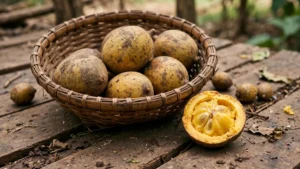
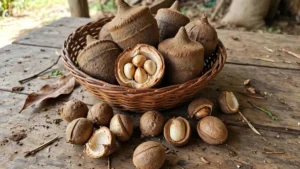
Sapucaia is the nut you hear before you see. The pod is a woody capsule, heavy as a small melon, and when it ripens a round lid works loose and drops to the forest floor with a dull knock. Inside sit a dozen or so kernels, pale and plump, waiting to be roasted over a low fire. Lecythis pisonis grows tall through the Amazon basin, and its nuts have fed river families for generations.
A farm retreat built around sapucaia is a slower kind of stay. There is no orchard in neat rows here. The trees stand in old forest and in mixed plantings near river towns, and the harvest is a walk, not a pick. You go out in the morning with a guide, listen for pods on the ground, crack them open at a wooden bench, and eat the kernels warm from the pan. It suits travellers who like their luxury quiet: a clean room, a good cook, and a forest that entertains.
Below are nine stays worth considering in 2027, from a riverbank lodge outside Belém to a grove house near Araguaína. Each one is judged on how it handles the nut, how it feeds you, and how honestly it prices the trip.
Key takeaways
- Sapucaia is the roasted kernel of Lecythis pisonis, an Amazon tree whose woody pods open with a lid when ripe.
- The best visits fall in the dry months, when pods drop and the forest paths stay walkable.
- A good farm shows you the cracking and roasting, not just the finished bowl on the table.
- Book the river or road lift with the room, because the last stretch to most farms is the hardest part of the trip.
- Sapucaia kernels contain no wheat, but shared farm kitchens handle flour, so tell the farm about gluten before you book.
What a sapucaia farm retreat actually is
A sapucaia farm retreat is a small lodge or farmhouse stay where the nut is the reason for the visit, not a garnish. The farm keeps sapucaia trees on its land, harvests the pods in season, and builds the day around them: a morning walk to gather fallen pods, a demonstration of cracking and roasting, and a meal that uses the kernels in more than one dish. The rest of the stay is river swimming, forest trails, and food cooked from what the farm grows.
The tree itself is worth understanding before you go. Lecythis pisonis can reach thirty metres, with a straight trunk and a wide crown, and its fruit is the famous monkey pot: a thick-walled woody capsule with a fitted lid. When the fruit ripens, the lid loosens and the seeds fall out, which is why harvesters walk beneath the trees rather than climbing. The kernel inside is rich and buttery, almost always eaten roasted, salted lightly, or ground into sauces.
Sapucaia is not the same as a Brazil nut, and a farm that confuses the two is a farm to avoid. Brazil nuts come from Bertholletia excelsa, a different tree with a different pod, and the kernels are larger and flatter. Sapucaia kernels are smaller, rounder, and softer when roasted. Asking the farm which tree you are walking to is a quick test of whether the place knows its own forest.
How we picked these stays, and what to ask first
We looked for farms that grow sapucaia on their own land, harvest it themselves, and put the nut into the food rather than into a gift shop bag. A lodge that buys kernels in town and serves them at breakfast is not a farm retreat. We also weighed the basics: a clean bed, a cook who can handle a nut allergy question without guessing, and a price that covers the lifts, the walks, and the meals.

Before you pay, ask four things. First, how many sapucaia trees stand on the farm, and will the harvest walk reach them. Second, who cracks and roasts the nuts, and whether guests join in or only watch. Third, what the price covers, down to the boat or car from the nearest town. Fourth, how the kitchen handles allergies and gluten, because the kernels are wheat-free but the bread and shared pans may not be.
A farm that answers all four without hedging is usually worth the money. A farm that waves the questions away will wave away other things too, like the lift that never arrives or the walk that turns out to be a ten-minute stroll to a single tree. The nine stays below passed those questions, and each one lists its price range, style, and standout feature so you can compare them on something firmer than photographs.
The 9 best luxury sapucaia farm retreats of 2027
Belém Riverbank Sapucaia Lodge
What we like: A short boat ride from Belém, a grove of old sapucaia trees along the bank, and a cook who roasts the kernels in a clay oven and folds them into a rich fish stew. What to consider: The river mist keeps mornings damp, and the lodge fills fast on weekends. Best For: First-time Amazon visitors who want the forest without a long journey. Style: Riverbank timber lodge with open verandas. Price Range: $95–$140 per night. Standout Feature: Clay-oven roasted sapucaia served at the evening table.
The harvest walk here is gentle, along flat ground under the trees, and the guide cracks the first pod for you at a bench by the water.
Manaus Forest Edge Sapucaia House
What we like: A working farm on the edge of the forest outside Manaus, with a large sapucaia stand, a smokehouse for the kernels, and rooms that stay cool through the afternoon. What to consider: The road from the city can take two hours in the rain, and the house keeps a strict check-in window. Best For: Travellers who want a real working farm, not a resort with a nut theme. Style: Low white farmhouse with a wide shaded porch. Price Range: $80–$125 per night. Standout Feature: Smoked sapucaia kernels sold by weight at the farm gate.
The farm roasts in small batches, so the kernels you taste at lunch were in the pod that morning.
Santarém Tapajós Sapucaia Retreat
What we like: A quiet retreat where the Tapajós meets the Amazon, with sapucaia trees scattered through the garden, a long sandy beach nearby, and a host who knows every tree by its fruiting year. What to consider: The beach road is rough after rain, and the retreat runs only a handful of rooms. Best For: Couples who want river swimming and slow mornings. Style: Garden retreat with hammocks and a thatched dining shelter. Price Range: $110–$165 per night. Standout Feature: Garden sapucaia trees you can harvest from your own doorway.
The trees grow in the garden rather than deep in the forest, so the harvest is unhurried and you can gather pods after breakfast.
Macapá Equator Sapucaia Farm
What we like: A farm straddling the equator line, with a young sapucaia planting, a nut-cracking workshop, and a kitchen that grinds roasted kernels into a thick sauce for grilled chicken. What to consider: The planting is young, so the harvest is smaller than at older farms, and the town is a fair drive away. Best For: Curious cooks who want to learn the roasting and grinding hands-on. Style: Bright farmhouse with an outdoor cooking yard. Price Range: $70–$105 per night. Standout Feature: A cracking and grinding workshop included in the stay.
The workshop is the reason to come: you leave knowing how to open a pod and roast the kernels evenly.
Boa Vista Savanna Sapucaia Stay
What we like: A savanna-edge stay where sapucaia grows beside open grassland, with wide skies, a small herd of cattle, and a dining room that serves the kernels with roast beef and manioc. What to consider: The landscape is drier and more open than the deep Amazon, and the nearest forest walk is a drive away. Best For: Travellers who prefer open country to dense forest. Style: Ranch-style stay with a long dining table and a fire pit. Price Range: $85–$130 per night. Standout Feature: Sapucaia kernels served with slow-roasted beef from the farm.
The contrast is the point: savanna light, a cooler evening, and a nut that tastes richer against the smoky beef.
Porto Velho Madeira Sapucaia Lodge
What we like: A lodge on the Madeira river with a mature sapucaia grove, a riverside deck for evening drinks, and a guide who collects pods by canoe. What to consider: The river rises fast in the wet season, and the lodge may close its lowest rooms for a few weeks. Best For: River lovers who want to arrive by boat. Style: Stilted river lodge with a broad deck. Price Range: $100–$150 per night. Standout Feature: Pod gathering by canoe along the flooded grove edge.
Arriving by canoe, with the grove rising out of the water on either side, is the most memorable entrance on this list.
Rio Branco Acre Sapucaia Farmhouse
What we like: A family farmhouse in Acre with deep-forest sapucaia, a wood-fired kitchen, and a host family that has harvested the same trees for three generations. What to consider: The house is simple, the road is long, and English is limited. Best For: Travellers who want the most traditional harvest on this list. Style: Family farmhouse with shared meals at one table. Price Range: $65–$95 per night. Standout Feature: Three generations of harvest knowledge at the same table.
This is the stay for people who want the forest rather than the frills: plain rooms, generous food, and stories at dinner.
Palmas Tocantins Sapucaia Retreat
What we like: A modern retreat near Palmas, with a planted sapucaia grove, a pool, a small spa, and a menu that pairs the kernels with local fruit and honey. What to consider: The grove is planted rather than wild, and the retreat feels more polished than rustic. Best For: Travellers who want comfort first and the harvest second. Style: Modern retreat with a pool and garden rooms. Price Range: $130–$190 per night. Standout Feature: Sapucaia and honey desserts made in the retreat kitchen.
If you want a soft bed, a long swim, and a dessert that shows off the nut, this is your stay.
Araguaína Sapucaia Grove House
What we like: A grove house surrounded by old sapucaia trees, with a cracking bench under a mango tree, a slow breakfast of fruit and warm bread, and a host who presses the kernels for oil. What to consider: The town is small, the house has only four rooms, and the oil pressing runs only in season. Best For: Small groups who want a quiet grove and a hands-on host. Style: Grove house with a shaded cracking yard. Price Range: $75–$115 per night. Standout Feature: Cold-pressed sapucaia oil made on the farm.
The oil is the surprise here: golden, nutty, and pressed in small amounts while you watch.
Which sapucaia region fits your trip
Belém and Manaus suit first-timers, with easy flights and short harvest walks. Santarém and Macapá suit travellers who want water with their forest: big rivers, beaches, and a slower pace. Porto Velho and Rio Branco suit the committed: longer roads, deeper forest, and the most traditional harvests.
Boa Vista, Palmas, and Araguaína sit on the drier edge of the sapucaia range, where the land opens into savanna and planted groves. These are the stays to pick if dense jungle feels too much, or if you want a pool and a proper bed after the walk. The nut is the same, but the light, the food, and the pace are different, as the canistel farm retreats in another forest show.
If you like this kind of farm stay, the mamey sapote farm retreats follow the same pattern in a different forest, with a large brown fruit and salmon-orange flesh. The questions to ask are identical; only the tree changes.
The caveats that matter
Sapucaia is a tree nut, and that is the first thing to respect. Anyone with a nut allergy should tell the farm before booking and ask how the kitchen separates its pans, boards, and oils. The kernels are roasted, which makes them easier to eat than raw nuts, but roasting does not remove the allergy risk.
| Detail | What is known |
|---|---|
| Tree | Lecythis pisonis, a tall Amazon tree with woody monkey-pot pods |
| The nut | Small round kernels inside a lidded pod, eaten roasted |
| Best season | Dry months, when pods drop and forest paths stay walkable |
| Not the same as | Brazil nut, from Bertholletia excelsa, a different tree and pod |
| Allergy note | A tree nut, so tell the farm about nut allergies before booking |
| Gluten note | Kernels have no wheat, but shared kitchens handle flour |
| What to ask first | How many trees, who roasts, what the price covers, how lifts work |
| What it does not do | It does not replace a guided forest trip, and pods fall only in season |
The season is the second thing to respect. Sapucaia pods fall when they are ready, not when your holiday starts, and a farm that promises a full harvest in the wettest weeks is promising something it cannot control. Ask what the farm does when the pods are scarce: a good one shifts the day to the forest, the river, and the kitchen, and still gives you a stay worth the fare.
Checklist: booking a sapucaia farm stay honestly
Use these checks before you pay, and again the week before you travel.
- Check the trees: ask how many sapucaia trees stand on the farm and whether the harvest walk reaches them.
- Check the season: confirm pods are falling on your dates, and ask what the farm does if they are scarce.
- Check the price: get the bed, meals, walks, and lifts in writing, with no extra charges at checkout.
- Check the kitchen: tell the farm about nut allergies and gluten before you book, not on arrival.
- Check the lift: confirm the boat or car from the nearest town, including the return, before you fly.
- Check the room: ask about fans or air conditioning, mosquito screens, and hot water, because farmhouses vary widely.
Frequently asked questions
What does a sapucaia nut taste like?
Roasted sapucaia is buttery and rich, somewhere between a Brazil nut and a macadamia, with a softer bite than either. It is usually eaten salted, folded into sauces, or ground into desserts.
When is the best time to visit a sapucaia farm?
The dry months are best, when pods drop freely and the forest paths stay firm underfoot. The exact weeks shift with the rains each year, so ask the farm what the ground looks like on your dates rather than trusting a fixed calendar.
Is sapucaia the same as a Brazil nut?
No. Sapucaia comes from Lecythis pisonis and Brazil nuts from Bertholletia excelsa. The trees, pods, and kernels are all different, and a farm that knows its forest will tell you so without hesitation.
Can I eat sapucaia raw?
The kernels are almost always eaten roasted. Roasting brings out the flavour and makes them easier to eat, and every farm on this list roasts its own harvest. Ask the farm to show you the roasting rather than serving the nuts cold from a jar.
Are sapucaia farm retreats suitable for children?
Older children usually love the harvest walk and the cracking bench, but the pods are heavy and the forest paths are uneven. Ask the farm about the walk length and the ground before bringing young children, and keep them close to the guide.
How do I get to a sapucaia farm?
Most farms sit a boat ride or a long drive from the nearest town, which is why the lift matters more than the room. Our pequi farm retreats make the same point, because the last stretch is where most Amazon trips go wrong.
The bottom line
The best sapucaia farm retreat in 2027 is not the grandest lodge or the cheapest room. It is the farm with real trees on its own land, a harvest you can join, a kitchen that roasts its own kernels, and a price that covers the whole trip. Belém and Manaus make the easiest first visit, while Rio Branco and Porto Velho reward travellers who want the deepest forest.
Pick your river town first, ask the four questions before you pay, and book the lift with the room. Do that, and the nut will take care of the rest: a morning walk, a warm bowl of roasted kernels, and a forest that sounds different once you know what is falling from the trees.