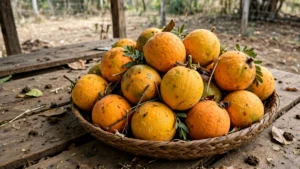
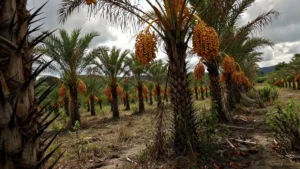
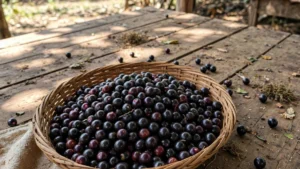
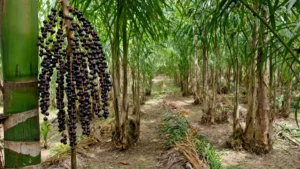
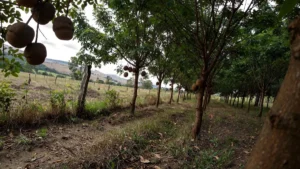
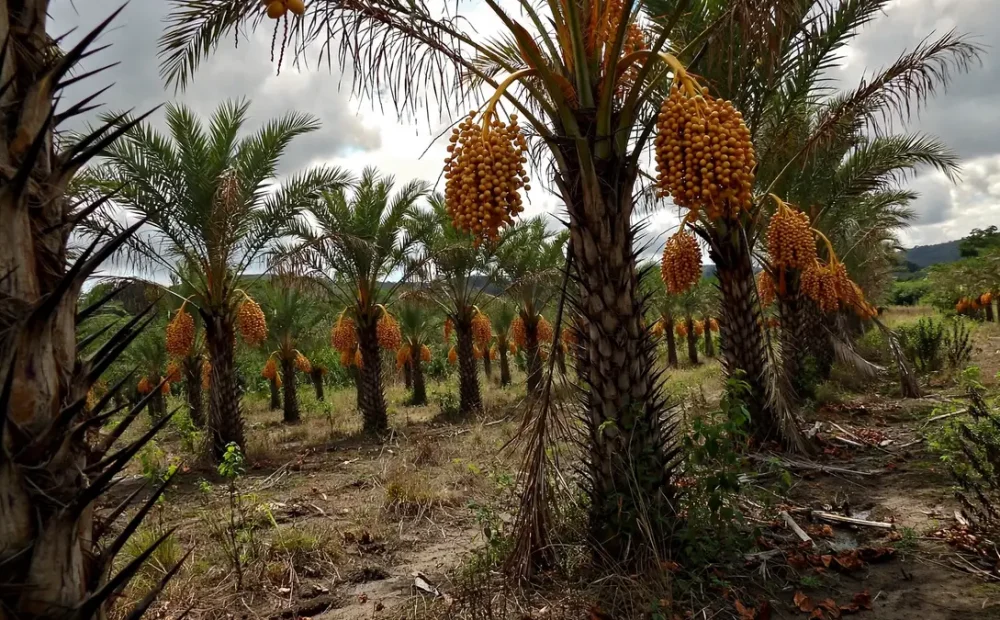
A sapucaia farm escape is a holiday built around a single tree. Lecythis pisonis grows tall through the Amazon, and its fruit is a woody capsule with a lid that pops off when ripe, spilling round kernels onto the forest floor. The trip is a slow one: a flight to a river town, a boat or a long drive to the farm, mornings spent gathering pods, and evenings eating kernels roasted over a low fire. It is not a resort holiday, and it is better for it.
Planning matters more than packing. The farms are small, the pods fall on the tree’s schedule rather than yours, and the last stretch of the journey is often a river crossing or a dirt road that a taxi will not take. Get the season right, get the lift in writing, and tell the kitchen about allergies before you arrive, and the rest of the trip falls into place.
This guide walks through the nine steps that turn a vague idea into a booked trip, from choosing your river town to leaving a free morning for the journey home. Follow them in order, and you will arrive at a farm that knows you are coming, with pods on the ground and a pan on the fire.
Key takeaways
- Sapucaia is the roasted kernel of Lecythis pisonis, an Amazon tree whose lidded pods drop their nuts when ripe.
- Choose the river town first, because the town decides the flight, the lift, and the farms within reach.
- Match your dates to the dry season, when pods fall and the paths stay firm.
- Settle the full price in writing before you pay, including meals, walks, and the lift in both directions.
- The kernels are naturally free of wheat, but farm kitchens share pans and flour, so flag gluten when you book.
What a sapucaia farm escape actually is
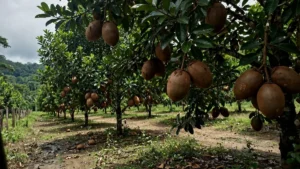
A sapucaia farm escape is a short stay at a working farm where the nut sets the rhythm of the day. You sleep in a farmhouse room or a small lodge, eat at a shared table, and spend the mornings in the grove, gathering fallen pods, cracking them at a bench, and roasting the kernels. The afternoons are for the river, the forest trails, or a hammock, depending on the farm and the weather.
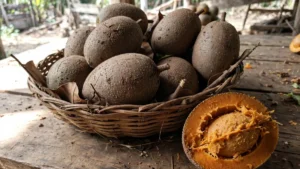
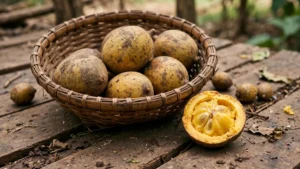
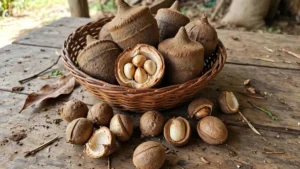
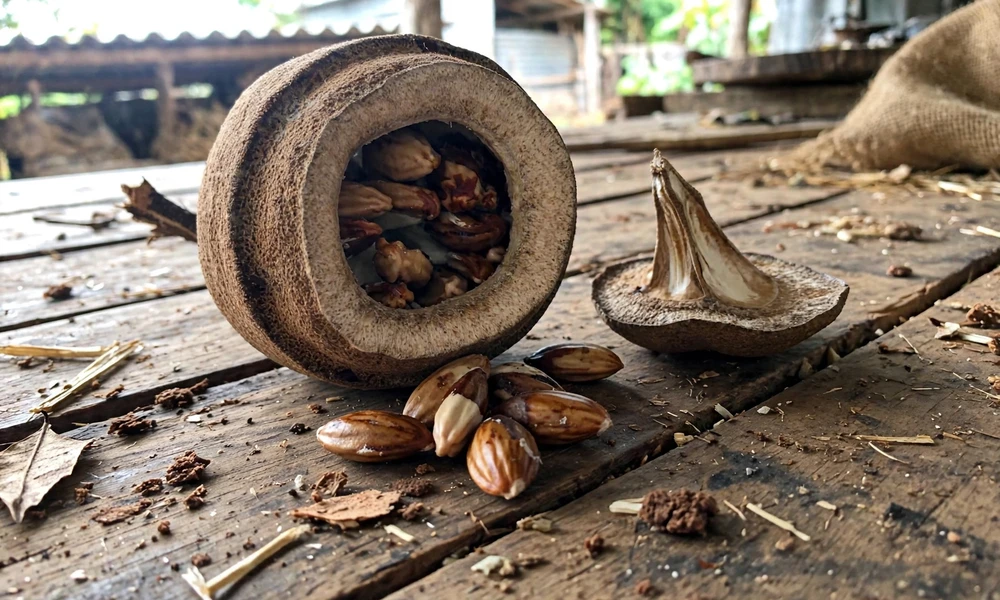
The tree is the star, and it deserves a proper introduction. Lecythis pisonis rises through the canopy with a straight trunk and a broad crown, and its fruit is known as the monkey pot: a thick-walled woody capsule with a fitted lid. When the fruit ripens, the lid loosens and the seeds tumble out, so harvesters walk the ground beneath the trees and listen for the knock of pods landing. The kernel is rich and buttery, and it is eaten roasted, salted, or ground into sauces and desserts.
Do not confuse sapucaia with a Brazil nut. The Brazil nut comes from Bertholletia excelsa, a different tree with a different pod, and its kernels are bigger and flatter. Sapucaia kernels are smaller and rounder, with a softer bite when roasted. A farm that can explain the difference in a sentence is a farm that knows its forest, and that is the first sign you are in good hands.
How to plan the trip, and what to ask first
Begin with the town, because the town sets the terms of the whole journey. Belém and Manaus have the easiest flights and the most farms within a short boat ride, which makes them the safest choice for a first trip. Santarém and Macapá add big rivers and beaches, while Porto Velho and Rio Branco sit deeper in the forest and suit travellers who have been to the Amazon before. Palmas, Boa Vista, and Araguaína sit on the drier edge, with open skies and planted groves.
Once you have a town, write to two or three farms and ask the same questions of each. How many sapucaia trees stand on the land, and does the harvest walk reach them? Who cracks and roasts the nuts, and do guests take part? What does the price cover, from the bed to the boat? How does the kitchen handle nut allergies and gluten? The answers will tell you more than any photograph, and the farm that answers plainly and quickly is usually the one that runs the smoothest stay.
Our pequi farm escape guide follows the same order of decisions, because the Amazon rewards travellers who plan the journey before they fall in love with the destination. The tree changes; the discipline does not.
The 9 steps to a sapucaia farm escape
Choose your river town before you choose the farm
The town decides everything downstream: the flight, the lift, the language, and the farms you can reach in a day. Belém suits travellers who want a short boat ride and a gentle first forest walk. Manaus suits those who want a working farm with a proper harvest. Rio Branco suits those who have done this before and want the deepest trees. Pick the town that matches your nerve, then look for farms within an easy lift of it, not the prettiest lodge on the far side of the map.
Match your dates to the pod season
Sapucaia pods fall in the dry months, when the ground is firm and the forest paths stay walkable. The exact weeks shift with the rains, so write to the farm and ask what the ground looks like on your dates. A farm that tells you honestly that the pods are thin that week is a farm you can trust; one that promises a full harvest in the wettest month is selling a photograph, not a trip.
Ask how the nuts are cracked and roasted
The harvest is the heart of the trip, so ask how it actually happens. Does the farm crack the pods at a bench with guests, or does the kitchen do it out of sight? Is the roasting done in small batches over a low fire, or bought in by the bag? A farm that invites you to the bench and lets you taste the kernels warm from the pan is giving you the real experience. A farm that only serves them at breakfast is giving you a garnish. Ask, too, whether the cracking bench sits in the shade, because a hot bench and a heavy pod make for tired hands, and a good farm thinks about that before you arrive.
Settle the full price in writing
Ask for the price that covers the bed, the meals, the walks, and the lift, and get it in writing before you pay. Farm stays have a habit of adding the boat, the guide, and the tasting one by one at checkout, and the bill can double between booking and departure. A single written figure, with the return lift included, is the only price worth comparing. If the farm will not put it in writing, keep looking.
Book the lift before you book the room
The hardest part of an Amazon farm trip is the last stretch: a boat from the town jetty, a long drive on a dirt road, or a canoe along a flooded grove edge. Confirm the lift, the meeting point, and the time before you pay for the room, because a farm without a lift is a farm you cannot reach. Book the return at the same time, and leave a spare hour at the end, because river timetables bend with the weather.
Pack for mud, rain, and dawn starts
The harvest starts early, before the heat, and the ground is often damp even in the dry season. Pack closed shoes with grip, a light rain jacket, long sleeves for the trails, and a small bag for the pods you collect. Leave the white clothes at home and bring a torch for the walk back after dinner, because farm paths are dark and the stars are the only lighting.
Plan one full day around the harvest
Give the harvest a whole day, not a spare hour between other plans. The morning walk, the cracking, the roasting, and the meal that follows take the better part of a day, and rushing them turns the best part of the trip into a photo stop. Keep the afternoon free too, because the guide will often suggest a river swim or a trail once the nuts are in, and those unplanned hours are usually the ones you remember.
Taste the kernel three ways before you buy a bag
Before you buy kernels to take home, taste them roasted and salted, ground into a sauce, and folded into a dessert. The same nut changes character in each form, and the one you love roasted may not be the one you want in a sweet dish. Buy only what you have tasted, and ask the farm how to store the bag, because roasted kernels keep best in a sealed jar away from heat and damp.
Leave a morning free for the return journey
Do not book a tight connection on the day you leave. River boats run late, dirt roads flood after a night of rain, and the farm may need an extra hour to get you to town. Keep the morning after your last night free, and book the flight for the afternoon. The extra hours cost nothing and save the trip from ending in a rush.
Which sapucaia region fits your trip
Belém and Manaus are the easy choices, with short lifts and farms used to first-time visitors. Santarém and Macapá add water and beaches to the forest, which suits travellers who want to swim as much as they want to walk. Porto Velho and Rio Branco are the deep choices, with longer roads and the most traditional harvests, and they suit travellers who have been to the Amazon before.
Boa Vista, Palmas, and Araguaína offer a different flavour: open savanna, planted groves, and a drier light. The nut is the same, but the landscape is wider and the stays are often more comfortable, with pools and proper beds. If dense jungle feels like too much, or if you want a gentle first trip, start on the dry edge and save the deep forest for next time. The drive to these towns is usually shorter too, which leaves more of the holiday for the farm itself rather than the road.
The mamey sapote farm escape guide makes the same point about regions, because every Amazon fruit has a corner where it grows best and a corner where the journey is easiest. Choose the corner that fits your trip, not the one that looks best in a photograph.
The caveats that matter
Sapucaia is a tree nut, and the allergy question comes first. Tell the farm about any nut allergy before you book, and ask how the kitchen separates its pans, boards, and oils. Roasting makes the kernels easier to eat, but it does not remove the allergy risk, and a farm that treats the question as a nuisance is a farm to avoid. The same care applies to gluten: the kernels contain no wheat, but the bread, sauces, and shared pans in a farm kitchen may, so flag it when you book rather than at the table.
| Detail | What is known |
|---|---|
| Tree | Lecythis pisonis, a tall Amazon tree with woody monkey-pot pods |
| The nut | Small round kernels inside a lidded pod, eaten roasted |
| Best season | Dry months, when pods drop and forest paths stay walkable |
| Not the same as | Brazil nut, from Bertholletia excelsa, a different tree and pod |
| Allergy note | A tree nut, so tell the farm about nut allergies before booking |
| Gluten note | Kernels have no wheat, but shared kitchens handle flour |
| Plan in order | Town first, then season, then price, then lift, then room |
| What it does not do | It does not guarantee pods in the wet season, or a tight connection home |
The season is the second caveat, and it is the one that catches the most travellers. Pods fall when the tree is ready, and no farm can hurry them. If the farm tells you the harvest is thin on your dates, believe it, and ask what the trip looks like without a full harvest. A good farm will shift the day to the forest, the river, and the kitchen, and still give you a trip worth the fare. A farm that promises everything in every season is promising something it cannot deliver.
Checklist: planning a sapucaia farm escape honestly
Use these checks while you plan, and again the week before you travel.
- Pick the town first: choose the river town that matches your experience, then look for farms nearby.
- Confirm the season: ask the farm whether pods are falling on your dates, and what happens if they are thin.
- Get the price in writing: bed, meals, walks, and lifts both ways, with no extras at checkout.
- Book the lift early: confirm the boat or car from town, including the return, before you pay for the room.
- Flag allergies and gluten: tell the farm about nut allergies and wheat before you book, not on arrival.
- Pack for the forest: closed shoes, a rain jacket, long sleeves, and a torch for the walk back after dinner.
Frequently asked questions
How many nights should I stay at a sapucaia farm?
Three nights is the sweet spot: one day to arrive and settle, one full day for the harvest, and one day for the river or the forest. Two nights works if the lift is short, but a single night leaves no room for a late boat or a slow morning.
Do I need a guide for the harvest walk?
Yes. The forest paths are uneven, the pods are heavy, and the trees are not always where a visitor expects them. A guide keeps you on the path, shows you which pods are ripe, and cracks the first one for you. Our canistel farm escape guide makes the same point, because a good guide is what turns a walk into a harvest.
What should I wear on a sapucaia farm?
Closed shoes with grip, long sleeves, and a light rain jacket. The mornings are damp, the paths are muddy even in the dry season, and the sun is strong by midday. Leave anything white or delicate at home.
Can I buy sapucaia kernels to take home?
Most farms sell roasted kernels by weight, and a few press oil in season. Taste before you buy, ask how to store the bag, and keep it sealed and cool on the journey home. The oil, where it exists, is pressed in tiny amounts and sells out most years, so ask about it early in your stay rather than on the last morning. Check the customs rules for your destination before you pack food in your luggage, because a bag of nuts in a suitcase can cause a delay at the border.
Is the trip suitable for children?
Older children usually love the harvest walk and the cracking bench, but the pods are heavy and the paths are uneven. Ask the farm about the walk length and the ground before bringing young children, and keep them with the guide at all times.
What if the rain never lets up all week?
Rain is part of the Amazon, and a good farm plans for it. The harvest walk may shorten, the roasting moves under cover, and the day shifts to the river, the kitchen, and the forest canopy. Ask the farm what a wet week looks like before you book, so the rain feels like part of the trip rather than a ruined one.
The bottom line
A sapucaia farm escape rewards travellers who plan in the right order: town first, then season, then price, then lift, then room. Get those five right, and the rest of the trip takes care of itself: a morning walk under tall trees, a pan of warm roasted kernels, and a forest that sounds different once you know what is falling from it.
Book three nights, give the harvest a full day, and leave a free morning for the journey home. The nut is the reason for the trip, but the slow days around it are what you will remember.