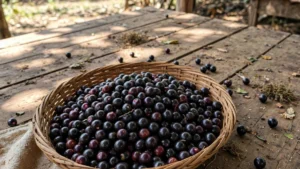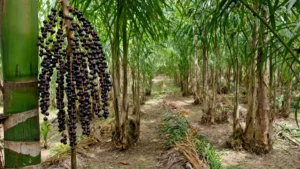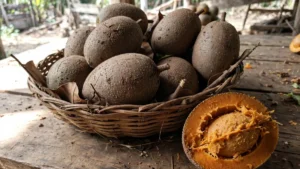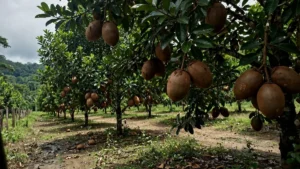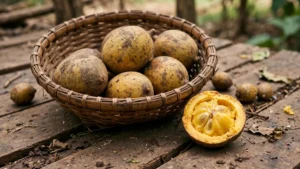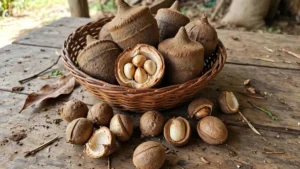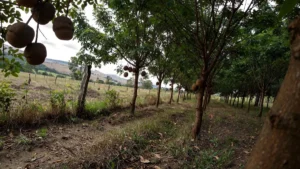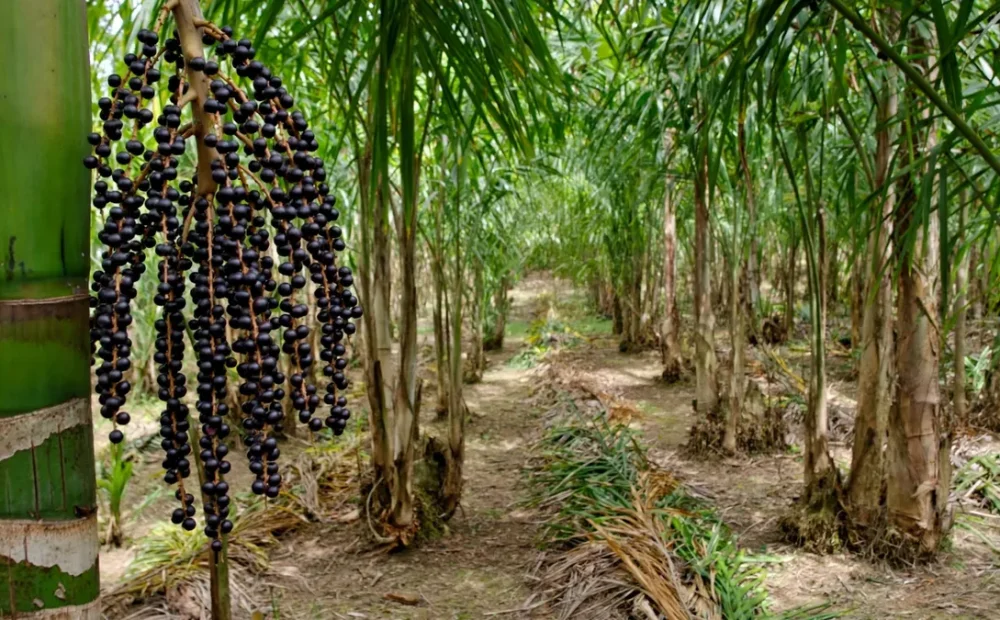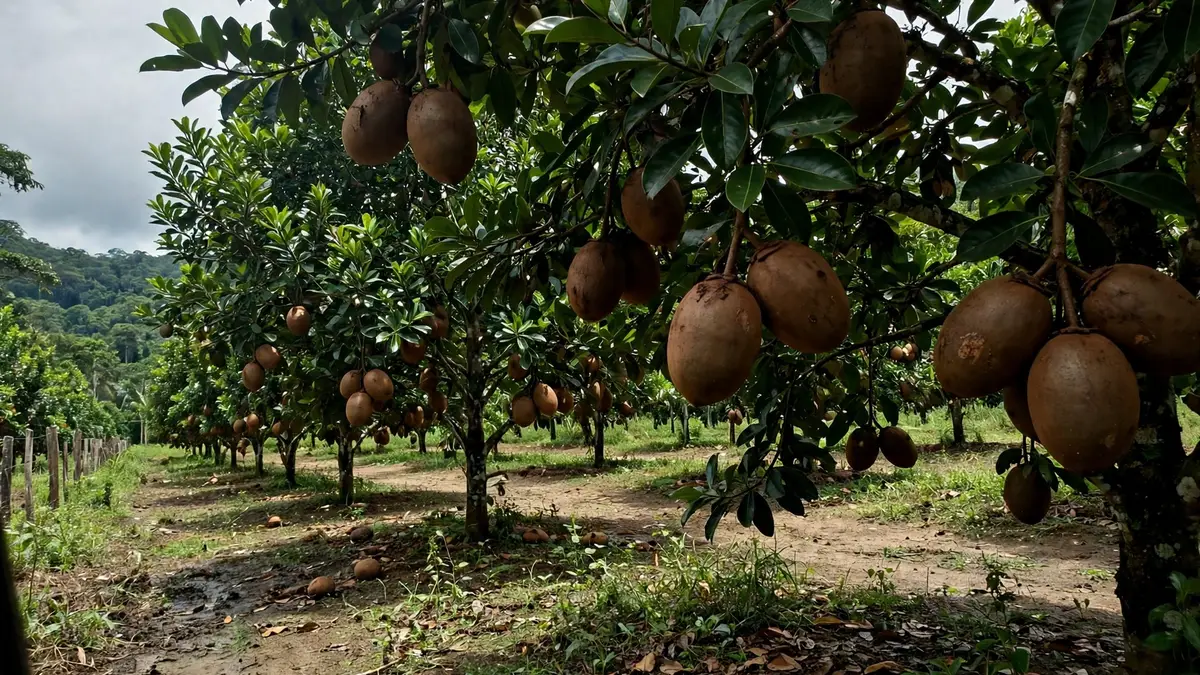

Pajurá is not a fruit most travellers have heard of, and that is exactly why a pajurá farm stay feels different from the usual Amazon trip. The fruit is Couepia bracteosa, a large brown fruit that grows on tall trees across the Brazilian Amazon, and its sweet pulp is eaten fresh from the shell, usually within hours of picking. There is no export trade, no supermarket version, and no resort built around it. The farms that grow it are working family farms, and a visit means walking the orchard with the people who planted it.
A luxury pajurá retreat is not a five-star hotel with a fruit theme. It is a small, well-run farm stay with comfortable rooms, good food cooked on the farm, and a host who knows every tree. The luxury is in the quiet, the space, and the attention: a hammock on a shaded veranda, a river swim at dusk, a table set with dishes from what the farm grew that day. You will not find a spa menu or a concierge desk, but you will find someone who can tell you which tree fruited first this season.
Below are nine pajurá farm retreats worth considering in 2027, across nine Amazon towns from Belém to Rio Branco. Each one is described by what it does well, what to be careful about, and who will enjoy it most.
Key takeaways
- Pajurá is Couepia bracteosa, a large brown Amazon fruit with sweet pulp, eaten fresh on the farm, and distinct from bacuri, a different species.
- The best pajurá stays are small family farms with comfortable rooms and home cooking, not resorts, and the fruit season runs December to April.
- Ask before you book whether pajurá will be in fruit on your dates, and what the farm serves instead if the season shifts.
- Plan for river travel, rain, and early mornings, and bring cash, insect cover, and mud-proof shoes.
- Tell the farm about wheat or gluten before you arrive, because meals come from a shared kitchen and menus are set the day before.
What a pajurá farm retreat actually is
A pajurá farm retreat is a working farm in the Amazon that opens a few rooms to guests and builds the stay around its orchard. The pajurá tree is tall and broad, and its fruit is large, brown, and heavy, with a thick shell and soft, sweet pulp. The fruit does not travel well, which is why it is almost unknown outside the region, and why the only way to taste it properly is to stand under the tree. A retreat stay is organised around that fact: you walk the orchard in the morning, the host picks what is ripe, and the fruit is served at lunch, in juice, or as a dessert.
Most of these farms sit an hour or two by boat or dirt road from the nearest town, and the day is shaped by the river and the rain. Mornings start early, the middle of the day is slow, with a long lunch and a hammock, and evenings are for cooking, stories, and a dark sky full of stars. Rooms are simple and clean: a bed with a mosquito net, a fan, a private bathroom, and a veranda. A few farms have air conditioning and hot water.
How we picked these stays, and what to ask first
We looked for farms that grow pajurá themselves, not farms that buy fruit in town and call it a harvest experience. A real pajurá farm has mature trees, a harvest calendar, and a host who can show you a ripe fruit beside one that needs another week. We also looked for stays that publish a price before you pay and include meals and orchard walks in the rate.

Ask three things before you book. First, will pajurá be in fruit on your dates, and what does the farm serve when it is not? Second, what is included in the price, and what costs extra, including boat transfers, laundry, and drinks? Third, how does the farm handle food allergies and gluten, because the kitchen cooks one menu for everyone and needs a day of notice to change it. If the answers come back quickly and in writing, the farm runs its guest business properly. Our guide to the best luxury bacuri farm retreats follows the same approach.
The 9 best luxury pajurá farm retreats of 2027
Belém — Riverside Orchard House
What we like: The easiest pajurá stay to reach, a forty-minute boat ride from Belém, with mature trees, a shaded veranda over the river, and pajurá ice cream from the morning pick. What to consider: It is the busiest farm on this list, and weekends can feel full. Best For: First-time Amazon visitors who want a gentle start. Style: Riverside family farm. Price Range: $95–$140 per night. Standout Feature: Pajurá ice cream made the same morning it is served.
Belém is the natural gateway to the Amazon, and this farm uses that well, with a driver and boat arranged from the city and a host who meets you at the dock.
Manaus — Blackwater Canopy Lodge
What we like: A larger farm on a blackwater tributary, with tall pajurá trees, dawn canoe trips, and rooms built on stilts above the flood line. What to consider: The price is the highest in this list, and the boat transfer adds to it. Best For: Travellers who want comfort and river wildlife in one stay. Style: Stilt lodge on a blackwater creek. Price Range: $180–$260 per night. Standout Feature: Dawn canoe trips past pink river dolphins.
Manaus is the classic Amazon base, and this lodge is the most polished stay on the list, with hot water, air conditioning, and a small library of field guides.
Santarém — Tapajós Fruit Farm
What we like: A farm on the Tapajós river with clear-water beaches nearby, a long pajurá orchard, and a host family growing the fruit for three generations. What to consider: The road from Santarém is rough in the wet season, and the trip can take three hours. Best For: Families who want river beaches and fruit picking in one trip. Style: Generational family farm. Price Range: $85–$130 per night. Standout Feature: Three generations of pajurá growing in one orchard.
Santarém sits where the Tapajós meets the Amazon, and the water here is clearer and bluer than anywhere else on this list.
Macapá — Equator Orchard Retreat
What we like: A small farm almost exactly on the equator, with a young pajurá orchard, solar power, and a host who teaches Amazon fruit with enthusiasm. What to consider: The orchard is young, so the harvest is smaller and the season shorter. Best For: Curious travellers who enjoy learning as much as resting. Style: Small solar-powered farm. Price Range: $70–$110 per night. Standout Feature: A host who teaches a full fruit-tasting session each evening.
Macapá is off the usual tourist route, and this farm is the most personal stay on the list, with only four rooms and a host who eats every meal with the guests.
Boa Vista — Open Savanna Farm Stay
What we like: A farm on the edge of the Roraima savanna, where the orchard meets open grassland, with wide skies, good birdwatching, and a dry climate. What to consider: It is the driest and hottest stay on this list, and the river is further away. Best For: Birdwatchers and travellers who dislike humidity. Style: Savanna-edge farm stay. Price Range: $75–$115 per night. Standout Feature: Open savanna skies and excellent dawn birdwatching.
Boa Vista feels different from the rest of the Amazon, with open grassland, granite hills on the horizon, and a dry heat that suits some travellers far better than the humid river towns.
Porto Velho — Riverside Farmhouse on the Madeira
What we like: A farmhouse on the Madeira river with a large pajurá grove, a wood-fired kitchen, and a host who fishes each morning for lunch. What to consider: The house is old, the bathrooms are basic, and the road in is unpaved. Best For: Travellers who want a rustic, hands-on farm stay. Style: Old riverside farmhouse. Price Range: $60–$95 per night. Standout Feature: A wood-fired kitchen and fish caught the same morning.
Porto Velho is a working river town, and this farmhouse is the most old-fashioned stay on the list, with creaking floors, a hammock room, and a kitchen that runs on wood fire and patience.
Rio Branco — Acre Forest Homestead
What we like: A homestead deep in Acre forest, with pajurá, Brazil nut, and rubber trees in one walk, and a host who knows the trails by heart. What to consider: It is the hardest farm to reach on this list, with a long dirt-road journey. Best For: Experienced travellers who want deep forest and few other guests. Style: Deep-forest homestead. Price Range: $80–$125 per night. Standout Feature: One walk that covers pajurá, Brazil nut, and rubber trees.
Rio Branco is the gateway to Acre, and this homestead is the most remote stay on the list, a three-hour drive down a dirt road that turns to mud in heavy rain.
Palmas — Tocantins Orchard House
What we like: A tidy farm near Palmas with a well-planned orchard, a swimming pond, and a host who runs a cooking class with pajurá and other local fruit. What to consider: The farm is smaller than most on this list, with only three guest rooms. Best For: Couples who want a quiet, well-organised stay. Style: Small planned orchard farm. Price Range: $90–$135 per night. Standout Feature: A hands-on cooking class using the farm’s own fruit.
Palmas is a planned city on the edge of the cerrado, and this farm reflects that orderliness, with straight orchard rows, a clean swimming pond, and a host who keeps a written schedule for the week.
Araguaína — North Tocantins Farm Stay
What we like: A farm stay in northern Tocantins with a mature pajurá orchard, horse riding, and a host family that welcomes children. What to consider: The farm is a working cattle and fruit farm, so mornings start early. Best For: Families with children who want animals and fruit picking. Style: Working mixed farm. Price Range: $65–$100 per night. Standout Feature: Horse riding and a farm that welcomes children.
Araguaína is the last stop on this list, and this farm is the most family-friendly, with horses, chickens, a vegetable garden, and a host family that treats children as part of the farm.
Which pajurá region fits your trip
Belém and Manaus suit first-timers best, with good flights, reliable boat connections, and farms used to guests who have never been to the Amazon. Belém is the easier arrival, while Manaus offers the deeper river experience, with blackwater creeks and dolphins, at a higher price.
Santarém and Macapá suit travellers who want something less visited. Santarém has the clear-water beaches of the Tapajós and a farm with three generations of history, while Macapá offers the most personal hosting and the best fruit tasting. Porto Velho and Rio Branco suit experienced travellers who are comfortable with dirt roads and basic rooms. Boa Vista suits birdwatchers and anyone who dislikes humidity, while Palmas and Araguaína suit couples and families. If you are torn between two regions, the best luxury cupuacu farm retreats cover many of the same towns.
The caveats that matter
Pajurá is a seasonal fruit, and the season can change your trip more than anything else. The main harvest runs from December to April, but a dry year can push it later and a wet year can bring it forward, and a farm that promises a full harvest in a fixed week is promising more than it can know. Book for the fruit if you can, but book for the farm, the river, and the food as well. Most of these farms are reached by boat or dirt road, and rain can double the travel time, so build a spare day into your plans.
| Detail | What is known |
|---|---|
| Botanical name | Couepia bracteosa, a tall Amazon tree with large brown fruit |
| Main harvest season | December to April, shifting a few weeks with the rains |
| How it is eaten | Fresh from the shell, in juice, ice cream, and spoon desserts |
| Closest confusion | Bacuri, a different species with a different flavour and flesh |
| Best bases | Belém and Manaus for first-timers, Santarém for river beaches |
| Getting there | Boat or dirt road from the nearest town, one to three hours |
| What to pack | Light rain cover, insect cover, mud-proof shoes, cash |
| Who should check first | Anyone with a wheat or gluten allergy, and anyone with limited mobility |
Health and access deserve a plain word. The farms in this list cook in shared kitchens, so anyone with a wheat or gluten allergy must tell the farm before arrival, not at the table. Some farms have steps, uneven paths, and boat transfers that are hard for anyone with limited mobility, so ask about access before you book. Medical care is hours away from most of these farms, so carry any medication you need and tell your host about any condition that could matter. Our roundup of the best luxury buriti farm retreats covers the same access questions.
Checklist: booking a pajurá farm stay honestly
Use these checks before you pay, and again a week before you travel.
- Confirm the fruit season for your dates in writing, and ask what the farm serves if the harvest shifts.
- Confirm the full price in writing, including boat transfers, meals, and drinks.
- Ask how the farm handles wheat and gluten, and give a day of notice for any allergy.
- Check the journey time from the nearest town, and leave a spare day for rain delays.
- Pack light rain cover, insect cover, mud-proof shoes, and cash.
- Carry any medication you need, and tell your host about any condition that could matter.
Frequently asked questions
When is the best time to visit a pajurá farm?
December to April is the main harvest, with January and February usually the most reliable. Outside those months the river, the forest, and the farm are still worth the trip, but the fruit may be served from preserves or not at all.
What does pajurá taste like?
The pulp is sweet and soft, with a mild, creamy flavour closer to a ripe pear than to any citrus fruit. It is eaten fresh from the shell, and also made into juice, ice cream, and spoon desserts.
How is pajurá different from bacuri?
They are different species with different fruit. Pajurá is Couepia bracteosa, a large brown fruit with sweet pulp eaten fresh, while bacuri is Platonia insignis, a large yellow fruit with white flesh usually eaten as ice cream or juice. The flavours, the trees, and the seasons are all different.
Will I manage on a pajurá farm without Portuguese?
Most farm hosts speak little or no English, so a few phrases and a translation app go a long way.
Are pajurá farm stays suitable for children?
Yes, especially the farms in Araguaína and Santarém, which welcome children and have animals, gardens, and gentle orchard walks.
How much should I budget for a pajurá farm stay?
Most farms on this list charge $60 to $260 per night including meals, with boat transfers often extra. A four-night stay for two, including transfers, usually costs between $600 and $1,600.
The bottom line
The best pajurá farm retreat in 2027 is not the most expensive one. It is the farm whose season matches your dates, whose journey suits you, and whose host answers plainly before you pay. Belém and Manaus are the safest first choices, Santarém and Macapá reward a little extra patience, and Rio Branco and Porto Velho suit travellers who want the forest at its most remote.
Pick one farm, confirm the fruit season and the full price in writing, tell the host about any food allergy, and leave a spare day for the rain. Do that, and a pajurá stay gives you something no resort can: a fruit you cannot buy anywhere else, eaten under the tree that grew it.