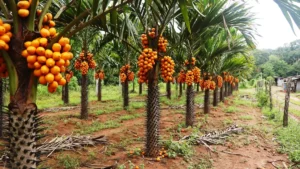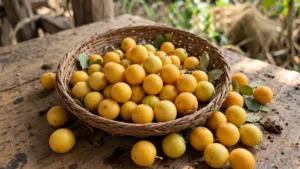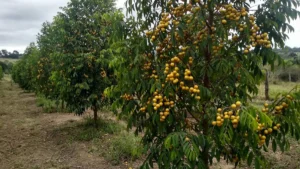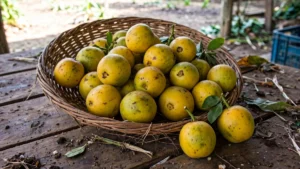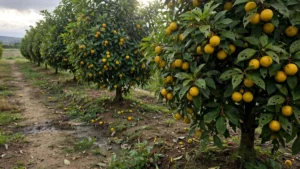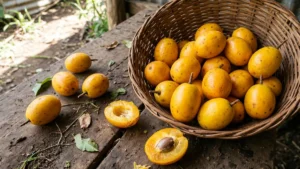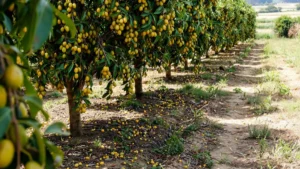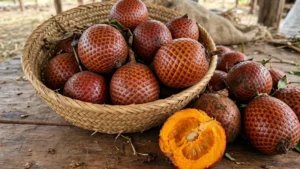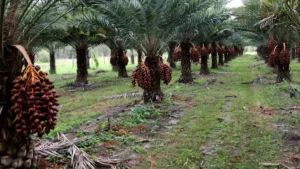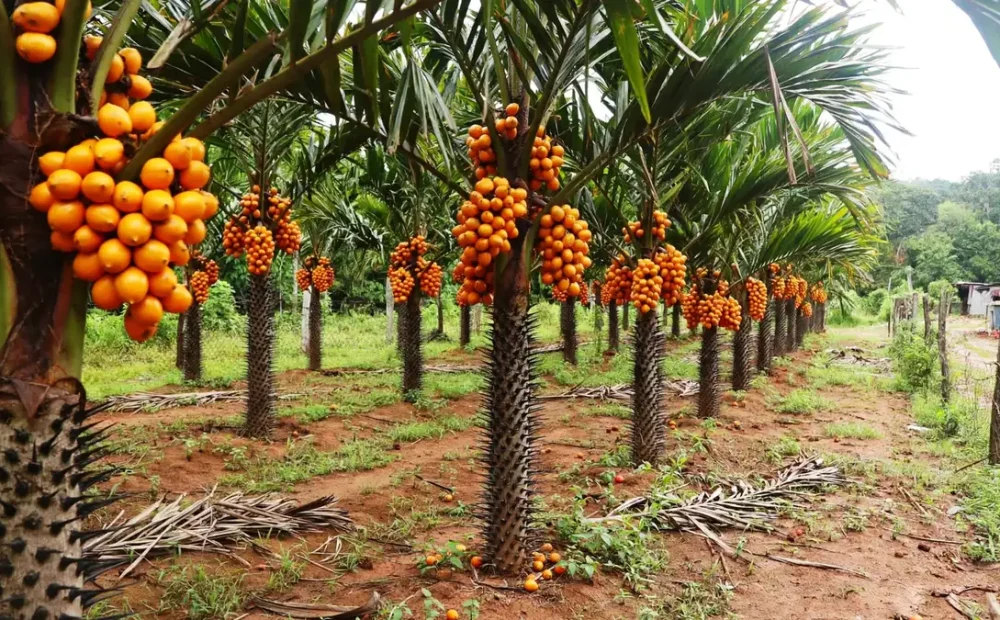
Buriti is the fruit of the Amazon wetlands, and a buriti farm retreat is the slowest way to meet it. The palms grow in the veredas, the damp hollows between savanna and forest where the ground never quite dries, and the fruit hangs in heavy rust-red clusters, each one covered in small glossy scales. Inside is flesh the colour of sunset, soft, oily and sweet, and so rich in beta-carotene that a spoonful stains the fingers orange for the rest of the afternoon.
Most visitors come for the fruit and stay for the pace. The farms in this guide are small places run by families who know their palms tree by tree, and the day is shaped by the wetland: a walk at first light, fruit gathered by hand, and juice pressed before lunch.
Below are nine stays worth considering in 2027, from a simple house on the Jalapão road to a polished lodge on the edge of the flooded forest. Each stay below is described by its strengths, its drawbacks, and the traveller it suits.
Key takeaways
- Buriti is the scaly reddish-brown fruit of the Mauritia flexuosa palm, grown in the wet veredas of the Amazon and the cerrado, with bright orange flesh rich in beta-carotene.
- The fruiting season runs roughly from December to June, and the best stays sit within walking distance of their own palms, not a drive away.
- Buriti is eaten fresh, scooped with a spoon, or pressed into juice, and the kitchens also make jams, sweets and ice cream.
- Most of these farms are small and family-run, with a handful of rooms, so the good ones book out weeks ahead in the high season.
- Ask about wheat in the breakfast breads and cakes before you book, and check the fruiting dates in writing, because a farm can be open while its palms carry nothing ripe.
What a buriti farm retreat actually is
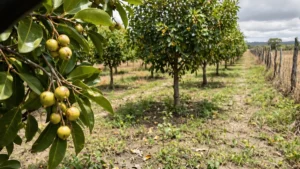
A buriti farm retreat is a working palm grove that takes guests. The palms stand in the vereda, the low wet ground where water gathers after rain, and the farm is built around them: a house, a few guest rooms, a kitchen that cooks with the fruit, and paths that lead out to the trees.
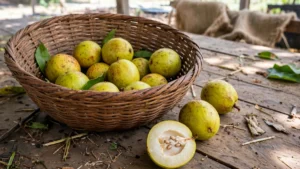
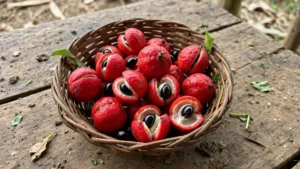
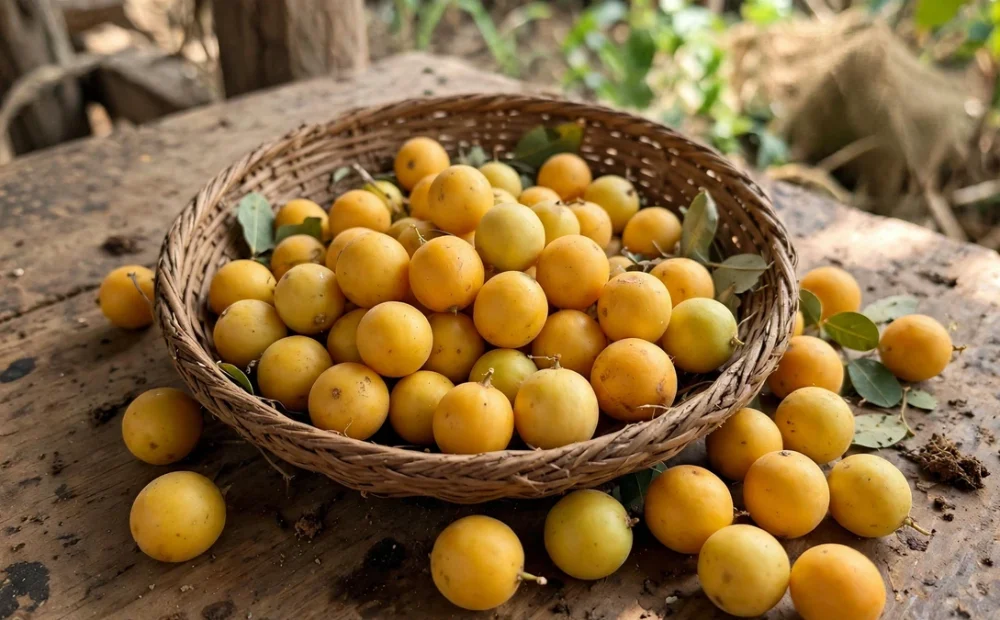
The fruit itself is unlike anything else on the farm circuit. It is about the size of a small plum, covered in hard chestnut-red scales that peel away under the thumb, and the flesh beneath is soft and orange, with a mild sweet flavour and a buttery texture. You sit down with it, peel it slowly, and eat it with your hands, or the kitchen presses it into juice for breakfast. Buriti is a palm fruit, not a berry, and it has nothing in common with acai beyond the Amazon address. It is also a different tree entirely from cupuacu, which is a large brown pod fruit with white pulp, where buriti is small, scaly and orange inside.
What the stay gives you is access. The host walks you to the palms, shows you which clusters are ripe, and tells you how the grove is managed, which trees are left for the birds, and how the fruit is gathered without cutting the palm.
How we picked these stays, and what to ask first
We looked for farms that grow their own buriti and let guests walk the vereda with the host. A real buriti farm has palms you can stand under, a kitchen that cooks with the fruit daily, and a host who can tell you when the next cluster will ripen.
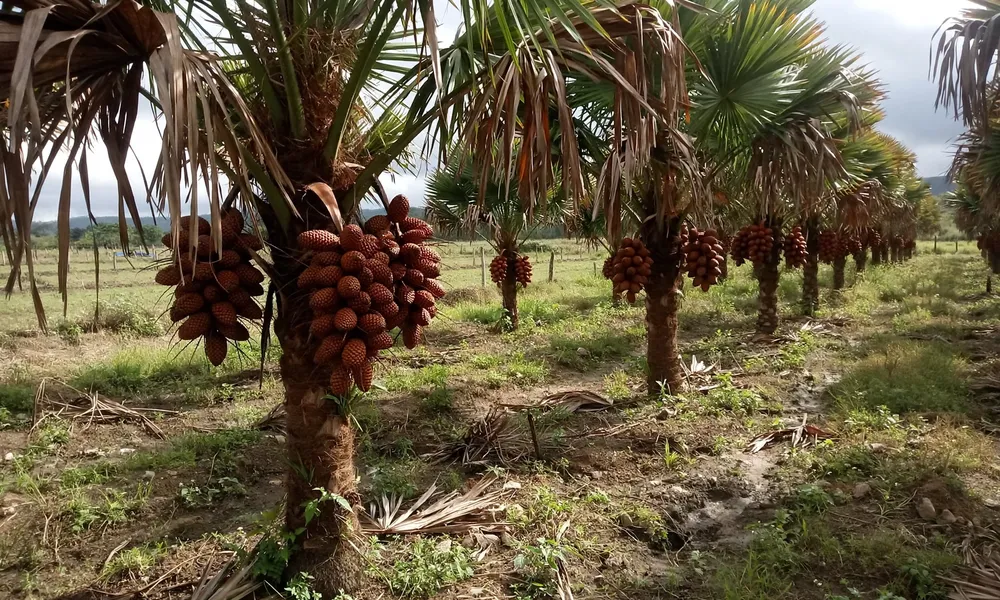
Ask first about the fruiting dates, and get them in writing. Buriti ripens in waves, and a farm can be full of green fruit while the kitchen serves last season’s jam. Ask how many palms the farm keeps, whether guests may pick with the host, and what happens if the fruit is not ripe on your dates. A good farm will be honest about this, and will tell you what else the kitchen is cooking that week. Our guide to sapodilla farm retreats uses the same test, because the question that matters is always the same: does the farm grow what it serves.
Ask next about the rooms, the water, and the road. Wetland farms are reached by dirt tracks that flood in heavy rain, so ask how the farm handles a wet week, whether a lift from the nearest town is included, and how far the nearest clinic sits. Then ask about breakfast, and about wheat in the breads and cakes. A farm that knows its kitchen can tell you plainly what is safe and what is not.
The 9 best luxury buriti farm retreats of 2027
Jalapão, Tocantins — Buriti in the wet hollows of the cerrado
What we like: The farm sits on the road to Jalapão, where the veredas run like green ribbons through the dry cerrado, and the palms stand in water that never quite leaves. The host walks guests out before breakfast, and the kitchen presses juice while the fruit is still cool.
What to consider: The road is long and dusty, and the dry season brings heat that builds through the afternoon. Best for: Travellers who want buriti where the wetland meets the desert. Style: A low white house under a thatch roof, with a veranda facing the palms. Price range: $70–$105 a night, breakfast counted in the price. Standout feature: Dawn walks through the vereda with the host.
Barreirinhas, Maranhão — Buriti beside the Lençóis lagoons
What we like: Buriti palms ring the lagoons of the Lençóis, and this farm pairs a morning among the palms with an afternoon at the sand and water. The kitchen makes a buriti ice cream that is worth the trip on its own,
What to consider: The lagoons are fullest after the rains, and the town is busy in the high months. Best for: People who want buriti with sand dunes and swimming. Style: Bright rooms with wooden floors and wide windows. Price range: $85–$125 a night, breakfast counted in the price. Standout feature: Buriti ice cream made in the farm kitchen.
Belém, Pará — Buriti on the Marajó shore
What we like: The farm stands near the water on the Marajó side, where buriti palms grow thick along the shore and the fruit arrives by basket from the grove each morning. The kitchen cooks with it in everything from breakfast juice to evening sweets,
What to consider: The air is humid and the rain comes fast, so pack light clothes and a rain layer. Best for: Travellers who want buriti with river life and a slow pace. Style: A raised wooden house with a long veranda over the grass. Price range: $75–$110 a night, breakfast counted in the price. Standout feature: Fruit gathered from the shore grove every morning.
Manaus, Amazonas — Buriti deep in the flooded forest
What we like: This lodge sits where the forest floods, and the buriti palms rise straight out of the dark water. Guests go out by canoe to the groves, peel the fruit on the boat, and come back to a kitchen that turns it into juice, jam and sweets.
What to consider: The lodge is a full day from the city, and the flooded season changes the paths completely. Best for: People who want the Amazon at its wettest and most beautiful. Style: A polished lodge on stilts, with a dining room over the water. Price range: $180–$260 a night, meals counted in the price. Standout feature: Canoe trips out to the flooded palm groves.
Boa Vista, Roraima — Buriti on the savanna edge
What we like: The farm lies where the savanna meets the forest, and the veredas here are wide and easy to walk. The host keeps a small grove close to the house, so the fruit is never far away, and the kitchen serves buriti juice with every breakfast.
What to consider: The town is small and the farm is a drive from the airport, so arrange the lift when you book. Best for: Travellers who want open country and easy walking. Style: A stone-and-timber house with a garden of palms. Price range: $60–$90 a night, breakfast counted in the price. Standout feature: A grove of palms within sight of the breakfast table.
Macapá, Amapá — Buriti where the river meets the sea
What we like: The farm sits near the mouth of the Amazon, where the river is wide enough to look like the sea and the buriti palms grow in the wet ground behind the house. The kitchen makes a thick juice served with tapioca at breakfast.
What to consider: The rain is frequent and the ground stays wet, so bring shoes you do not mind muddying. Best for: People who want buriti at the edge of the great river. Style: A simple house with a covered porch and a view of the water. Price range: $68–$98 a night, breakfast counted in the price. Standout feature: Buriti juice served with tapioca at breakfast.
Rio Branco, Acre — Buriti under tall forest shade
What we like: The farm is deep in the west, where the forest is thick and the veredas are shaded by tall trees. The host is a patient teacher who shows guests how to peel the fruit, how the grove is tended, and how the oil is pressed from the pulp.
What to consider: The journey is long, with a flight and a drive, and the farm has only a few rooms. Best for: Travellers who want to learn the fruit properly. Style: A wooden house in a clearing, with hammocks on the porch. Price range: $95–$140 a night, breakfast counted in the price. Standout feature: A host who teaches the peeling and the pressing.
Cuiabá, Mato Grosso — Buriti where the wetlands begin
What we like: The farm stands at the edge of the Pantanal, where the buriti palms line the wet channels and the wildlife is everywhere. Guests walk the vereda in the morning and watch birds and capybaras in the afternoon, and the kitchen cooks buriti into sweets. A stay here pairs well with a persimmon farm retreat for a second fruit season, if you plan the dates round both.
What to consider: The heat is strong and the insects are part of the deal, so bring repellent and light long sleeves. Best for: People who want buriti with wildlife. Style: A ranch house with a wide porch and a pool. Price range: $110–$160 a night, breakfast counted in the price. Standout feature: Wildlife watching from the veranda after the morning walk.
Parnaíba, Piauí — Buriti in the river delta
What we like: The farm sits in the delta where the river splits into channels, and the buriti palms grow on the low islands between them. Guests go out by boat to the groves, and the kitchen serves buriti sweets with the fish and rice of the delta.
What to consider: The delta is reached by boat, and the tides set the timetable for the day. Best for: Travellers who want buriti by boat. Style: A whitewashed house on a low island, with a jetty at the door. Price range: $80–$120 a night, breakfast counted in the price. Standout feature: Boat trips out to the island palm groves.
Which buriti region fits your trip
If you want the classic wetland, start with Tocantins or Maranhão, where the veredas are easy to walk and the farms are used to guests. If you want the Amazon at full scale, Manaus is the choice, though it costs more and needs more time. The western farms in Acre and Roraima suit travellers who like quiet country and long drives, while the delta in Piauí and the shore in Pará suit people who want water with their fruit.
Think about the season before the region. Buriti ripens in waves from December to June, and the farms are at their best when the fruit is coming in steadily. A farm in the flooded forest is a different trip in the wet months than in the dry, and a farm on the savanna edge is best when the tracks are passable. Pick the month first, then the region that is fruiting then. Choose the season before the map on every farm trip, as our guide to carambola farm retreats shows.
The caveats that matter
Buriti is a rich fruit, and the flesh is oily and dense, so eat it in modest amounts at first, especially if your stomach is unused to it. The fruit stains hands and clothes a deep orange, so wear clothes you do not mind marking, and wash your hands before handling pale fabric. The farms are remote, the tracks flood, and the nearest clinic can be an hour away, so carry any medicine you need and tell the host about allergies on arrival.
| Detail | What is known |
|---|---|
| Best season | Roughly December to June, ripening in waves, varies by region |
| Fruit to expect | Small scaly reddish-brown fruit, bright orange flesh, eaten fresh or as juice |
| How the fruit is served | Fresh with a spoon, pressed into juice, made into jam, sweets and ice cream |
| Getting there | Dirt tracks, sometimes boat; arrange a lift from the nearest town |
| What a night costs | About $60 to $260 a night, breakfast usually counted in the price |
| Who should skip it | Anyone who needs paved roads, city clinics nearby, or a strict schedule |
| Wheat and breakfast | Breads and cakes often contain wheat; ask the kitchen before you book |
| What to bring home | Buriti oil, jam and sweets; fresh fruit does not travel well |
If you are pregnant, breastfeeding, or managing a medical condition, check with your clinician before travelling to a remote wetland, and carry your medicine with you rather than in checked luggage. That is not a formality: the farms are beautiful and far from help.
Checklist: booking a buriti farm stay honestly
Run through these checks before you pay, and again in the week before you travel.
- Get the fruiting dates in writing, and ask what the kitchen serves if the fruit is not ripe.
- Ask how many palms the farm keeps, and whether guests walk the vereda with the host.
- Ask about wheat in the breakfast breads and cakes, and what the kitchen can make without it.
- Arrange the lift from the nearest town before you book flights, and confirm the price.
- Check the distance to the nearest clinic, and carry the medicine you need with you.
- Pack clothes you do not mind staining orange, light long sleeves, and shoes for mud.
Frequently asked questions
When does buriti ripen?
Roughly from December to June, ripening in waves that differ by region. Ask the farm for its own dates in writing.
What does buriti taste like?
Mild and sweet, with a buttery texture and a flavour that sits between carrot and mango. The juice is thick, orange and served cold.
Can visitors pick buriti themselves?
Usually yes, with the host, and only from the clusters the host points to. The fruit bruises easily and the palms are tall, so the host does the climbing and guests gather what falls or is handed down.
Is buriti safe to eat?
Yes, the ripe flesh is widely eaten fresh and as juice. Eat modest amounts at first, because it is rich and oily, and wash your hands after peeling, since the colour stains.
Which buriti farm is best for a first visit?
Start with Tocantins or Maranhão for an easy first visit.
How do I keep wheat out of my meals on a buriti farm?
Tell the kitchen when you book, and again on arrival. Most farms can make tapioca, rice and fruit breakfasts without wheat, but the breads and cakes need a warning in advance.
The bottom line
The best buriti farm retreat in 2027 is the one where the palms are close, the host walks with you, and the kitchen cooks with the fruit every day. Tocantins and Maranhão are the easiest first visits, Manaus is the grandest, and the small farms in Acre and Roraima are the ones that teach you the most. Choose the season first, then the region, and let the fruit set the pace of the trip.
Book the farm before the flights, get the fruiting dates in writing, and tell the kitchen about wheat in advance. Then pack light, wear clothes you do not mind staining, and give yourself three unhurried days in the wetland. That is the honest way to meet buriti, and it is worth every dusty mile of the road in.