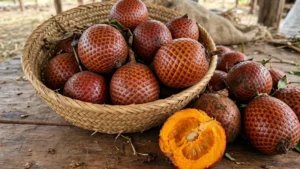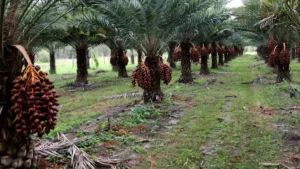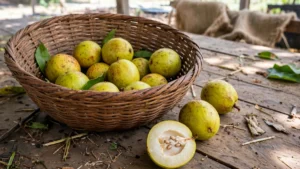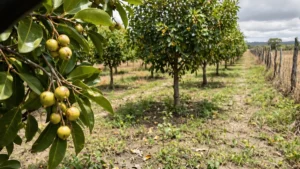

A muruci farm escape is not a holiday you can plan from a photograph. The fruit decides the dates, the river decides the roads, and the farm decides what the kitchen can cook. That is a lot of uncertainty, but it is also what makes the trip worth taking: you are travelling to meet a fruit where it grows, rather than ordering it to come to you.
Planning it well comes down to decisions made in the right order. Dates first, because the harvest window is short and the best rooms go early. Region second, because cerrado and Amazon muruci taste different, and the landscapes could hardly be further apart. Transport third, because these farms sit at the end of unpaved roads, and a lift booked late is a lift that does not exist.
This guide walks through those decisions in order, from the first message to the farm to the last morning’s packing. It is written for a first visit, and it assumes nothing about Brazil, farms, or muruci, except that you want to taste the fruit where it grows.
Key takeaways
- Book your dates inside the farm’s harvest weeks, and get those weeks in writing before you pay.
- Cerrado muruci is sweeter and easier to reach; Amazon muruci is tarter, more fragrant, and needs more travel.
- Arrange your transfer before you land, because taxis and buses do not always reach the gate.
- Pack for heat, sudden rain, and rough ground, and carry cash for the farm shop.
- Farm kitchens cook with wheat every day, so gluten-free guests should tell the farm about it in the first message, not on arrival.
What a muruci farm escape involves
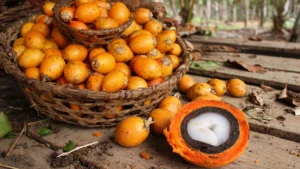
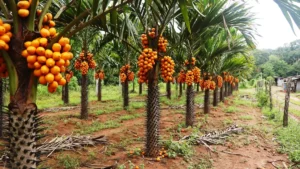
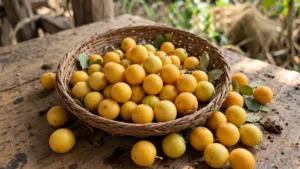
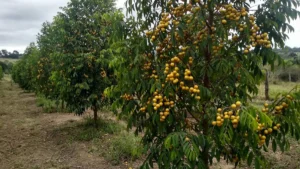
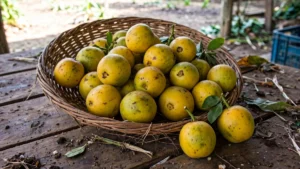
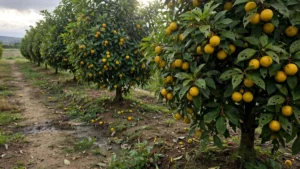
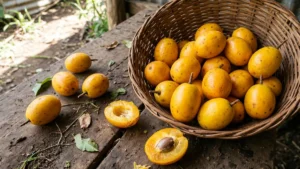
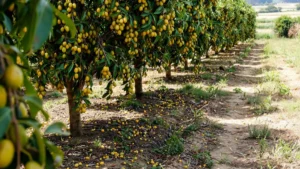
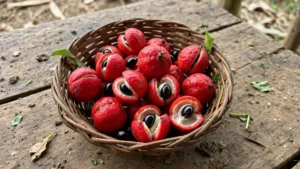
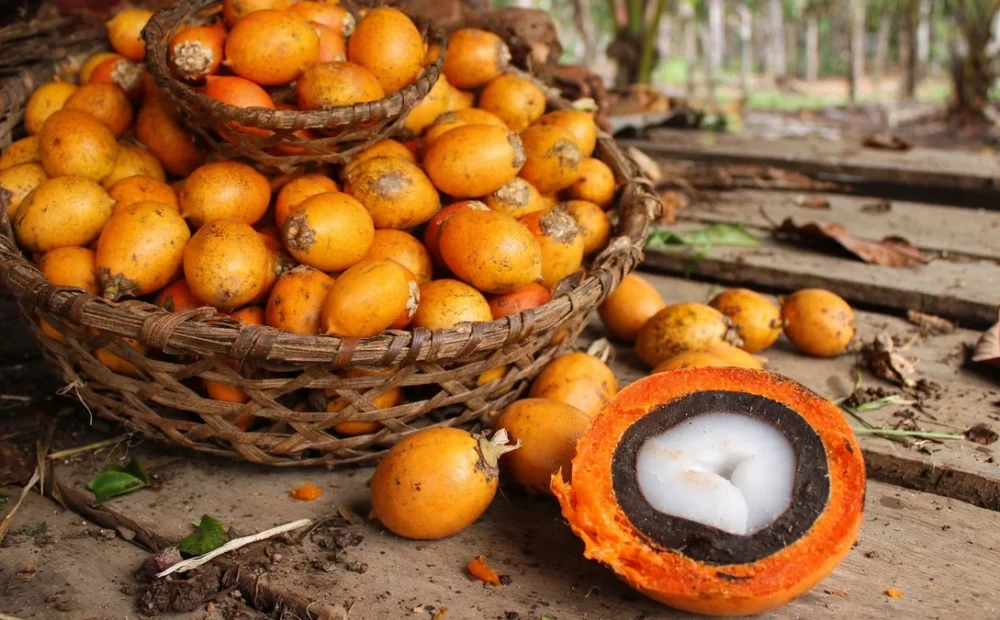
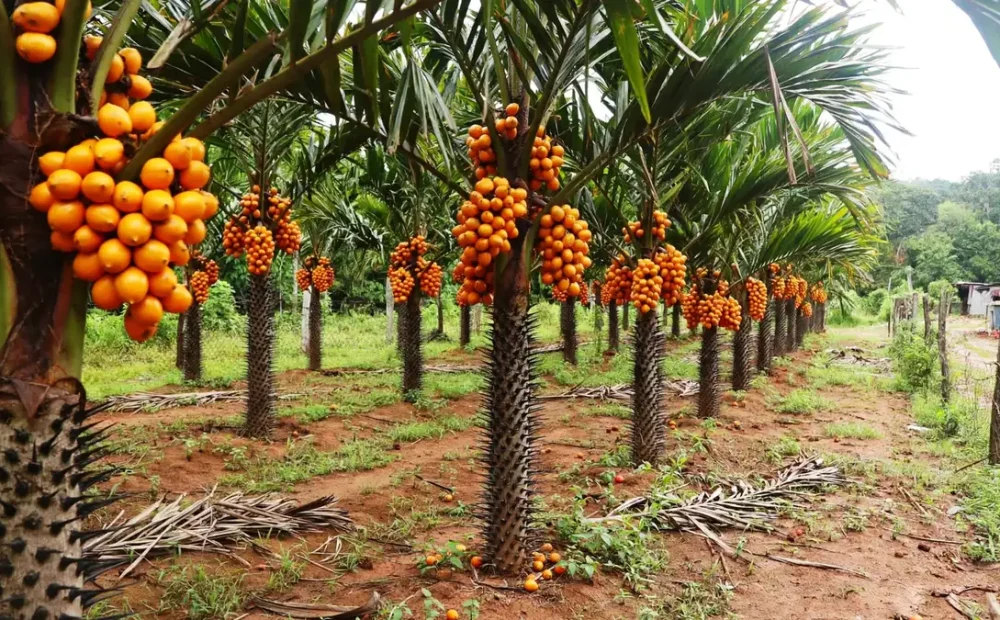
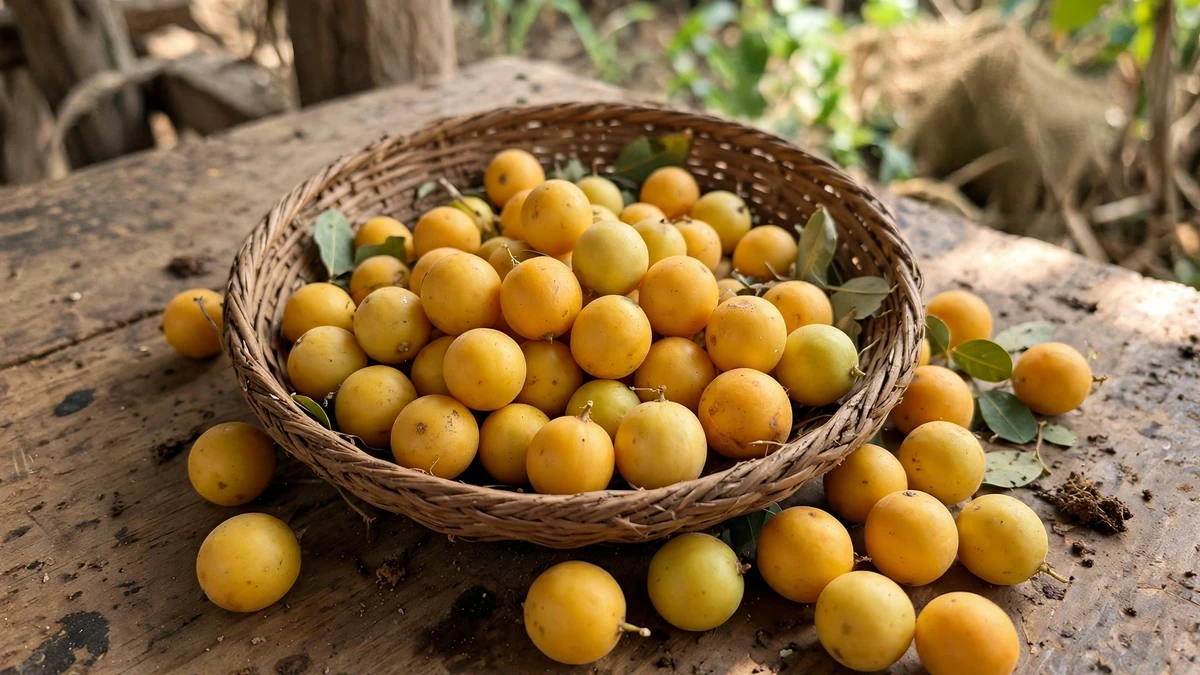
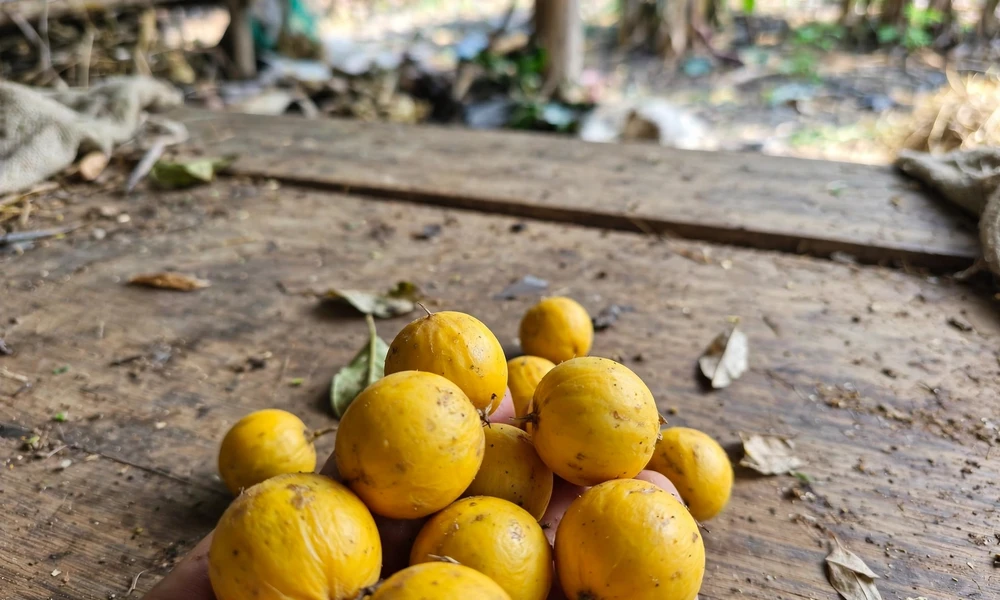
An escape built around muruci is a stay on a working farm where the fruit is part of the daily routine. The trees are low and spreading, the fruit is small and yellow, and the picking happens in the cool of the morning, when the fruit comes away easily. Guests walk the rows with the host, fill a basket, and then see the same fruit appear at breakfast as juice, at lunch in a sauce, and in the evening as ice cream.
The rest of the day is shaped by the farm and the land around it. In the cerrado that means long light, red earth, and walks to waterfalls; in the Amazon it means rivers, boats, and a breakfast table crowded with fruits you have never seen. Rooms are simple, meals come from the garden, and the pace is slow by design.
It is also a trip with a short window. Muruci ripens over a few weeks in any one place, and outside that window the trees are just trees. A farm alive with fruit in June can be quiet and green in September, with nothing to pick. That is why the planning below starts with dates.
How to plan it, and what to check first
Start by writing to two or three farms, not one. Ask each the same questions: which weeks the fruit is falling, whether guests may pick it, how you get from the nearest town to the gate, and what the price covers. A farm that replies with specific dates and a named driver has done this before; a farm that replies vaguely about seasons is one to press further.
Check the practical things early, while you still have time to change your mind. Confirm that your room has a fan or air conditioning, because the heat is real in every region. Confirm that the kitchen can feed you if you avoid wheat, and get the answer in writing. Confirm the transfer, the price, and what happens if your flight is late. Our guide to planning a mangaba farm escape works the same way, and the farms answer the same questions in the same spirit.
The 9 steps to plan a muruci farm escape
1. Start with the fruit’s calendar, not yours
Write to the farm first and ask which weeks the fruit is falling, then build your holiday around the answer. In the cerrado the window falls in the dry months, when the roads are good and the fruit drops steadily; in the Amazon it follows the river, as the water falls and the trees ripen. A date chosen for a cheap flight is a date that may miss the fruit entirely.
Get the weeks in writing before you pay anything, and ask what happens if the harvest comes early or late. A good farm will tell you honestly when the fruit is thin. If two farms give different windows, trust the one closer to the ground you will stand on.
2. Choose cerrado sweetness or Amazon sharpness
Muruci is one species, but it does not taste the same everywhere. In the cerrado, around Brasília and Goiânia, the fruit is rounder, sweeter, and easier to eat fresh. In the Amazon, around Belém and Manaus, it is smaller, tarter, and more fragrant, and it shines as juice rather than as a fruit eaten out of hand.
Pick the flavour you want, and let the landscape follow. If you are travelling with children, or tasting muruci for the first time, the cerrado is the kinder introduction. If you already love sharp tropical fruit, the river farms are the deeper trip. Either way, choose before you book, because the two are not interchangeable.
3. Check if picking is open to guests
Some farms welcome guests into the orchard with a basket; others pick the fruit themselves and bring it to the table. Both are fine, but they are different trips, and you should know which one you are booking. Ask plainly: may guests pick, and if so, when, and with whom?
If picking is part of the stay, ask what to wear and what to bring. Long sleeves help against branches, a hat helps against the sun, and a small basket of your own is a pleasure. Remember that muruci bruises if handled roughly, so pick gently and only what is ripe; the kitchen needs the rest.
4. Sleep where the trees are outside your window
The best rooms on a muruci farm are the ones nearest the trees. You wake to birdsong rather than a corridor, you step outside and the orchard is there, and the morning walk starts from your own door rather than from a car park. Ask the farm which rooms sit closest to the rows, and book one of those.
Check the basics too: a fan or air conditioning, a window that opens, and a bathroom that works properly. Farm rooms are simple by nature, and an honest one beats a room that pretends to be a hotel. What matters is the walk out of the door in the morning, and the fruit waiting at the end of it.
5. Tell the farm about wheat at the very start
Farm kitchens bake bread and cakes every day, and wheat is in the air, on the boards, and in most of the food. If you cannot eat gluten, say so in your first message to the farm, in plain words, and ask whether the kitchen can cook a meal without it. Do not leave it until you arrive, when the cook is already busy and the bread is already in the oven.
Ask for a straight answer, and take it seriously. A farm that says yes and explains how is one you can trust; a farm that hesitates is telling you something useful. Cross-contact is likely in a small kitchen unless the farm says otherwise, so a clear answer before you pay beats a hopeful guess at the table.
6. Taste it fresh, as juice, and as ice cream
Do not judge muruci from a single bite. Taste it fresh from the tree, when it is soft and warm from the sun; taste it as juice, pressed that morning and served cold; and taste it as ice cream or pulp, where the sourness softens and the flavour opens out. Three tastings tell you more than any description, and most farms offer all three without being asked.
Notice how the flavour changes with the place. The same fruit tastes different in the cerrado and on the river, and different again from one farm to the next. That variation is the point of travelling to the fruit, and it is what you will remember.
7. Handle the fruit gently, or it bruises fast
Muruci is soft when it is ripe, and it bruises if it is dropped, squeezed, or piled too deep in a basket. Ask the host to show you how to pick it: a gentle twist, a soft hand, and a shallow basket lined with leaves. It takes a minute to learn and it saves the fruit.
Pick only what is fully ripe and soft to the touch, and leave the firm fruit on the tree for another day. A basket of bruised muruci is juice and nothing else, while a basket picked gently will keep until the evening. The farm will thank you for it, and so will your breakfast.
8. Arrange the farm transfer while you are still home
These farms sit at the end of unpaved roads, and a taxi from the nearest town will not always come to the gate. Book the transfer with the farm before you travel, with a named driver, a price, and a meeting point, and confirm it again the day before you arrive. A lift arranged in advance is the difference between a smooth arrival and a long wait on a dusty road.
If you are driving yourself, ask about the road. A dry-season track and a wet-season track are not the same road. Ask whether the farm road needs a high vehicle, and whether the river farms need a boat as well as a car. Our guide to planning a pitanga farm escape covers the same ground, because the roads work the same way.
9. Pack light so the farm shop fits in your bag
Most muruci farms sell pulp and jam made in their own kitchen, and it is the best thing to bring home, because the fresh fruit does not travel. Pulp freezes well and keeps its flavour, and jam carries the taste of the farm for months. Buy it on your last morning.
Pack it carefully and check the rules for carrying it on your flight. Pulp needs to stay cold, so ask the farm for a cool bag or a frozen pack, and jam needs to be sealed properly. Leave space in your luggage before you travel, because a bag packed full on the way out has no room for what you most want to bring back.
Picking the right season and region
For a first trip, go to the cerrado in the dry months. The roads are good, the fruit is sweet, the farms around Brasília and Goiânia are easy to reach, and the days are long and clear. Pack light layers for cool mornings, a hat for the midday sun, and shoes you can walk in on red earth.
For a second trip, go to the Amazon as the water falls. The fruit is tarter and more fragrant, the breakfast table is crowded with fruits you will not find anywhere else, and the river is part of every day. It takes more planning: a flight, a boat, and a farm whose calendar follows the water. Leave a day on either side for travel.
For the far north, Boa Vista in the dry season is the quiet choice. The savanna is open, the light is extraordinary, and the fruit ripens when the roads are at their best. It is a long way from anywhere, and that is the appeal: fewer visitors, wider skies, and a farm that has time for its guests.
The caveats that matter
Muruci is a gentle fruit, but a farm escape still needs a clear head. The fruit is acidic, so eat a little before you eat a lot, especially if your stomach is sensitive. Farm kitchens use wheat daily, and a guest who does not warn them will find it in most of the food. Roads are unpaved, rain can close them, and a river farm’s calendar follows the water. None of this is a reason to stay home; it is a reason to plan with your eyes open.
| Detail | What is known |
|---|---|
| Scientific name | Byrsonima crassifolia, a low spreading tree of the cerrado and Amazon |
| The fruit | A small yellow berry, sweet and sour together, good fresh, juiced, or frozen as pulp |
| Where it grows | Across Brazil and Central America, from cerrado plains to river country |
| Best season | The dry months inland; the season when the river water drops |
| How to eat it | Straight from the tree, pressed into juice, or as jam and ice cream |
| Who should taste carefully | Anyone with a sensitive stomach, since the fruit is sharp and acidic |
| Gluten-free guests | Warn the farm about wheat in your first message; the kitchen bakes with it daily |
| What it is not | Not mangaba, not citrus, and not a fruit that survives a long journey |
If you are pregnant, on regular medication, or living with a food allergy, speak to your clinician before eating much of any fruit you have not tried, and tell the farm about the allergy in your first message. A warning given early is worth far more than one given at the table. The same applies to any farm stay built around a single fruit, as our guide to planning a goldenberry farm escape explains.
Checklist: before you book a muruci farm escape
Use these checks before you pay, and again the week before you travel.
- Get the harvest weeks in writing, and book your dates inside them.
- Confirm the transfer, the driver, and the price before you land.
- Tell the farm about wheat or any allergy in your first message.
- Check what the price covers: meals, walks, boats, and transfers vary.
- Pack light layers, waterproofs, sturdy shoes, and insect repellent.
- Leave space in your bag for pulp and jam, and carry cash for the farm shop.
Frequently asked questions
How many nights does a muruci escape need?
Three nights is the honest minimum: one day to arrive and settle, one full day in the orchard, and one morning to buy pulp and jam before you leave. Four or five nights is better for the Amazon, because the journey itself takes a day each way.
Is a car needed to reach a muruci farm?
Usually not, and often it is more trouble than it is worth. Most farms arrange a transfer from the nearest town, and the farm tracks are rough enough that a hired car may struggle. Book the farm’s own lift.
Can children come along on the fruit walk?
Yes, and most farms welcome them, because the walk is gentle and the fruit is easy to pick. Keep children close on river farms, where the water is near, and bring hats and water for everyone. Ask the farm in advance, so the guide sets a slower pace.
What should I pack for a muruci farm?
Light layers for cool mornings and hot middays, a waterproof jacket for sudden rain, sturdy shoes for rough ground, a hat, sunscreen, and insect repellent. A small day pack helps, and a cool bag helps if you are bringing pulp home.
How is muruci different from mangaba?
They are different species with different flavours. Muruci is Byrsonima crassifolia, a small yellow fruit that is sweet-sour and often eaten as juice or ice cream. Mangaba is Hancornia speciosa, a yellow-green cerrado fruit with its own sweet-tart flavour and a warning about milky sap in unripe fruit. The farms, the seasons, and the cooking are different too.
Can I buy muruci products to take home?
Yes, and pulp and jam are the things to buy, because the fresh fruit bruises and does not travel well. Most farms sell both from their kitchen, and the pulp freezes well. Buy on your last morning and pack it cold.
The bottom line
A muruci farm escape rewards planning in the right order: dates first, region second, transport third, and everything else after. Get the harvest weeks in writing, choose between the sweet cerrado fruit and the sharp Amazon fruit, and book your lift before you land. The rest is the pleasure of the trip itself.
Go with an open mind and an empty bag. Taste the fruit three ways, walk the rows in the morning, and bring home pulp and jam instead of fresh fruit. That is the honest way to meet muruci.