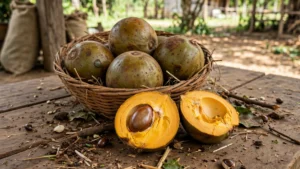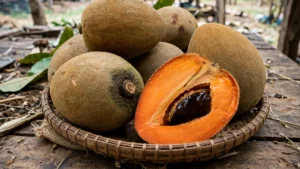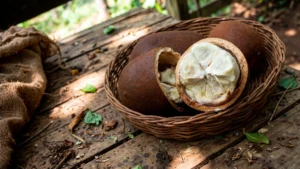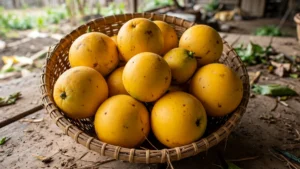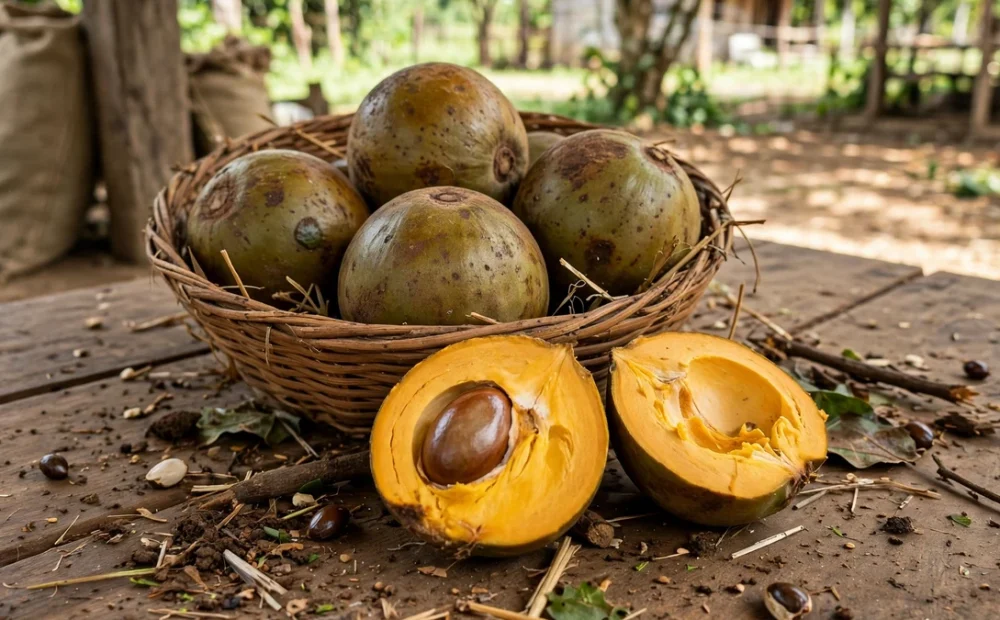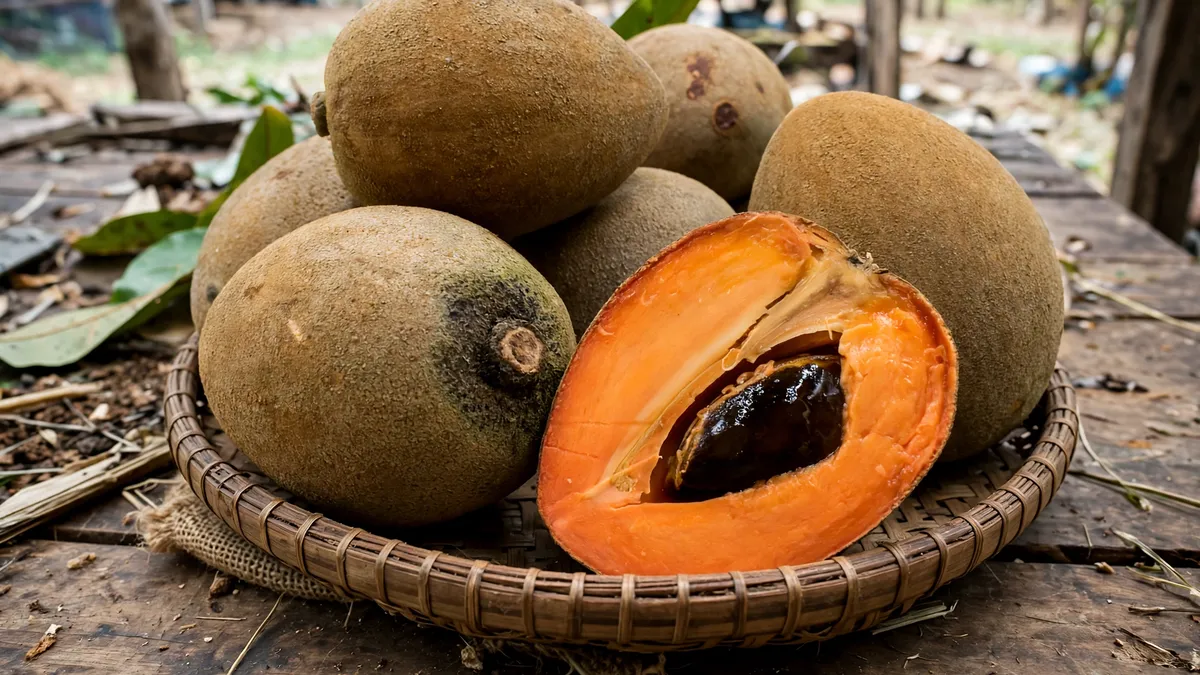
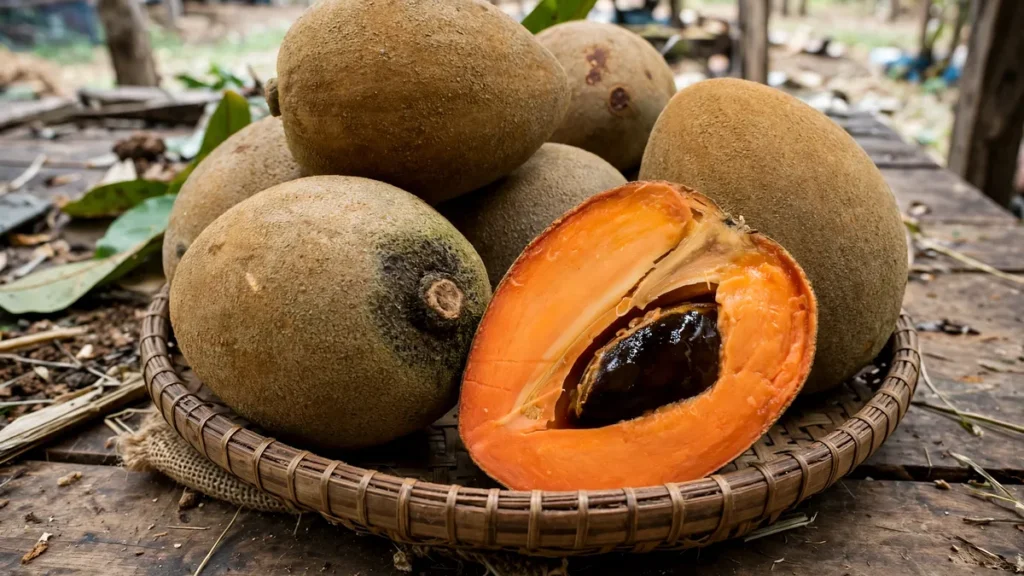
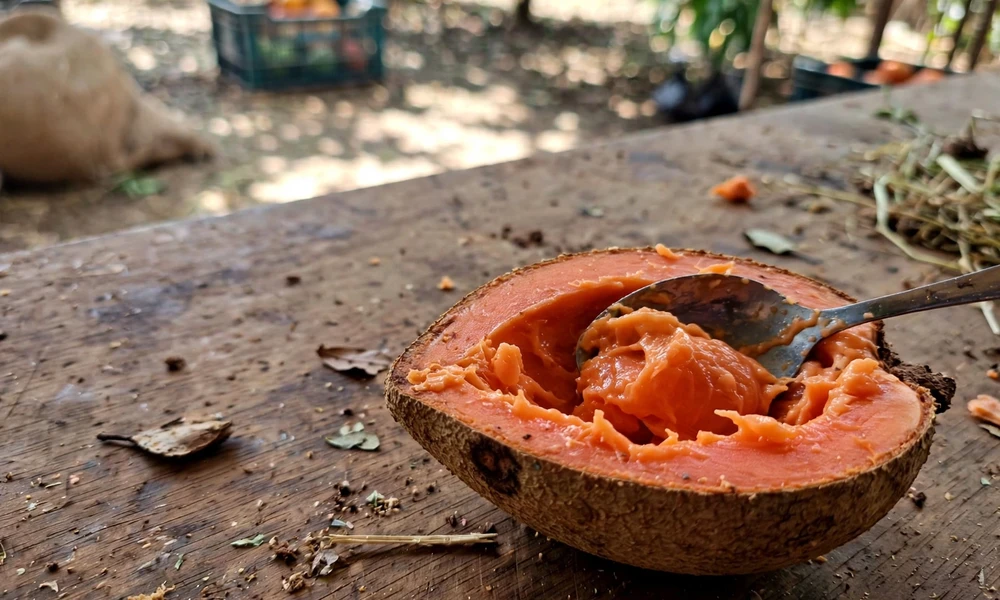
Mamey sapote eats like sweet potato baked into a pie: dense, sweet, and salmon-orange inside. Its skin is rough and brown, its flesh gives way to a spoon, and one large seed sits at the centre. Build the trip around the harvest, and the fruit will carry the rest.
A mamey sapote farm escape is a slow holiday built on a single tree. The days open with a walk among the rows, reach a tasting at noon, and close with pudding after dinner, while the kitchen folds the salmon-orange flesh into shakes and ice cream between times. The rooms are plain, the host is out with the trees at sunrise, and the season sets the pace. Shade runs deep under those crowns, so the hottest hours pass easily.
Nine steps follow, from fixing your dates to carrying the ice cream home. Take them in order and the trip builds on itself: the dates settle the region, the region settles the farm, and the farm settles everything else.
Key takeaways
- Mamey sapote, Pouteria sapota, is ripe when its skin turns dull brown and gives a little under the thumb, with dense, sweet flesh inside.
- The harvest arrives in waves through the warm months, so your dates count for more than your destination.
- Treat the room, the meals, and the lifts as separate questions. Each one may carry its own charge.
- Mamey sapote is not black sapote: Pouteria sapota stands on its own, salmon-orange flesh and one big seed that is never eaten.
- Send the wheat warning in your first message: bread and cakes come out of the oven each morning, and flour travels through the whole kitchen.
What a mamey sapote farm escape involves
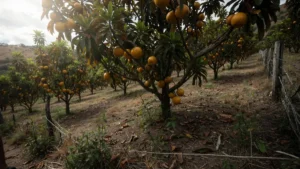
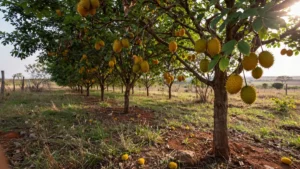
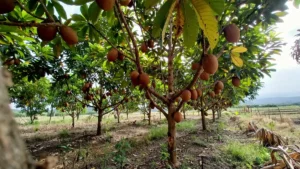
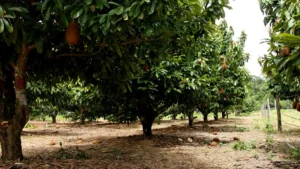
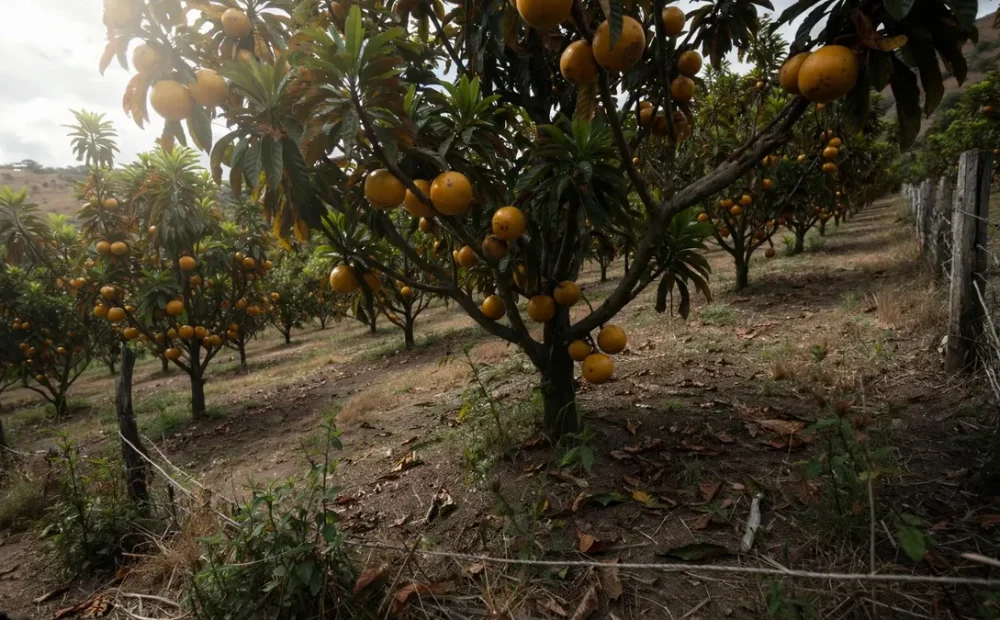
A mamey sapote farm escape is a holiday spent in the shade of a working orchard. The trees stand tall with wide crowns, the fruit hangs one by one from the branches, and a few soften each day across the season. The picking is done by hand, and the farm kitchen eats most of the crop.
The escape keeps the fruit’s unhurried pace. Dawn brings a walk between the rows, noon brings a tasting of fruit picked an hour earlier, and evening ends with pudding or ice cream from the kitchen. Bedrooms stay plain, the host is out among the trees, and the fruit, not any schedule, runs the hours. Guests who arrive expecting a full programme usually drop it by the second morning, once the orchard’s rhythm takes hold.
Sort out what the stay includes before you pay. Some farms lead with the orchard: plain rooms and a host who prunes the trees each morning. Others are comfortable guesthouses set inside an orchard, with more comfort and less farm work to see. Either kind can be a good stay, but they are different holidays, and the nightly price usually gives it away. Our guide to planning a sapodilla farm escape makes the same point from another angle: check what the price covers before the photographs win you over.
How to plan it, and what to ask first
Think fruit first and room second. A strong mamey sapote escape grows its own crop, builds a walk or a tasting into the visit, and stays honest about the months when nothing is fruiting.
Begin with the season. Mamey comes ripe across the warm months in Mexico and Central America, and the peak slides from country to country. Florida picks from late spring into summer, while Hawaii keeps fruiting after the northern orchards have rested.
Then check what the rate covers. At some stays the walk, the tasting, and the cooking session are each billed on their own. Before you book, ask when breakfast is served, whether the garden is shared, and which languages the farm speaks. A farm that lists every charge in plain words is usually well run. If persimmon appeals more, the guide to planning a persimmon farm escape we covered earlier runs on the same small-stay pattern.
The 9 steps to plan a mamey sapote farm escape
1. Get the farm’s harvest dates in writing first
What to do: Write to the farm first and ask which fortnight the trees will carry ripe fruit, then book your flights to match. The harvest moves with the weather, so a confirmed date from the farm beats any guidebook window.
What to avoid: Booking flights first and hoping the trees keep up. A farm with no ripe fruit is still a pleasant stay, but it is not the trip you planned. Best for: Travellers chasing the fruit at its ripest. Time needed: One afternoon of messages before you pay for anything. Standout tip: Get the harvest dates in writing, not a rough season.
2. Choose the coast or the highlands by how much heat you enjoy
What to do: Yucatán and Oaxaca give you the warmest lowland fruit, Guanacaste gives you dry Pacific slopes, and Hawaii gives you a gentler island season. Each region ripens on its own calendar, so where you go fixes when you go. Ask the farm how long its season lasts: a short window punishes a late booking, and Yucatán usually ripens first while Hawaii runs longest.
What to avoid: Choosing a region because the flights are cheap. A cheap flight to a farm out of season buys you bare branches. Best for: Travellers who know whether they prefer heat or breeze. Time needed: An evening of comparing regions and seasons. Standout tip: Match the region to the month, not the month to the region.
3. Check the picking rules before you go
What to do: Ask whether guests may pick, whether a guide comes along, and how much fruit you may take. Some farms hand you a basket and let you wander; others keep the picking to the crew, because the fruit bruises in minutes.
What to avoid: Assuming you will pick all day. The fruit is heavy and the branches break easily, so picking is usually a short morning walk, not a day’s work. Best for: Guests who want to touch the fruit themselves. Time needed: Ten minutes inside your first message. Standout tip: Ask who holds the ladder and who holds the bag.
4. Pick a bedroom that looks over the orchard
What to do: Ask if the window looks over the rows or the garden, and whether the room has shade, a fan, or cooling. A room beside the orchard wakes you to birdsong; a room beside the road wakes you to passing cars.
What to avoid: Taking the last room on offer and spending your mornings looking at a brick wall. The cheapest room is usually the one nobody wanted. Best for: Travellers who want a quiet start to the day. Time needed: A single message before the deposit is paid. Standout tip: Ask about the view by name, not by price.
5. Mention wheat in your first message to the farm
What to do: Put the allergy note in your first message, and ask how the kitchen keeps flour away from your plate. Bread and cakes come out of the oven every morning, so the cook needs time to plan around you.
What to avoid: Waiting until you sit down to eat. By then the bread is baked, the flour has drifted across the kitchen, and the cook has little left to offer. Best for: Anyone who eats without gluten. Time needed: Five minutes inside the booking message. Standout tip: Write the wheat note down; a phone call is easy to forget.
6. Tag along on the cook’s morning market trip
What to do: Ask if guests may join the morning market run. You will see what the farm buys, what it grows, and how the kitchen builds the day around the fruit. Take a small cloth bag: stallholders often wrap things in leaves, and a bag keeps them together.
What to avoid: Sleeping in and eating whatever the kitchen had left. The day’s menu is decided at the market, and the best dishes begin there. Best for: Food lovers who want the kitchen as much as the orchard. Time needed: Two hours at dawn, once in the stay. Standout tip: Bring a small bag and let the cook fill it.
7. Eat the fruit three ways before you make up your mind
What to do: Have it halved and fresh at noon, blended into a shake the next morning, and churned into ice cream before the week ends. The same fruit tastes different in every form, and the shake is where most guests change their minds. Ask the cook to leave one shake unsweetened, so you taste the fruit before the sugar joins in.
What to avoid: Judging mamey from one hard, unripe fruit. An unripe mamey is starchy and dull, and it says nothing about the ripe one. Best for: Travellers who like tasting things properly. Time needed: Three tastings over the course of the stay. Standout tip: Taste the shake before you decide you dislike the fruit.
8. Visit the farm shop on your last morning
What to do: Save the farm shop for your last morning. The ice cream travels home sealed and the jam keeps for weeks, and both carry the flavour better than fresh fruit.
What to avoid: Packing fresh fruit into your luggage. It bruises on the journey, softens in the heat, and arrives as mush. Best for: Guests who want the taste to last after the trip. Time needed: Half an hour inside the farm shop. Standout tip: Buy the tub, not the fruit.
9. Carry seeds home to plant later
What to do: Ask the host if you may take a few seeds home, and how to keep them safe. A seed wrapped in damp paper and planted within the week is the one souvenir that grows.
What to avoid: Filling your bag with fresh fruit for the flight. It will not survive the flight, and the seed is the part worth keeping. Best for: Gardeners and unhurried travellers. Time needed: Ten minutes with the host before you go. Standout tip: Ask how the host stores seed, then copy the method.
Picking the right season and region
Mérida or Oaxaca grows the most traditional fruit, where working orchards serve it at every meal. Guanacaste has the wildest setting, a farm on dry slopes above the Pacific, while Chiapas has the strongest flavours, with fierce sun and a heavy harvest. Florida suits a short trip from the United States: the flight is brief and the farms welcome weekend guests. Homestead works well for a first taste, since the flight is short and the tasting is simple.
Newcomers should start in Oaxaca, where the farm knows its guests, the season runs long, and the kitchen cooks with the fruit daily. Our guide to the canistel farm escape makes the same point: choose the farm that cooks with its crop daily, and the trip mostly takes care of itself.
The caveats that matter
Mamey sapote farm escapes are wonderful, but they fit some travellers better than others. The harvest picks the dates, the farms sit far from town, and the honest ones are plain about what is ripening and what is not.
| Detail | What is known |
|---|---|
| Best months | The warm months, while the trees are in fruit; the window moves by country |
| Telling ripe from raw | Skin dull brown all over, a little give under the thumb, sweet scent at the stem, no hard patches |
| Usually in the rate | Room and breakfast with an orchard walk or tasting; the cooking session and the lifts usually cost extra |
| Made for | Slow travellers, food lovers, and families with older children |
| Skip it if | You want nightlife, quick service, or a full daily programme |
| The journey | Often an hour or more from the closest airport; sort the lift before you arrive |
| What to pack | Long sleeves for the snapping branches, firm shoes for dusty paths, and repellent for still evenings |
| No guarantees | Fruit on your dates; the harvest rests on weather, season, and the tree’s own rhythm |
A mamey sapote holds no gluten by itself, yet bread and cakes leave the farm oven each morning, so ask how the kitchen keeps flour off your plate. The flesh is dense and filling, so eat it on the day it is picked and bring ice cream home instead of fresh fruit. The seed is big and must never be chewed, so work around it. A health condition, a pregnancy, or small children change the trip: ask the distance to the nearest clinic, the last spraying date, and how steep the paths are, before you book.
Checklist: before you book a mamey sapote farm escape
Work through these checks before you pay, then again in the week before you travel.
- Settle the fruiting: ask whether the trees will carry fruit on your dates, not merely whether the farm is open.
- Price it line by line: what the walk, the tasting, the meals and the lifts each cost before you pay anything.
- Settle the journey: how long the airport drive takes, and whether the farm runs a pickup.
- Settle the bedroom: whether the window faces the rows or the garden, and whether shade, a fan, or cooling is provided.
- Ask how the orchard is grown: how many trees it holds, whether it is organic, and the last spraying date.
- Look for reviews from guests who travelled in your season.
Frequently asked questions
How many nights does a mamey sapote escape need?
Three nights is the sweet spot. Day one settles you in, day two brings the picking walk and the tasting, and day three leaves room for the market run and the farm shop. One night feels rushed, and a week is only worth it when the harvest is at its peak.
Is a car needed to reach the farm?
Most of the time, yes, or a lift the farm arranges. Most mamey farms lie an hour or more from the closest airport, down roads where buses run rarely. Ask about pickups before you book, and settle the price in writing. If you drive, leave early: the last stretch is often unpaved and slower than the map suggests.
Is the picking walk right for children?
Older children, yes. The walk is gentle, the fruit hangs within reach, and most hosts enjoy showing a child how the harvest works. Small children are harder: the branches snap easily, the paths are dusty, and the heat builds fast. Ask the farm which ages it welcomes.
What should I pack for a mamey sapote farm?
Long sleeves for the snapping branches, firm shoes for dusty paths, and repellent for still evenings. Bring a hat for the midday sun, a light layer for cool mornings, and a small bag for the farm shop. Leave the smart clothes at home.
How can I tell when a mamey is ripe?
Look for dull brown skin all over, with no green patches and no hard spots. Press it gently: a ripe mamey yields a little under the thumb and smells sweet at the stem. If it feels like a stone, leave it where it hangs.
Can I buy mamey sapote products to take home?
Yes, and the farm shop is the place to buy them. Sealed ice cream travels well and jam keeps for weeks, and both hold the flavour better than fresh fruit. Fresh fruit bruises on the journey, so buy the tub, not the basket.
The bottom line
A mamey sapote farm escape suits anyone who likes food from the tree beside them and is glad to let the harvest run the day. The fruit is rich, the season is kind, and the best stays pick it, serve it halved, and churn the rest into ice cream without any fuss. The holiday is quiet by design, and that quiet is the point: the orchard gives you time the city never will. You leave with the taste of the fruit on your tongue and the shape of the orchard in your head.
Pick the region by what matters most to you: the lowland groves of Yucatán, the warm valleys of Oaxaca, or the dry slopes of Guanacaste — and bring the ice cream home sealed, not the fruit itself. A sealed tub keeps the trip alive long after the photographs fade.