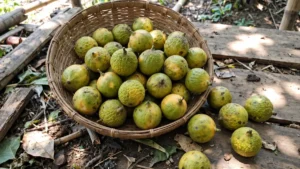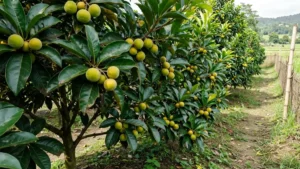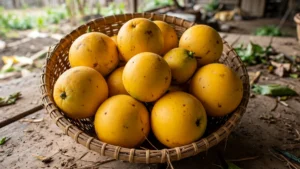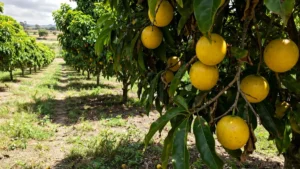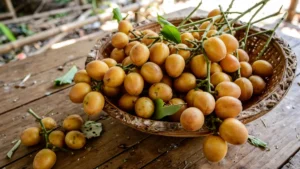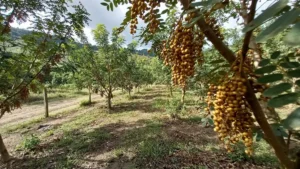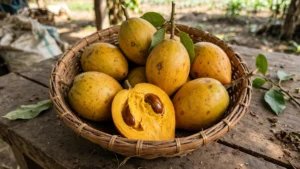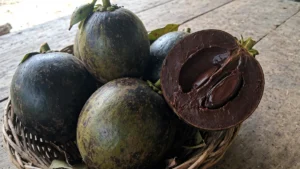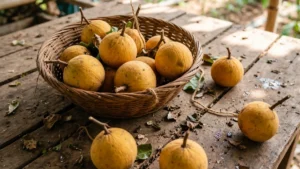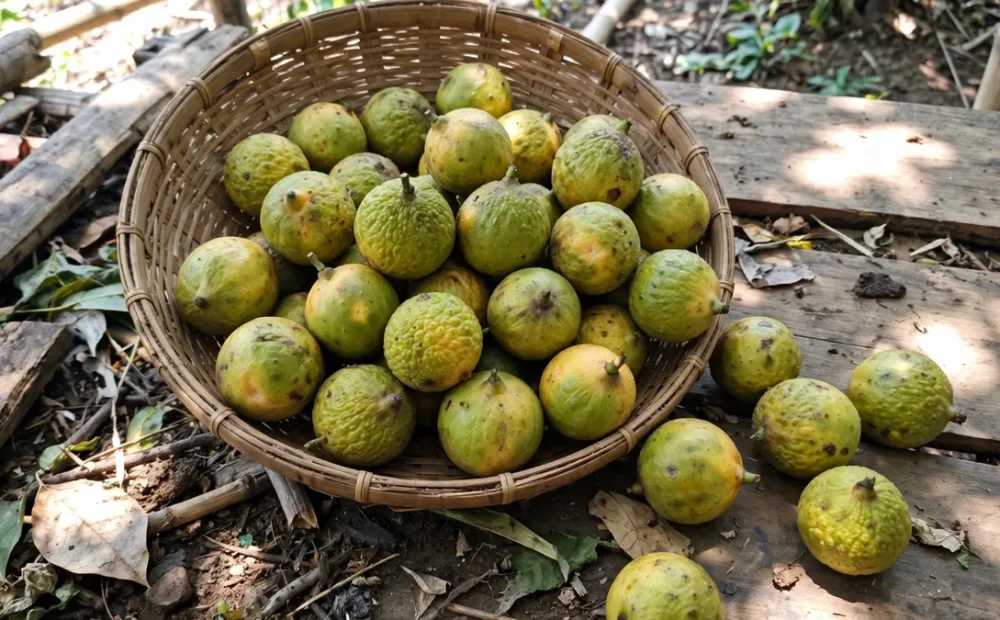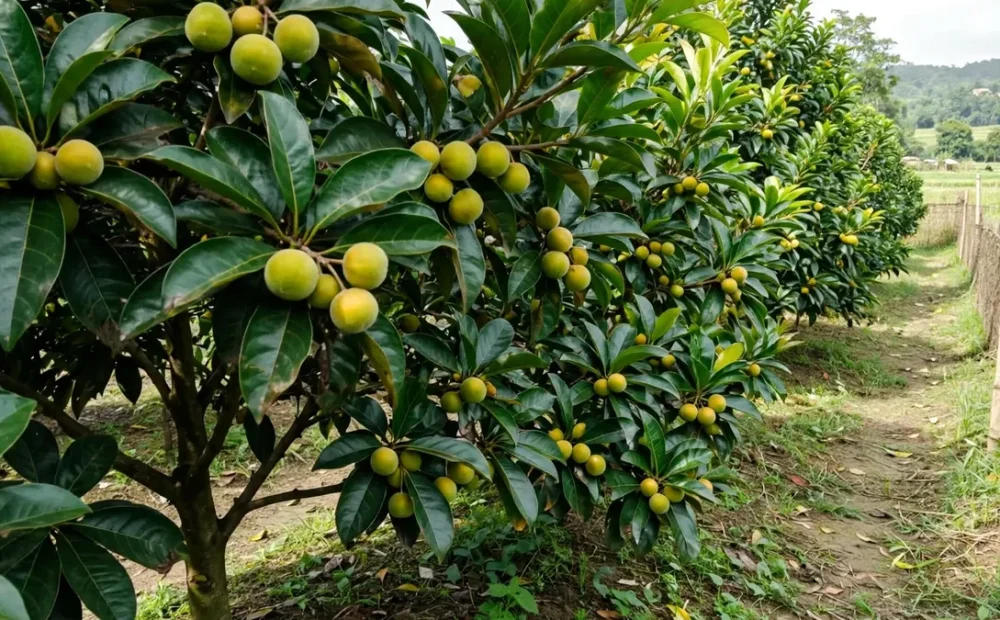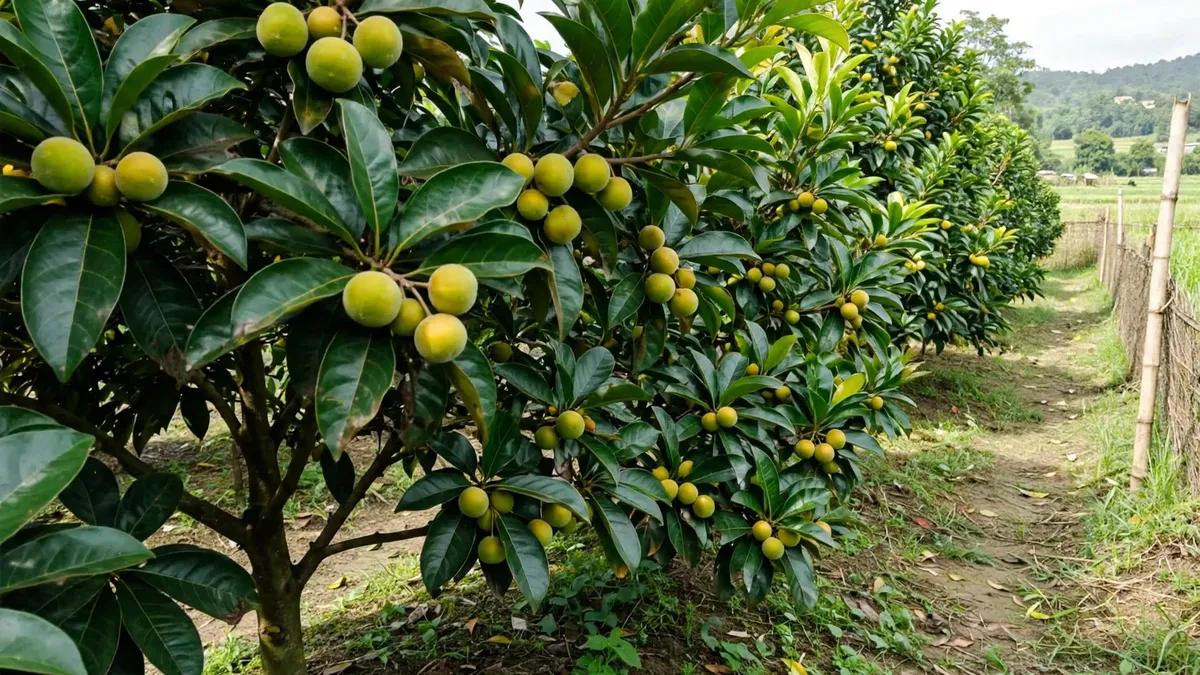

Two bites is all a kwai muk takes, and the taste stays with you for days. The fruit is round and small, its skin turning from green to a soft yellow as it ripens, and the flesh inside is pale gold, tender, and sweet. It grows on low trees across the warm south of China, and the best way to eat one is standing under the branch it came from, while the skin is still warm.
Life on a kwai muk farm follows the fruit. The trees are short enough to walk beneath, the harvest comes a little at a time through the summer, and the kitchen puts the fruit on the table fresh at breakfast and in cool desserts after lunch. Rooms are simple, the host is out among the trees each morning, and the harvest sets the day.
What follows is nine farm stays, from the orchard country of Guangdong, where kwai muk began, to a warm grove in Queensland. Each one is judged on its strengths, its drawbacks, and the kind of traveller it suits best.
Key takeaways
- Kwai muk is a small southern Chinese fruit, and the stays worth your money are the farms where the orchard is the heart of the place.
- Look for skin that has turned yellow-green and gives a little under the thumb; a hard, fully green fruit is not ripe yet.
- The harvest runs through the summer, about June to August, and the district you choose decides your dates.
- The room rate usually buys the walk and the tasting. Meals, lifts and cooking classes are often charged on top.
- Tell the kitchen about wheat in advance, in writing. Bread and cakes come out of the oven every morning, and flour gets everywhere.
What a kwai muk farm retreat actually is
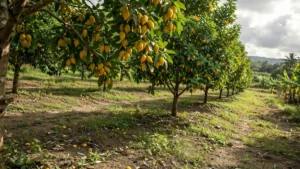
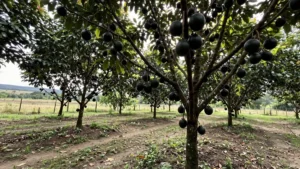
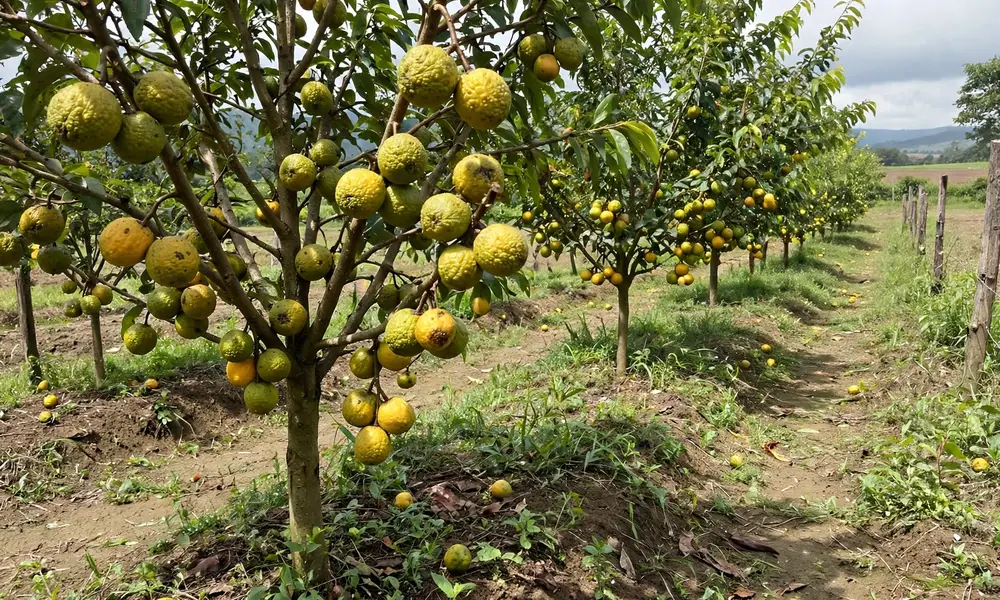
It means sleeping on, or next to, a working kwai muk orchard. The trees grow in tidy rows on warm low ground, short and broad, fruit hanging singly from the branches. Because the fruit ripens one by one, the picking stretches across the whole summer, and the farm eats most of what it gathers.
What makes it different from an ordinary farm holiday is the single crop at the centre of everything. The fruit shapes the day, from the halves served at breakfast to the chilled puddings after lunch and the sorbet the kitchen makes on Sundays. Rooms are plain, the host is out pruning, and the clock matters less than the trees.
Before you commit, find out exactly what the nightly rate buys. Some places are farm-first, with basic rooms and a host who is in the orchard at dawn. Others are comfortable guesthouses inside an orchard, where the farm work stays mostly out of sight. Both can be good holidays, but they are not the same holiday. Our guide to luxury jackfruit farm retreats makes the same point from the other side: read what the rate covers before the photographs decide for you.
How we picked these stays, and what to ask first
We chose places where the kwai muk trees are the point of the stay. A strong retreat grows its own fruit, builds an orchard walk or a tasting into the visit, and is honest about the months when the trees are bare.
Season comes first. In Guangdong and Guangxi the fruit comes through the summer, with the peak moving from one district to the next. Hong Kong gathers in high summer, Taiwan as the heat builds, and Queensland while the northern orchards are resting.
Then comes the price. At some stays the walk, the tasting and the cooking class are each billed separately, so ask before you book, and ask about breakfast, the shared garden, and which languages the host speaks. A farm that sets out every charge clearly is usually a farm run with care. If cempedak appeals more, the luxury cempedak farm retreats we covered earlier follow the same small-stay pattern.
The 9 best luxury kwai muk farm retreats of 2027
Guangzhou, Guangdong — Kwai Muk in the Pearl River Orchard Country
What we like: Guangzhou sits in the warm low country where kwai muk began, and the fruit here is the old kind, small, fragrant, and sweet. Each morning the host takes guests out between the rows with a basket.
What to consider: Afternoons are hot and sticky, and a rainy week can split the fruit before it is picked. The farm is a drive from the nearest town, so fix a lift ahead of time. Best for: Travellers who want kwai muk in the place it first grew. Style: A whitewashed house at the edge of the rows. Price range: $65–$95 a night, breakfast included in the price. Standout feature: Picking walks at dawn, led by the host.
Shenzhen, Guangdong — Kwai Muk on the City’s Green Edge
What we like: This farm sits on the green fringe of the city, kwai muk in sheltered rows under a wide sky, the fruit small and full of honey. Guests stay in a comfortable brick house with a broad garden, and the host holds picking mornings for anyone who wants to join in.
What to consider: The city is near and the farm fills up while the fruit is coming in. After a dry week the paths are dusty, so bring shoes that can handle it. Best for: Travellers who want a generous harvest within reach of the city. Style: A brick cottage with a garden full of herbs. Price range: Between $95 and $125 per night, with the farm breakfast included. Standout feature: Picking mornings open to guests.
Foshan, Guangdong — Kwai Muk in the Old Orchard Districts
What we like: A farm in the old orchard country, kwai muk in deep soil beneath the hills, the fruit pale and sweet, slow to ripen. The rooms face the rows, the host keeps a small kitchen, and puddings are set to chill in a steel bowl on the porch.
What to consider: The lane up is narrow and the farm has few rooms, so book well ahead. Evenings stay warm enough to want a fan, and the nearest town is half an hour away. Best for: Visitors who like warm lowland air and long slow mornings. Style: A low house in the valley with hills on every side. Price range: $125–$160 a night, and both breakfast and dinner are covered. Standout feature: Chilled puddings from the farm kitchen.
Huizhou, Guangdong — Kwai Muk on the Warm Coast
What we like: A farm on the warm coast below the hills, kwai muk beside lychee trees, the kitchen halving the fruit for breakfast each morning. The house is old and low, the July air is soft, and the host can name every tree in the rows.
What to consider: The coast road is narrow and the farm has few rooms, so book early. Early in the season the fruit is still firm, and the sea wind picks up by the afternoon. Best for: Travellers after a calm green corner of the south. Style: A weathered house on the coast road. Price range: $160–$195 per night, with dinner in the rate. Standout feature: Kwai muk halves at breakfast every morning.
Yangjiang, Guangdong — Kwai Muk by the Sea
What we like: A farm in the dry hills near the coast, kwai muk ripening early in long rows, the gate stall selling the fruit by the basket. The house stands among the rows, and the kitchen turns the fruit into sorbets as well as salads.
What to consider: The heat arrives early and the nearest city is an hour away by road. After a hot day the paths are baked hard, so bring sturdy shoes. Best for: Guests who want orchard days in strong southern sun. Style: A farmhouse set back among the trees. Price range: $195–$230 a night, all meals in the price. Standout feature: Kwai muk sorbets made in the farm kitchen.
New Territories, Hong Kong — Kwai Muk on the Harbour Hills
What we like: A hillside farm where kwai muk grows on steep terraces above the harbour, fruiting while the mainland orchards rest. Guests sleep in a stone cottage, and at breakfast the host serves the fruit chilled, with cream from a dairy nearby and spoons laid beside each bowl.
What to consider: The wind off the water is strong and the farm is a drive from the city. The picking window is short, so the dates count for more than the rate. Best for: Travellers who want kwai muk with a sea view. Style: A stone-built cottage on the hillside. Price range: $230–$265 a night, breakfast and dinner covered. Standout feature: Chilled fruit served with cream from the neighbouring dairy.
Taipei, Taiwan — Kwai Muk in the Warm Northern Groves
What we like: Kwai muk thrives in the warm rich soil here, sold by the basket at the gate stall. The host family has grown it for two generations, the fruiting season is long, and the kitchen freezes the flesh into granita that guests can take home in tubs.
What to consider: The road winds a long way and the farm books out through the picking months. Showers come through often, so pick at first light and take shelter when the sun comes back. Best for: Travellers who want a long season and warm soil. Style: A hillside house beside the farm gate. Price range: $265–$300 a night, covering the walk, the cooking class, the lifts and all meals. Standout feature: Kwai muk granita made on the farm.
Chiang Mai, Thailand — Kwai Muk Where the Mountains Begin
What we like: A small farm in the hills, kwai muk in neat rows behind an old barn, the stay a polished cottage above the valley. The fruit is sweet, the farm holds a tasting each week, and the kitchen blends the flesh into smoothies every morning.
What to consider: The price is the highest on this list so far, and the farm is a drive from the city. The picking window is narrow, so settle the dates before you book. Best for: Travellers who want kwai muk within reach of the hills. Style: A cottage on the slope with the valley beneath it. Price range: $300–$340 a night, every meal covered. Standout feature: A tasting each week on the terrace over the valley.
Cairns, Queensland — Kwai Muk in the Tropical North
What we like: A grove in the warm north, kwai muk beside mangoes, the fruit served chilled at every meal. Guests sleep in a low timber house with a garden in the shade, and the host churns the flesh into ice cream on Sundays.
What to consider: The farm is a long drive from the city, and summer rain can soften the fruit by midday. Biting insects appear on still evenings, so bring repellent. Best for: Travellers after orchard days in a noted food region. Style: A timber house under the shade trees. Price range: $345–$380 a night, meals, tastings and the picking walk in the rate. Standout feature: Fresh kwai muk ice cream at Sunday lunch.
Which kwai muk region fits your trip
For the most traditional fruit, Guangzhou or Shenzhen is the choice: working orchards, and the fruit at every meal. For the wildest setting, the New Territories, where the farm stands on terraces above the harbour. For the strongest flavours, Huizhou, where the sun is fierce and the harvest is heavy.
For a first trip, Huizhou is the simplest pick: the farm is used to visitors, the season is long, and the kitchen cooks with the fruit every day. Our guide to the luxury marang farm retreats makes the same point: pick the farm that cooks with its crop daily.
The caveats that matter
Kwai muk retreats are lovely, but they suit some travellers better. The harvest decides the season, the farms are a long way from town, and the honest ones say plainly what is ripening and what is not.
| Detail | What is known |
|---|---|
| Best time to visit | Summer, while the trees are fruiting; the exact weeks move from one district to the next |
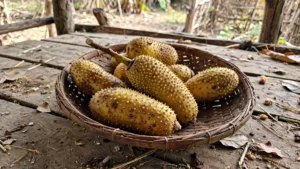
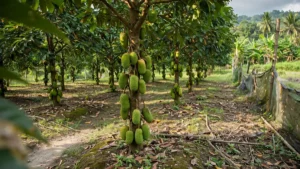
| The two main kinds | Kwai muk is the small southern Chinese original with soft pale flesh; jackfruit is its far larger cousin, firm and heavy |
| How ripe fruit looks | Yellow-green all over, soft under a gentle press, sweet-smelling at the stem, no hard patches |
| What is usually included | Room and breakfast with a walk or a tasting; cooking classes and lifts are often extra |
| Who should go | Slow travellers, food lovers, and families with older children |
| Who should think twice | Anyone after nightlife, fast service, or a packed daily schedule |
| Transfers | Often an hour or more from the nearest airport; fix the lift before you travel |
| What is not guaranteed | Fruit on your dates; the harvest depends on weather and the tree’s own pace |
Kwai muk itself has no gluten, but the farm kitchen bakes bread and cakes each morning, so ask how it keeps flour off your plate. The fruit is soft and bruises quickly, so eat it on the day it is picked and take ice cream home instead of fresh fruit. The seeds are small and are only safe cooked, so scoop around them. If you have a health condition, are pregnant, or are bringing small children, check the nearest clinic, the last spray date, and how steep the paths are before you book.
Checklist: booking a kwai muk farm stay honestly
Go through these checks before you pay, and again the week before you travel.
- Fruiting: ask if the trees will be bearing on your dates, not just whether the farm is open.
- Costs: get the price of the walk, the tasting, the meals and the lifts, and what is charged apart.
- Distance: how long the airport drive is, and whether the farm sends a pickup.
- Room: does the window face the rows or the garden, and is there shade, a fan, or cooling?
- Growing: how many trees the orchard holds, whether it is organic, and the last spray date.
- Reviews: read guests who went in the same season as the trip you have planned.
Frequently asked questions
Which months are best for kwai muk?
It moves with the district. Guangdong and Guangxi bear through the summer, with the peak in July and August. Hong Kong gathers in high summer, and Taiwan and Queensland fruit as the heat builds.
How would you describe the flavour of kwai muk?
Sweet and soft together, the flesh scooping like a ripe plum. A ripe fruit is yellow-green and fragrant, with hints of honey, melon and vanilla; an unripe one is hard, pale and chalky. Eat the best ones chilled, on the morning they were picked.
Can visitors pick kwai muk themselves?
At most farms, yes, as long as you walk the rows with a guide and ask first. Some farms give guests a basket for a few fruits, while others leave the picking to the crew, because the fruit bruises easily and the branches snap. Mention it when you book, and wear long sleeves, since the branches are brittle.
Who should be careful eating kwai muk?
Most people are fine. The flesh suits most eaters, but the small seeds are only safe cooked, and anyone with a fruit allergy should warn the farm before booking. Rinse the fruit first, and eat small portions if your stomach is sensitive.
Which kwai muk farm is best for a first visit?
Huizhou, for the easiest journey and the longest season. The farm is used to visitors, the fruit runs through much of the summer, and the kitchen serves it at every meal.
What does a wheat-free traveller need to ask the farm?
Raise it when you book. Kwai muk on its own is gluten-free, and the rice dishes are safe as a rule. The risk is the morning bake: bread and cakes leave the oven daily, so ask what the farm does to keep flour off your plate.
The bottom line
A kwai muk farm retreat suits travellers who like their food to come from the tree next to them, and who are happy to let the harvest run the day. The fruit is sweet, the season is long, and the best stays gather it, serve it chilled, and turn the rest into ice cream without any fuss.
Choose by what you want most: the warm lowlands of Guangzhou, the sunny coast of Huizhou, or the terraced slopes of the New Territories — and take the ice cream home sealed, not the fruit itself. A tub of it will outlast any photograph.