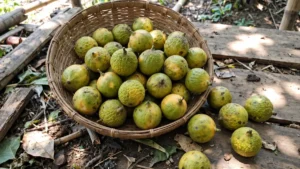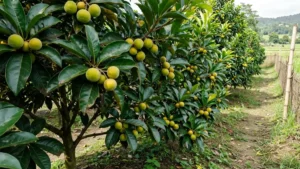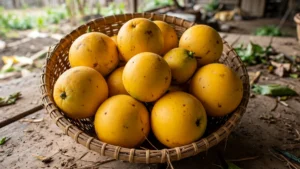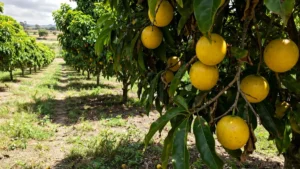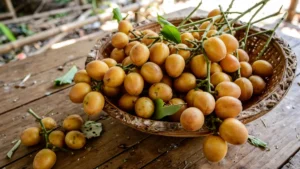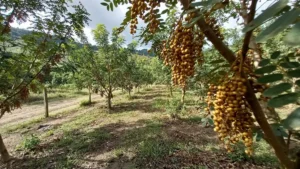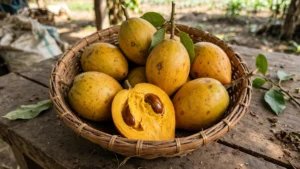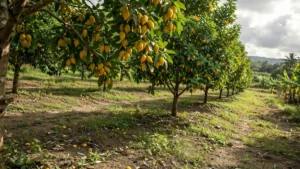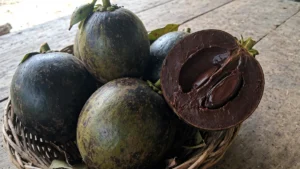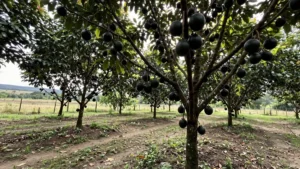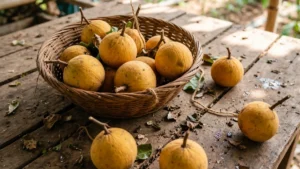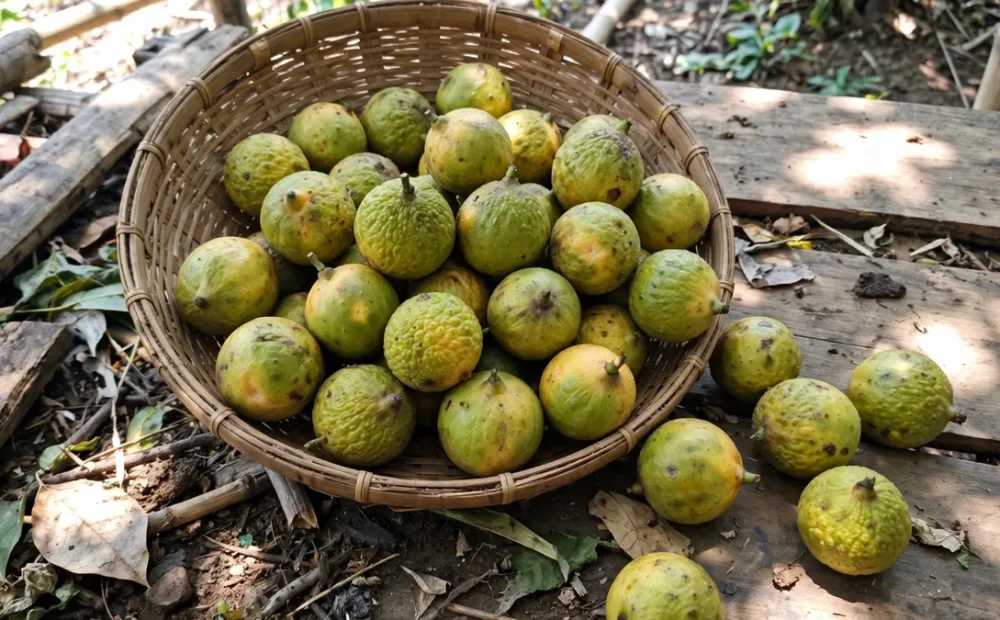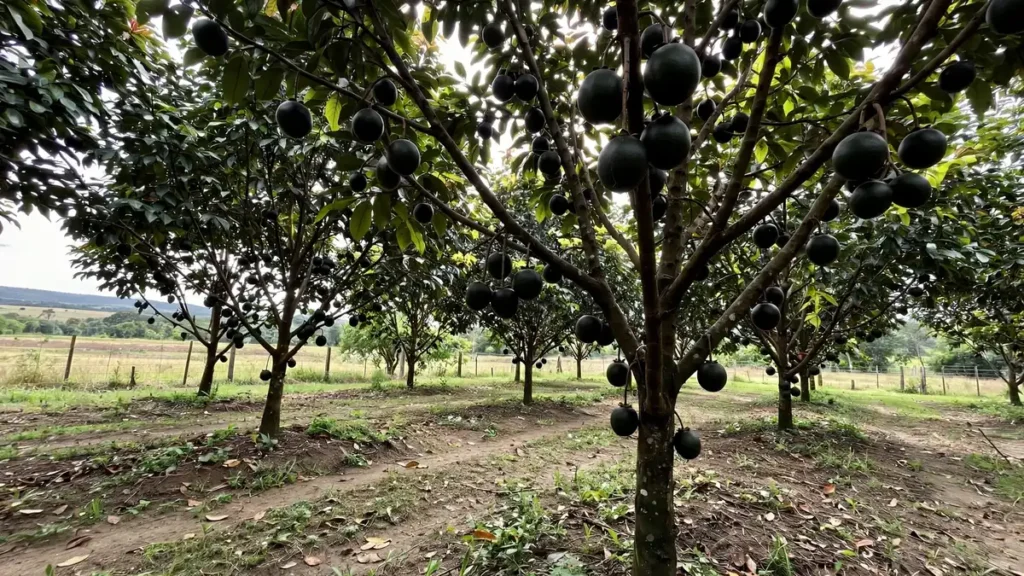
Long before chocolate reached Europe, the people of Mexico were already eating a fruit that tasted of it. Black sapote grows round and green on broad lowland trees, and as it ripens the skin darkens and the flesh inside turns soft, brown, and sweet, ready to eat with a spoon.
Staying on a black sapote farm means arranging your days around that ripening. The orchards lie across warm flat country in Mexico and Central America, the trees bear a few fruits at a time through the dry season, and the kitchen scoops the flesh for breakfast and whisks it into desserts. Rooms are simple, the host is out among the trees each morning, and the harvest decides the day.
What follows is nine farm stays, from Veracruz to a warm grove on Hawaii’s Big Island. Each entry weighs what the place does well, where it falls short, and who it suits most.
Key takeaways
- Black sapote is a lowland fruit of Mexico and Central America, and the stays worth booking put its orchard at the centre of the trip.
- Ripe fruit is dark all over and yields to a soft press; green, hard fruit needs more days on the branch.
- The harvest runs through the dry season into early summer, so the region you pick fixes your dates.
- A nightly rate usually buys the room, the orchard walk and the tasting; meals, lifts and cooking sessions are often charged apart.
- Tell the farm kitchen about wheat in advance. Bread and cakes come from the oven every morning, and flour travels through the kitchen air.
What a black sapote farm retreat actually is
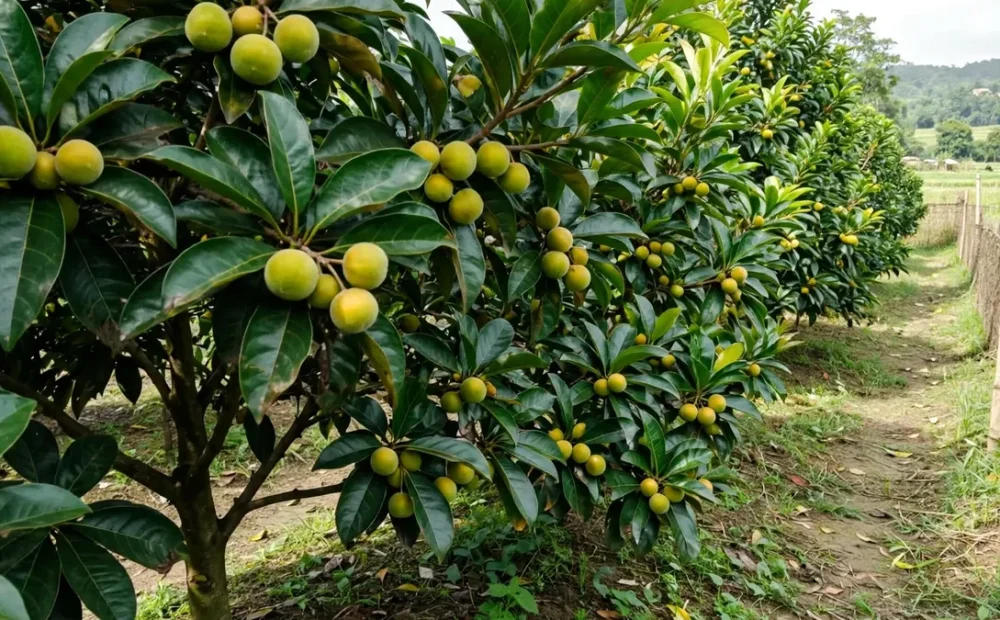
You sleep on, or beside, a working black sapote orchard. The trees stand broad and leafy across warm flat ground, fruit hanging one by one from the branches, and because the fruit ripens singly the gathering stretches across the whole season. Picking is done by hand, and most of the crop is eaten on the farm itself.
What makes the stay different from an ordinary farm holiday is the single crop at its heart. It sets the pace of the day: a scooped half at breakfast, mousse after dinner, ice cream on a Sunday. Rooms are plain, the host prunes by sunrise.
Before committing, find out exactly what the nightly rate buys. A few of these places are working farms first, with plain rooms and a host who spends the morning in the orchard. Others are comfortable guesthouses set inside an orchard, offering more ease and less farm work in view. Both kinds reward a stay, though they are different holidays, and the price per night is usually the clearest sign of which you are getting. Our guide to luxury persimmon farm retreats puts it another way: persimmon is black sapote’s cousin in the same genus, and the rate is still the truest guide to what a stay contains.
How we picked these stays, and what to ask first
We chose places where black sapote trees anchor the stay rather than decorate it. A strong retreat grows its own fruit, builds an orchard walk or a tasting into the visit, and speaks plainly about the months when the branches hold nothing.
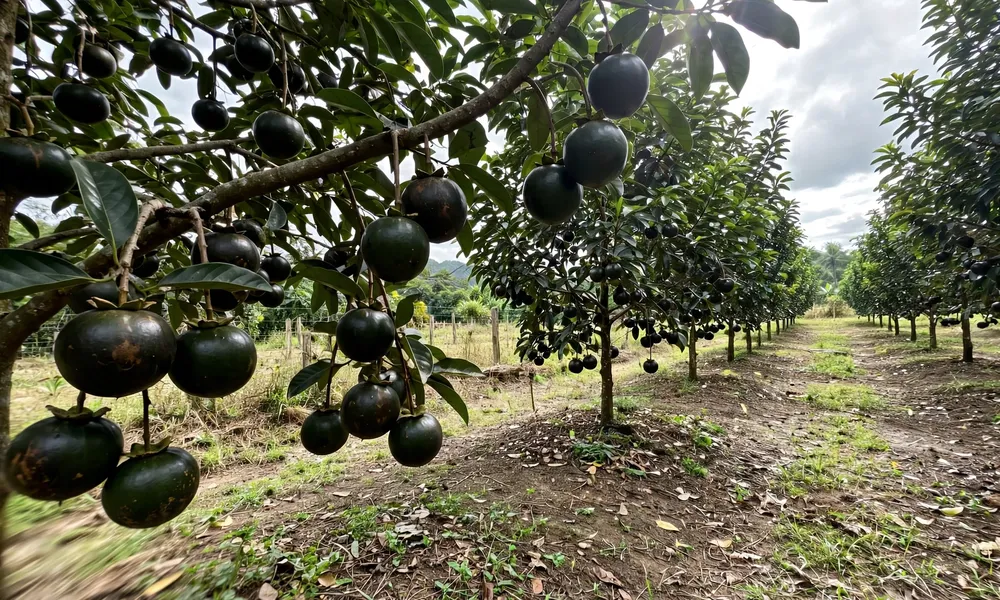
Season comes first. In Mexico and Central America the fruit comes through the dry season into early summer, with the peak moving by country. Veracruz and Oaxaca gather in the late dry months; Guatemala and Belize follow as the rains approach; Florida and Hawaii carry on while the northern orchards rest.
Then the inclusions. At some stays the walk, the tasting and the cooking session each carry a separate charge. Before booking, ask about breakfast, the shared garden, and the languages the host speaks. A farm that sets out every charge in the open is generally run with care. If sapodilla appeals more, the luxury sapodilla farm retreats we covered earlier follow the same small-stay pattern.
The 9 best luxury black sapote farm retreats of 2027
Veracruz, Mexico — Black Sapote in the Gulf Lowlands
What we like: Veracruz sits in the warm Gulf lowlands where black sapote has been eaten for centuries, and the fruit here is the old kind: large, dark, and rich as pudding. Each morning ahead of breakfast the host takes guests down the rows with a basket, setting out from a whitewashed farmhouse at the orchard’s edge.
What to consider: Midday heat is heavy and the ground softens after rain, so bring shoes that can handle mud. The nearest town is a drive off, so book a lift ahead of time. Best for: Travellers who want black sapote in the place Mexico has grown it longest. Style: Whitewashed farmhouse standing at the orchard’s edge. Price range: $65–$95 a night, breakfast served in the garden. Standout feature: Dawn walks through the rows beside the host.
Oaxaca, Mexico — Black Sapote beneath the Sierra Madre
What we like: A farm in the southern valleys where black sapotes grow in wide rows under a big sky, and the fruit arrives dark and spoon-soft. The stay is a comfortable adobe house with a broad garden, and the host runs picking mornings for guests who like to work.
What to consider: The sun turns fierce by noon and the nearest city is a long drive. After a dry week the paths are dusty, so bring shoes that can take it. Best for: Travellers after a heavy, generous harvest. Style: Comfortable adobe house standing close to the rows. Price range: $95–$125 per night, farm breakfast on the house. Standout feature: Picking mornings where guests may gather their own fruit.
Mérida, Yucatán — Black Sapote on the Limestone Plain
What we like: A farm on the flat limestone plain, black sapotes in rich soil beside old hacienda walls, the fruit dark, sweet, and slow to ripen. Rooms look across the orchard, and mousse is whisked in a clay bowl on the porch.
What to consider: The track in is rough and the farm fills while the fruit is coming in. Evenings stay warm enough to sit outside, and the nearest town is half an hour off. Best for: Visitors who enjoy warm evenings around the orchard. Style: A hacienda house on the plain, orchard all around. Price range: $125–$160 per night, breakfast and dinner in the rate. Standout feature: Mousse whisked on the porch.
Chiapas, Mexico — Black Sapote in the Green Highlands
What we like: A farm in the green highlands where black sapotes grow beside coffee, and the kitchen scoops the fruit for breakfast each morning. The house is old and low, the mountain air stays soft, and the host knows every tree in the rows.
What to consider: The mountain road is narrow and the farm keeps few rooms, so book early. Fruit stays firm in the early season, and mist rolls in by afternoon. Best for: Travellers who want a still, green corner of the south. Style: Old farmhouse up in the highlands. Price range: $160–$195 a night, dinner in the rate. Standout feature: Black sapote scooped fresh each morning.
Antigua, Guatemala — Black Sapote under the Volcanoes
What we like: A farm in the high valley east of Antigua, where black sapotes ripen early in long rows beneath a wide sky, and the gate stall sells the fruit by the basket. The house sits among the rows, and the kitchen uses the fruit in puddings as well as breakfasts.
What to consider: The heat builds early and the nearest city is an hour off. After a hot day the paths turn to dust, so bring shoes that can handle it. Best for: Guests who want orchard days with mountain air. Style: Farmhouse set among the rows. Price range: $195–$230 a night, with every meal on the house. Standout feature: Black sapote puddings from the farm kitchen.
Osa Peninsula, Costa Rica — Black Sapote beside the Rainforest
What we like: A rainforest farm where black sapotes grow on gentle slopes above the Pacific, and the season runs while the northern orchards rest. A timber lodge houses the guests. At breakfast the host brings the fruit out scooped, cream from a neighbouring dairy on the side.
What to consider: Rain falls hard off the forest and the nearest town is a drive away. The picking window is brief, so the dates count for more than the rate. Best for: Travellers who want black sapote by the sea. Style: Timber lodge above the shore. Price range: $230–$265 per night, breakfast and dinner served at the lodge. Standout feature: Fruit with cream from the dairy a short walk away.
Cayo, Belize — Black Sapote in the River Valley
What we like: Black sapotes grow in dark, rich soil here, and the gate stall sells them in baskets. The host’s family has grown black sapotes for two generations, and the kitchen freezes the flesh into ice cream for guests to take home in tubs.
What to consider: The road winds a long way, and the farm is booked solid through the picking months. Showers sweep through often, so pick at first light and take cover when the sun comes back. Best for: Travellers who want a long season and river-valley soil. Style: Riverside farmhouse beside its farm stall. Price range: $265–$300 a night, covering the orchard walk, the cooking session, the lifts and every meal. Standout feature: Black sapote ice cream made on the farm.
Homestead, Florida — Black Sapote in the Redland Orchards
What we like: A small farm in the Redland groves where black sapotes grow in neat rows behind an old barn, and the stay is a polished cottage with a garden view. The fruit runs dark, the farm holds a weekly tasting, and the kitchen blends the flesh into smoothies each morning.
What to consider: This is the dearest rate on the list, and the farm sits a drive from the city. The picking window is brief, so lock the dates in before you book. Best for: Travellers who want black sapote within reach of the coast. Style: A cottage in the groves, garden below. Price range: $300–$340 per night, full board in the rate. Standout feature: A weekly tasting on the terrace above the garden.
Hilo, Hawaii — Black Sapote on the Big Island
What we like: A grove in the warm east, black sapotes beside papaya, the fruit served scooped at every meal. Guests sleep in a low timber house with a shaded garden, and the host turns the flesh into ice cream on Sundays.
What to consider: The farm lies a long drive from the town and the afternoon rain can soften the fruit by midday. Biting insects appear on still evenings, so pack repellent. Best for: Guests who want orchard days in a famous food region of Hawaii. Style: A low timber house with a shaded garden and a porch. Price range: $345–$380 per night, with everything laid on. Standout feature: Fresh black sapote ice cream at Sunday lunch.
Which black sapote region fits your trip
Veracruz or Oaxaca holds the most traditional fruit: working orchards, and the fruit on the table at every meal. For the wildest setting, choose the Osa Peninsula, where the farm sits on slopes above the Pacific. For the boldest flavours, pick Antigua, where the sun is strong and the harvest is heavy.
For a first trip, Mérida is the easiest choice: the farm is used to guests, the season is generous, and the kitchen cooks with the fruit daily. Our guide to the luxury carambola farm retreats makes the same point: choose the farm that cooks with its crop daily, and the trip mostly takes care of itself.
The caveats that matter
Black sapote farm retreats are lovely, but they do not suit everyone. The harvest decides the season, the farms sit far from town, and the honest stays say plainly what is ripening and what is not.
| Detail | What is known |
|---|---|
| Best time to visit | Dry season into early summer, when the trees are in fruit; the window moves by country |
| The two main kinds | Black sapote is the dark chocolate-pudding fruit of Mexico; mamey sapote is a different orange-fleshed fruit, often confused with it |
| How ripe fruit looks | Dark all over, yielding to a soft press, and sweet-smelling at the stem, with no hard patches |
| What is usually included | Room and breakfast with an orchard walk or tasting; cooking sessions and lifts often cost extra |
| Who should go | Slow travellers, food lovers, and families with older children |
| Who should think twice | Anyone chasing nightlife, quick service, or a full daily programme |
| Transfers | Often an hour or more from the closest airport; arrange the lift before you arrive |
| What is not guaranteed | Fruit on your dates; the harvest leans on weather, season, and the tree’s own rhythm |
The fruit itself carries no gluten, yet the farm kitchen bakes bread and cakes each morning, so ask how it keeps flour away from your plate. The flesh is soft and bruises fast, so eat it the day it is picked and carry ice cream home instead of fresh fruit. The seeds are large and must never be chewed, so scoop around them. Small children, pregnancy and health conditions change what the trip needs. Learn how far the nearest clinic lies, when the farm last sprayed, and how steep the paths run, before you book.
Checklist: booking a black sapote farm stay honestly
Run through these checks before you pay, then once more in the week before you travel.
- Ask about fruiting: will the trees be in fruit on your dates, not only whether the farm is open?
- Ask about the rate: what the walk, the tasting, the meals and the lifts cost, and what each one adds.
- Ask about the journey: how long the airport drive takes, and whether the farm runs a pickup.
- Ask about the bedroom: does the window face the rows or the garden, and is there shade, a fan, or cooling?
- Ask about the growing: how many trees the orchard holds, if it is organic, and when it was last sprayed.
- Look for reviews from guests who travelled in the same season as the trip you planned.
Frequently asked questions
When is black sapote season?
It depends on the country. In Mexico and Central America the trees bear through the dry season into early summer, peaking in the late dry months. In Florida and Hawaii the window runs while the northern orchards rest.
What does black sapote taste like?
Sweet and soft at once, with flesh that scoops like chocolate pudding. A ripe fruit is dark and fragrant, with notes of cocoa, caramel, and vanilla; an unripe one is hard, pale, and chalky. Eat the best scooped, on the morning they were picked.
Can guests pick black sapote from the trees?
Most farms say yes, if you walk the rows beside a guide and check which trees are ready first. A handful keep guests out of the picking, since the fruit marks at a touch and the branches snap. Tell the farm when you book, and pack long sleeves for the branches.
Is black sapote safe for everyone to eat?
Broadly, yes. The flesh suits most people, but the big seeds must never be chewed or swallowed, and anyone with a fruit allergy should warn the farm ahead of booking. Wash the fruit first, and keep the first helping small if your stomach is delicate.
Where should a first-timer begin with black sapote farms?
Mérida, for the easiest journey and the longest season. The farm knows its guests, the fruit runs through much of the dry season, and the kitchen puts it on the table at every meal.
What should a gluten-free traveller ask on a black sapote farm?
Yes, if you raise it when you book. The fruit by itself holds no gluten, and the rice dishes are safe as a rule. The danger is the morning bake: bread and cakes leave the oven daily, so ask the kitchen how it keeps flour off your plate.
The bottom line
A black sapote farm retreat suits travellers who like their food to come from the tree beside them, and who are happy to let the harvest set the day. The fruit is dark, the season is generous, and the best stays pick it, serve it scooped, and churn the rest into ice cream without any fuss.
Choose the region by what you want most: the warm lowlands of Veracruz, the high valley of Antigua, or the rainforest slopes of the Osa Peninsula — and carry the ice cream home sealed, not the fruit itself. A tub of it will outlast any photograph.