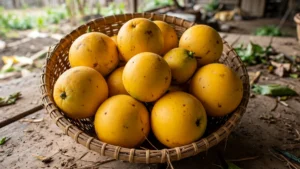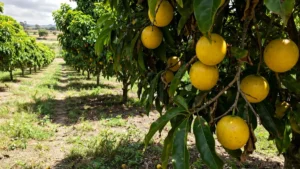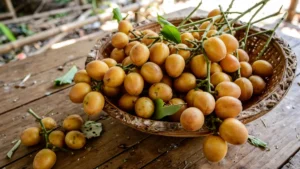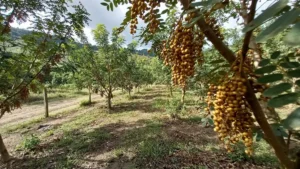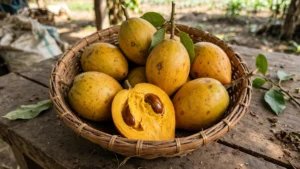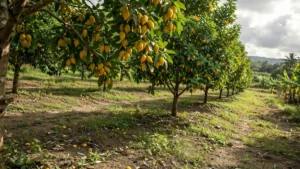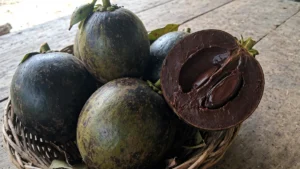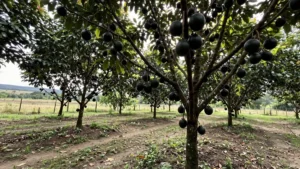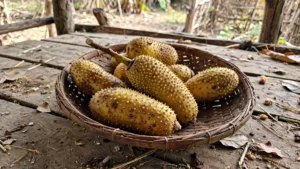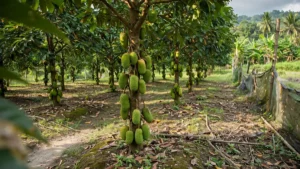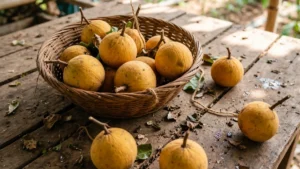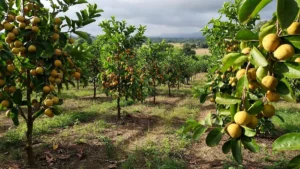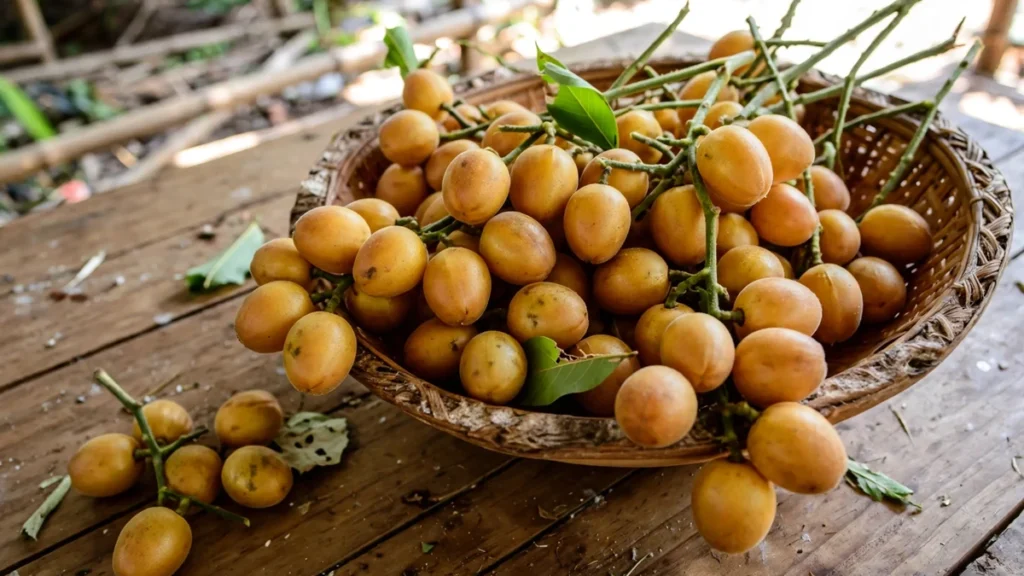
Wampee is a fruit you pick a cluster at a time, straight off the branch and into the basket. The fruit is small and golden, the flesh pale and tart-sweet, and the tree is low, so most of the picking happens at shoulder height. A farm escape built around it is a slow holiday: mornings in the rows, afternoons in the kitchen, evenings with a cold drink made from the morning’s fruit.
It takes more planning than booking a hotel. The harvest runs through summer, the farms sit far from the closest airport, and the best rooms are taken first. The steps below run in the order that saves you trouble: settle the dates, choose the farm, ask the hard questions early, and leave the fruit behind when you go.
Here is the whole trip, from the first message to the farm to the jar of jam you carry home. Nine steps, each short, each worth doing before you pay.
Key takeaways
- Wampee ripens through summer, and the harvest window sets your dates; sort the fruit first and the flights second.
- Book a farm that grows its own wampee and lets guests walk the rows; a farm that only serves the fruit is a different holiday.
- A ripe wampee is gold and comes off the stem with a light tug; the small hard seeds inside are never for chewing.
- Ask about the room, the meals, the lifts and the kitchen’s wheat rules before you pay — in writing, not by phone.
- Take jam home, not fresh fruit. Clusters bruise in a bag and spoil within a day, while a sealed jar keeps for months.
What a wampee farm escape actually is
A wampee farm escape is a few days on a working wampee orchard. You sleep in a room beside the rows, eat the fruit at every meal, and walk the orchard with the host each morning. The farm is small, the work is out in the open, and the fruit is why you came.
The harvest shapes the escape. Clusters ripen a few at a time, so the host picks each morning and the kitchen cooks with that day’s fruit. You will taste it fresh, as jam, and in cold drinks, and you will see the trees that grew it from your bedroom window.
A typical day starts before the heat. You walk the rows with the host while the fruit is still cool, taste a cluster or two straight from the branch, and carry the rest back in a shallow basket. Breakfast follows on the porch, the fruit on the table beside bread, eggs and tea. The middle of the day is for rest, reading, or a cooking session, and the late afternoon brings another walk, this time to watch the light change across the rows.
Be clear what you are booking before you commit. Some escapes are working farms with plain rooms and a host up at dawn. Others are guesthouses set in an orchard, with more comfort and less farm work in view. Both are worth the trip, but they are different holidays. Our guide to planning a longan farm escape says the same thing another way: read what the rate covers before the photographs win you over.
How to plan the trip, and what to ask first
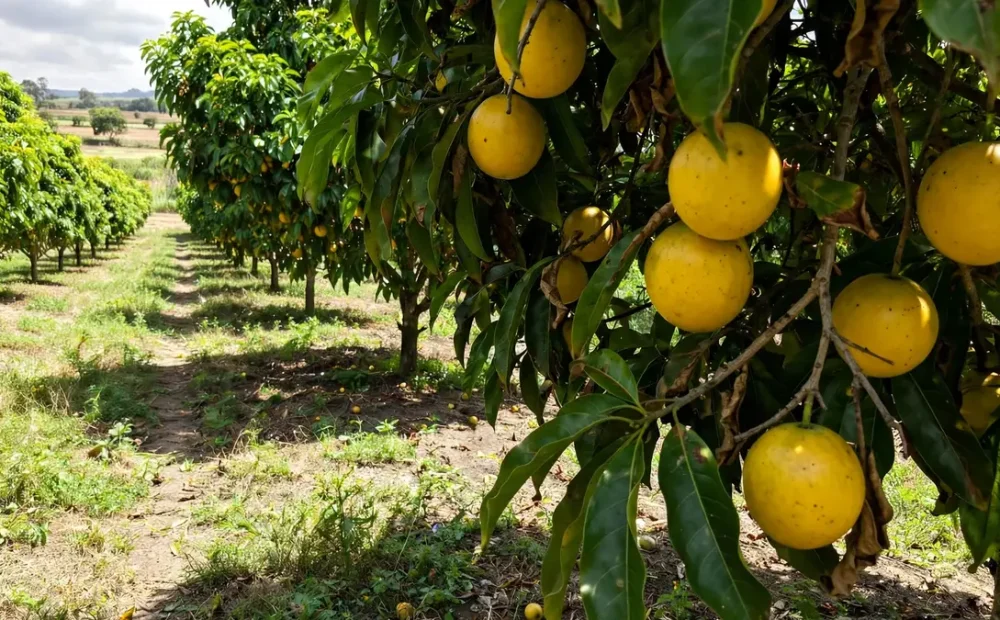
Begin with the season, then the farm, then the room. A farm that grows its own wampee, builds an orchard walk into the stay, and answers honestly about the months with no fruit is the farm to book.
Ask about the harvest dates before you ask about the room. Wampees ripen through the summer across southern China, and from early summer into autumn in Southeast Asia, the peak shifting with the country. Guangdong and Guangxi gather in high summer; Hainan begins sooner; Vietnam and Thailand keep going as China’s harvest ends.
Lifts matter more than most travellers expect. The farms sit an hour or more from the nearest airport, and the last stretch is often a dirt track a taxi will not take. Ask the farm to collect you, and agree the price in the same message as the room. A lift booked late costs twice as much and arrives half an hour after you do.
Then check what the price actually buys. Some stays charge the walk, the tasting and the cooking session apart from the room. Before you book, ask what breakfast covers, whether there is a shared garden, and which languages the host speaks. When a farm lists every charge up front, it is usually run with care. If lychee is more your taste, the guide to planning a lychee farm escape we covered earlier follows the same small-stay pattern.
The 9 steps to a wampee farm escape
1. Set the picking weeks before you book flights
What to do: Write to the farm and ask which weeks the clusters will be ripe on your dates. Ask for the picking window rather than the open season, and ask how last year’s harvest ran. Ask, too, whether the farm staggers its picking across the summer or gathers everything in one rush. A staggered harvest gives you a wider window; a single rush means your dates must be exact. What to avoid: Flights first, trees second. A farm being open is not the same as a farm in fruit. Best for: Travellers who want to pick, not only to look. Time needed: One message, and a day to hear back. Standout tip: Ask when the first clusters turned gold last summer.
2. Stay on a farm that owns its orchard
What to do: Ask how many trees the farm holds and whether the fruit at the table came from its own rows. A farm that grows its crop will talk about its trees by row and by name. What to avoid: A stay that buys its fruit in and serves it as a garnish. The orchard is the holiday, not the backdrop. Best for: Travellers who want the farm itself, not the view. Time needed: Half an hour of messages. Standout tip: Ask the host which row ripens first, and why.
3. Learn how to pull a cluster loose
What to do: Ask whether guests may pick, and how the fruit is carried back to the kitchen. Wampee bruises easily, so a good farm gives you a shallow basket and shows you the gentle tug that frees a cluster. A shallow basket keeps the clusters from crushing each other on the walk back. What to avoid: Yanking the stems or piling fruit into a deep bag. Stems snap, fruit crushes, and a crushed cluster is fit only for jam. Best for: Guests who want their hands on the harvest. Time needed: Ten minutes at the farm gate. Standout tip: Pick in the morning, while the fruit is cool and firm.
4. Choose a room over the rows, not the road
What to do: Ask which rooms face the orchard and which face the road. A room above the rows wakes you to birds and leaves; a room above the road wakes you to engines. What to avoid: Taking the last room on offer and waking to a blank wall. The view is half the stay, and orchard rooms go first. Best for: Travellers who want trees outside the window. Time needed: One message when you book. Standout tip: Ask for afternoon shade, when the western sun hits the rooms.
5. Ask about wheat before you pay anything
What to do: Write to the farm about wheat and gluten before you pay. Ask how the kitchen keeps flour away from your plate, and whether the morning bake shares a bench with your breakfast. What to avoid: Raising it at the table on the first morning. By then the bread is baked and flour is in the air. Best for: Travellers who need a wheat-free plate. Time needed: Five minutes of writing. Standout tip: Ask for the rice dishes by name, and whether they are cooked apart.
6. Shop for the week beside the cook
What to do: Ask the cook which morning the market runs and whether you may come along. A market morning shows what the region eats, and the cook will point out the fruit worth buying. Ask what the cook buys for the week, and whether the market sells fruit you cannot find at the farm. A good market morning ends with a bag of things you did not expect and a recipe you will use at home. What to avoid: Sleeping past the market and shopping at the gate stall instead. The stall is dearer and the choice is smaller. Best for: Food lovers who like to cook as well as pick. Time needed: One morning, early. Standout tip: Bring cash in small notes, and a bag of your own.
7. Bring small notes for the stall and the jam
What to do: Carry cash in small notes for the gate stall, the jam and the drinks. Most farm stalls take cash only, and the closest cash machine may be an hour away. What to avoid: Expecting a card to work at the gate. It will not, and the jam will be gone by the time you get back. Best for: Travellers who like to carry the farm home. Time needed: A stop at a cash machine before the farm road. Standout tip: Buy the jam on your last morning, not your first.
8. Bring home jam in a jar, not fresh clusters
What to do: Eat the fresh clusters at the farm and take home a sealed jar of jam. The jam keeps for months, travels well, and tastes of the orchard you walked. What to avoid: Carrying fresh fruit onto the flight home. It bruises in the bag, spoils within a day, and the seeds are no use to anyone. Best for: Travellers who want a keepsake that lasts. Time needed: Five minutes at the farm stall. Standout tip: Ask the host to mark the jar with the picking date.
9. Send the farm a note from home
What to do: Send the farm a short note once you are home, saying what you liked and what you would change. Mention the picking, the room, and the food, and say plainly what fell short. Farms that hear honest notes improve faster than farms that hear only praise. Small farms read every note, and yours shapes the next guest’s stay. What to avoid: Leaving without a word and letting the farm guess. A silent guest teaches the farm nothing. Best for: Travellers who want the farm to remember them. Time needed: Ten minutes at home. Standout tip: Name the room and the cook.
Which wampee region fits your trip
Guangzhou or Chaozhou holds the oldest fruit: working orchards, with the fruit at every meal. For the coolest setting, choose Chiang Rai, where the farm stands on terraces above the valley. For the strongest flavours, choose Nanning, where the sun burns and the harvest comes in heavy.
If it is your first wampee trip, start in Nanning: the farm welcomes guests warmly, the season stretches for weeks, and the kitchen uses the fruit daily. Our guide to planning a langsat farm escape says the same thing another way: pick the farm that cooks with its crop every day, and the trip mostly looks after itself.
The caveats that matter
A wampee farm escape is wonderful, but it does not suit everyone. The harvest sets the season, the farms sit far from town, and the honest ones say plainly what is ripening and what is not.
| Detail | What is known |
|---|---|
| Best time to visit | The summer months, while clusters hang ripe; the precise weeks shift by country |
| How long to stay | Three nights covers the picking, the market and the kitchen; five nights suits slow travellers |
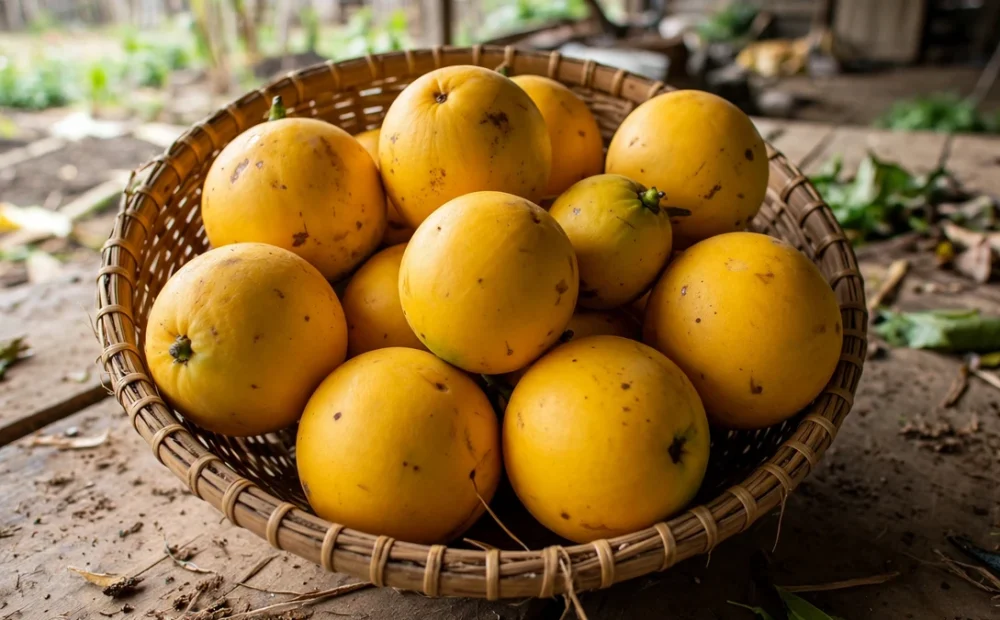
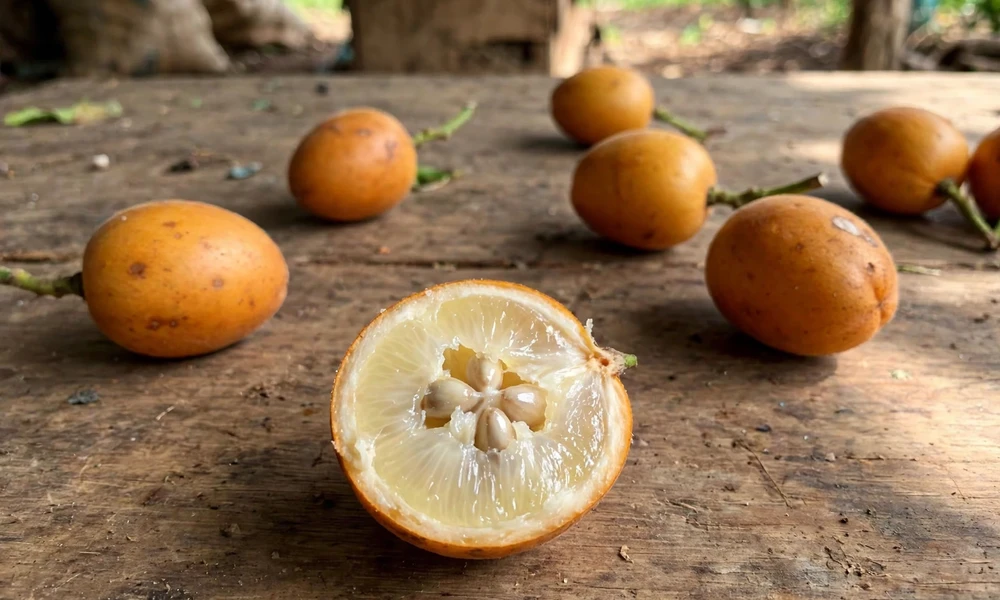
| How ripe fruit looks | Gold all over, parting from the stem with a light tug, and fragrant in the hand, with no pale patches |
| What is usually included | A room and breakfast, plus a walk or a tasting; the cooking session and the lifts are often charged apart |
| Who should go | Unhurried travellers, keen cooks, and families with older children |
| Who should think twice | Anyone who wants nightlife, quick service, or a full programme every day |
| Transfers | Often an hour or more from the closest airport, so fix the lift before you arrive |
| What is not guaranteed | Fruit while you are there; the harvest leans on weather, season, and the tree’s own pace |
A wampee itself carries no gluten, yet bread and cakes come out of the farm oven every morning, so find out how the kitchen keeps flour off your plate. The fruit is small, its seeds are bitter, and it is best eaten the day it is picked — take jam home rather than fresh clusters. Never chew the small hard seeds; spit them out. If you have a health condition, are pregnant, or travel with small children, the trip changes: ask where the nearest clinic sits, when the farm last sprayed, and how steep the paths run, before you book.
Checklist: planning a wampee farm escape honestly
Run through these checks before you pay, then once more in the week before you travel.
- Dates first: will the trees carry fruit while you are there, or only the farm be open?
- The bill: what the rate buys and what it leaves out — walk, tasting, meals, lifts, and the price of each.
- The drive: how long it takes from the airport, and whether the farm collects you.
- The room: where the window looks, and whether shade, a fan, or cooling is there.
- The orchard: how many trees it holds, whether it is farmed organically, and when it was last sprayed.
- Other guests: read travellers who went in the same season you plan to travel.
Frequently asked questions
When do wampees ripen?
It moves by country. Southern China peaks in July and August; Hainan starts sooner, and the Vietnamese and Thai harvests follow once China’s ends.
How does a wampee taste?
Tart and sweet together, with pale flesh that comes off the seed cleanly. Ripe fruit is gold and fragrant, tasting of grapefruit, green grape and lime; unripe fruit is pale, hard and sharp. Eat it fresh, the morning it was picked.
Can guests pick the fruit themselves?
Most farms agree, as long as you walk the rows with a guide and ask first. Some farms hand guests a basket for a few clusters; others leave the picking to the crew, since the fruit bruises and stems snap. Tell the farm when you book, and cover your arms, since the branches scratch.
Who should be careful eating wampee?
Most people can eat it freely. The flesh suits most people, but the small hard seeds must never be chewed or swallowed, and anyone with a fruit allergy should warn the farm ahead of booking. Wash the fruit first, and eat only a little if your stomach is delicate.
How long should a wampee escape last?
Three nights covers the picking, the market and the kitchen. Five nights suits travellers who want to slow down, walk the rows twice, and cook with the host. Under two nights is too short to catch the harvest rhythm.
How do I eat safely with a wheat allergy on a wampee farm?
Raise it when you book. Wampee itself carries no gluten, and the rice dishes are generally safe. The risk lies in the morning bake, when bread and cakes leave the oven daily. Ask how the farm keeps your plate free of flour.
The bottom line
A wampee farm escape fits travellers who like their food to come from the tree next door, and who are content to let the harvest run the day. The fruit is tart-sweet, the season is kind, and the best stays pick it, serve it chilled, and stir the rest into jam without fuss.
Plan by the harvest, not the calendar: settle the picking window first, choose a farm that grows its own fruit, and bring the jam home sealed, not the fruit. A sealed jar lasts far longer than a photograph.