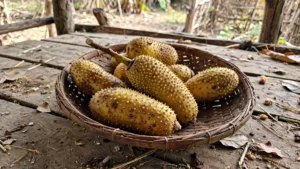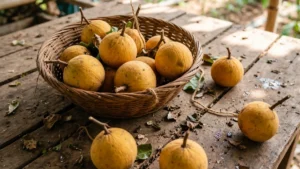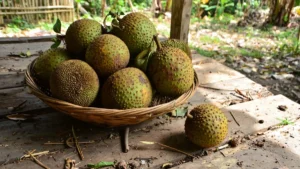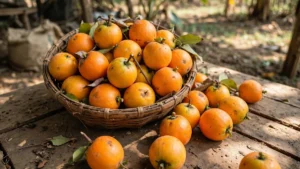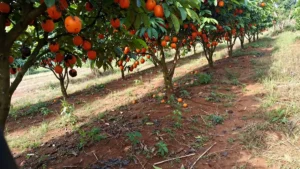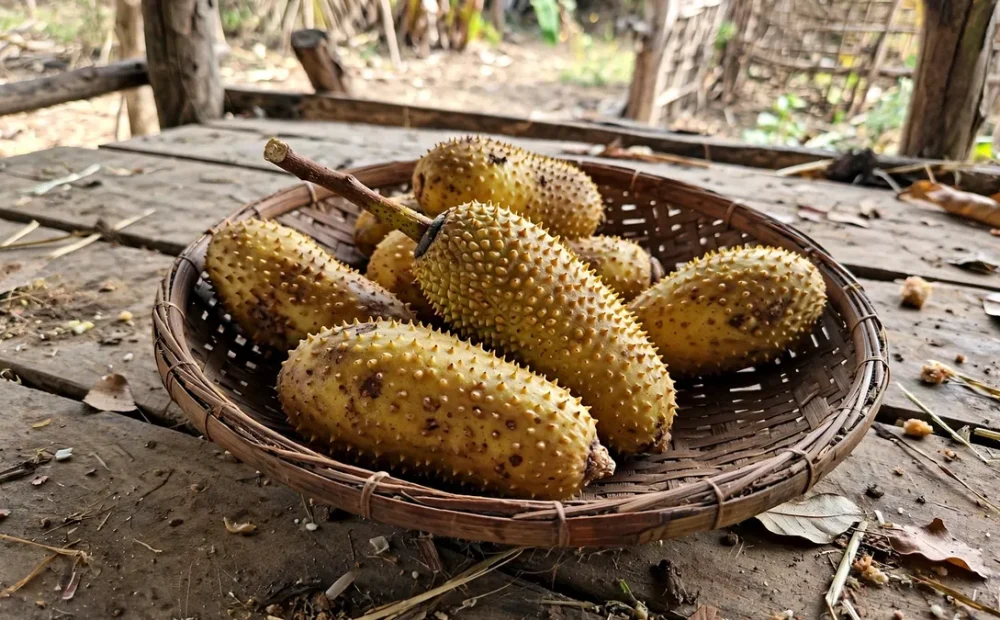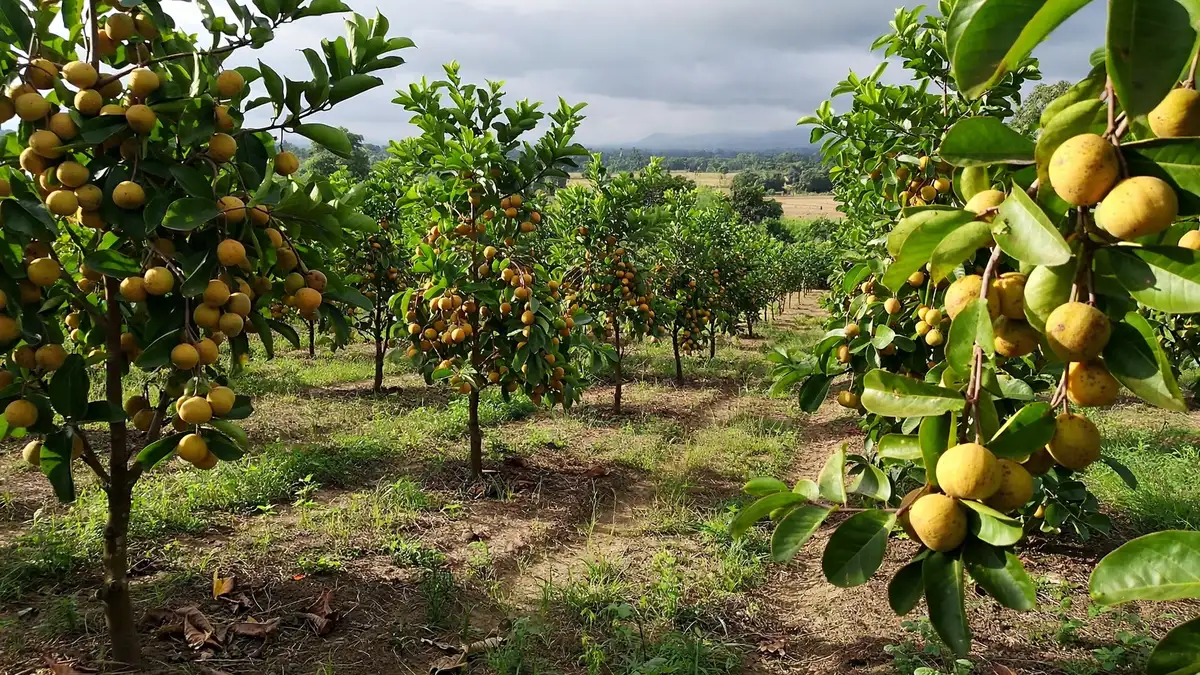
Santol is the fruit you eat with your fingers and a little patience. Its skin is round and golden, its flesh is white and cottony, and the pulp clings to the seeds inside like damp wool. It tastes sour first, then sweet, and the best of it never leaves the farm where it grew.
A stay on a santol farm is shaped by that short season. The trees fruit once a year, the harvest runs for a few weeks, and the kitchen turns the surplus into jam, chutney and a sharp green salad. The bedrooms are simple, the host walks the rows each morning, and the picking sets the rhythm of the day. The fruit comes in two kinds, the sweet Thai santol that you eat fresh and the sour wild santol that the kitchens prefer for salad and curry, and a good farm grows both so guests can taste the difference.
Nine santol farm stays follow, from the orchards of Chanthaburi where Thailand’s santol trade began to a warm grove in Queensland. Each one is weighed for its good points, its weak points, and the traveller it suits best.
Key takeaways
- Santol, or Sandoricum koetjape, is a round yellow fruit with cottony sour-sweet pulp around inedible seeds.
- The harvest is brief, so the dates matter more than the room, the price or the view.
- Farm kitchens cook what they grow, and the santol salad is the dish to judge them by.
- Prices run from $65–$95 a night at the simplest farm stays to $345–$380 at the grandest.
- Tell the farm in writing about wheat or gluten before you book, because farm kitchens bake with wheat flour and cross-contact is common.
Why Santol Farms Are Worth the Trip
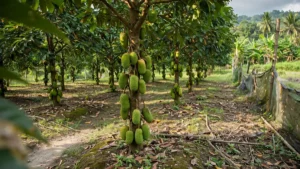
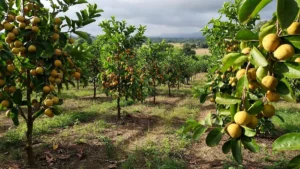
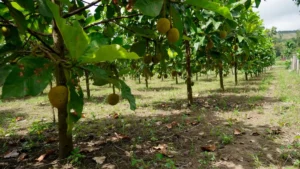
Santol grows across Southeast Asia, and it grows best where the rain is heavy and the soil is deep. Thailand plants more of it than anywhere else, and the orchards around Chanthaburi and Rayong supply the markets of Bangkok. The Philippines grows it on Luzon and Mindanao, Malaysia on Penang and in Perak, and Indonesia across Sumatra and Java. The fruit ripens in the wet months, roughly June to September in Thailand, and a farm that times its guests to the harvest gives them the fruit at its sharpest. The santol tree itself is a big one, growing to twenty metres or more, and a mature orchard shades the ground beneath it so completely that the picking rows stay cool even at midday.
The fruit itself is an oddity. The rind is thick and golden, the flesh inside is white and soft, and the pulp wraps each seed in a cottony coat that you suck clean and then set aside. The seeds are not for eating. Eaten fresh, santol is sour enough to make you blink, then sweet enough to reach for another. Cooked, it turns into jam, into a sour curry, and into som tam santol, the Thai salad that shreds the young fruit with chilli, lime and peanuts.
A farm stay puts you beside the tree while all of this happens. You walk the rows at dawn, you watch the cook shred the morning’s pick, and you eat the salad while the fruit is still warm from the sun. A hotel cannot offer that. A farm can, and the nine stays below are the ones that do it best.
The 9 Best Luxury Santol Farm Retreats 2027
Chanthaburi, Thailand
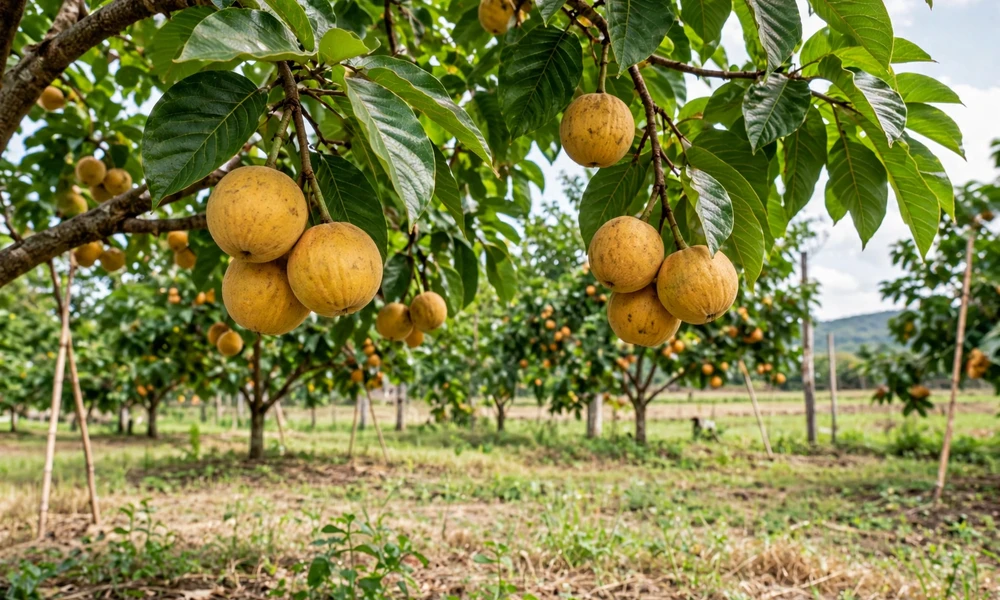
The orchards of Chanthaburi have grown santol longer than anywhere else in Thailand, and this farm sits in the middle of them. The trees are old, the rows are wide, and the host’s family has sold santol at the Chanthaburi market for three generations. Guests pick at dawn, before the heat settles, and the cook shreds the morning’s fruit into som tam santol for lunch.
What We Like: The oldest santol trees on this list, and a cook who has made the salad for thirty years. What to Consider: The rooms are plain and the road from Bangkok takes four hours. Best For: Travellers who want the cheapest way into a santol orchard. Style: A whitewashed farmhouse among the orchard rows. Price Range: $65–$95 a night, breakfast in the rate. Standout Feature: Sunrise picking before the heat arrives.
Davao City, Philippines
Davao grows santol on the slopes below Mount Apo, and this farm pairs the orchard with a view of the mountain. The trees here fruit a little later than the Thai orchards, which stretches the season for travellers who miss the first harvest. The host runs picking walks each morning and a salad lesson each afternoon, and the children of guests are welcome on both.
What We Like: A later harvest than Thailand, so the season runs longer. What to Consider: Afternoon rain is frequent and the paths turn to mud. Best For: Families who want picking the children can join. Style: A stilted timber house above the garden. Price Range: $95–$125 a night, breakfast and a tasting in the rate. Standout Feature: A santol salad lesson with the farm cook.
Penang, Malaysia
Penang’s santol orchards sit inland from George Town, and this stay pairs them with a heritage house that has stood since the 1920s. The fruit here is smaller and sharper than the Thai santol, and the kitchen makes a chutney from it that guests carry home in jars. The house tour runs between tastings, and the veranda is the place to eat the fruit at dusk.
What We Like: A heritage house with real history, and a chutney worth the luggage space. What to Consider: The fruit is sharper here, so first-timers should taste before they pick a basketful. Best For: Couples who want old Penang charm with their fruit. Style: A colonial-era house with wide verandas. Price Range: $125–$160 a night, breakfast and dinner in the rate. Standout Feature: Heritage house tours between tastings.
Chiang Mai, Thailand
Chiang Mai grows santol in the cool hills north of the city, and this farm sits high enough that the evenings turn cool. The orchard is smaller than the Chanthaburi farms, but the kitchen is the strongest on this list, and the hilltop dinner is cooked entirely from the day’s pick. Guests who want to learn the salad properly should come here.
What We Like: The best farm kitchen on this list, and cool mountain evenings. What to Consider: The orchard is small, so picking walks are short. Best For: Travellers who want cool mountain air and a kitchen. Style: A teak house on a quiet hillside. Price Range: $160–$195 a night, every meal in the rate. Standout Feature: A hilltop dinner cooked from the day’s pick.
Sumatra, Indonesia
Sumatra’s santol grows at the edge of the rainforest, and this lodge sits where the orchard meets the trees. The fruit here is wild in flavour, sharper and more fragrant than the farmed fruit of Thailand, and the forest walks run straight from the picking rows. Guests who want the wilder side of santol should come here, and bring shoes for the mud.
What We Like: Wild-flavoured fruit and forest walks from the door. What to Consider: The lodge is remote and the road is rough after rain. Best For: Adventurous eaters who want forest-edge picking. Style: A longhouse-style lodge at the forest edge. Price Range: $195–$230 a night, meals and tastings in the rate. Standout Feature: Forest walks that end at a tasting table.
Lucban, Quezon
Quezon’s santol groves lie a few hours south of Manila, and this stay is the quietest on the list. The grove is small, the host family cooks for six guests at most, and the picnic under the santol canopy is the centre of the day. Travellers who want to escape Manila without a flight should look here first.
What We Like: A small grove, a small table, and real quiet. What to Consider: Only six guests at a time, so the farm books out early. Best For: Travellers who want a quiet grove near Manila. Style: A nipa-roofed cottage beside the grove. Price Range: $230–$265 a night, full board in the rate. Standout Feature: A grove picnic under the santol canopy.
Langkawi Island, Malaysia
Langkawi pairs its santol orchard with the sea, and this villa sits between the two. Mornings belong to the orchard, afternoons to the boat, and the kitchen serves santol with grilled fish in the evening. It is the only stay on this list where the fruit and the beach share a day, and travellers who want both should come here.
What We Like: Orchard mornings and island afternoons in one stay. What to Consider: The orchard is smaller than the mainland farms. Best For: Travellers who want island air with their orchard. Style: A beachside villa with an orchard garden. Price Range: $265–$300 a night, full board and tastings in the rate. Standout Feature: Island boat trips between orchard mornings.
Ubud, Bali
Bali grows santol on the terraced hillsides around Ubud, and this villa is built into them. The orchard steps down the hill in terraces, the temple at the top of the valley is a short walk away, and the farm lunch pairs santol with the island’s rice and spice. Travellers who want Bali’s temples and its fruit in one trip should come here.
What We Like: Terraced orchards and a temple walk from the door. What to Consider: The hillside is steep and the paths are uneven. Best For: Travellers who want terraces, temples and tastings. Style: A stone villa terraced into the hillside. Price Range: $300–$340 a night, all meals and tastings in the rate. Standout Feature: A temple visit paired with a farm lunch.
Mareeba, Queensland
Mareeba grows santol in the warm tablelands west of Cairns, and this homestead is the most comfortable stay on the list. The orchard is young but generous, the house is airy and shaded by rain trees, and the tasting flight runs from jam to chutney to dried santol. It is the farthest south santol grows well, and the most relaxed way to taste it.
What We Like: The most comfortable house on this list, and a full tasting flight. What to Consider: The orchard is young, so the trees are smaller than the Thai giants. Best For: Travellers who want Australian comfort with tropical fruit. Style: A Queenslander homestead shaded by rain trees. Price Range: $345–$380 a night, all meals, tastings and transfers in the rate. Standout Feature: A tasting flight of jams, chutneys and dried santol.
What to Look for in a Santol Farm Stay
The first thing to check is the harvest. Santol fruits once a year, and a farm that takes guests outside the harvest is selling a room, not a santol stay. Ask for the picking dates in writing, and ask what the farm does when the fruit runs early or late. A good farm will tell you plainly. A farm that cannot give you dates is not a santol farm that week.
The second thing is the kitchen. Santol is a cook’s fruit, and the farm that only serves it raw is missing half of it. Look for a kitchen that makes the salad, the jam and the chutney, and ask what the cook served yesterday. The answer tells you more than any brochure. The mangosteen farm retreats we covered earlier follow the same rule, and the kitchens that cook their own fruit are the ones guests remember.
The third thing is the table. Farm kitchens bake with wheat flour, and a guest who needs wheat kept out of their meals must say so in writing before booking. Ask whether the kitchen can cook the santol dishes without wheat, whether the salad dressing is wheat-free, and whether the bread is served apart from the fruit. A farm that answers clearly is a farm that has done this before.
Planning Your Santol Farm Escape
Book the harvest first and the flights second. The season is short, the best farms take few guests, and a flight booked before the dates are fixed is a flight wasted. Write to the farm, ask for the picking window, and only then look at fares. The rambutan farm retreats run on the same short-season logic, and the travellers who plan around the fruit have the better trip.
Pack for heat, sudden rain and sticky hands. Santol juice stains, the pulp clings to the fingers, and the afternoon rain arrives without warning in the wet months. Bring a light rain layer, shoes that can take mud, and clothes you do not mind staining. Leave the white linen at home.
Carry home jam and dried santol, not fresh fruit. Fresh santol bruises in a bag and border rules often forbid it, but the jam and the dried fruit travel well and keep for months. The langsat farm retreats share the same advice, and the jars are the souvenir that actually gets eaten.
Santol at a Glance
| Detail | What is known |
|---|---|
| Botanical name | Sandoricum koetjape, a tree of the mahogany family |
| Fruit | Round and golden, with thick rind and cottony white pulp |
| Flavour | Sour first, then sweet, with a milky note |
| Season | Once a year, roughly June to September in Thailand |
| Where it grows | Thailand, the Philippines, Malaysia, Indonesia and northern Australia |
| How it is picked | Cut from the branch when the rind turns golden and gives slightly |
| How it is eaten | Fresh, or shredded into salad, jam, chutney and sour curry |
| Allergy note | Seeds are not for eating; wheat cross-contact is common in farm kitchens |
Your Santol Farm Checklist
- Ask for the picking dates in writing before you book anything else.
- Tell the farm about wheat or gluten in writing, and ask how the kitchen handles it.
- Pack a light rain layer and shoes that can take mud.
- Bring clothes you do not mind staining with santol juice.
- Leave room in the bag for jars of jam and dried santol.
- Check whether fresh fruit can cross the border home before you buy a basketful.
Frequently Asked Questions About Santol Farm Retreats
When is santol in season?
Once a year, in the wet months. In Thailand the harvest runs roughly June to September, and the Philippines and Malaysia follow a similar calendar. The exact weeks shift with the rain, so ask the farm for the current year’s dates rather than trusting last year’s.
Can you eat santol straight from the tree?
Yes, and that is the best way to eat it. Peel the rind, suck the cottony pulp from around the seeds, and set the seeds aside. The seeds are not for eating, and the pulp is the part worth having.
Is santol the same as mangosteen?
No. Santol is Sandoricum koetjape, a round yellow fruit with cottony pulp, while mangosteen is a purple fruit with white segments. They grow in the same countries and share a season, but they are different fruits from different trees.
What is som tam santol?
A Thai salad made from young santol, shredded and tossed with chilli, lime, peanuts and fish sauce. It is sour, hot and crunchy, and it is the dish most farm kitchens are proudest of. Ask for it on the first day. The peanuts give it a crunch that the soft pulp lacks, and the lime keeps the sourness bright rather than flat.
Can a wheat-free guest eat at a santol farm?
Yes, if the farm knows in advance. Tell the farm in writing before you book, ask whether the santol dishes can be cooked without wheat, and ask whether the bread is served apart from the fruit. A farm that has done this before will answer clearly.
What should you bring home from a santol farm?
Jam, chutney and dried santol. They travel well, keep for months, and pass border checks that fresh fruit often fails. Fresh santol bruises in a bag and is often forbidden at the border, so buy the jars instead.
The Bottom Line
Santol is a fruit that rewards the traveller who plans around it. The harvest is short, the fruit is sour-sweet and strange, and the farm kitchens that cook it properly are worth the journey. Pick the farm by its dates and its kitchen, not by its photographs, and tell it about wheat before you pay anything.
Chanthaburi is the cheapest way in and Chiang Mai has the best kitchen, while Mareeba is the most comfortable stay and Sumatra the wildest. Whichever you choose, arrive in the harvest, eat the salad on the first day, and carry home the jam.