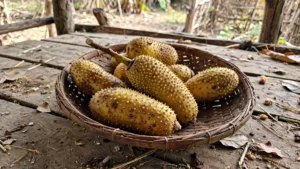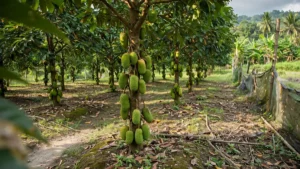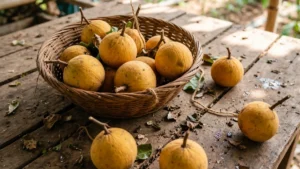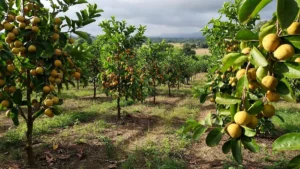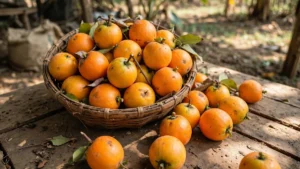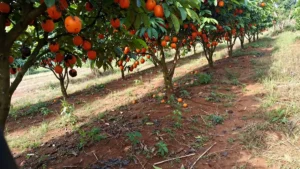

Three nights, one farm, and a fruit that hides a star inside it: that is the whole shape of an African star apple farm escape. You sleep within earshot of tall shade trees, you rise before the heat, and you eat orange segments that were hanging on a branch an hour before breakfast. No lobby, no concierge, no programme — the trees set the day, and you follow it.
That dependence on the trees is the gamble and the charm at once. The dry-season window is short and the fruit ripens a little at a time; the best fruit never leaves the farm — it sells at the gate the morning it is cut. Arrive in the middle of the window and the branches hang heavy; arrive a week late and you will sleep beside bare wood. Here, planning means picking a fortnight, not a hotel.
Nine decisions shape the trip, from the first taste at a market stall to the jars you pack for home. They run in order below: the dates, the region, the kitchen, the room, the packing, and the questions to ask before any money moves. Because the trees ripen a few fruit at a time rather than all at once, a good stay keeps you near the farm for several mornings, so you catch each tree at its sweetest.
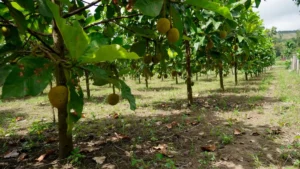
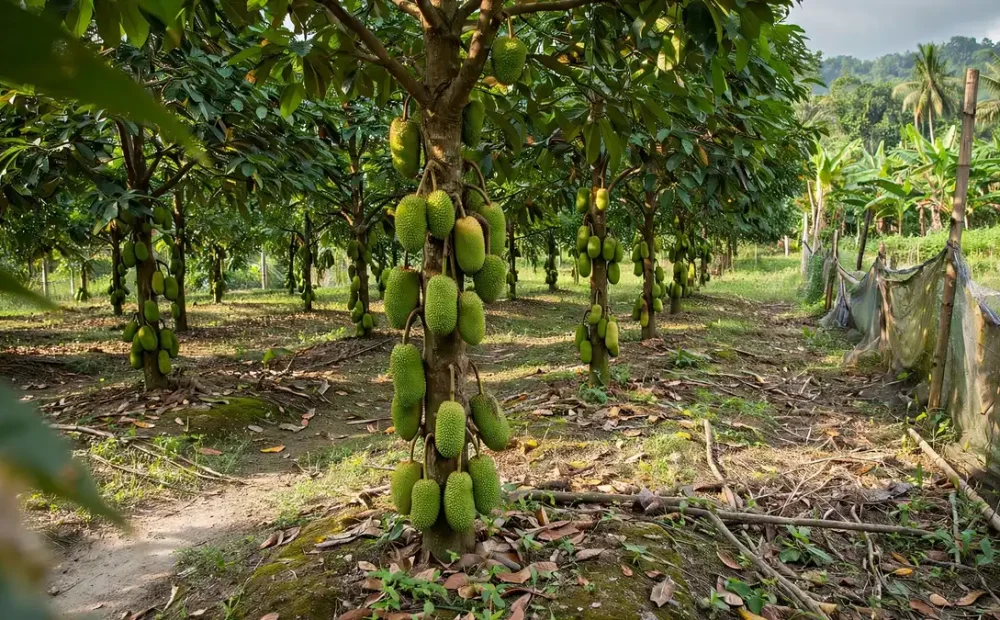
- Agbalumo trees are tall shade trees, and the escape works around their shade rather than formal rows.
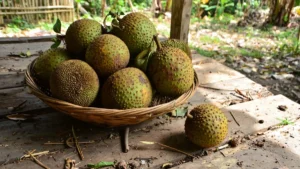
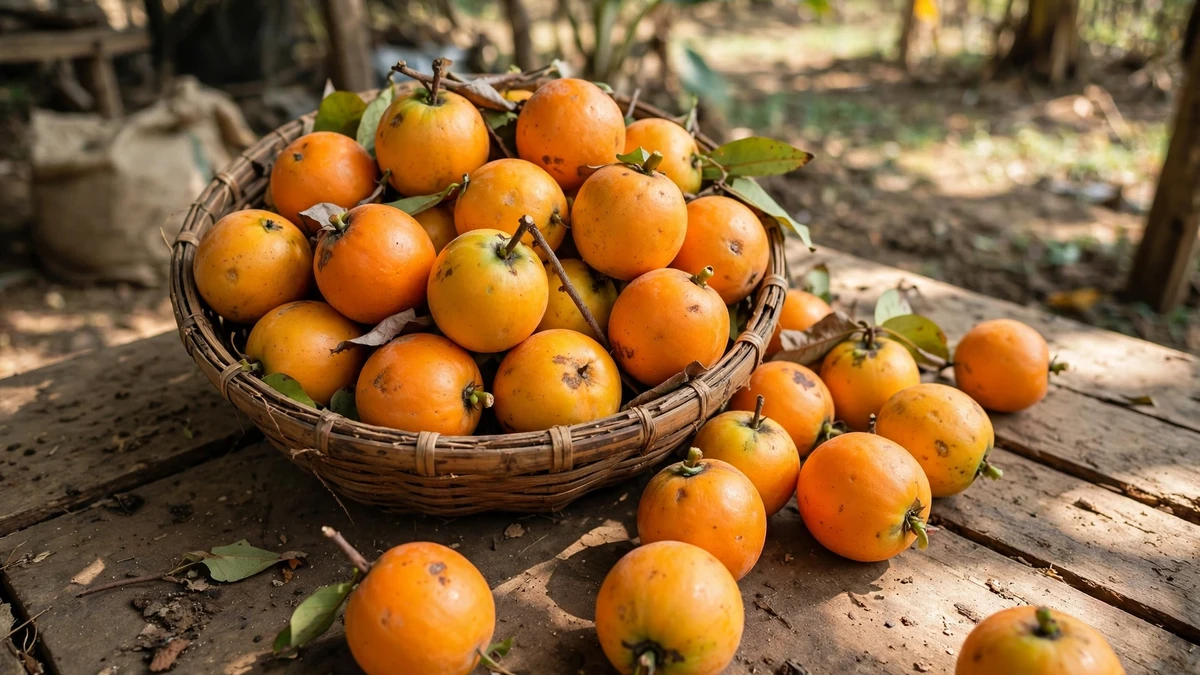
- A ripe African star apple glows orange all over, gives softly to a squeeze, and smells sweet at the stem.
- Picking runs through the dry season, roughly December to April, and the window shifts with the rains.
- What the stay covers is the walk under the trees and the tasting. Expect markets, cooking, and long slow mornings rather than a packed programme.
- Message the kitchen about wheat before you travel. Each morning the cooks bake with local grains, and they need warning to keep wheat out of your plate.
What an African star apple farm escape involves
An African star apple farm escape means three or four nights on, or beside, a working agbalumo farm, where the trees are the reason for the trip and everything else is built around them. You wake to fruit dropping onto the leaf litter, you walk the farm with the grower before the heat arrives, and you eat the fruit the way the region eats it: cut open, the orange segments scooped out with a spoon.
The escape is slow by design. There is no daily programme to follow, only the rhythm of the trees: a dawn walk, a long breakfast, a market trip or a cooking session in the afternoon, and an evening under the canopy. The fruit is the entertainment, and the host is the guide, the cook, and the storyteller all at once. Ask the host anything: which tree fruits first, why the sap runs white, how the jam sets.
Know what the stay covers before you commit. Some farms fold the orchard walk, the tasting, and the cooking session into the price; others charge for the walk separately, and the market trip may cost extra. Ask in writing, before you pay, so the first morning brings no surprise bill.
How to plan it, and what to ask first
Start with the picking dates, not the map. Agbalumo ripens through the dry months, and the exact weeks move with the rains: a late rain can push the fruit back by a fortnight, and an early harmattan can bring it forward. Ask the farm which weeks its own trees were in fruit last year, and book inside that window rather than at its edges. The farms keep their own records, and those records beat any guidebook.

Then ask what the price includes. At some farms, the walk, the tasting, and the market trip are all in the rate; at others, only the room and breakfast are covered. Ask too about the road: most of these farms sit an hour or more from the nearest airport, and a farm car is worth more than a hire car on a red dirt road after rain.
The 9 steps to plan an African star apple farm escape
Try the fruit at a market stall before choosing a region
What to do: Find a market stall selling agbalumo and taste the fruit before you choose anything else. A ripe one is orange all over and sweet-smelling at the stem; an unripe one is sour and sticky with white sap. One taste tells you whether the trip is for you. What to avoid: Booking flights first and hoping the trees cooperate, because an open farm is not the same as a bearing farm. Best for: Travellers tasting the fruit for the first time. Time needed: Thirty minutes among the market stalls. Standout tip: Buy from two stalls and compare, because the fruit varies from tree to tree.
Pin down the picking dates before booking any flights
What to do: Write to two or three farms and ask which weeks their trees fruited last year, then book your flights inside the overlap. The dry-season window is short, and the trees do not wait for late bookers. What to avoid: Trusting a guidebook’s dates over the farm’s own record, because the rains move the season by weeks. Best for: Travellers whose dates can move a little. Time needed: One short email before you hand over any money. Standout tip: Ask for last year’s fruiting weeks, not this year’s guess.
Choose a farm where the kitchen cooks with its own fruit
What to do: Choose a farm where the kitchen turns agbalumo into jam, juice, and tarts, not one that serves it once at breakfast. Ask what the cook made yesterday, and judge the farm by the answer. What to avoid: A farm that buys its fruit in, because the trees are the trip and a bought-in basket is not the same. Best for: Food lovers who want the kitchen and the picking rows in equal measure. Time needed: A short email before you hand over any money. Standout tip: Ask what the farm cooked for dinner yesterday, and judge it from the answer.
Ask whether guests may gather fruit during the morning walk
What to do: Ask in writing whether guests may gather fruit during the morning walk, and whether a guide goes with you. The trees are tall, so the fruit is usually brought down with a pole, and guests gather what falls into the baskets. What to avoid: Turning up to pick and finding the rows closed to guests. Best for: Travellers who want to gather, not only watch. Time needed: One quick email before you pay anything. Standout tip: Ask whether the picking is open to guests, and get the answer in writing.
Choose a room with the trees outside the window
What to do: Ask for a room whose window faces the trees, so you can see the fruit from your bed and hear it drop in the night. The rooms facing the rows usually sell first, so ask early. What to avoid: Taking whatever room is left and waking up to a blank wall, because the view is half the trip. Best for: Travellers who want to wake to the trees outside the window. Time needed: A quick email before you pay anything. Standout tip: Ask which way the window faces, and whether there is shade, a fan, or cooling.
Warn the kitchen about wheat first of all
What to do: Put your wheat-free needs in writing before you pay, and ask what the morning food is cooked in. Agbalumo itself has no gluten, but the kitchen fries in shared oil and bakes bread each morning. What to avoid: Mentioning it only at the table, because the cooks need time to set aside clean oil and a separate pan. Best for: Guests who must keep wheat off the plate. Time needed: A brief email before you hand over any money. Standout tip: Ask what the akara is fried in, and whether a clean pan is possible.
Pack for dust, sharp showers and cool nights
What to do: Pack light clothes for the heat, a layer for the cool evenings, and shoes with grip for paths that turn to mud in minutes. The harmattan dust gets everywhere, so bring a bag that closes tight. What to avoid: Packing only for sunshine, because the rain comes in sudden bursts even in the dry season. Best for: Travellers who pack light and walk far. Time needed: An evening of packing before you leave. Standout tip: Pack a light layer for the evenings, because the air cools fast once the sun goes down.
Go to the dawn market alongside the cook
What to do: Rise early and walk to the market with the cook, so you see the fruit sold, the bargaining, and the baskets loaded for the day. The market is where the farm’s fruit goes, and the morning there is worth the alarm. What to avoid: Sleeping through the market, because by nine the best fruit is gone and the stalls are packing up. Best for: Travellers who want the market as much as the farm. Time needed: A dawn start, back by breakfast. Standout tip: Learn when the cook leaves, and set your alarm to match.
Bring home jam and juice, not fresh fruit
What to do: Buy jam, juice, and dried pulp to take home, because fresh agbalumo bruises in a bag and ripens past its best on the flight. The farm’s jam keeps for months and tastes of the trip. What to avoid: Packing fresh fruit for the flight, because it bruises, leaks, and arrives as pulp. Best for: Travellers who want the trip to stay with them on the drive home. Time needed: Fifteen minutes wandering the farm shop. Standout tip: Ask the farm what keeps longest, and buy that.
Picking the right season and region
Ibadan or Enugu is where the most traditional fruit grows: working farms, old trees, and hosts who have sold agbalumo at market for decades. The fruit there is the deep-orange kind, and the stays are the simplest in this list, which suits travellers who want the farm more than the room. Go there for the tradition, not the comfort. Sapodilla farm escapes suit travellers who want a similar slow tropical pace with a brown, caramel-sweet fruit.
For a first trip, Accra is the simplest choice: the farm is used to guests, the drive from the airport is short, and the season runs long. Kumasi suits those who want to cook with their fruit rather than only eat it fresh, while Homestead suits travellers who want to carry a young grafted tree home in a pot.
The caveats that matter
African star apple farm escapes are lovely, but not for everyone. The dry-season window is short, and the trees do not wait for late bookers: arrive a week late and the branches stand bare. The farms are working farms, not resorts, so expect early mornings, simple rooms, and hosts who are out among the trees rather than at a desk.
| Detail | What is known |
|---|---|
| Best time to visit | The dry season, roughly December to April; the window moves with the rains |
| What the fruit looks like | Bright orange skin, orange flesh, and a pale star in a crosswise slice |
| How ripe fruit looks | Orange throughout, soft to a gentle squeeze, and sweet-smelling at the stem |
| What is usually included | Room and breakfast with an orchard walk or tasting; cooking sessions and market trips often extra |
| Who should go | Slow travellers, food lovers, and families with older children |
| Who should think twice | Anyone chasing nightlife, quick service, or a full daily programme |
| Transfers | Often an hour or more from the closest airport; fix the lift before you arrive |
| What is not guaranteed | Fruit on your dates; the harvest leans on weather, season, and the trees |
Agbalumo carries no gluten on its own, yet the farm kitchen bakes bread and fries akara in shared oil, so wheat can reach your plate without anyone noticing. Tell the kitchen in writing before you arrive, and ask what the morning food is fried in. Carambola farm escapes carry the same warning for wheat-free travellers, and the same fix: a message in writing before any money moves.
Checklist: before you book an African star apple farm escape
Run through these checks before you pay, then once more in the week before you travel.
- Check the fruiting: ask whether the trees will be in fruit on your dates, and which weeks they fruited last year.
- Check what the stay includes and what it costs: the walk, the tasting, the cooking session, and the market trip.
- Check the distance: work out the airport drive time, and whether the farm runs a pickup.
- Check the room: does the window look onto the trees or the garden, and is there shade, a fan, or cooling?
- Ask how the orchard is grown: how many trees it holds, whether it is organic, and how the fruit is picked.
- Read reviews from guests who travelled in the same season as the trip you are planning.
Frequently asked questions
How long should an African star apple farm escape last?
Three nights is the sweet spot. One night is too short to catch the trees at their best, and five nights is more than most farms can fill. Three mornings give you the dawn walk, the market trip, and a cooking session, with a spare morning for the fruit to ripen further. Four nights suits a slow traveller who wants a second market morning.
Do you need a hire car for an African star apple farm?
Usually not. Most farms run a car from the airport, and the farm car knows the red dirt roads better than a hire car does. A small car gives you the run of the valley and a way to reach the market before dawn, but the farm car is the safer choice after rain.
May guests pick fruit on the morning walk?
Yes, on most farms, when a guide walks the rows with you and you asked first. The trees are tall, so the fruit is usually brought down with a pole, and guests collect what falls into the baskets below.
What is the difference between African star apple and star apple?
They are different fruits. The African star apple is Chrysophyllum albidum, a West African fruit with orange flesh and a pale star in the slice. The Caribbean star apple, or caimito, is Chrysophyllum cainito, with purple or green skin and a milky white flesh. The farms in this guide grow the African kind only.
Is an African star apple farm escape suitable for children?
Yes, for older children. The walks are slow, the fruit is easy to eat, and the hosts are used to young guests. Small children need watching under the tall trees, because the fruit drops without warning and the ground is uneven.
How do gluten-free travellers eat safely on an African star apple farm?
Yes, if you flag it when you book. Agbalumo on its own is gluten-free, but the kitchen fries in shared oil and bakes bread each morning. Put it in writing before you pay, and ask which oil the morning food is fried in. Naranjilla farm escapes carry the same wheat warning, and the same answer: tell the farm early, in writing.
The bottom line
An African star apple farm escape suits travellers who like their food to come from the tree above their bed. The fruit is strange to most visitors, the season is short, and the farms are working farms, which is exactly the point: you go to taste something you cannot buy at home, cut down an hour before breakfast.
Pick the region by what you want most: the old trees of Ibadan, the early fruit of Enugu, the cooking of Kumasi, the easy drive of Accra, or the young grafted tree of Homestead. Book inside the dry-season window, ask what the stay covers, and tell the kitchen about wheat in writing before you pay.