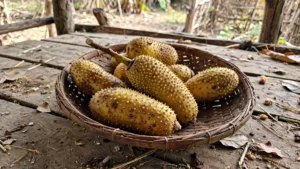
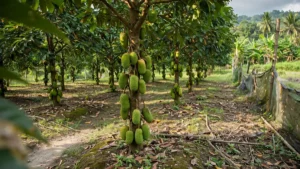
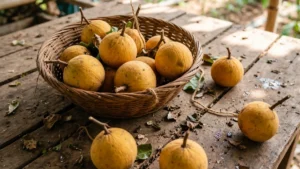
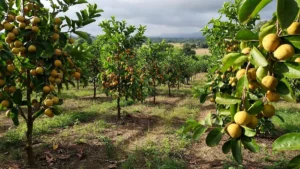
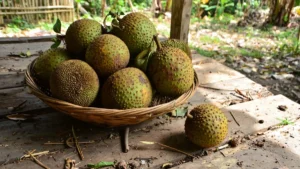
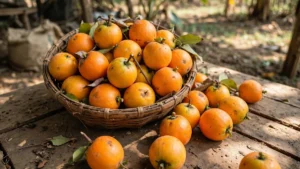
Agbalumo is the fruit you cut open to find a star. The skin is bright orange, the flesh inside orange too, and a crosswise slice shows the pale star shape that gives the African star apple its name. It is tart and sweet at once, juicy enough to drip down your wrist, and it grows on tall trees across West Africa.
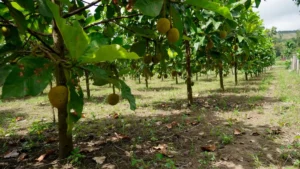
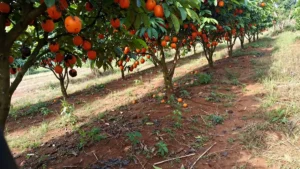
A stay on an African star apple farm is shaped by that short season. The trees are big shade trees, not neat orchard rows, and the fruit ripens a little at a time from December into April, so the best stays keep you close to the farm for several mornings and let you taste fruit cut down an hour before breakfast. The rooms are simple, the host knows every tree, and the harvest sets the pace of the day.
Nine African star apple farm stays follow, from the red-soil country around Ibadan to a small grove in South Florida where West African growers keep the trees alive far from home. Each one is judged on its strong points, its weak points, and the traveller it fits.
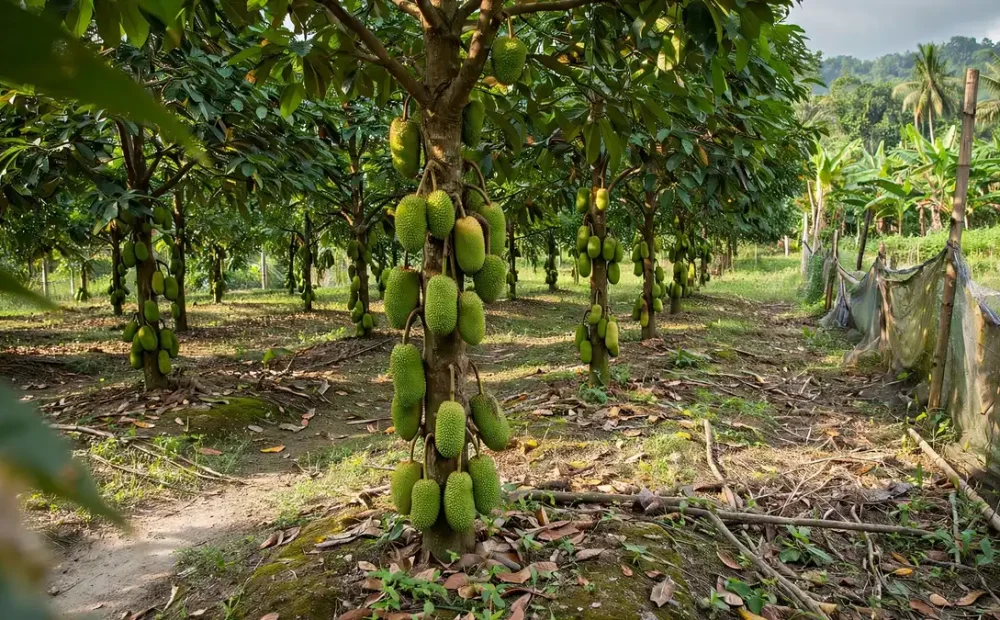
- Agbalumo trees are tall shade trees, and the stays work around their shade, not formal rows.
- A ripe African star apple is bright orange all over, soft to a gentle squeeze, and sweet-smelling at the stem.
- Picking runs through the dry season, roughly December to April, and the window moves with the rains.
- What the room covers is the walk under the trees and the tasting: markets, cooking, and long slow mornings, not a packed programme.
- Warn the kitchen about wheat before you arrive. The cooks bake with local grains, and they need warning to keep wheat out of your plate.
What an African star apple farm retreat actually is
An African star apple farm retreat means sleeping on, or beside, a working agbalumo farm, where the trees are the reason for the stay. You wake to fruit dropping onto the leaf litter, you walk the farm with the grower before the heat arrives, and you eat the fruit the way the region eats it: cut open, the orange segments scooped out with a spoon, the juice running down your chin.
The one crop at its heart is what marks it out from an ordinary farm stay. Agbalumo is new to most visitors, and the hosts explain the star in the slice, the sticky white sap that coats an unripe fruit, and the way a ripe one yields under the thumb. The season is the whole trip: outside December to April there is little fruit to taste.
Find out what the nightly rate covers before you commit. Some places fold the orchard walk, the tasting, and the cooking session into the price; others charge for the walk separately, and the market trip may cost extra. Ask in writing before you pay, so the first morning brings no surprise bill.
How we picked these stays, and what to ask first
We looked for places where agbalumo trees sit at the centre of the stay: farms with old trees, hosts who pick with their guests, and kitchens that cook with the fruit instead of serving it once at breakfast. Every stay below has working trees in fruit during the dry season, a host who walks the farm, and a kitchen that feeds wheat-free guests when warned.
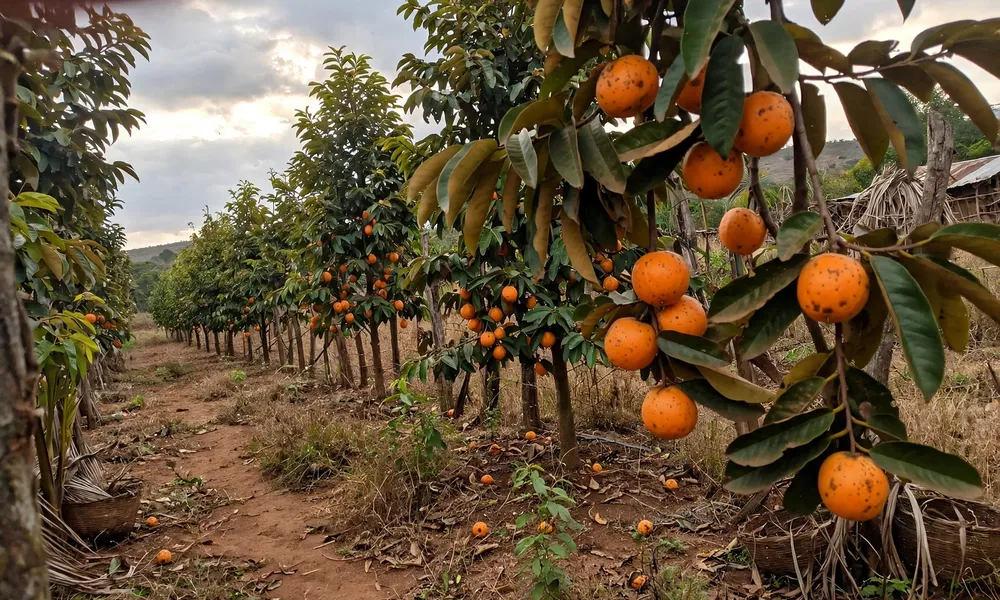
Start with the season. Agbalumo ripens through the dry months, and the exact weeks shift with the rains: a late rain can push the fruit back by a fortnight, and an early harmattan can bring it forward. Ask the farm which weeks its trees fruited last year, and book inside that window rather than at its edges.
Then ask what the price includes. At some stays, the walk, the tasting, and the market trip are all in the rate; at others, only the room and breakfast are covered. Ask too about the road: most farms sit an hour or more from the nearest airport, and a farm car is worth more than a hire car on red dirt after rain.
The 9 best luxury African star apple farm retreats of 2027
Ibadan, Nigeria — Agbalumo beneath the Red-Soil Hills
What we like: Ibadan is where agbalumo first fed the towns of the south-west, and the fruit here is the old kind, deep orange and heavy with juice. Before breakfast the host leads guests under the tall trees, basket in hand, from a mud-brick farmhouse shaded by the canopy.
What to consider: Harmattan dust hangs in the air for weeks, and the roads turn to red mud after a storm. The farm sits a drive from the city, so fix a lift before you arrive. Best for: Travellers who want agbalumo where Yoruba towns first sold it. Style: Mud-brick farmhouse under a tall canopy. Price range: $65–$95 a night, breakfast counted in the price. Standout feature: Dawn walks under the oldest trees on the farm.
Enugu, Nigeria — Agbalumo on the Coal City Slopes
What we like: Enugu’s hills hold big old agbalumo trees, and the fruit here ripens early, often before Christmas. The hostess cuts the first fruit of the morning herself, and the kitchen serves it with akara and pap while mist still sits in the valley.
What to consider: The slopes are steep and the paths turn slick after rain, so bring shoes with grip. Evenings cool fast after sunset. Best for: Early-season travellers who want the first fruit of the year. Style: Hillside house with a wide shaded veranda. Price range: $95–$125 per night, breakfast and the orchard walk covered. Standout feature: The first fruit of the season, cut by the hostess herself.
Kumasi, Ghana — Agbalumo in the Ashanti Forest Belt
What we like: Kumasi sits in the forest belt where agbalumo grows wild as well as planted, and the farm mixes old wild trees with a planted grove. The cook turns the fruit into jam and juice, and guests help press the pulp in the shade.
What to consider: The forest air is humid and mosquitoes arrive at dusk, so pack repellent and long sleeves. The farm is a long drive from Accra airport. Best for: Food lovers who want to cook with the fruit as well as eat it. Style: Timber lodge at the forest edge. Price range: $125–$160 a night, breakfast plus dinner. Standout feature: An afternoon pressing the pulp for jam and juice.
Accra, Ghana — Agbalumo near the Coastal Plains
What we like: Accra’s farm lies on the coastal plain, an easy drive from the airport, and the trees here are watered through the dry months so the season runs long. The host runs a small market stall, and guests can follow the fruit from the tree to the stall in a single morning.
What to consider: The city heat is fierce by midday, and the coastal plain has little shade outside the farm. Book the early walk and rest through the afternoon. Best for: Short-trip travellers who want agbalumo without a long drive. Style: Whitewashed house around a shaded courtyard. Price range: $160–$195 per night, dinner and breakfast both counted in. Standout feature: Following the fruit from the tree to the market stall.
Cotonou, Benin — Agbalumo among the Palm Groves
What we like: Cotonou’s farm grows agbalumo between the palms, and the fruit here is smaller and sweeter than the Nigerian kind. The host fishes in the lagoon and the kitchen pairs the catch with the fruit at lunch, a combination few visitors forget.
What to consider: French is the farm’s language, and little English is spoken, so bring a phrasebook or a guide. Lagoon mosquitoes are persistent after sunset. Best for: Travellers who want fruit, fish, and a lagoon in one stay. Style: Palm-thatch house beside the lagoon. Price range: $195–$230 a night, every meal counted in. Standout feature: Lagoon fish at lunch, paired with the morning’s fruit.
Douala, Cameroon — Agbalumo in the Littoral Rain
What we like: Douala’s farm sits where the rainforest meets the coast, and the agbalumo trees here are the tallest of the nine, some over a century old. The host climbs with a long pole to bring the fruit down, and guests watch the baskets fill.
What to consider: Rain comes in sudden bursts even in the dry season, and the paths turn to mud in minutes. City traffic makes the airport drive slow. Best for: Travellers who want the tallest, oldest trees in the group. Style: Rainforest lodge on stilts above the mud. Price range: $230–$265 per night, full board counted in. Standout feature: Century-old trees, picked with a long pole.
Lomé, Togo — Agbalumo on the Gulf of Guinea Shore
What we like: Lomé’s farm lies a short walk from the beach, and the sea breeze keeps the afternoons bearable. The host sells at the Grand Marché, and guests who rise early can help load the baskets before the sun is up.
What to consider: The beach road is busy and dusty, and the farm’s water runs low late in the dry season. Showers are brief by February. Best for: Market lovers who want the dawn run to the Grand Marché. Style: Beachside cottage with a sea breeze. Price range: $265–$300 a night, breakfast, dinner and the tastings counted in. Standout feature: Loading the baskets for the dawn market run.
Abidjan, Côte d’Ivoire — Agbalumo in the Lagoon City
What we like: Abidjan’s farm sits on the lagoon’s edge, and the fruit here is pressed into an orange juice that the host serves chilled at noon. The cook makes a tart from the pulp, and the terrace looks across the water.
What to consider: The lagoon air is heavy and city traffic is slow, so plan the airport drive with an extra hour. The fruit season here is the shortest of the nine. Best for: Travellers who want the fruit pressed, baked, and served in one day. Style: Lagoon terrace house with a city view. Price range: $300–$340 per night, full board plus the tastings counted in. Standout feature: Bright orange juice pressed at noon, served chilled.
Homestead, Florida — Agbalumo in a South Florida Grove
What we like: Homestead’s grove is run by a West African family who planted agbalumo far from home, and the trees here fruit in the Florida winter. The host grafts new trees in the nursery, and guests can take a young tree home in a pot.
What to consider: The grove is small, a dozen trees, so the season is short and the rooms book out fast. A cold snap can end the fruit in a night. Best for: Travellers who want to carry a young tree home in a pot. Style: Nursery cottage beside the grafting beds. Price range: $345–$380 a night, the whole stay counted in, meals and tastings alike. Standout feature: A young grafted tree to take home in a pot.
Which African star apple region fits your trip
Ibadan or Enugu is where the most traditional fruit grows: working farms, old trees, and hosts who have sold agbalumo at market for decades. The stays there are the simplest in this list, for travellers who want the farm more than the room.
For a first trip, Accra is the easiest pick: the farm is used to guests, the drive from the airport is short, and the season runs long. Sapodilla farm retreats suit travellers who want a similar slow tropical pace with a brown, caramel-sweet fruit, while Kumasi suits those who want to cook with their fruit, not only eat it fresh.
The caveats that matter
African star apple farm retreats are lovely, but not for everyone. The dry-season window is short, and the trees do not wait for late bookers: arrive a week late and the branches hang bare. The farms are working farms, not resorts, so expect early mornings, simple rooms, and hosts out among the trees rather than at a desk.
| Detail | What is known |
|---|---|
| Best time to visit | The dry season, roughly December to April; the window moves with the rains |
| What the fruit looks like | Bright orange skin, orange flesh, and a pale star in a crosswise slice |
| How ripe fruit looks | Orange throughout, soft to a gentle squeeze, and sweet-smelling at the stem |
| What is usually included | Room and breakfast with an orchard walk or tasting; cooking and market trips often extra |
| Who should go | Slow travellers, food lovers, and families with older children |
| Who should think twice | Anyone chasing nightlife, quick service, or a full daily programme |
| Transfers | Often an hour or more from the closest airport; fix the lift first |
| What is not guaranteed | Fruit on your dates; the harvest leans on weather, season, and the trees |
Agbalumo carries no gluten on its own, yet the farm kitchen bakes bread and fries akara in shared oil, so wheat can reach your plate unnoticed. Tell the kitchen in writing before you arrive, and ask what the morning food is cooked in. Carambola farm retreats carry the same warning for wheat-free travellers, and the same fix: a message in writing before any money moves.
Checklist: booking an African star apple farm stay honestly
Run through these checks before you pay, then once more in the week before you travel.
- Ask about the fruiting window: whether the trees will be in fruit on your dates, and which weeks they fruited last year.
- Ask what the nightly rate covers: the walk, the tasting, the cooking session, and the market trip.
- Work out the airport drive: how long it takes, and whether the farm runs a car.
- Look at the room: which way the window faces, and whether there is shade, a fan, or cooling.
- Ask how the orchard is kept: how many trees it holds, and how the fruit is picked.
- Read reviews from guests who came in the same season you are planning.
Frequently asked questions
When is African star apple season?
It depends on the country. In Nigeria and Ghana the trees bear through the dry months, roughly December to April, and the peak falls in January and February. A late rain can push the fruit back by a fortnight, so ask the farm which weeks its trees fruited last year before you book.
What does an African star apple taste like?
Tart and sweet at once, with juicy orange flesh that drips when you bite it. The flavour sits between a citrus fruit and a soft mango, and the texture is softer than either. An unripe fruit is sour and sticky with white sap, so eat only the ripe orange kind.
May guests pick African star apples from the trees?
Yes, on most farms, when a guide walks the rows with you and you have asked first. The trees are tall, so the fruit is usually brought down with a pole, and guests gather what falls into the baskets below.
Is it safe for everyone to eat African star apple?
Mostly. The flesh is fine for most people, but the large flat seeds should not be chewed, and the white sap of an unripe fruit can upset the stomach. Eat the ripe orange flesh only, and wash your hands after the sap.
Where should a first-timer begin with African star apple farms?
Accra, for the simplest journey and the longest season. The farm knows its guests, the drive from the airport is short, and the host runs a market stall you can follow in a single morning. Ibadan suits a second trip, when you want older trees and a deeper tradition.
What should a gluten-free traveller ask on an African star apple farm?
Yes, if you flag it when you book. Agbalumo on its own has no gluten, but the kitchen fries in shared oil and bakes bread each morning. Put it in writing before you pay, and ask what the morning food is cooked in. Naranjilla farm retreats carry the same wheat warning, and the same answer: tell the farm early.
The bottom line
An African star apple farm retreat suits travellers who like their food to come from the tree above their bed. The fruit is strange to most visitors, the season is short, and the farms are working farms, which is the point: you go to taste something you cannot buy at home, cut down an hour before breakfast.
Choose the region by what you want most: the old trees of Ibadan, the early fruit of Enugu, the cooking of Kumasi, the easy drive of Accra, or the young grafted tree of Homestead. Book inside the dry-season window, ask what the rate covers, and tell the kitchen about wheat before you pay.