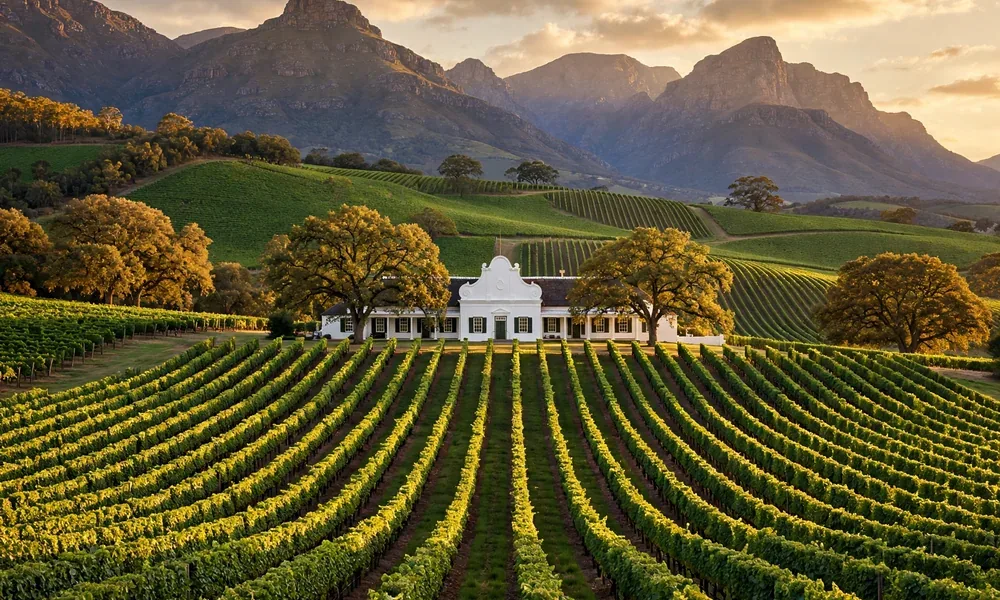
Stellenbosch is the beating heart of South African wine, and the Best Luxury Stellenbosch Brands are the estates that have turned a small university town in the Western Cape into one of the great wine destinations on earth. Set against the Simonsberg, Helderberg and Stellenbosch mountains, this valley of oak-lined roads and white Cape Dutch homesteads produces Cabernet Sauvignon, Pinotage, Chenin Blanc and Chardonnay that stand comfortably beside the finest bottles from Bordeaux, Napa and Burgundy. The estates here are not just wineries; they are working farms, art galleries, fine restaurants and luxury guest houses, all within a forty-minute drive of Cape Town.
What sets Stellenbosch apart is depth. The region has been making wine since the late seventeenth century, and its leading estates have spent generations learning which slopes suit which grape. The granite soils of the Simonsberg favour structured Cabernet Sauvignon, the cooler pockets near the coast keep Chenin Blanc fresh and precise, and old bush vines produce Pinotage with a depth that no other region can copy.
This guide gathers the ten luxury Stellenbosch brands that matter most in 2027, chosen for the quality of the wine, the beauty of the estate, and the strength of the visitor experience.
Key takeaways
- Stellenbosch is South Africa’s premier wine region, and its best luxury brands combine world-class Cabernet Sauvignon, Pinotage and Chenin Blanc with fine dining, art and guest accommodation.
- Kanonkop, Meerlust and Rust en Vrede are the historic benchmarks, while Delaire Graff, Tokara and Jordan lead on the modern luxury experience.
- Cabernet Sauvignon is the valley’s signature red, Pinotage is its unique contribution to the wine world, and old-vine Chenin Blanc is its most exciting white.
- Most estates ask for a tasting booking in advance, especially from Thursday to Sunday.
- Stellenbosch is grander and more established than Franschhoek, which is smaller and more restaurant-focused.
Why Stellenbosch leads South African wine
Stellenbosch earned its reputation slowly, and that is exactly why the reputation lasts. The town was founded in 1679, vines were planted within a few years, and the valley has been a working wine region ever since.
The geography helps. Mountains on three sides shelter the valley from the worst of the weather, the cooling influence of False Bay keeps the afternoons from overheating, and the soils change from slope to slope, from decomposed granite to clay and sandstone. That variety within one small valley is what lets ten very different estates all make great wine within a few kilometres of each other.
There is also the question of value. A top Stellenbosch Cabernet Sauvignon or Pinotage costs a fraction of an equivalent bottle from Bordeaux or Napa, and the tasting experience is often better: smaller groups, winemakers who pour their own wines, and restaurants that serve local produce with a view over the vines. For a traveller, the valley pairs naturally with a stay in the city, and our guide to the best luxury hotels in Cape Town shows how easily a wine weekend fits around a Cape Town base.
The 10 best luxury Stellenbosch brands at a glance
| Brand | Signature wine | Founded | Best for |
|---|---|---|---|
| Kanonkop | Paul Sauer Bordeaux blend | 1920s | Pinotage and classic reds |
| Meerlust | Rubicon Bordeaux blend | 1756 | Historic elegance and Merlot |
| Rust en Vrede | Estate Cabernet Sauvignon | 1694 | Fine dining and old-vine reds |
| Delaire Graff | Botmaskop Bordeaux blend | 2003 | Art, views and pure luxury |
| Tokara | Director’s Reserve Red | 1994 | Sauvignon Blanc and sculpture |
| Jordan Wine Estate | Cobblers Hill Bordeaux blend | 1982 | Chardonnay and mountain views |
| Ernie Els Wines | Ernie Els Signature blend | 1999 | Cabernet-led power and golf |
| Waterford Estate | Estate Cabernet Sauvignon | 1998 | Chocolate pairings and Shiraz |
| Simonsig | Kaapse Vonkel MCC | 1971 | Sparkling wine and Chenin Blanc |
| Kleine Zalze | Family Reserve Chenin Blanc | 1695 | Chenin Blanc and family warmth |
The 10 best luxury Stellenbosch brands
1. Kanonkop
What we like: Kanonkop is the estate that made Pinotage a serious wine, and its reds remain the benchmark for the grape. The Paul Sauer, a Cabernet-led Bordeaux blend named after a former Springbok rugby captain, is one of South Africa’s most collected wines, and the Pinotage itself is dark, structured and built to age for decades. The estate sits on the lower slopes of the Simonsberg, and its dry-farmed bush vines produce small, concentrated berries that give the wines their depth.
What to consider: Kanonkop is a working farm first and a showpiece second, so the tasting room is calm and unflashy rather than theatrical, and that is part of its charm. Location: Simonsberg slopes, Stellenbosch. Best for: Serious collectors and Pinotage lovers. Standout feature: The Paul Sauer, a South African icon.
2. Meerlust
What we like: Meerlust has been in the Myburgh family since 1756, and it shows in every detail of the estate, from the historic manor house to the immaculate gardens. The Rubicon, first made in 1980, is South Africa’s original Bordeaux blend, a wine of polish and restraint that ages beautifully, and the estate Merlot is among the finest in the country. The tasting room is one of the most elegant in the valley, with a calm, old-world atmosphere that suits the wines.
What to consider: Meerlust rewards patience. The Rubicon is made to cellar, so a young vintage tastes tight and structured beside the glass, and it opens with air and time. Location: Near Somerset West, Stellenbosch. Best for: Classic elegance and Bordeaux-style blends. Standout feature: The Rubicon, the original Cape Bordeaux blend.
3. Rust en Vrede
What we like: Rust en Vrede, founded in 1694, is one of the oldest estates in the valley, and its single-vineyard Cabernet Sauvignon is a masterclass in Stellenbosch structure: dark fruit, fine tannin and a long, savoury finish. The estate Shiraz is equally strong, and the restaurant, set in the historic manor house, is one of the finest in the Winelands, pairing estate wines with seasonal local cooking in a room that feels both grand and intimate.
What to consider: The restaurant books up well ahead, especially on weekends, so reserve a table at the same time as a tasting if you want the full experience. The wines are generous and full-bodied, and they pair best with food, so this is an estate to visit hungry. Location: Annandale Road, Stellenbosch. Best for: Fine dining and powerful reds. Standout feature: The manor house restaurant and the estate Cabernet.
4. Delaire Graff
What we like: Delaire Graff is the most glamorous estate in Stellenbosch, a hilltop world of sculpture, art, fine dining and sweeping views across the valley to the Simonsberg. Owned by jeweller Laurence Graff, the estate pairs a serious wine programme, led by the Botmaskop Bordeaux blend and a refined Chardonnay, with two restaurants, a spa and luxury lodges. The art collection alone justifies a visit, and the sunset views from the terrace are among the best in the Western Cape.
What to consider: Delaire Graff is a luxury resort as much as a winery, so prices for dining and lodging sit at the top of the valley, and bookings are essential. The wines are polished and modern, made in a style that favours elegance over rusticity, and the estate suits a special occasion better than a casual stop. For a longer luxury trip, our guide to the best luxury safaris in South Africa shows how a Winelands stay pairs with a safari leg. Location: Helshoogte Pass, Stellenbosch. Best for: Art, views and a special occasion. Standout feature: The sculpture garden and the Botmaskop blend.
5. Tokara
What we like: Tokara sits high on the Helshoogte ridge with views across the valley to Table Mountain, and its Sauvignon Blanc is one of the finest in the country: crisp, mineral and precise, with a texture that sets it apart from the average. The Director’s Reserve Red is a serious Cabernet-led blend, and the estate’s olive oil, pressed from its own groves, is worth taking home. The sculpture garden and the modern tasting room give the visit a contemporary feel.
What to consider: Tokara is popular, and the tasting room fills quickly on fine weekends, so arrive early or book ahead. The estate’s high altitude keeps the wines fresh, and the whites in particular reward a cool, unhurried tasting. Location: Helshoogte Pass, Stellenbosch. Best for: Sauvignon Blanc and modern design. Standout feature: The Reserve Collection Sauvignon Blanc and the olive oil.
6. Jordan Wine Estate
What we like: Jordan is a family estate on the slopes of the Stellenbosch Kloof, where Gary and Kathy Jordan built a winery from scratch in 1982 and turned a rugged mountainside into one of the valley’s most reliable names. The Chardonnay is rich and textured without losing freshness, the Cobblers Hill Bordeaux blend is a cellar favourite, and the views from the tasting room across the valley are superb. The estate restaurant, The Cellar Door, serves honest, generous food with the same attention to detail as the wines.
What to consider: Jordan is a little off the main wine route, which keeps it calmer than the estates on the Helshoogte Pass, and that is a genuine advantage on a busy weekend. Location: Stellenbosch Kloof, Stellenbosch. Best for: Chardonnay and a relaxed family estate. Standout feature: The Cobblers Hill blend and the mountain views.
7. Ernie Els Wines
What we like: Ernie Els Wines brings a golfer’s competitive instinct to the cellar, and the results are impressive: the Signature, a Cabernet-led Bordeaux blend, is powerful, polished and built to age, and the estate Cabernet Sauvignon is a confident expression of Stellenbosch terroir. The estate sits in the Helderberg with wide views over False Bay, and the tasting room has a relaxed, sporting character that suits a leisurely afternoon.
What to consider: The wines here are bold and full-bodied, made in a generous style that favours ripe fruit and firm structure, so they pair best with red meat and hearty food. Location: Helderberg, Stellenbosch. Best for: Powerful Cabernet blends and golf fans. Standout feature: The Ernie Els Signature blend.
8. Waterford Estate
What we like: Waterford Estate is known for its wine and chocolate pairing, a tasting that matches estate Cabernet Sauvignon, Shiraz and natural sweet wines with handmade chocolates, and it is one of the most enjoyable experiences in the valley. The wines themselves are excellent: the estate Cabernet is structured and savoury, the Shiraz is spicy and supple, and the single-vineyard bottlings show how carefully the estate farms its Helderberg slopes.
What to consider: The chocolate pairing is popular and must be booked ahead, and it takes about an hour, so plan the day around it rather than squeezing it in. The wines are made in a modern, polished style with a clear sense of place. Location: Helderberg, Stellenbosch. Best for: The wine and chocolate pairing. Standout feature: The estate Cabernet Sauvignon and the chocolate tasting.
9. Simonsig
What we like: Simonsig made South Africa’s first Méthode Cap Classique sparkling wine, the Kaapse Vonkel, in 1971, and it remains the benchmark for Cape bubbles: fine, persistent and quietly elegant. The estate is also a Chenin Blanc specialist, with old-vine bottlings that show the grape’s depth and texture, and the family-run tasting room has a warm, unhurried feel that suits a long lunch. The gardens are lovely, and the estate is one of the most welcoming in the valley.
What to consider: Simonsig is a family estate, and the tasting room reflects that: friendly, knowledgeable and free of pretension, with staff who clearly love the wines they pour. The MCC range rewards a proper tasting, since the differences between the brut, rosé and vintage bottlings are real and instructive. Location: Kromme Rhee Road, Stellenbosch. Best for: Sparkling wine and old-vine Chenin Blanc. Standout feature: The Kaapse Vonkel, South Africa’s first MCC.
10. Kleine Zalze
What we like: Kleine Zalze is a family estate dating to 1695, and its Family Reserve Chenin Blanc is one of the great white wines of the Cape: textured, layered and capable of ageing for a decade. The estate also makes a refined Shiraz and a Cabernet-led red, and the tasting room, set among the vines, has a relaxed charm that larger estates cannot copy. The restaurant serves generous country cooking, and the whole visit feels like being welcomed into a family home.
What to consider: Kleine Zalze is quieter than the famous names on the Helshoogte Pass, and that is exactly why it belongs on this list: the wines are world class, the welcome is genuine, and the prices are fair. Location: Strand Road, Stellenbosch. Best for: Chenin Blanc and a family welcome. Standout feature: The Family Reserve Chenin Blanc.
Stellenbosch vs Franschhoek: which valley suits you
Stellenbosch and Franschhoek sit less than half an hour apart, and visitors often ask which one to choose. The honest answer is that both deserve a day, but they reward different kinds of traveller. Stellenbosch is the grander valley: larger, older and more established, with more than 150 wine farms, a historic university town at its centre, and the greatest depth of fine wine in South Africa.
Franschhoek is smaller and more intimate, a village valley known for its restaurants, its French Huguenot history and its elegant, food-friendly wines. The valley’s signature is Chardonnay and Méthode Cap Classique, along with refined red blends, and its estates tend to be smaller, prettier and more focused on the table.
For a first visit, Stellenbosch is the better starting point: the wines are more varied, the estates are more diverse, and the town itself has more to do, from museums and galleries to oak-lined streets and a lively student energy. Franschhoek suits a second day, or a traveller who cares more about restaurants than cellars. Wine lovers who want depth and power should start in Stellenbosch; food lovers who want charm and intimacy should save Franschhoek for a leisurely afternoon. If the trip stretches beyond the Winelands, our guide to the best luxury yachts for food and wine trips shows how a wine holiday can continue on the water.
Checklist: planning a luxury Stellenbosch visit
- Book tastings at least a week ahead for the best-known estates, especially from Thursday to Sunday, when the popular rooms fill up.
- Plan two or three estates a day at most, and leave an hour and a half for each, so the visit stays relaxed rather than rushed.
- Hire a driver or join a guided tour, since the roads are rural and the tastings are generous, and the valley is best enjoyed without worrying about driving.
- Pair a tasting with lunch at an estate restaurant, and book the table when you book the tasting, because the best rooms fill first.
- Ask about older vintages and single-vineyard bottlings, which are often poured only on request and show the wines at their best.
- Bring a case or ask about shipping, because the best bottles are often cheaper at the cellar door than anywhere else, and many estates ship abroad.
Frequently asked questions
What is the best luxury wine brand in Stellenbosch?
Kanonkop is the most respected name for red wine, thanks to its Pinotage and the Paul Sauer blend, while Meerlust and Rust en Vrede are the historic benchmarks for Bordeaux-style blends.
Which Stellenbosch wine should I buy first?
Start with a Cabernet Sauvignon or a Bordeaux blend, since those are the valley’s signature wines and the best measure of an estate’s quality.
How much does a luxury Stellenbosch tasting cost?
Most estate tastings cost between 150 and 350 rand per person, with premium and paired tastings running higher, and the best experiences, such as the wine and chocolate pairing at Waterford, are worth booking ahead.
When is the best time to visit Stellenbosch?
Autumn, from March to May, is the best time, with warm days, cool nights and the harvest in full swing, while spring, from September to November, offers green vineyards and mild weather.
Is Stellenbosch better than Franschhoek for wine?
Stellenbosch is better for depth and variety, with more estates, stronger reds and a longer history, while Franschhoek is better for intimacy, restaurants and elegant whites.
Can I visit Stellenbosch without a car?
Yes, and it is the better way to do it. Hire a driver for the day, join a guided wine tour, or use a hop-on service between estates, since the tastings are generous and the roads are rural.
The Bottom Line
Stellenbosch earns its place among the great wine regions of the world through depth, not noise: centuries of farming, a valley of varied soils and slopes, and estates that have learned their land over generations. The ten brands in this guide cover the full range of what the valley does best, from the historic reds of Kanonkop, Meerlust and Rust en Vrede to the modern luxury of Delaire Graff and Tokara, the sparkling heritage of Simonsig, and the old-vine Chenin Blanc of Kleine Zalze. Stellenbosch rewards the unhurried visitor more than any wine region in South Africa, and the best bottle you take home will be the one you tasted properly, in the place where it was made.