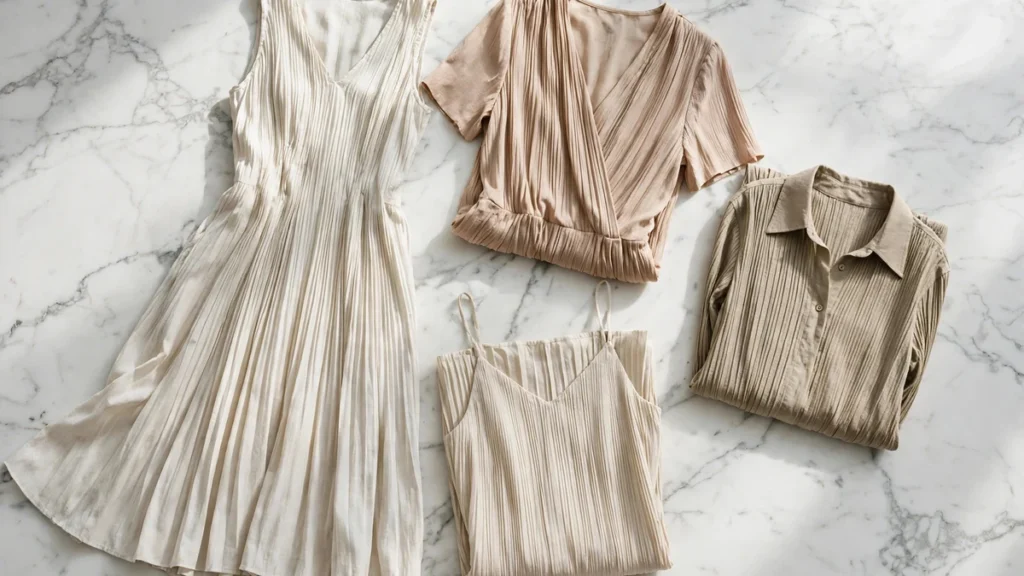
A pleated dress is one of the few wardrobe pieces that does real work on its own. The folds add movement as you walk, give the skirt shape without stiffness, and let a simple silhouette look considered rather than plain. The problem is not finding a pleated dress. It is finding one whose pleats stay crisp after sitting, whose fabric does not cling in the wrong places, and whose length and cut actually suit the occasion you bought it for.
That is why this guide is organised by fabric and fit, not just by popularity. A knife-pleated midi in a fluid crepe behaves very differently from a wide box-pleated dress in a heavy cotton, and a pleated dress that looks polished at a wedding can look wrong at the office if the fabric is too sheer or too shiny. Price is a poor guide on its own. Some of the most reliable pleated dresses are mid-priced, and some of the most expensive need dry cleaning after every wear.
Below are nine pleated dresses worth considering in 2027, from a classic navy midi to a bold printed maxi. Each one is described by what it is good at, what to watch for, and who it suits best, so you can choose with your body and your calendar in mind, not just a bestseller list.
Key takeaways
- Knife pleats are slimming and fluid, while box pleats and accordion pleats add volume and structure.
- Fabric decides how a pleated dress behaves: crepe and polyester blends hold a pleat, silk and chiffon move beautifully but crease easily.
- Check the pleats at the waist and hips, not just the hem, because that is where pulling and gaping show first.
- A midi length suits most occasions, while a maxi reads formal and a knee length reads casual.
- No pleated dress flatters every body or suits every event, and pleats that are pressed flat or uneven at the seams will not improve with wear.
What a pleated dress actually does for your silhouette
Pleats are folds of fabric pressed into place, and they change how a dress moves and falls. Knife pleats lie flat in one direction and open as you walk, which gives a slim line at rest and movement in motion. Accordion pleats are finer and softer, and they suit lighter fabrics that drape. Box pleats are wider and more structured, and they add volume at the skirt, which is why they work well on A-line and shirt dresses.
What pleats do not do is hide poor fit. If a dress pulls at the waist or the hips, the pleats will open and show the gap, and if the bodice is too tight, the skirt will flare in the wrong place. A pleated dress should skim the body at the waist and fall cleanly from the hips. If it does not do that on the hanger or in the fitting room, tailoring is unlikely to fix it, because moving a seam on a pleated skirt changes how every fold sits.
The other quiet problem is maintenance. Heat-set pleats in polyester hold their shape through washing, while silk and cotton pleats soften and need pressing. That matters if you plan to wear the dress often. A dress that needs a professional press after every wash is a dress you will reach for less, however beautiful it looks on the day you buy it.
How we chose these dresses and what to look for
Look first at the pleat itself. Run your hand down the skirt. The folds should be even in width, pressed sharply from waist to hem, and consistent all the way around. Uneven pleats, or pleats that fade halfway down the skirt, are a sign of poor construction, and they will look worse after the first wash.

Look next at the fabric and the lining. A lined bodice keeps a sheer fabric modest and stops the skirt from clinging to tights. A crepe or a good polyester blend holds a pleat and resists creasing, while a silk blend drapes beautifully but needs more care. If the dress is unlined and the fabric is thin, hold it up to the light before you buy it.
Finally, look at the waist and the closure. A defined waist, whether from a seam, a belt, or a wrap cut, is what stops a pleated dress from looking shapeless. A back zip should lie flat, and a wrap dress should have a secure tie and enough overlap that it cannot gap when you sit. Our guide to pleated skirts explains why the same checks matter there, because a pleat that pulls at the waist will pull in a skirt just as it will in a dress.
The 9 best pleated dresses for women of 2027
Chanel Pleated Midi Dress
What we like: A classic navy knife-pleated midi in a fluid crepe, with a clean bodice and a skirt that moves beautifully, cut to a length that works for day and evening.
What to consider: Luxury price, and the crepe needs gentle care to keep the pleats crisp. Best for: Weddings, dinners, and occasions that call for polish. Fabric: Crepe. Price range: Luxury. Standout feature: The even, heat-set knife pleats that hold their line all day.
This is the dress other pleated dresses are measured against. It is not the most affordable, and it is not the most forgiving, but for a polished, timeless midi it remains a strong first choice.
Dior Pleated Dress
What we like: A refined accordion-pleated dress with a fitted bodice and a full skirt, in a soft fabric that drapes without clinging.
What to consider: Premium price, and the accordion pleats need careful pressing if they soften. Best for: Formal occasions and evening events. Fabric: Silk blend. Price range: Luxury. Standout feature: The fine accordion pleats that give the skirt a soft, fluid fall.
A graceful, occasion-ready option for people who want a dress that moves beautifully and photographs well.
& Other Stories Pleated Midi Dress
What we like: A versatile knife-pleated midi in a matte crepe, with a defined waist and a length that suits work and weekends alike.
What to consider: Limited colour range, and the fabric can crease if it is packed tightly. Best for: Work, dinners, and smart daytime events. Fabric: Crepe. Price range: Mid-range. Standout feature: The clean waist seam that keeps the silhouette defined.
A practical, well-priced midi for people who want a pleated dress they can wear often without worrying about it.
Mango Pleated Midi Dress
What we like: An affordable pleated midi with a flattering wrap waist, in a fluid fabric that holds its pleats well through the day.
What to consider: The wrap tie needs adjusting through the day, and the fabric is thinner than premium options. Best for: Everyday wear, holidays, and casual occasions. Fabric: Polyester blend. Price range: Affordable. Standout feature: The wrap waist, which flatters most figures and adjusts easily.
A good entry point if you want to try a pleated dress without spending much, and the wrap cut makes it forgiving on fit.
Zara Pleated Midi Dress
What we like: A trend-led pleated midi in a satin finish, with a simple bodice and a skirt that catches the light as you move.
What to consider: The satin shows creases easily, and sizing can run small. Best for: Evenings out, parties, and nights that call for shine. Fabric: Satin polyester. Price range: Affordable. Standout feature: The satin sheen that makes a simple cut look special.
This is the dress to choose when you want a pleated midi with a bit of drama, at a price that makes it easy to try.
J.Crew Pleated Dress
What we like: A classic pleated shirt dress with a collared bodice and a full skirt, in a crisp cotton blend that holds its shape.
What to consider: The cotton blend needs ironing, and the fit is straighter than a wrap style. Best for: Work, lunches, and smart daytime occasions. Fabric: Cotton blend. Price range: Mid-range. Standout feature: The shirt-dress cut, which reads polished without feeling formal.
A straightforward, well-made option for people who want a pleated dress that works as hard as they do.
Madewell Pleated Midi Dress
What we like: A relaxed pleated midi in a soft, fluid fabric, with a comfortable fit that works for long days and travel.
What to consider: The relaxed fit can look shapeless without a belt, and the colour range is muted. Best for: Travel, weekends, and relaxed daytime wear. Fabric: Viscose blend. Price range: Mid-range. Standout feature: The easy, comfortable fit that does not restrict movement.
If comfort matters as much as style, this is the pleated midi to reach for first.
Boden Pleated Midi Dress
What we like: A cheerful pleated midi with a printed bodice and a solid skirt, cut to flatter and made in a fabric that holds its pleats.
What to consider: The print is bold, so it suits confident styling, and the length is on the longer side. Best for: Garden parties, holidays, and daytime celebrations. Fabric: Polyester crepe. Price range: Mid-range. Standout feature: The print-and-solid combination that keeps the dress from looking plain.
A joyful, well-cut option for people who want a pleated dress with personality.
Massimo Dutti Pleated Midi Dress
What we like: A refined pleated midi in a muted tone, with a clean bodice and a skirt that falls beautifully, made to look far more expensive than it is.
What to consider: Limited sizes in popular colours, and the fabric needs a cool iron. Best for: Work, dinners, and occasions that call for quiet polish. Fabric: Crepe blend. Price range: Mid-range. Standout feature: The understated, expensive-looking finish.
A smart choice for people who want a pleated dress that looks tailored and restrained, without a luxury price.
Which pleated dress is right for you
Petite frames usually do best with a knee-length or a midi that ends just below the knee, because a long maxi can overwhelm a shorter frame. Taller frames can carry a full-length pleated maxi, and a wide box pleat adds balance to a long silhouette. If you are between sizes, size up in a fitted bodice and have the waist taken in, because a pleated skirt hides a small adjustment far better than a bodice hides a tight one.
For work, choose a matte crepe or a cotton blend in a solid colour, with a defined waist and a midi length. For a wedding or a formal event, a silk blend or a satin finish in a deeper tone reads more special, and a longer hem suits the occasion. A velvet skirt can be a useful alternative in winter, because it gives a similar sense of movement with more warmth, but a pleated dress in a heavier fabric is usually the more versatile choice.
For everyday wear, a wrap or shirt-dress cut in a washable blend is the easiest to live with. It does not need a perfect fit, it travels well, and it can be dressed up with heels or down with flat shoes. A pleated dress that needs dry cleaning after every wear is a dress for occasions, not for ordinary days, and it is worth being honest about that before you buy.
The caveats that matter
Pleated dresses are well loved, but they are not without faults. The most common is pleats that lose their press. Heat-set pleats in synthetic blends hold up well, but silk and cotton pleats soften with wear and washing, and once they do, the dress loses the crisp line that made it attractive. Check the care label before you buy, and be realistic about how often you are willing to press or dry clean it.
| Detail | What is known |
|---|---|
| Best pleat for most bodies | Knife pleats, which lie flat and open as you walk |
| Best fabric for holding a pleat | Crepe and polyester blends, which resist creasing |
| Most flattering length | Midi, just below the knee, for most occasions |
| Who should size up | Anyone between sizes, or with a fuller bust, in a fitted bodice |
| What to avoid | Unlined sheer fabrics, and pleats that pull at the waist or hips |
| Care | Follow the label; synthetic pleats wash well, silk and cotton need pressing |
| When to return it | If the pleats are uneven, pressed flat, or gap at the seams |
| What it does not do | It does not hide poor fit, and it does not suit every occasion |
If you are buying online, check the return policy before you order. Pleats are hard to judge from a photograph, and a dress that looks crisp in a studio shot can arrive with the pleats flattened from packing. A free return makes that risk easy to manage. A denim trend may come and go, but a well-cut pleated dress in a classic colour will still look right next year, which is why it is worth choosing carefully rather than quickly.
Checklist: choosing a pleated dress honestly
Use these checks before you buy, and again when the dress arrives.
- Check the pleats: even in width, pressed sharply from waist to hem, consistent all the way around.
- Check the waist: it should sit flat, with no pulling or gaping when you sit.
- Check the lining: the bodice should be lined, and the skirt should not cling to tights.
- Check the length: midi for most occasions, maxi for formal, knee length for casual.
- Check the care label: make sure you are willing to press or dry clean it as often as it needs.
- Check the return policy: buy from a shop that lets you return it if the pleats arrive flattened.
Frequently asked questions
Are pleated dresses flattering for all body types?
Mostly yes, if the cut is right. Knife pleats suit most figures because they lie flat and open with movement. A defined waist helps, and a wrap or A-line cut is more forgiving than a straight, fitted bodice. Try the dress on and sit in it before you decide.
How do I keep pleats crisp after washing?
Follow the care label. Synthetic pleats usually survive a gentle wash and hang dry. Silk and cotton pleats need pressing, ideally with a steam iron on a low setting, pressing along each fold rather than across it. A professional press is worth it for an expensive dress.
Can I wear a pleated dress to work?
Yes. A matte crepe or cotton blend in a solid colour, with a midi length and a defined waist, reads smart and professional. Avoid sheer fabrics, very shiny satin, and maxi lengths for the office.
What shoes go best with a pleated dress?
Heels lengthen the line and suit a midi or maxi, while flat shoes and loafers work well with a knee-length or relaxed midi. Avoid heavy boots with a fine accordion pleat, because the contrast can look unbalanced.
Do pleated dresses make you look wider?
They can, if the pleats are wide and the fabric is stiff. Knife pleats in a fluid fabric are the safest choice, because they lie flat at rest. A defined waist and a darker colour also help the dress read slim rather than wide.
How do I store a pleated dress?
Hang it on a wide, padded hanger, and let the pleats fall naturally. Do not fold it tightly, because folding flattens the pleats. If you must pack it, roll it loosely and press it lightly when you arrive.
The bottom line
The best pleated dress in 2027 is not the most expensive or the most dramatic. It is the one whose pleats stay crisp, whose fabric suits your life, and whose length and cut fit the occasions you actually attend. For most people, a knife-pleated midi in a crepe or a good blend is the smartest choice, because it is flattering, easy to care for, and versatile enough for work, dinners, and celebrations.
Choose one dress, check the pleats at the waist and the hem, try it sitting down as well as standing up, and judge it on how it moves when you walk, not just how it looks on the hanger. That is the honest way to buy a pleated dress you will reach for again and again.