

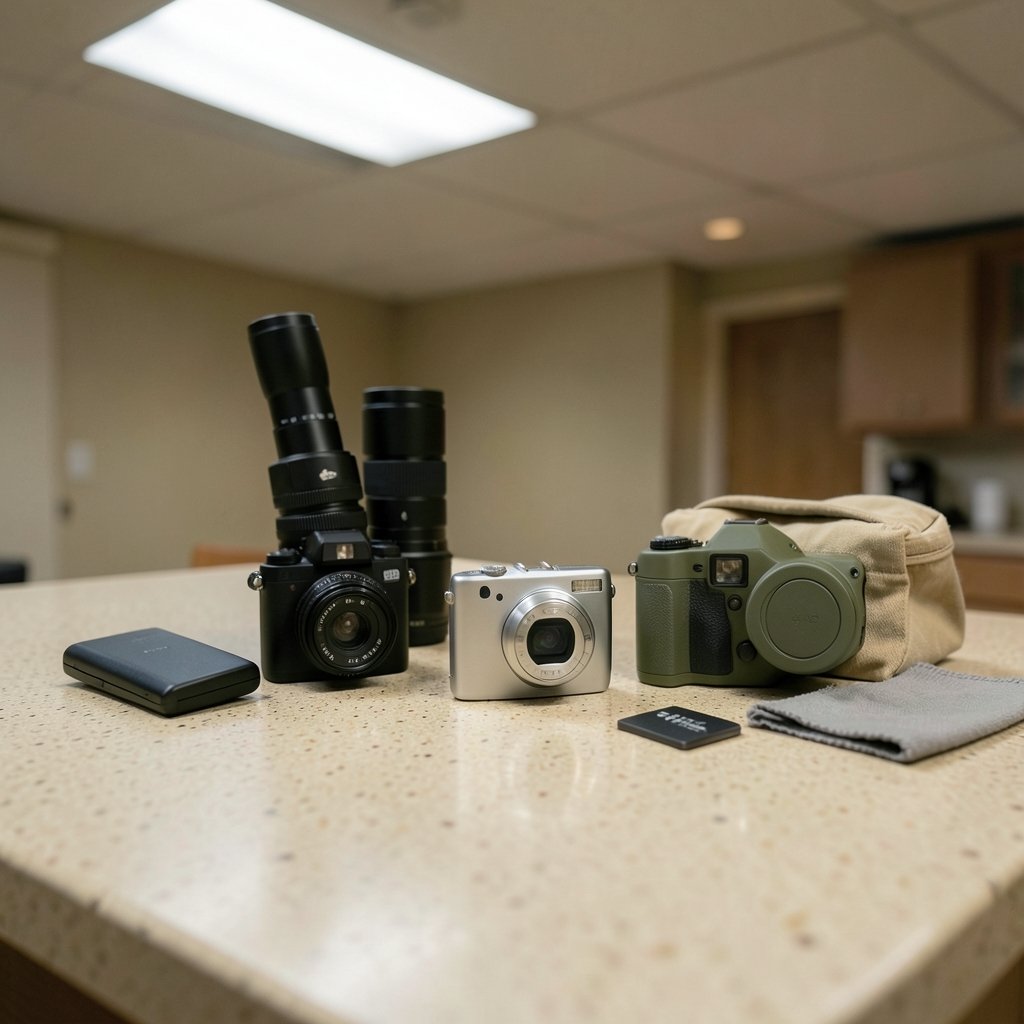
Why would anyone carry a separate camera when a phone already lives in their pocket? That question sounds reasonable until you try to zoom into a concert shot taken on a phone, or hand a stranger a device with your entire digital life on it. Dedicated compacts have quietly clawed their way back, and the current crop is genuinely interesting. Some fit in a jeans pocket, one survives being dropped in a river, and another costs less than a nice dinner out.
This roundup skips the philosophy and gets to the shortlist. Each pick below names who it suits, what it nails, and where it stumbles. Prices appear only where a published review states them, so treat any figure as a starting point and confirm it at checkout.
Quick comparison of the top point and shoot cameras
| Camera | Best for | Standout strength | Main trade-off | Stated price |
|---|---|---|---|---|
| Panasonic Lumix ZS99 | All-round travel | Handling, grip, easy controls | Pricier than budget rivals | Not stated |
| Ricoh GR IV | Street and everyday | Pocketable, Snap Focus | Fixed lens, one focal length | Not stated |
| Fujifilm X100VI | Luxury second camera | APS-C sensor, dials, recipes | Not truly pocketable | $1,799 |
| Leica D-Lux 8 | Splurge buyers | Large sensor, precise dials | No built-in flash | Not stated |
| OM System Tough TG-7 | Water and adventure | Rugged, waterproof body | Smaller sensor | Not stated |
| Kodak Pixpro FZ55 | Tight budgets | Simple and cheap | Weak in low light | About $139 |
| Canon PowerShot Elph 360 HS A | Casual snapshooters | Nearly half the ZS99’s price | Fewer manual controls | Not stated |
| Kodak Ektar H35N | Film beginners | Half-frame 35mm fun | Not digital at all | Not stated |
Panasonic Lumix ZS99: the safest all-rounder

If someone wants one camera for a trip and does not want to think hard about it, the ZS99 is the pick most reviewers land on. Testing notes praise its solid front and back grips, which make one-handed shooting feel secure, plus an interface with dials and buttons that are easy to reach without looking. That sounds like a small thing until you are on a moving boat.
The catch is price. The OM System Tough TG-7, the Panasonic Lumix FZ80D, and the Canon PowerShot Elph 360 HS A all undercut it, and the Canon costs nearly half as much. Reviewers argue the extra spend buys noticeably better handling and performance, which is a fair trade for a daily carry. Buyers who mostly shoot in good light and rarely touch settings can save the money without regret.
Ricoh GR IV: the street shooter’s pocket rocket
The GR series has a long, loyal following among documentary and street photographers, and the GR IV continues that run. Its signature trick is Snap Focus, a mode that locks focus at a preset distance so the shutter fires with no autofocus delay. That is how people catch a fleeting expression before it disappears.
It is also genuinely compact and stealthy, which matters more than spec sheets suggest. One review notes that pretty much everything the pricier Fujifilm X100VI can do, the GR IV can also do, sometimes with a few extra menu steps or a little Lightroom work afterward. The limitation is baked into the design: a single fixed focal length. If a person wants zoom, this is the wrong camera, full stop.
Fujifilm X100VI: beautiful, but not a pocket camera
Calling the X100VI a point and shoot is a stretch, and reviewers say so. It is comfortable in hand, has intuitive controls, and produces sharp, lovely files thanks to its APS-C sensor. Its many dials give quick access to settings, and its film simulation recipes are famous for a reason.
The honest verdict from testing is that it works best as a luxury addition to a kit rather than someone’s only camera, unless a single focal length is exactly what they want. It is not as compact as the pocket models here. At $1,799 it is also the priciest option on this list by a wide margin. Wonderful tool, wrong first camera for most people. (Install reversing camera step by step without cutting wrong)
Leica D-Lux 8: the splurge that earns its keep
One tester called the D-Lux 8 probably their favorite camera on a long list, and the reasoning was not the badge. The sleek body, precise manual controls, and short but useful zoom range all drew praise, but the photos sealed it. A larger-than-average sensor produced shots that rival output from much bigger mirrorless bodies.
The automatic mode is strong enough for casual use, yet the clicky dials reward someone who wants to shape exposure deliberately. Two caveats: it is pricier and less pocketable than most rivals, and it has no built-in flash, though a small unit slots into the top. If the budget stretches and the goal is a beautiful object that takes beautiful pictures, this is the one.
OM System Tough TG-7: built for water, sand, and clumsiness
Most cameras live in fear of the beach. The TG-7 was designed for it. It is the rugged, waterproof pick that keeps showing up on best-of lists for travelers who snorkel, hike in rain, or hand cameras to children.
The trade-off is sensor size. A small sensor limits low-light flexibility and fine detail compared with the GR IV or D-Lux 8. But a camera that is actually with you in the water beats a better camera left in the hotel safe, and that logic is hard to argue with. For family trips and outdoor work, it earns its place.
Kodak Pixpro FZ55: the honest budget option
Around $139 buys a camera that is easy to use and genuinely compact, which is exactly what a beginner or a casual documenter needs. It is the answer for someone who wants a real camera for birthday parties and school events without spending phone money.
Be clear-eyed about the limit: photo quality in low light is limited. Indoor evening shots will show noise and softness that a pricier model handles better. Used within its comfort zone, in daylight and simple scenes, it does the job without fuss.
Canon PowerShot Elph 360 HS A: cheap and cheerful
The Elph 360 HS A is the value challenger to the ZS99, costing nearly half as much. That gap is real and worth weighing, especially for a first camera or a gift.
What a buyer gives up is the polish: the ZS99’s grip and control layout are meaningfully better for one-handed shooting. The Elph is the right call for someone who wants pocketable snapshots and will never open a settings menu. It is the wrong call for anyone planning to learn photography properly.
Kodak Ektar H35N: the film wildcard
This one is not digital, which makes its presence here deliberate. Analogue instant and film cameras keep appearing on best-of compact lists because they offer something phones cannot: constraint and character. The H35N shoots half-frame 35mm, so a single roll goes twice as far, and it is marketed as a starter film camera.
The limitation is obvious. Every shot costs money to develop, and there is no screen to check results. For someone curious about film without buying a vintage SLR, it is a low-stakes doorway. For anyone who needs reliable output, skip it.
How to choose without overthinking it
Start with the pocket question. If the camera will not fit in a pocket or a small bag, it will stay home, and a camera at home takes no photos. That single test eliminates the X100VI for many buyers and elevates the GR IV and ZS99.
Next, decide what the photos are for. Travel and family documentation favor zoom and easy handling, which points to the ZS99 or the Elph. Street and documentary work favor speed and discretion, which points to the GR IV. Water and weather point to the TG-7. Image quality obsession points to the D-Lux 8 or X100VI, budget permitting.
Then check the ergonomics in person if possible. Grip shape and button placement matter more than megapixels, and reviews consistently flag handling as the difference between cameras that feel right and cameras that fight back. If the plan is to shoot video alongside stills, the same instinct applies to how you pick the best digital camera for your actual needs rather than the specs sheet.
Finally, budget for the extras. A spare battery, a fast memory card, and a small case add up. Skipping them is one of the most common mistakes, and it shows up as a dead camera at the worst moment.
Practical tips that separate happy owners from frustrated ones
Buy one camera, not three compromises. People who split their budget across a cheap compact and a cheap action cam usually end up using neither.
Learn two controls before the first trip: exposure compensation and focus mode. Those two solve most everyday problems, from a backlit face to a moving dog.
Do not judge a camera by its automatic mode alone. Even the budget models improve noticeably when the photographer takes over a little. The same principle applies when you install a reversing camera step by step without cutting the wrong wire: understanding the tool beats guessing.
Keep expectations calibrated on low light. Small sensors have physical limits, and no firmware update changes physics. If evening photos matter most, save for the larger-sensor models.
Conclusion
The best point and shoot camera is not the one with the longest feature list. It is the one that ends up in a pocket, bag, or dry box often enough to actually get used. The Lumix ZS99 covers the most ground for most people. The Ricoh GR IV rewards anyone who shoots on the street. The Tough TG-7 goes where others fear to go, the D-Lux 8 and X100VI deliver the prettiest files, and the FZ55 and Elph 360 HS A keep the entry price low. Pick the one that matches the life being photographed, confirm the current price before buying, and spend the difference on actually going somewhere worth shooting.
Frequently asked questions
Is a point and shoot camera better than a phone?
For zoom, handling, and creative control, yes. A dedicated compact gives physical dials, optical zoom, and a device free of notifications. For quick sharing and always-with-you convenience, a phone wins. Many photographers carry both.
Which point and shoot camera is best for travel?
The Panasonic Lumix ZS99 is the most balanced travel pick thanks to its grip, intuitive controls, and easy one-handed handling. Travelers heading to water or rough terrain should look at the OM System Tough TG-7 instead.
Do I need a large sensor in a compact camera?
Not necessarily. A larger sensor helps in low light and with fine detail, which is why the Leica D-Lux 8 and Fujifilm X100VI impress. But small-sensor models like the ZS99 and TG-7 are lighter, cheaper, and often more fun to carry.
What is Snap Focus on the Ricoh GR IV?
Snap Focus fixes the lens at a preset distance so the shutter fires instantly with no autofocus delay. Street photographers use it to catch fleeting moments. It is unique to the GR line and a major reason the series has loyal fans.
Are cheap point and shoot cameras worth buying?
Yes, within limits. The Kodak Pixpro FZ55 at about $139 and the Canon PowerShot Elph 360 HS A suit beginners and casual snapshooters. Expect weaker low-light performance and fewer manual controls than pricier models.
Is film a reasonable alternative to a digital compact?
For hobbyists, yes. The Kodak Ektar H35N is pitched as a starter film camera and shoots half-frame 35mm, doubling the shots per roll. Just remember that developing costs money and there is no screen to check results.











