

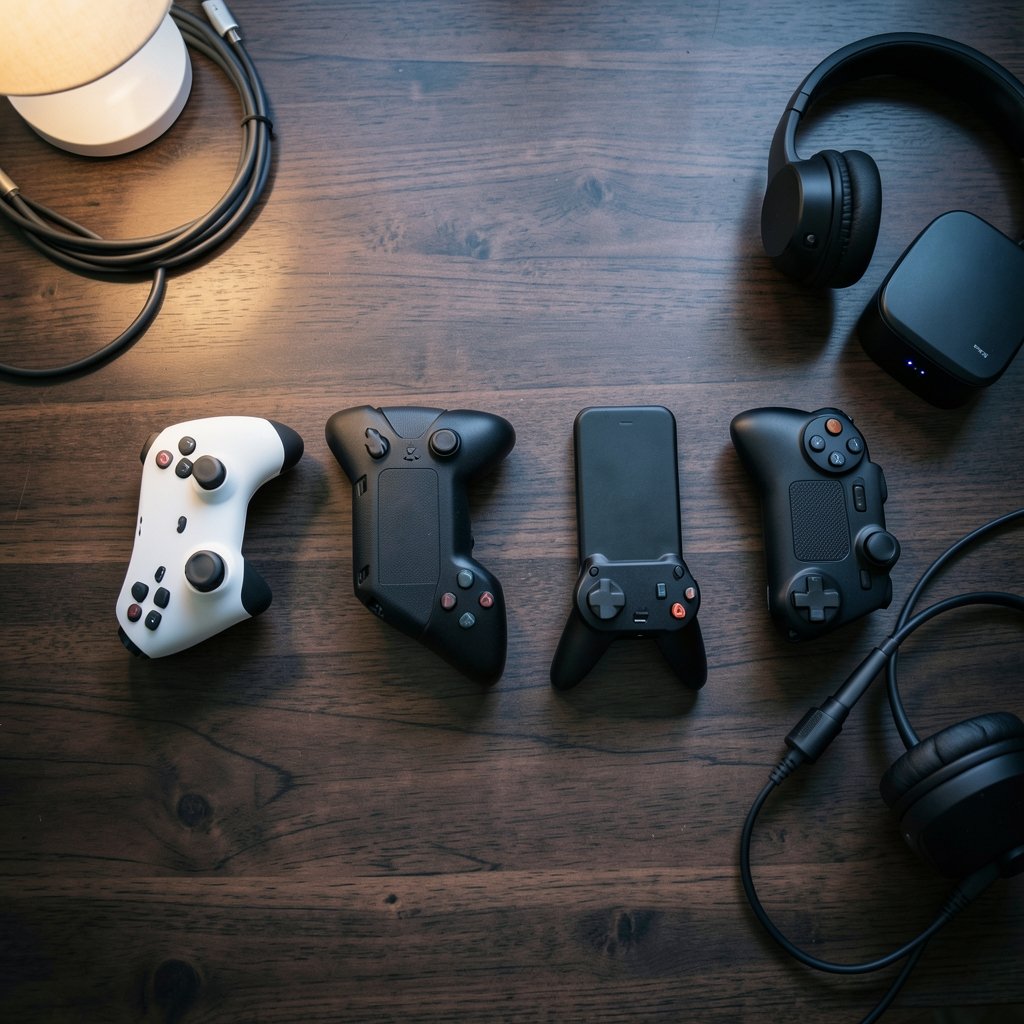
What if the controller you already own is holding back your game more than your console is? That question sits behind every “best PS5 controller” search, and the honest answer depends on what you play. A casual player chasing a good story has different needs than someone grinding ranked shooters. The good news: the market now has clear, distinct options rather than a pile of near-identical pads. Below is a shortlist of named controllers, who each one suits, what it does well, and the one thing that might annoy you.
Quick Comparison of the Top PS5 Controllers
| Controller | Best for | Standout strength | Main drawback | Noted by reviewers |
|---|---|---|---|---|
| Sony DualSense | Most players | Adaptive triggers and haptic feedback | Battery life and stick drift complaints | Stuff, SlashGear |
| Sony DualSense Edge | Performance-focused players | Swappable sticks, back buttons, profiles | High price, roughly 6 hours battery | CNET, IGN, Stuff |
| Scuf Reflex Pro | Deep customization fans | Four back paddles, adaptive triggers | Expensive, no haptic feedback | IGN, Stuff |
| Scuf Omega | Competitive FPS players | 11 extra programmable controls, up to 17 hours battery | No rumble, haptics, or adaptive triggers | Best Buy Blog |
| Nacon Revolution 5 Pro | Tinkerers who like Xbox layout | Granular software and hardware tuning | Asymmetrical stick layout, no PS4 support | CNET |
| Victrix Pro BFG | Players who want one pad for everything | Modular, versatile design | Less premium feel than the Edge | TechRadar |
Sony DualSense: The Default That Still Wins for Most People
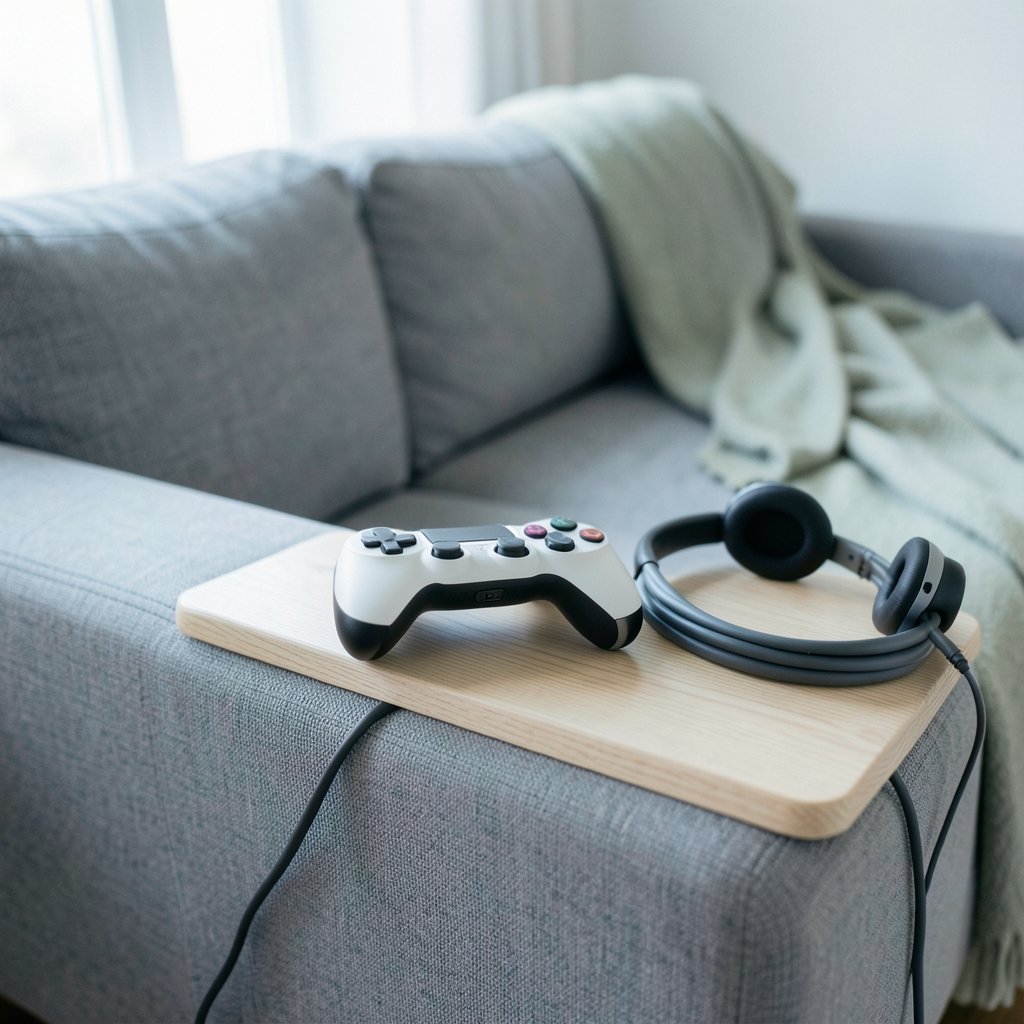
Start with the controller already in the box. The Sony DualSense ships with every PS5, and reviewers keep coming back to the same point: it is a huge improvement over past Sony efforts. Its adaptive triggers add resistance when you press them, and combined with haptic feedback you can feel what is happening in the game rather than just watching it. There is also a mute button built in, plus a microphone and speaker, so you can talk in-game without plugging in a headset.
The build suits most hands, and for the majority of players it will more than suffice. That is the verdict from multiple outlets, and it is hard to argue with.
The real limitation is durability and battery. Users have reported lackluster battery life and stick drift, two problems that can quietly ruin a session. If you already own a DualSense, treat drift as a wear item rather than a mystery failure. Keep the sticks clean, avoid pressing down hard during frantic moments, and know that replacement is a normal part of long-term ownership.
Who it suits: anyone who plays a few hours a week, single-player fans, and households where one controller gets shared. If you are still deciding on hardware before accessories, it helps to sort out the console side first, and a guide to buying a PS5 at Best Buy covers what actually matters at checkout. Pair that with a practical look at the best PS5 games worth playing and you will know whether your controller budget should go toward hardware or software.
Sony DualSense Edge: The Pro Pick With Real Trade-offs
The DualSense Edge is Sony’s high-end version of the standard pad, and it is the best buy if performance is a priority. You get function buttons under the control sticks, two back button attachments, and the ability to swap joystick modules. Three sets of analog sticks are included with different curves and lengths. Two sliders let you adjust trigger depth across three levels, which matters whether you are racing or shooting. You can also save profiles and switch between them on the fly.
It keeps haptic feedback and adaptive triggers in supported games, which is the big advantage over most third-party rivals. The touchpad even has the button symbols etched into it, along with the bottom of the L2 and R2 triggers, for extra grip. It feels a little heavier and more premium in the hand.
Now the drawbacks. It is expensive, and battery life lands around 6 hours, which is shorter than the standard DualSense. It also has only two back buttons, where some rivals offer four. And it does not support PS4.
Who it suits: competitive players who want Sony’s haptics plus paddles, and anyone who has already lost a controller to drift and wants swappable sticks as insurance. If you want the wider picture on which games justify the upgrade, a roundup of the best PS5 games in 2026 and what is worth your money is a sensible next read.
Scuf Reflex Pro: Customization Without Compromise on Triggers
The Scuf Reflex Pro is expensive yet highly customizable, and for some players it should be the only controller on the list. Its key feature is four customizable back paddles, well placed and easy to reach, so you can hit key actions without lifting your thumbs from the sticks. The non-slip grip around both stems keeps your hands locked in during long sessions.
It is one of the only third-party controllers to include Sony’s proprietary adaptive triggers. That is a meaningful detail, because most alternatives drop them entirely. It also offers a range of vibrant colors and unique faceplates, plus interchangeable parts.
The catch: it skips the DualSense’s haptic feedback in favor of traditional rumble, and battery life lands around 8 hours, slightly ahead of the Edge but behind the standard DualSense. It is also costly.
Who it suits: players who want four paddles, adaptive triggers, and a look they chose themselves. Skip it if haptics are the reason you love the DualSense.
Scuf Omega: Built for Ranked Shooters
The Scuf Omega Wireless Performance Controller replaced the older Reflex family in Scuf’s lineup and is the best fit if you mainly play competitive and FPS games. Its adjustable Instant Triggers switch from full analog travel to short click-style activation, which is exactly the kind of change shooter players notice immediately.
The competitive focus runs through the rest of the pad: four rear paddles, two side buttons, and five G-Keys give you 11 additional programmable controls, keeping more commands within reach. It uses TMR thumbsticks with magnetic sensing, and Scuf rates battery life at up to 17 hours.
The trade-off is stark. The Omega does not include vibration, haptic feedback, or adaptive triggers. That is a deliberate choice for players who want speed over immersion, but it makes the pad a poor fit for cinematic single-player games.
Who it suits: ranked shooter players who want maximum inputs and long battery life. Not the right pick if you play a mix of genres.
Nacon Revolution 5 Pro: The Most Customizable Option
Nacon is a French gaming company, and its Revolution 5 Pro is one of the few officially licensed controllers for PlayStation. It is also one of the more novel models. The body is more squared-off than the DualSense, and it uses an Xbox-style asymmetrical joystick layout rather than Sony’s symmetrical arrangement. The face buttons are slightly flatter and larger than most PlayStation pads.
It brings lots of hard customization options, a solid feel in the hand, and granular software tuning. If you like adjusting dead zones, remapping, and tweaking how a pad responds, this is the one that rewards that habit.
The limitations are real. The non-standard layout will bother players who have years of muscle memory on symmetrical sticks, and it does not support PS4. Expect a learning curve measured in days, not minutes.
Who it suits: tinkerers, players who came from Xbox, and anyone who wants hardware-level tuning without paying the very top price.
Victrix Pro BFG: The Modular All-Rounder
The PDP Victrix Pro BFG has been a mainstay of best-controller guides for years, and for good reason. It is among the best third-party controllers available and a genuinely compelling alternative to the DualSense Edge. The Edge feels more premium thanks to higher-quality materials and a familiar shape, but the Victrix is the king of versatility, which makes it the more practical choice for many players.
Whether you are diving into fighting games or grinding a first-person shooter, its range of specialist features adapts to the job. The modular design means you can reconfigure rather than replace.
The honest limitation is feel. It does not match the Edge for premium materials or that familiar DualSense shape. If you care most about how a controller feels in the first five seconds, the Edge wins; if you care about what it can become, the Victrix does.
How to Choose Without Overthinking It
Work through these steps in order and you will land on the right pad quickly.
- Name your main genre. Shooters favor paddles and short triggers. Story games favor haptics and adaptive triggers. Racing favors adjustable trigger depth.
- Decide if you need haptics. If yes, stay with Sony or the Scuf Reflex Pro. If no, the Omega and Nacon open up.
- Check your stick layout preference. Symmetrical is PlayStation standard; asymmetrical is Xbox style. Do not fight muscle memory you have built for years.
- Set a hard budget. The Edge, Reflex Pro, and Omega all sit at the expensive end. The standard DualSense costs the least and covers most needs.
- Plan for wear. Stick drift is a known complaint on standard DualSense pads. Swappable modules, like those on the Edge, turn a future failure into a cheap fix.
- Match the pad to your library. A competitive pad is wasted if you mostly play narrative games. Browse a practical guide to what is worth playing before you spend on hardware.
One common mistake: buying a competitive controller first and discovering you miss the haptics. Another: assuming a higher price always means a better fit. The right controller is the one that matches your games, not the one with the longest feature list.
If you enjoy practical breakdowns of everyday gear decisions, the same approach applies elsewhere, from cat litter that actually controls odor to an airless sprayer versus a roller. The principle holds: match the tool to the job.
Conclusion
There is no single best PS5 controller, but there is a best one for you. The Sony DualSense remains the sensible default for most players, with haptics and adaptive triggers that no third-party pad fully replicates. The DualSense Edge is the performance pick, trading battery life and money for swappable sticks, paddles, and profiles. The Scuf Reflex Pro wins on customization while keeping adaptive triggers, the Scuf Omega is a competitive shooter tool with 11 extra inputs and long battery life, and the Nacon Revolution 5 Pro rewards players who want to tune everything. The Victrix Pro BFG rounds things out as the modular all-rounder.
Pick by genre, layout, and budget. Then spend your remaining money on games you will actually finish.
Frequently Asked Questions
Is the DualSense Edge worth the extra money?
For competitive players, often yes. It adds swappable joystick modules, two back buttons, adjustable trigger depth, and saved profiles while keeping haptics and adaptive triggers. The trade-offs are a high price and roughly 6 hours of battery life, which is shorter than the standard DualSense.
Do third-party PS5 controllers keep adaptive triggers?
Some do, most do not. The Scuf Reflex Pro is one of the only third-party controllers to include Sony’s proprietary adaptive triggers, though it skips haptic feedback. The Scuf Omega deliberately leaves out vibration, haptics, and adaptive triggers to focus on competitive speed.
Which PS5 controller is best for shooters?
The Scuf Omega is the strongest fit for competitive and FPS play, with adjustable Instant Triggers, four rear paddles, two side buttons, five G-Keys, TMR thumbsticks, and battery life rated at up to 17 hours. The DualSense Edge is a good alternative if you still want Sony’s haptics.
Why do people complain about the standard DualSense?
Two reasons come up repeatedly: lackluster battery life and stick drift. Both can break the experience over time. Keeping the sticks clean and considering a pad with swappable modules are practical ways to manage the risk.
Can I use an Xbox-style layout on PS5?
Yes. The Nacon Revolution 5 Pro uses an asymmetrical, Xbox-style joystick layout and is officially licensed for PlayStation. The catch is that it does not support PS4, and the layout takes adjustment if you are used to symmetrical sticks.
Which controller is best if I want one pad for every genre?
The PDP Victrix Pro BFG is the versatility leader, thanks to its modular design that adapts to fighting games, shooters, and more. It does not feel as premium as the DualSense Edge, but it is the more practical choice for players who refuse to own three controllers.











