

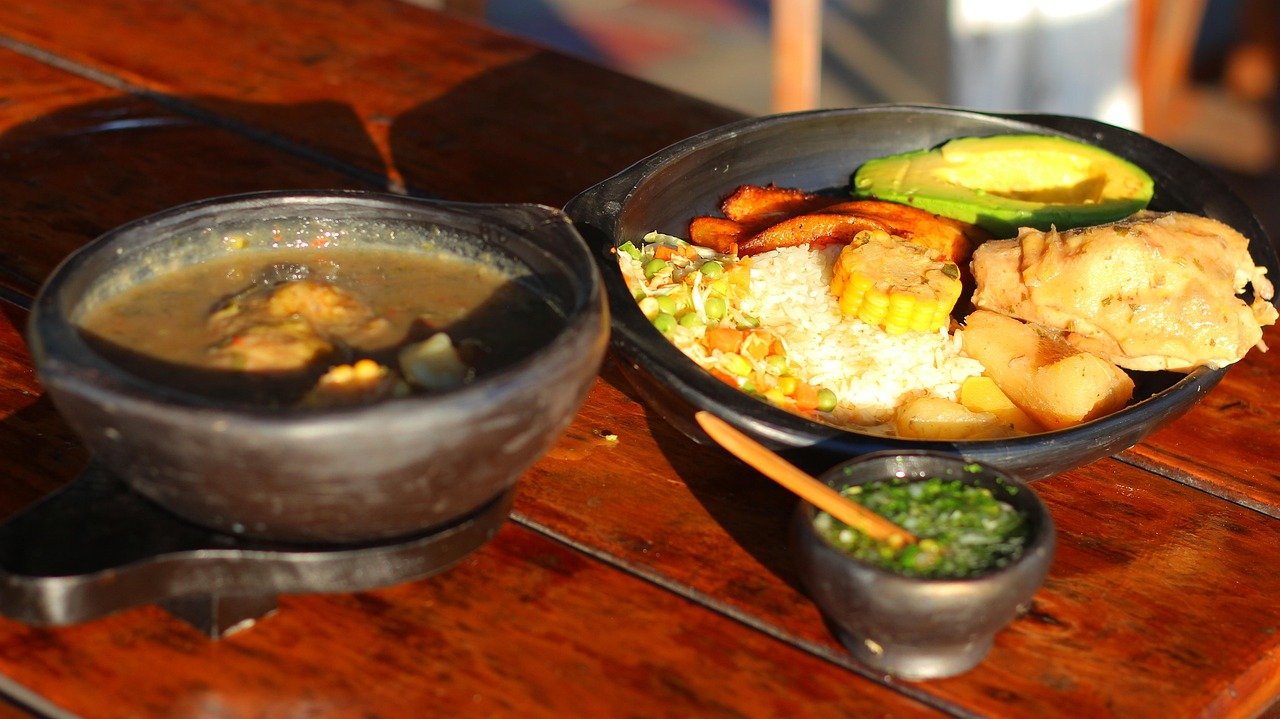
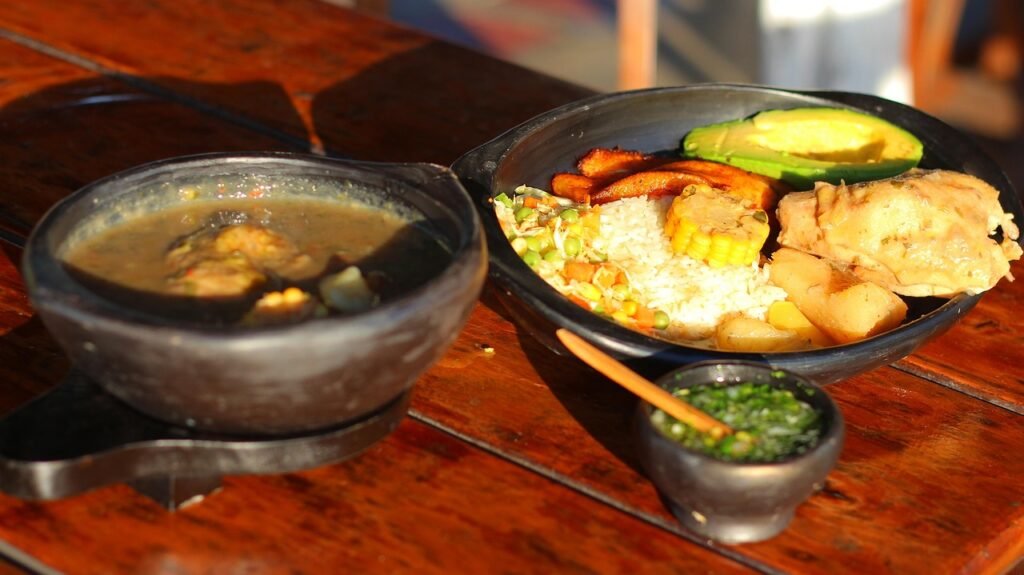
What if the best bowl of sancocho colombiano near you is hiding in a strip-mall spot with plastic chairs, a television blaring fútbol, and a handwritten menu taped to the wall? That scenario is more common than you might think. Sancocho rewards the curious eater, because the restaurants that do it well are rarely the ones with the biggest signs.
This guide is for anyone typing “sancocho near me” into a phone and hoping for something better than a generic soup. It covers what the dish actually is, how to judge a good version, which questions to ask before you drive across town, and how to read a menu so you order the right thing the first time.
What Sancocho Actually Is (and What It Is Not)
Sancocho is a hearty Colombian stew built on meat, starchy roots, and vegetables simmered together in a seasoned broth. Chicken, beef, and pork are all common bases. The roots do much of the work: potato, yuca (cassava), ñame, and plátano thicken the liquid and give the bowl its weight. It is broth-heavy, but it is eaten with rice and avocado on the side rather than treated as a light starter.
That description sounds simple. The execution is not. Sancocho is a long-simmered dish, which means the kitchen has to plan for it. Many Colombian restaurants serve it mainly at lunch or on weekends, so a 8 p.m. Tuesday visit may end in disappointment. Calling ahead is one of the most practical habits a sancocho hunter can build.
One warning saves a lot of confusion: ajiaco is not sancocho. Bogotá’s ajiaco uses chicken, three potato varieties, and the herb guascas. It is a separate, region-specific soup that visitors routinely confuse with sancocho. If a menu lists both, order both and taste the difference. They are cousins, not twins.
Why “Near Me” Is a Harder Question Than It Looks
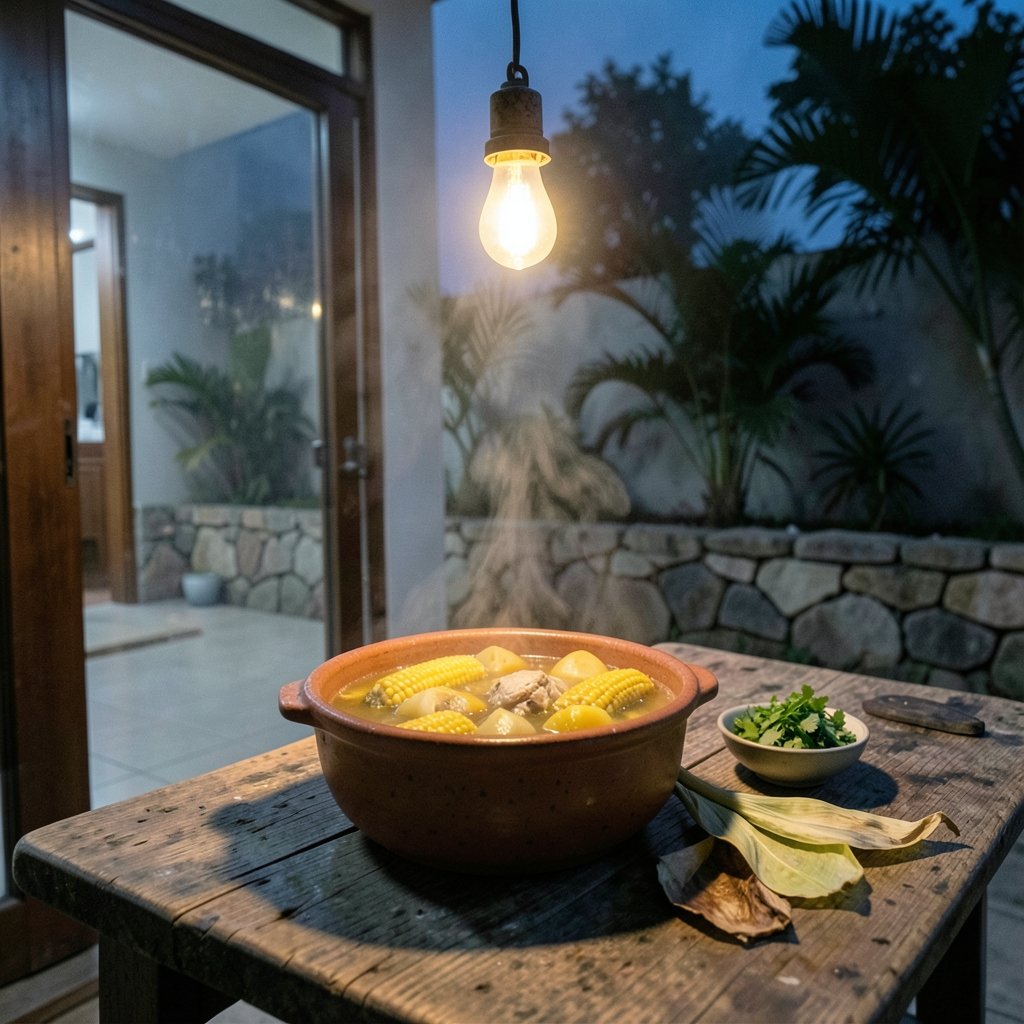
Search results for “sancocho near me” depend on your GPS location, the time of day, and whether a kitchen is currently open. Any list of restaurants is a snapshot. It goes stale the moment a cook changes the menu or a lease runs out. Treat every recommendation, including the ones in this article, as a starting point rather than a verdict.
There is also no single canonical recipe. Sancocho de gallina is common in the Andean interior, sancocho de costilla (beef rib) shows up on the Caribbean coast, and fish-based versions appear in river and coastal areas. A restaurant advertising “authentic sancocho” is really advertising one regional tradition. That is not a red flag. It is a reason to ask which tradition you are getting.
The “national dish” label gets repeated everywhere, but it is informal and contested regionally. No official body has designated it. That matters for how you read marketing copy. A banner claiming national-dish status tells you about the restaurant’s confidence, not about the food.
How to Judge a Sancocho Before You Sit Down
Most people choose restaurants by star rating. That works poorly for a dish this specific. A four-star rating built on burgers and a four-star rating built on sancocho are not the same signal. Here is what actually helps.
Read the reviews for the right words
Search the review text for the dish itself. Reviews that mention sancocho, broth, yuca, or “lunch special” tell you more than a general average. A place with 40 reviews and a dozen mentioning sancocho is a better bet than a place with 400 reviews and none.
Check the hours against the dish
Long-simmered food has a schedule. If a restaurant opens at 11 a.m. and closes at 3 p.m., that is often a sign the kitchen cooks in the morning and serves until it runs out. Those hours are a feature, not a limitation.
Look at the side dishes
Rice, avocado, arepa, and sometimes a fried egg or plantain come alongside. A kitchen that bothers with good sides usually bothers with the main bowl. A kitchen that treats them as afterthoughts often does the same with the stew.
Ask about the broth
A good sancocho has a broth with body and color, not a thin, cloudy liquid. If you can call ahead, ask what the base is and how long it simmers. Staff who answer with specifics are staff who know their own kitchen.
Weigh the price against the portion
Sancocho is filling and cheap to make in volume. A modest price for a large bowl is normal. An unusually high price should come with an unusually good explanation, like a premium cut of beef rib or a specialty regional version.
If you are comparing restaurants the way you would compare any local service, the same discipline applies. The logic in this guide to laser hair removal near me holds here too: verify the specific thing you want rather than the general category. And if you want a second example of how to sift local options quickly, this piece on Chinese restaurants near me walks through the same filtering process.
A Practical Comparison: Which Version Should You Order?
Regional styles differ enough that the right order depends on what you want from the meal. Use this table as a rough guide rather than a rulebook.
| Version | Base | Character | Best For |
|---|---|---|---|
| Sancocho de gallina | Hen or chicken | Lighter broth, tender meat, Andean style | First-timers and anyone wanting a milder bowl |
| Sancocho de costilla | Beef rib | Richer, fattier, deeper color | Cold days and big appetites |
| Sancocho de pescado | Fish | Brighter, coastal and river tradition | Anyone avoiding red meat |
| Sancocho de res | Beef | Hearty, root-heavy, filling | Sharing or a heavy lunch |
| Ajiaco (not sancocho) | Chicken and three potatoes | Creamy, herbal, guascas-forward | Curious eaters comparing Bogotá style |
Two practical notes. First, a bowl of sancocho is typically high in sodium and calories, thanks to starchy roots and fatty cuts. Public-health guidance recommends adults keep salt intake under 5 grams a day, so a big restaurant bowl can eat most of that budget in one sitting. That is not a reason to skip it. It is a reason not to make it a daily habit. Second, “best” is editorial opinion, not safety certification. Inspection records and local health oversight are separate questions from flavor, and a great bowl does not automatically mean a spotless kitchen.
Common Mistakes People Make When Hunting for Sancocho
Ordering at the wrong hour. The single biggest mistake. Sancocho is often a lunch or weekend dish. Show up at the wrong time and you get whatever else the kitchen has left.
Confusing it with a light soup. People order sancocho expecting something broth-forward and modest, then get a bowl that could feed two. Portion expectations matter.
Skipping the sides. Rice and avocado are part of the architecture. Eating the stew alone is like eating a sandwich without the bread.
Trusting the word “authentic.” Every restaurant says it. Ask which region instead. A specific answer is worth more than an adjective.
Ignoring the language barrier. Many of the best spots have menus in Spanish only. Learning five words, sancocho, gallina, costilla, yuca, and para llevar (to go), changes the entire experience.
Never calling ahead. A 30-second phone call answers the two questions that matter: Do you have sancocho today, and until when?
Assuming a ranking is permanent. Any list, including this article’s advice, is a snapshot. Restaurants change hands, cooks move, and menus shift. Recheck before a long drive.
How to Read a Colombian Menu Without Guessing
A few menu terms do a lot of work. Gallina means hen, which usually signals a longer, more flavorful simmer than plain chicken. Costilla means rib. Pesca or pescado means fish. Yuca is cassava, ñame is a starchy tuber, and plátano is plantain. Con todo means with everything, sides included.
If a menu lists sancocho only as a “special” or “del día,” that is often a good sign. Daily specials suggest the kitchen cooks in batches and sells through them, which is exactly how this dish wants to be handled. A sancocho available 24/7 from a freezer is a different product entirely.
Pay attention to garnishes too. Cilantro, lime, and a side of ají (a chili condiment) let you adjust the bowl to your taste. A kitchen that offers them considers the eater as well as the pot.
What to Do When You Find a Good One
When a spot delivers, lock in the details while they are fresh. Note the day of the week, the time of day, and which version you ordered. Ask whether the sancocho is a fixed menu item or rotates. Ask if they take reservations for weekends, since good local spots fill up.
Then do the small things that keep a good place in business. Order the sides. Tip well. Tell the cook the broth was good, in Spanish if you can manage it. These are the restaurants that survive on regulars, and regulars are made, not born.
For anyone who wants to keep exploring nearby options in other categories, the broader collection of laser hair removal near me resources shows how the same local-search approach works across different needs. The method is the same everywhere: verify the specific offering, check the timing, and trust specifics over slogans.
Conclusion
Finding the best sancocho colombiano near you is not about chasing a ranking. It is about knowing what the dish is, understanding that regional versions differ, and doing a little homework before you get in the car. Call ahead. Ask which region. Order the sides. Go at lunch. Recheck the hours. Those five habits will outperform any list, because they work in any city and any year.
The bowl you want is probably not the most advertised one. It is the one where the kitchen started simmering at dawn and the menu is written in marker. Go find it, and go hungry.
Frequently Asked Questions
What is the difference between sancocho and ajiaco?
Ajiaco is a Bogotá-specific chicken soup built on three potato varieties and the herb guascas. Sancocho is a broader family of stews with meat, starchy roots, and vegetables, and it varies by region. They are separate dishes that visitors often confuse.
Is sancocho Colombia’s national dish?
The label is widely repeated but informal. No official body has designated sancocho as Colombia’s national dish, and regional traditions contest the idea of a single national version. Treat the claim as cultural shorthand rather than fact.
What time of day should I order sancocho?
Lunch and weekends are the safest bets. Because the dish is long-simmered, many restaurants prepare it in the morning and serve until it runs out. Calling ahead to confirm availability and closing time is the most reliable approach.
Which sancocho version should a first-timer order?
Sancocho de gallina is a gentle starting point. It has a lighter broth and tender meat, and it is common in the Andean interior. Anyone who prefers richer, heavier food should try sancocho de costilla instead.
Is sancocho healthy?
It is filling and nutritious in the sense that it contains meat, roots, and vegetables, but it is typically high in sodium and calories. Public-health guidance suggests adults keep salt intake under 5 grams daily, so a large restaurant bowl can use most of that allowance.
Why does my “sancocho near me” search give different results each time?
Results depend on your GPS location, the current time, and which kitchens are open. Restaurant hours and menus change, so any list is a snapshot. Recheck hours and call ahead before making a long trip.














