

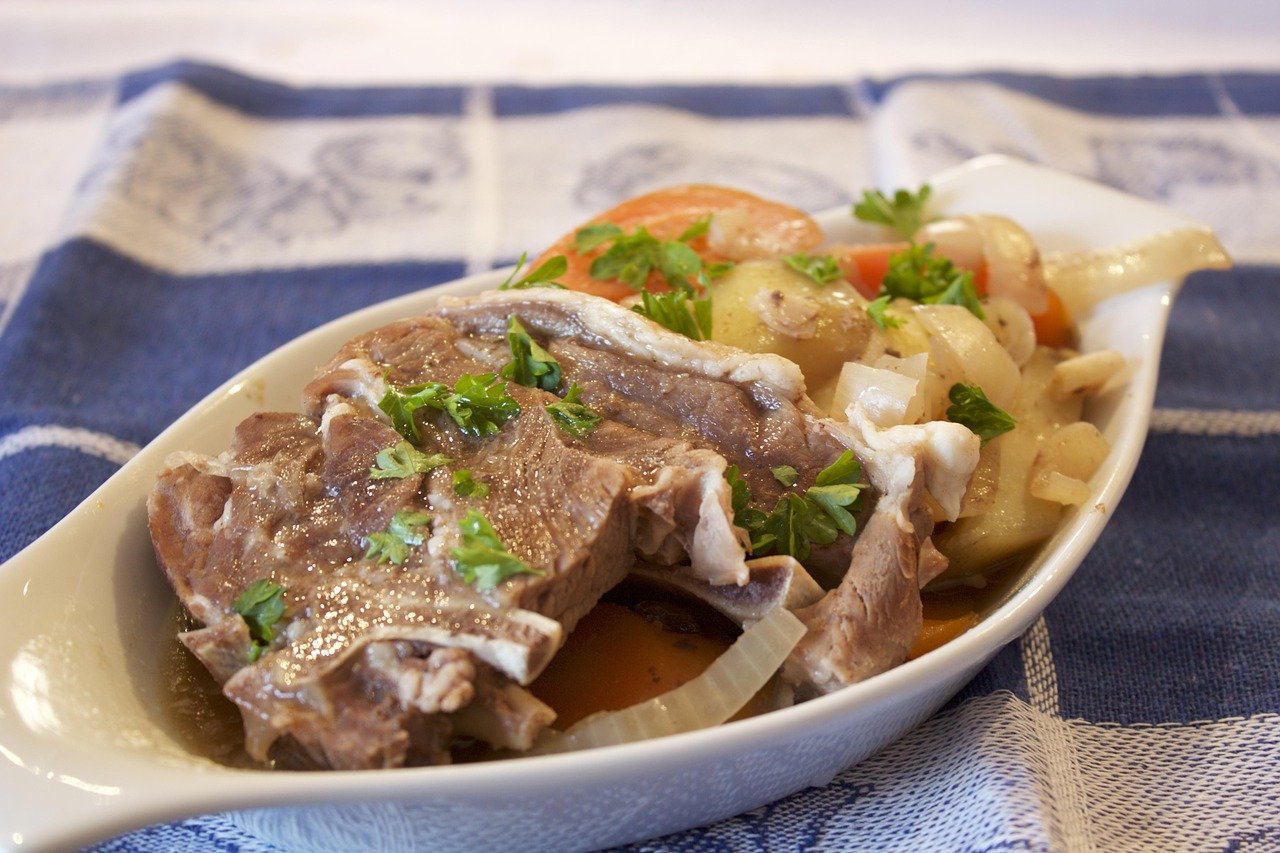

Ever typed “best seco de cordero near me” into your phone at 8 p.m., stomach growling, only to get a map full of pins that all look the same? This slow-braised lamb stew is one of the most satisfying dishes in Peruvian and Ecuadorian cooking, yet it is also one of the hardest to pin down on a menu. It appears as a daily special, vanishes on Tuesdays, and sometimes sits under a completely different name.
This guide cuts through the noise. It explains what seco de cordero actually is, why search results are so unreliable, and how to spot a bowl worth your money before you sit down. By the end, you will have a repeatable method for finding the good stuff in any city.
What Seco de Cordero Actually Is
Seco de cordero is a lamb stew braised low and slow until the sauce thickens into something rich and concentrated. The base is usually a sofrito of onion, garlic, and tomato, colored with achiote (annatto) and often deglazed with chicha de jora or beer. It typically arrives with rice, potatoes, or both.
Here is the part that trips people up. The word “seco” means “dry” in Spanish, but the dish is anything but. In this context, it refers to a stew reduced until the liquid clings to the meat rather than swimming around it. The etymology is genuinely contested among food writers, so treat any confident claim about the name’s origin with a raised eyebrow.
The lamb version is also the least common of the family. Seco de res (beef) and seco de chivo (goat) appear on far more menus. That scarcity is exactly why your search results feel thin.
| Dish | Main Protein | How Common on Menus |
|---|---|---|
| Seco de res | Beef | Very common |
| Seco de chivo | Goat | Common in coastal areas |
| Seco de cordero | Lamb | Least common, often a special |
| Seco de pollo | Chicken | Common, lighter version |
Why “Near Me” Searches Disappoint

There is no official registry, certification, or standard for seco de cordero. No board decides what qualifies. That means “near me” results depend entirely on map platforms, user-generated menus, and whatever a restaurant happened to upload two years ago.
Three practical problems follow from this.
First, menus go stale. A stew that was a Wednesday special in March may be gone by June, but the listing still says otherwise. Second, naming is inconsistent. The same dish might appear as seco de cordero, seco de borrego, or an Andean-style lamb curry. Third, coverage varies by neighborhood. Search reliability tends to be highest in cities with large Peruvian and Ecuadorian communities, but that is a general pattern rather than a ranked, sourced fact.
The fix is to stop trusting a single platform. Cross-check a map listing against the restaurant’s own social account, then call. Yes, calling feels old-fashioned. It also saves you a wasted trip.
If you want a broader framework for evaluating local businesses before you commit, the same instincts that help you choose a laser hair removal clinic near you apply here: verify the specifics, ignore the marketing, and ask direct questions. That article’s checklist mindset transfers surprisingly well to restaurant hunting, and you can browse more laser hair removal near me resources if you like structured comparison methods.
The Pre-Trip Checklist That Saves Wasted Evenings
Before you drive across town, run through these checks. Each one takes under a minute and eliminates most disappointments.
- Confirm the dish is available today. Stews are often daily specials. Ask directly: “Do you have seco de cordero today?”
- Ask about the cut. Bone-in lamb is more common for braises and usually means more flavor. Boneless is fine, but it tells you something about the kitchen’s approach.
- Ask what the sauce is built on. Chicha de jora and beer both appear. This matters for flavor and for anyone avoiding alcohol.
- Check the sides. Rice, potatoes, or both. A kitchen that gets the sides right usually gets the stew right.
- Ask about portion size. Lamb braises are rich. A small bowl goes a long way, and some places serve portions built for two.
- Confirm hours and whether they sell out. Popular stews frequently run out by mid-afternoon.
The sixth point is the one people ignore most. A stew that simmers for hours is made in a fixed batch. When it is gone, it is gone.
Reading a Menu Like Someone Who Knows the Dish
Menus tell you more than they intend to. A few signals are worth watching for.
Good signs. The dish is listed as a special of the day. The menu names the region or the style. The restaurant serves other slow-cooked dishes, which suggests the kitchen has the patience and the equipment for braising.
Neutral signs. The dish appears under a slightly different name. This is normal, not a red flag. Look for seco de cordero, seco de borrego, or an Andean lamb curry.
Caution signs. A photo that looks identical across five different dishes. A menu that lists forty items, which usually means nothing is made with particular care. A “lamb stew” with no indication of style at all.
One more thing worth knowing: the same skill of reading a menu carefully applies when you order wine at a restaurant without that awkward pause. Both come down to asking a specific question instead of a vague one. “What pairs well with a slow-braised lamb?” gets you a better answer than “What’s good?”
What a Great Bowl Tastes Like
You do not need to be a chef to judge the result. A few sensory markers separate a good seco from a forgettable one.
The sauce should coat the back of a spoon and taste concentrated rather than watery. If it runs off the meat in a thin stream, it was not reduced enough. The meat should pull apart with a fork but still hold its shape. If it collapses into shreds, it was cooked too long or too hot. The color should be a deep orange-red from the achiote, not pale brown.
The balance is the real tell. A good seco tastes of onion and garlic first, then the lamb, then a gentle warmth from the chilies. If the first thing you taste is salt, keep looking. If the first thing you taste is nothing, you found the wrong place.
Dietary and Safety Notes Worth Asking About
Lamb stews are typically gluten-free, but that is recipe-dependent. Some kitchens use beer or soy-based seasonings. If gluten matters to you, ask rather than assume.
Alcohol is a real consideration too. Chicha de jora is fermented, and beer is common in the braise. Cooking reduces but does not always eliminate alcohol, so anyone avoiding it should ask which liquid the kitchen uses.
For leftovers, general food-safety guidance applies: refrigerate promptly and reheat thoroughly. Stews are forgiving, but they are not immune to the basics.
A Realistic Method for Any City
Here is the whole approach condensed into something you can actually do on a hungry evening.
Start with a map search using two or three name variants, not one. Filter for restaurants that describe themselves as Peruvian or Ecuadorian. Open the restaurant’s own social account, not the aggregator listing, and look for a recent post mentioning the dish. Call and ask the two questions that matter: is it available today, and what is the sauce built on. If the answers sound specific, go.
That last point is the secret. Vague answers usually mean a vague dish. A kitchen that knows its own stew will tell you exactly how it is made, and often with some pride.
For anyone who enjoys methodical local searching, the same patience pays off when you need to find a good Chinese restaurant fast. Both tasks reward cross-checking sources over trusting a single star rating.
Conclusion
Finding the best seco de cordero near you is less about luck and more about process. Know what the dish is, accept that it is rarely a permanent menu item, and verify before you travel. Ask about the cut, the sauce, and the sides. Read the menu for signals of a kitchen that braises with care. Then judge the bowl on sauce thickness, meat texture, color, and balance rather than on star ratings.
The dish rewards curiosity. It is a slow-cooked, deeply flavored plate of food that most restaurants treat as a labor of love rather than a volume seller. Treat your search the same way, with a phone call and a little patience, and your hit rate will climb fast. The best bowl in your city is probably not the one with the most reviews. It is the one where someone in the kitchen still cares about getting the reduction right.
What does seco de cordero mean?
It is a slow-braised lamb stew from Peruvian and Ecuadorian cooking. The word “seco” means dry, but here it describes a stew reduced until the sauce is thick and concentrated, not a dry dish. The base is usually onion, garlic, tomato, and achiote, often with chicha de jora or beer.
Why is seco de cordero so hard to find on menus?
Because it is the least common member of the seco family. Beef and goat versions appear far more often, and the lamb version is frequently a daily special rather than a permanent menu item. Availability can change week to week, so a phone call is more reliable than any listing.
What should I order with it?
Rice and potatoes are the standard sides, and many places serve both. Since the stew is rich, a lighter side or a simple salad balances it well. If the restaurant offers a choice, ask which side the kitchen recommends for that specific stew.
Is seco de cordero gluten-free?
Often, but not always. The stew itself is usually built from meat, vegetables, and spices, but some kitchens use beer or soy-based seasonings. Anyone with a gluten sensitivity should ask directly about the braising liquid and any thickeners used.
Does the sauce contain alcohol?
Frequently, yes. Chicha de jora is a fermented corn beverage and beer is a common braising liquid. Cooking reduces the alcohol but does not always remove it entirely. If you avoid alcohol, ask which liquid the kitchen uses before ordering.
How can I tell if a restaurant’s version is good?
Look for a sauce that coats a spoon rather than running off it, meat that pulls apart but holds its shape, and a deep orange-red color from the achiote. Taste for balance: onion and garlic first, then lamb, then gentle heat. If salt dominates, it is not the bowl you are looking for.
One final note on timing: seco de cordero is often best earlier in the day, when the batch is fresh and the kitchen has not yet rushed the last servings out the door. If you can, aim for lunch rather than a late dinner, and ask whether the stew was made that morning. A kitchen that hesitates on that question is telling you something useful. None of this requires expertise, only a willingness to ask two or three specific questions before committing an evening. Do that consistently, and the search stops feeling like a gamble. It becomes a short list of trusted kitchens, each one verified by a phone call and a good bowl. That is the real answer to “best seco de cordero near me”: not a single restaurant, but a method you can reuse in any city you happen to be hungry in.














