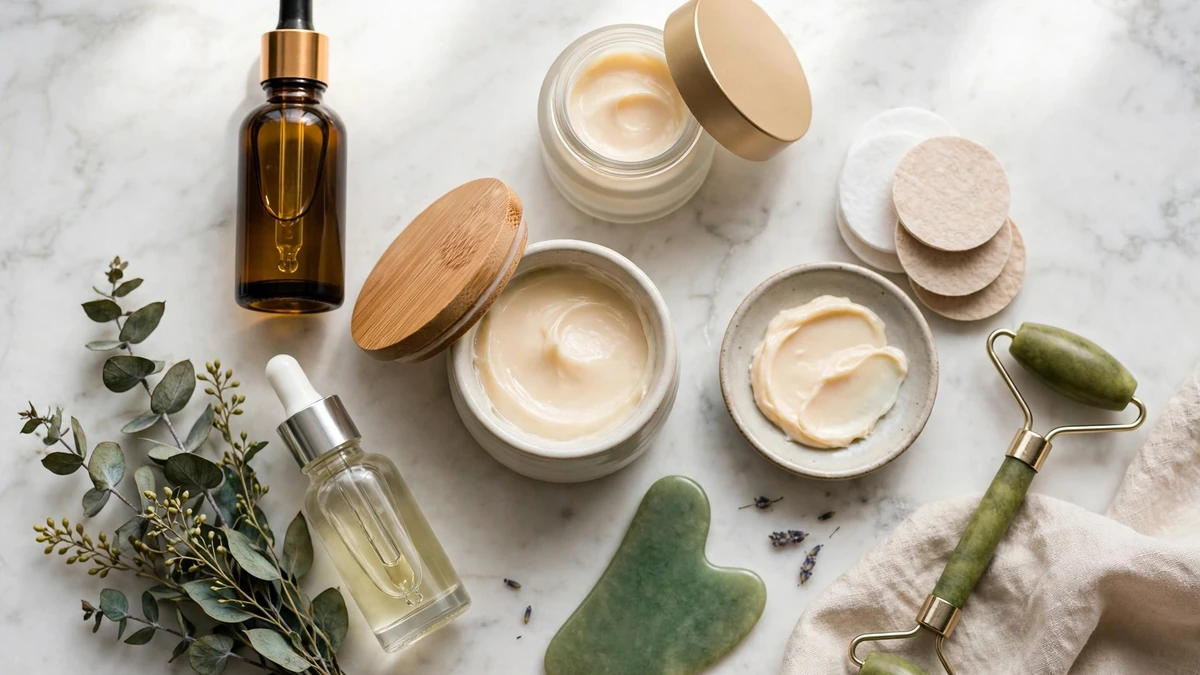

Mature skin has different needs from the skin you had at 25, and the most useful thing a skincare routine can do is respect that. Collagen production slows, skin becomes thinner and drier, cell turnover takes longer, and the barrier that keeps moisture in and irritants out does not recover as quickly. The right products do not promise to turn back time. They hydrate deeply, support the barrier, smooth the look of fine lines, and protect the skin you have now.
The problem is the sheer number of products aimed at mature skin, and how many of them are either too harsh or too vague. A strong retinol used too quickly can leave skin red and flaking for weeks, while a rich cream with no active ingredients can feel comforting and do very little. The nine products below cover the essentials: a gentle cleanser, a hydrating serum, a retinol, a firming treatment, and moisturisers that actually keep skin comfortable through the day and night.
Each product is described by what it does well, what to watch for, and who it suits best, so you can build a routine that fits your skin, your budget, and your patience, rather than buying a shelf of products you will never finish.
Key takeaways
- Mature skin needs hydration, barrier support, and gentle actives more than it needs strong exfoliation or high-strength treatments used aggressively.
- Retinol is the most studied anti-ageing ingredient, but it should be introduced slowly, two or three nights a week, and always paired with moisturiser.
- Hyaluronic acid, ceramides, peptides, and niacinamide are the supporting ingredients that make a routine comfortable and effective.
- Daily sunscreen matters more with age, because sun damage is the main driver of the wrinkles, spots, and laxity people associate with ageing.
- No cream removes deep wrinkles or restores lost firmness on its own, and a product that stings, peels, or leaves skin red is not working harder, it is irritating your skin.
What mature skin actually needs
As skin ages, it produces less oil and less collagen, and it holds less water. That combination shows up as dryness, a thinner feel, fine lines that stay visible when the face is at rest, and a slower recovery after irritation or sun exposure. Hormonal changes can add to this, particularly around the menopause, when skin often becomes drier and more sensitive at the same time. A routine that worked at 35, with a strong exfoliant and a light gel moisturiser, can suddenly feel too much and too little at once.
The priorities shift accordingly. Hydration comes first, because plump, well-moisturised skin looks smoother and tolerates active ingredients better. Barrier support comes second, because ceramides and fatty acids help skin hold that moisture and resist irritation. Gentle actives come third: retinol for cell turnover and collagen support, vitamin C for brightness and uneven tone, and peptides for firmness. Strong, frequent exfoliation, by contrast, usually does more harm than good on mature skin.
It is also worth being honest about what skincare can and cannot do. A good routine can visibly soften fine lines, improve texture and tone, and keep skin comfortable and healthy. It cannot replace lost volume, lift sagging skin, or erase deep wrinkles. Products that claim otherwise are selling a fantasy, and the money is better spent on the unglamorous basics: a gentle cleanser, a hydrating serum, a good moisturiser, and sunscreen every morning.
How we chose these products and what to look for
Look first at the active ingredients and their strength. For retinol, a low to moderate strength used consistently beats a high strength used once and abandoned after a bad reaction. For vitamin C, a stable derivative or a 10 percent formula is often more comfortable than a 15 percent L-ascorbic acid serum on mature, drier skin. For peptides and niacinamide, the exact percentage matters less than using them daily in a formula that does not irritate.
Look next at the texture and the barrier support. Mature skin usually prefers creams over gels, and formulas with ceramides, squalane, hyaluronic acid, or shea butter tend to feel more comfortable and keep skin hydrated for longer. A product that leaves skin tight or shiny after ten minutes is a poor match, however good its ingredient list looks on paper. Our guide to the best moisturisers for mature skin explains how to tell a genuinely hydrating cream from one that only feels rich for an hour.
Finally, look at fragrance and sensitivity. Mature skin is often more reactive, and fragrance is the most common irritant in skincare, so fragrance-free formulas are the safer default. Patch-test a new active on your jawline for a few days, introduce one new product at a time, and give each one four to eight weeks before judging it. A routine that is calm, consistent, and comfortable will do more for your skin than a shelf of strong products used in rotation.
The 9 best skincare products for mature skin of 2027
CeraVe Skin Renewing Night Cream
What we like: A rich, fragrance-free night cream with ceramides, niacinamide, and peptides, designed to support the barrier while you sleep. What to consider: It is a moisturiser, not a treatment, so it will not tackle deep wrinkles on its own. Key ingredients: Ceramides, niacinamide, peptides. Skin type: Dry, normal, sensitive. Size: 48 g. Cruelty-free: No.
A reliable, affordable night cream that does the unglamorous work well: it keeps skin hydrated overnight and helps the barrier recover.
Olay Regenerist Micro-Sculpting Cream
What we like: A well-studied formula with niacinamide and peptides, a rich but not greasy texture, and a price that makes daily use easy. What to consider: It contains fragrance, so very sensitive skin should patch-test first. Key ingredients: Niacinamide, peptides, hyaluronic acid. Skin type: Normal, dry, combination. Size: 50 ml. Cruelty-free: No.
One of the most consistently recommended drugstore moisturisers for mature skin. It hydrates well, layers comfortably under sunscreen and makeup, and the niacinamide helps with uneven tone over time.
Neutrogena Rapid Wrinkle Repair Retinol Oil
What we like: A retinol in an oil base that is gentler than many retinol creams, with hyaluronic acid to offset dryness, and a sensible price. What to consider: Start two or three nights a week only, and expect some dryness in the first few weeks. Key ingredients: Retinol, hyaluronic acid. Skin type: Normal, dry, combination. Size: 30 ml. Cruelty-free: No.
A good first retinol for mature skin, because the oil base cushions the active and the formula is not so strong that it overwhelms. Use it at night, follow with moisturiser, and be patient: visible smoothing takes eight to twelve weeks.
RoC Retinol Correxion Line Smoothing Night Serum Capsules
What we like: Single-dose capsules that keep the retinol fresh and make the dose foolproof, with ceramides to support the barrier. What to consider: The capsules are not cheap per use, and the formula is still strong enough to irritate if used nightly at first. Key ingredients: Retinol, ceramides, squalane. Skin type: Normal, dry, combination. Size: 30 capsules. Cruelty-free: No.
The capsule format solves two real problems: retinol that oxidises in an open jar, and the temptation to use too much. One capsule, two or three nights a week, is a simple way to get the benefit.
L’Oréal Paris Revitalift Triple Action Moisturizer
What we like: A daytime moisturiser with pro-retinol, vitamin C, and SPF 30, combining treatment, hydration, and sun protection in one step. What to consider: The SPF is not enough on its own for long sun exposure, so add a dedicated sunscreen outdoors. Key ingredients: Pro-retinol, vitamin C, SPF 30. Skin type: Normal, dry, combination. Size: 50 ml. Cruelty-free: No.
A practical daytime option for people who want a simple routine. It is not a substitute for a dedicated retinol at night or a proper sunscreen on a sunny day, but as an everyday base it covers a lot of ground for very little money.
Estée Lauder Perfectionist Pro Rapid Firm + Lift Treatment
What we like: A lightweight serum with acetyl hexapeptide-8 and vitamin C, designed to improve the look of firmness and fine lines without irritation. What to consider: Premium price, and the firming effect is subtle and gradual rather than dramatic. Key ingredients: Acetyl hexapeptide-8, vitamin C, hyaluronic acid. Skin type: Normal, dry, combination. Size: 30 ml or 50 ml. Cruelty-free: No.
The most polished serum in this list, and a good choice if your main concern is the look of firmness rather than deep lines. It layers well under moisturiser and suits skin that finds retinol too harsh.
StriVectin TL Advanced Tightening Neck Cream Plus
What we like: A cream made specifically for the neck and jawline, with peptides and a rich texture that addresses the thinner, crepier skin in that area. What to consider: It is a targeted product, so it is an extra step and an extra cost on top of a face routine. Key ingredients: Peptides, hyaluronic acid, shea butter. Skin type: Dry, normal, mature. Size: 50 ml. Cruelty-free: No.
The neck is often the first place ageing shows and the last place a routine reaches. This is a genuinely useful targeted cream for that area, and it is one of the few neck products with a consistent record of good reviews.
No7 Protect & Perfect Intense Advanced Serum
What we like: An affordable peptide serum with a long history of independent testing, a light texture, and good tolerance on sensitive mature skin. What to consider: The results are gradual, and it works best as part of a routine rather than on its own. Key ingredients: Peptides, retinol palmitate, vitamin C. Skin type: All, including sensitive. Size: 30 ml. Cruelty-free: No.
A sensible, budget-friendly serum for people who want peptides without a luxury price. It is gentle enough for daily use, and its mild retinol derivative makes it a good stepping stone before a stronger retinol.
Drunk Elephant Protini Polypeptide Cream
What we like: A peptide-rich moisturiser with nine signal peptides, amino acids, and pygmy waterlily, in a light, bouncy texture that suits day and night. What to consider: Premium price, and the peptide benefit is gradual rather than immediate. Key ingredients: Signal peptides, amino acids, pygmy waterlily. Skin type: Normal, dry, combination. Size: 50 ml or 100 ml. Cruelty-free: Yes.
A well-formulated peptide cream that feels more like a gel-cream than a heavy night cream, which makes it easy to use twice a day. It is the most expensive moisturiser here, but also the most versatile, and it suits skin that finds rich creams too heavy.
Which product is right for your mature skin
Dry and very dry skin should build the routine around rich creams and hydrating serums, with ceramides and hyaluronic acid as the backbone. A gentle cleanser, a hyaluronic acid serum on damp skin, and a ceramide night cream will do more for comfort and appearance than any single expensive treatment. Avoid foaming cleansers and strong exfoliants, which strip the little oil mature dry skin still produces.
Sensitive mature skin needs the slowest introduction of actives. Choose fragrance-free formulas, start retinol at two nights a week, and keep a simple routine for at least a month before adding anything new. If your skin reacts, simplify rather than adding a soothing product on top of the irritant: stop the active, use a plain moisturiser for a week, and restart more slowly. A good wrinkle cream for sensitive skin is usually one with peptides and ceramides rather than a high-strength retinol, because it improves the look of lines without challenging the barrier.
Oily or combination mature skin still needs hydration, but in lighter textures: a gel-cream moisturiser, a peptide serum, and a retinol used two or three nights a week. Do not skip moisturiser because your skin is oily; dehydrated oily skin often produces more oil, not less. Sun protection matters for every skin type, but it is especially important here, because UV damage is the main reason fine lines deepen and spots appear with age.
The caveats that matter
The biggest mistake with mature skin is doing too much, too fast. Starting a strong retinol, a vitamin C serum, and an exfoliating acid in the same week is a reliable way to end up with red, flaking skin and no idea which product caused it. Introduce one active at a time, wait two to four weeks, and only then add the next.
| Detail | What is known |
|---|---|
| Most important step | Daily sunscreen, because sun damage drives most visible ageing |
| Best-studied active | Retinol, introduced slowly at two or three nights a week |
| Key supporting ingredients | Hyaluronic acid, ceramides, peptides, niacinamide, and vitamin C |
| How long to see results | Hydration improves in days; fine lines soften over 8 to 12 weeks |
| What to avoid at first | Starting several strong actives in the same week, and frequent strong exfoliation |
| Cleanser choice | Gentle, non-foaming, fragrance-free, used with lukewarm water |
| Who should take extra care | Very sensitive skin, rosacea, eczema, and anyone on prescription skincare |
| What it does not do | It does not remove deep wrinkles, restore lost volume, or lift sagging skin |
Prescription treatments change the picture. If you use tretinoin, or any prescription product for rosacea, eczema, or acne, check with your clinician before adding a new active, especially retinol or a strong vitamin C. The same applies if you are pregnant or breastfeeding. A face oil for mature skin can be a useful extra layer of comfort in winter, but it is a supplement to a good moisturiser, not a replacement for it.
Checklist: building a routine for mature skin honestly
Use these checks before you buy, and again after four weeks of use.
- Check the cleanser: gentle, non-foaming, and fragrance-free, so it does not strip the barrier.
- Check the actives: one at a time, starting with retinol two or three nights a week, or a peptide serum daily.
- Check the moisturiser: a cream with ceramides or peptides, rich enough to keep skin comfortable all day.
- Check the sunscreen: broad-spectrum SPF 30 or higher, worn every morning, whatever the weather.
- Check the fragrance: fragrance-free is the safer default for mature, reactive skin.
- Check the timeline: judge a product after four to eight weeks, not after three days.
Frequently asked questions
When should I start using anti-ageing skincare?
There is no single age. Sunscreen and moisturiser matter from your twenties, a gentle retinol is often introduced in your thirties or forties, and richer products become more important from your fifties onwards.
Can I use retinol if my skin is sensitive?
Often yes, but slowly. Start with a low-strength formula or a retinol oil, use it two nights a week, and always follow with moisturiser. If redness or flaking persists after two weeks, stop for a week and restart at once a week, or switch to a peptide serum instead.
Do I need a separate eye cream?
Not necessarily. A gentle moisturiser or peptide serum can be used around the eyes, as long as it does not sting. A separate eye cream is worth it only if your regular products irritate the eye area.
Is expensive skincare better for mature skin?
Not reliably. Some of the most effective products for mature skin are drugstore moisturisers and retinols with well-studied ingredients. Price often reflects packaging and marketing rather than performance.
Can skincare replace cosmetic treatments for mature skin?
No. Skincare improves hydration, texture, tone, and the look of fine lines, but it cannot replace lost volume or lift sagging skin. It is best seen as the foundation that keeps skin healthy, whatever else you choose to do.
How do I layer products in the morning and at night?
In the morning: cleanser, hydrating serum, moisturiser, sunscreen. At night: cleanser, treatment such as retinol two or three nights a week, then a richer moisturiser. Keep the order simple and the number of steps low enough that you will actually do it every day.
The bottom line
The best skincare for mature skin in 2027 is not the most expensive or the strongest. It is a calm, consistent routine built on a gentle cleanser, a hydrating serum, a ceramide-rich moisturiser, a slowly introduced retinol, and sunscreen every morning. The products above cover those steps at a range of prices, and any one of them is a sensible place to start.
Choose one new product at a time, use it for eight weeks before judging it, and protect the result with daily sun protection. That is the honest way to keep mature skin comfortable, healthy, and looking its best, without the irritation and wasted money that come from chasing every new claim.