



Ever pulled a good leftover steak from the fridge, warmed it up, and bitten into something that tasted like a shoe sole? That outcome is familiar. Reheating steak looks simple until you try it. Meat that was juicy and tender the night before comes back dry, gray, and chewy, and the expensive cut starts to feel wasted.
The good news is that reheating steak well is entirely possible. It just takes a little understanding of what heat does to meat, plus a method that respects the line between “warm enough to enjoy” and “cooked all over again.” This guide walks through the methods that actually work, the ones that quietly ruin your steak, and the small habits that make the biggest difference.
Why Reheated Steak So Often Goes Wrong
Steak is mostly muscle fiber and water, held together by proteins that change when heated. The first time you cook it, those proteins set and the fibers squeeze out some moisture. That is normal, and resting helps. But when you reheat the steak, you apply heat a second time, and those same fibers contract again. Water that was trapped inside gets pushed out, and the meat dries from the inside.
There is a second problem: the safety-versus-quality tension. Food safety guidance generally points to reheating leftovers to an internal temperature of 165°F (74°C) to kill bacteria. That number is a safety standard, not a taste standard. A steak taken to 165°F is effectively well-done, no matter how pink it looked the night before. So the goal becomes a balance: warm the steak through enough to be safe and pleasant, without blasting it so hard that it overcooks.
The practical answer most cooks land on is gentle, even heat. You want to raise the internal temperature slowly and keep the exterior from drying out. That single principle explains why some methods work and others fail.
The Methods, Ranked From Best to Worst
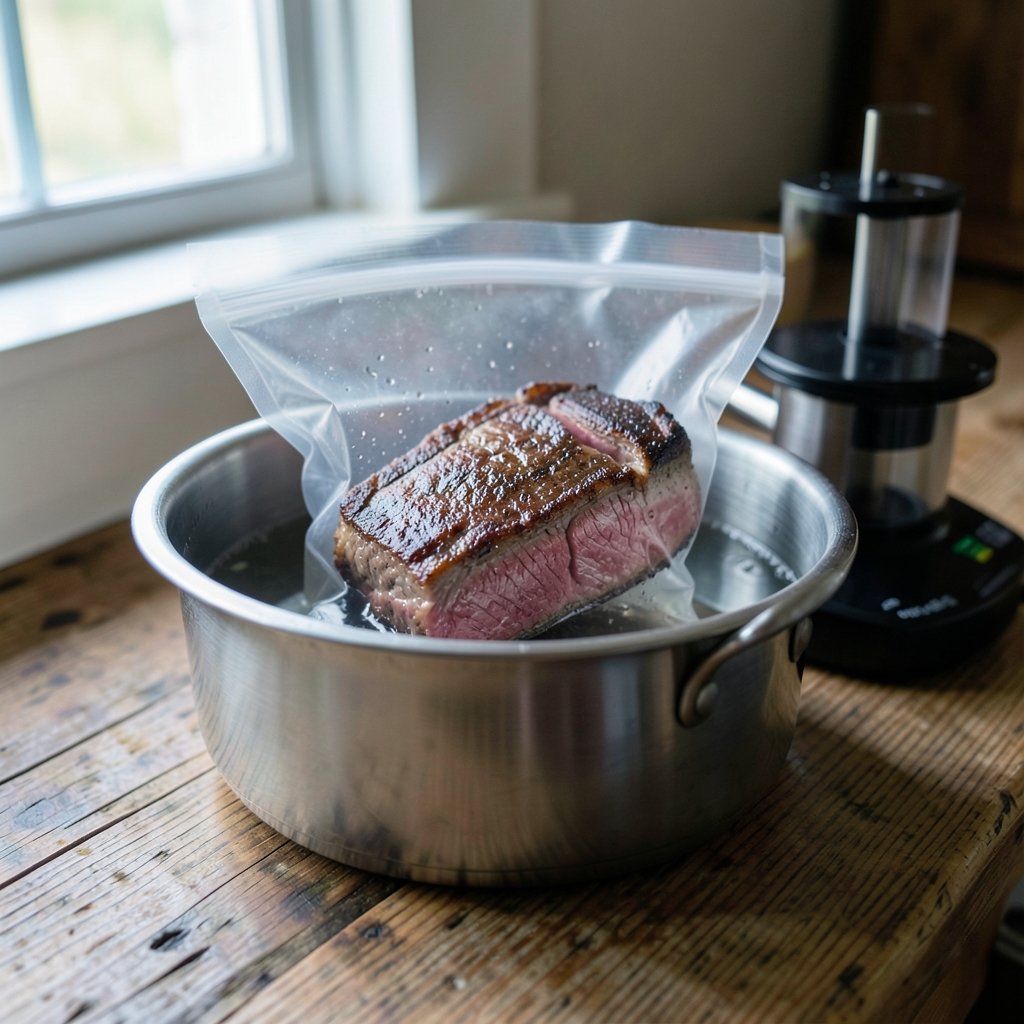
Not all reheating methods are equal. Here is how the common options stack up.
| Method | Best For | Speed | Moisture Retention | Risk |
|---|---|---|---|---|
| Sous-vide water bath | Thick cuts, precision | Slow (20–40 min) | Excellent | Needs equipment |
| Low oven (250–275°F) | Whole steaks, several at once | Moderate (15–25 min) | Very good | Easy to overshoot |
| Skillet with a splash of liquid, covered | Single steak, quick | Fast (3–5 min) | Good | Can steam the crust |
| Air fryer (low setting) | Quick single portions | Fast | Fair to good | Dries edges if too hot |
| Microwave | Last resort | Very fast | Poor | Uneven, tough results |
Sous-Vide Reheating: The Precision Winner
If there is a “best” method in terms of protecting the steak’s original doneness, it is the water bath. Sealing the steak in a bag and holding it in water at roughly 130–140°F (54–60°C) brings it back to serving temperature without ever exceeding the point where it was cooked. The meat warms evenly from edge to center, and because it is sealed, almost no moisture escapes.
The catch is time and equipment. A water bath takes 20 to 40 minutes depending on thickness, and you need a circulator or a carefully monitored pot. For anyone who regularly cooks steak, it is worth the setup. For a one-off leftover, it may feel like overkill. Still, if you already own the gear, this is the method that best respects a medium-rare steak.
The Low Oven: The Reliable Everyday Choice
For most home cooks, a low oven is the sweet spot. Set the oven to 250–275°F (120–135°C), place the steak on a wire rack over a tray so air circulates, and warm it for 15 to 25 minutes depending on thickness. A meat thermometer helps here; pull it when the center reaches about 110–120°F for medium-rare, since it will carry over a little heat.
This method is forgiving and works for several steaks at once. The trade-off is that the crust softens. That leads to the finishing trick covered below: a quick, hard sear at the very end to bring back the browned surface without cooking the interior further.
The Covered Skillet: Fast and Good Enough
For a single steak and a hungry evening, a covered skillet works well. Get a pan gently warm over medium-low heat, add the steak, and splash in a teaspoon or two of water, stock, or even a little butter. Cover immediately. The trapped steam warms the meat evenly and keeps it from drying. Keep the heat low; you are warming, not cooking.
The mistake people make here is cranking the heat. A screaming-hot pan will sear the outside while the middle stays cold, and by the time the center warms, the exterior is overcooked. Low and covered is the whole point.
The Air Fryer: Convenient With a Caveat
An air fryer can work if you keep the temperature modest, around 300–320°F, and check often. The moving hot air warms quickly but also pulls moisture from the surface. It is fine for a quick lunch, less ideal for a prized cut. If you use one, wrap the steak loosely in foil first to trap some steam. The same logic that makes an air fryer great for a crispier snack works against you here, because you want moisture kept in, not driven off. (Air popcorn lighter crispier way snack)
The Microwave: Fast but Flawed
Microwaves heat unevenly, and that is the core problem. Some parts of the steak can get very hot while others stay cool, and the meat can toughen as it heats. If you must use one, use a lower power setting, cover the steak, and let it stand for a minute or two afterward so the heat evens out. Turn or flip it halfway. It will never be great, but it can be acceptable in a pinch.
The Reverse-Sear Trick That Saves the Crust
Here is the move that separates a decent reheated steak from a genuinely good one. Warm the steak gently first, using the oven, water bath, or covered pan. Then, once the interior is warm, give it a very brief, very hot sear, maybe 30 to 45 seconds per side in a screaming-hot pan. The interior is already at temperature, so the short blast of heat only rebuilds the crust. It does not have time to overcook the middle.
This is the same logic behind reverse-searing a raw steak, applied to leftovers. Gentle heat first, hard sear last. It is the single most useful habit in the whole process, and it costs you less than two minutes.
Practical Tips That Actually Make a Difference
Beyond choosing a method, a handful of small habits separate good results from disappointing ones.
Let the steak sit out briefly first. Ten to fifteen minutes on the counter takes the chill off, so the heat does not have to work as hard and the outside does not overcook before the center warms.
Use a thermometer. Guessing is how steaks get ruined. An instant-read thermometer takes the mystery out of it. Aim for a final center temperature around 120–130°F for medium-rare, understanding that food-safety guidance and taste preferences pull in different directions here.
Rest it again after reheating. Just as with a freshly cooked steak, a short rest lets juices redistribute. Cut too soon and they run onto the board instead of staying in the meat.
Slice against the grain, and only when ready to eat. Slicing before reheating does speed up and even out the warming, but it also exposes more surface and lets more moisture escape. If you slice first, expect a slightly drier result. For a whole steak, slice after warming.
Keep the seasoning light. Salt draws moisture to the surface. If you salted heavily the first time, you probably do not need more. A little butter or a pan sauce at the end adds richness without drying anything out.
Store it right in the first place. A steak that was cooled quickly and stored tightly will reheat better than one left out. Refrigerate leftovers within two hours and use them within three to four days, or freeze them for longer storage.
There is a nice parallel in other kitchen problems where the fix is a small technique change rather than more effort. Getting a lighter, crispier result from a snack depends on the same kind of thinking about heat and moisture, and understanding how a check valve versus a one way valve works comes down to one small design difference doing all the work. Good cooking is often like that: the right small adjustment beats brute force every time.
Common Mistakes People Make
The most frequent error is reheating at too high a temperature. High heat feels efficient, but it cooks the outside before the inside warms, and the result is a dry, gray steak. Low and slow is almost always better.
The second is skipping the rest. People pull the steak from the heat and cut immediately, and the juices end up on the plate. Give it a couple of minutes.
The third is treating the 165°F safety number as a taste target. It is not. It is a safety floor for killing bacteria, and applying it strictly to steak means well-done meat. The sensible approach is to warm the steak thoroughly, enjoy it promptly, and follow good storage habits so the safety question stays simple.
The fourth is over-searing at the end. The final sear should be brief. If you leave the steak in the hot pan for three or four minutes a side, you have simply cooked it again.
When a Reheated Steak Is Not Worth It
Some steaks reheat better than others. Thick cuts with some fat, like a ribeye, hold up well because the fat bastes the meat as it warms. Lean, thin cuts dry out fast. If you are working with a budget cut that already rewards hot, fast cooking, like a chuck eye that eats like a ribeye, treat the reheat gently and skip any long oven time. A cut that was cooked to a precise medium-rare is also harder to bring back than one cooked a little more.
If the steak was already dry the first time, no reheating method will rescue it. In that case, slice it thin and use it in a sandwich, a salad, or a stir-fry, where a little sauce and quick heat do the work.
A Simple Step-by-Step for the Best Result
For most people, this sequence delivers the best balance of effort and outcome.
- Take the steak out of the fridge 10–15 minutes ahead.
- Heat the oven to 250–275°F and set the steak on a wire rack over a tray.
- Warm for 15–25 minutes, checking with a thermometer until the center reaches about 110–120°F.
- Remove and rest for 3–5 minutes.
- Heat a skillet until very hot and sear the steak for 30–45 seconds per side to rebuild the crust.
- Rest again briefly, then slice against the grain and serve.
That is it. Gentle heat, a brief sear, and a little patience. The steak comes back juicy, warm, and with its crust intact, which is really all anyone wants from a leftover. (Lbs into stone pounds convert weight british way)
Conclusion
The best way to reheat steak is not a single gadget or a magic number. It is a principle: warm the meat gently and evenly, then finish with a quick, hot sear to restore the surface. Sous-vide gives the most precise result, a low oven is the most practical for most kitchens, and a covered skillet handles a single steak in minutes. Microwaves work in a pinch but rarely flatter the meat.
What ties it all together is respect for the steak. Heat it slowly, rest it, and do not chase a safety temperature at the cost of flavor. Do that, and last night’s dinner can taste almost as good as it did the first time. Few things in the kitchen are more satisfying than rescuing a great piece of meat from a sad second act.
Frequently Asked Questions
What is the best way to reheat steak?
The best all-around method is a low oven at 250–275°F until the center warms, followed by a very brief sear in a hot pan to restore the crust. For precision, a sous-vide water bath at 130–140°F protects the original doneness best. Both approaches follow the same rule: gentle heat first, fast sear last.
Can you reheat steak without overcooking it?
Yes, if you keep the heat low and use a thermometer. Warming the steak gradually to around 120–130°F in the center keeps it from going well-done. The brief final sear adds crust without cooking the interior further, because the inside is already warm.
Is it safe to reheat steak in the microwave?
It is safe if the steak reaches a safe internal temperature, but quality suffers. Microwaves heat unevenly, so some parts overcook while others stay cool. Use lower power, cover the meat, flip it halfway, and let it stand afterward so the heat evens out.
How long does leftover steak last in the fridge?
Cooked steak keeps for about three to four days in the refrigerator when stored properly. Refrigerate it within two hours of cooking and keep it tightly wrapped or in a sealed container. For longer storage, freeze it and reheat gently from frozen or after thawing overnight.
Should you slice steak before or after reheating?
Slice after reheating for the best moisture retention. Slicing first speeds up and evens out the warming, but it exposes more surface area and lets more juice escape, so the meat ends up drier. Cut against the grain just before serving.
Why does reheated steak taste dry?
Reheating applies heat a second time, which makes the muscle fibers contract and push out moisture. High heat and long cooking make this worse. Gentle, even warming and a short rest afterward limit the moisture loss and keep the steak tender.














