


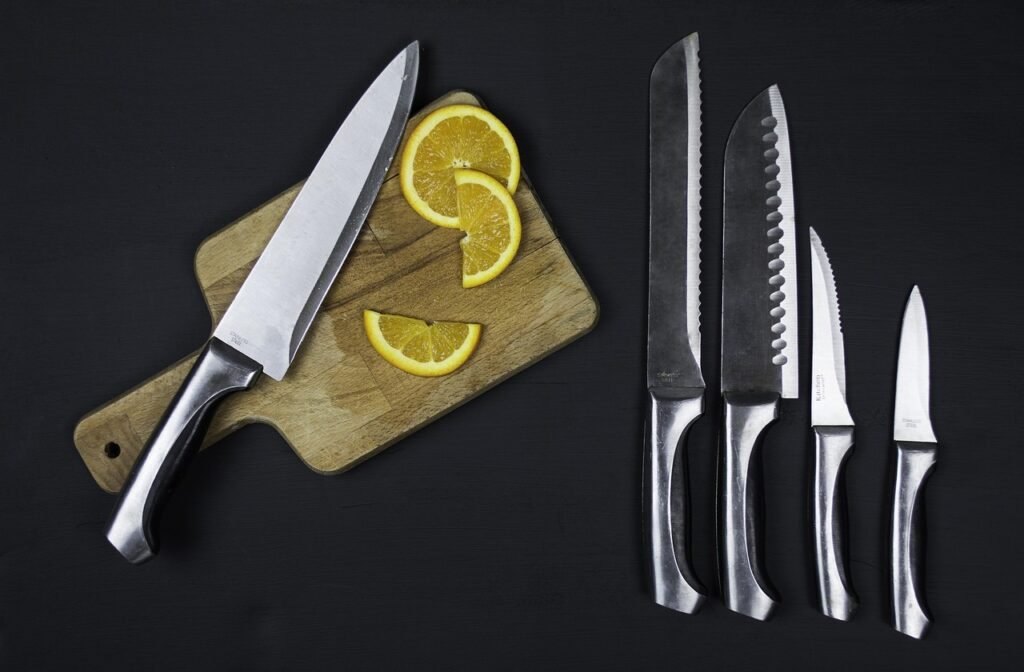
What if the best knife set in your kitchen is the one you barely think about? The knife that feels right in your hand, glides through an onion without tearing it, and still holds an edge after a year of weeknight dinners. That is the set worth owning. Not the biggest block on the shelf. Not the one with the flashiest brand name. The one whose steel, shape, and size fit how you actually cook.
This guide cuts through the marketing. It explains what separates a genuinely good set from a pretty one, which knives earn their place, and where most buyers go wrong. There are no product rankings here, because a set that suits a professional line cook rarely suits someone who cooks twice a week. Instead, you will learn the criteria that matter, so any set you consider can be judged on its real merits.
Why Most Knife Sets Disappoint Their Owners
Walk through any kitchenware aisle and you will see sets of ten, twelve, even eighteen pieces. They look impressive. They also contain a lot of filler. A typical large set includes a chef’s knife, a bread knife, a utility knife, a paring knife, six steak knives, kitchen shears, and then several oddities: perhaps a “tomato knife,” a “cheese knife,” and a cleaver nobody uses.
The problem is simple. Most home cooks reach for two or three knives almost every time they cook. The rest sit in the block, taking up counter space and quietly collecting dust. You paid for them, though, because sets are priced as bundles and the per-piece value of the fillers is often poor.
There is a second issue. Big sets sometimes spread a manufacturer’s quality thin. The flagship chef’s knife in a set may be excellent while the smaller knives are stamped from lesser steel. Buyers who judge the whole set by the one knife they use most end up surprised later.
The practical lesson: count how many knives you will genuinely use in a typical week, then judge a set on the quality of those pieces, not the total count.
Steel First, Brand Second

If you remember one thing from this article, make it this: steel type matters more than the name on the box. Two knives from the same brand can perform very differently depending on their steel.
Most Western-style kitchen knives use a high-carbon stainless steel. A common example is the German steel family known as X50CrMoV15, which contains roughly 0.5% carbon. It is tough, resists rust well, and is forgiving of imperfect technique. It also dulls faster than harder steels.
Many Japanese-style knives use harder steels. VG-10, for instance, contains about 1% carbon and is prized for edge retention. Traditional carbon steels such as Aogami and Shirogami take an extremely keen edge but require more care, since they can rust and patina.
What Rockwell Hardness Tells You
Knife makers often quote Rockwell hardness, measured on the HRC scale. The scale itself dates back to the early twentieth century, when the Rockwell hardness test was developed and later patented. In knives, typical German-style kitchen blades sit around 56 to 58 HRC, while many Japanese knives run from 60 to 63 HRC.
What does that mean in practice? Harder steel holds an edge longer but is more prone to chipping if you twist the blade or hack through something frozen. Softer steel is tougher and more forgiving but needs honing and sharpening more often. Neither is “better.” The right choice depends on your habits. If you treat knives gently and want long edge life, harder steel rewards you. If you are rough on blades, a slightly softer steel will survive longer.
Exact hardness ranges vary by maker and heat treatment, so treat published HRC numbers as a guide, not gospel.
Construction Terms That Sound Better Than They Are
Knife marketing leans on two phrases: full tang and forged. Both describe construction, and both are often presented as proof of quality. They are not.
Full tang means the steel extends the full length of the handle, usually sandwiched between handle scales. It can improve balance and durability. It says nothing, by itself, about the quality of the steel or the geometry of the blade.
Forged versus stamped describes how the blade is shaped. Forged blades are formed from heated steel, often with a bolster; stamped blades are cut from a sheet. A well-made stamped knife can outperform a mediocre forged one. Plenty of excellent kitchen knives are stamped.
The point is not that construction is irrelevant. It is that construction is one factor among several. Geometry, steel, heat treatment, and handle fit matter just as much, and often more.
The Knives That Actually Earn Their Place
A useful set is built around the knives you reach for constantly. Here is how the core pieces compare.
| Knife | Typical size | Main jobs | How often most cooks use it |
|---|---|---|---|
| Chef’s knife | 8 to 10 inches (20 to 25 cm) | Chopping, slicing, dicing almost everything | Daily |
| Paring knife | 3 to 4 inches | Peeling, trimming, small precision work | Several times a week |
| Serrated bread knife | 8 to 10 inches | Bread, tomatoes, delicate crusts | Weekly for many households |
| Utility knife | 5 to 6 inches | Mid-size tasks, sandwiches, fruit | Occasionally |
| Santoku | 5 to 7 inches | Slicing, dicing, a chef’s knife alternative | Depends on preference |
| Steak knives | 4 to 5 inches | Table service | Only if you serve steak |
The chef’s knife, paring knife, and often a serrated bread knife cover the overwhelming majority of home cooking. A set built around those three, with maybe a utility knife added, will serve most kitchens better than a twelve-piece block.
Handle Fit and Safety
A knife is a tool you hold, and the handle matters more than buyers expect. A slippery or poorly fitted handle raises the risk of the blade slipping, especially with wet or greasy hands. Look for a handle that fills your palm comfortably and does not force your wrist into an awkward angle.
In commercial kitchens, hygiene standards for food equipment exist, and knife handles are part of that picture. At home, there is no single consumer standard governing knife handles, but the common-sense rules apply: avoid handles with gaps where food and moisture can collect, and check that the handle is securely attached.
A quick test in the store helps. Hold the knife as if you were chopping. If your hand feels cramped or the blade wants to rotate, that handle is not for you, no matter how good the steel is.
Sharpening and Care Decide Real-World Performance
Here is the truth that knife sellers rarely emphasize: a modest set maintained well will outperform an expensive set neglected. Maintenance is where most kitchens fall short.
Honing Versus Sharpening
These are different jobs. A honing rod realigns a blade’s edge, which has bent slightly through use. It does not remove metal and does not restore a dull edge. Sharpening, whether with a whetstone or a guided sharpener, removes metal to create a fresh edge.
A practical routine looks like this:
- Hone lightly before or after use, a few strokes per side, with light pressure.
- Sharpen when the knife struggles to cut a ripe tomato or slips on an onion skin, typically every few months for home cooks.
- Learn one sharpening method and stick with it. A simple whetstone and steady practice beat a drawer full of gadgets.
Keep Knives Out of the Dishwasher
Nearly every knife maker advises against dishwashing fine knives, and the reasoning is sound. Heat, prolonged moisture, and contact with other items can damage edges and handles. Hand washing and immediate drying take seconds and add years to a knife’s life.
Storage That Protects the Edge
A magnetic strip, a blade guard, or a block with slots that do not scrape the edge all work. What does not work is a crowded drawer where blades knock against each other.
How to Judge a Set Before You Buy
When you compare sets, use a repeatable checklist rather than impressions. The following criteria separate strong sets from weak ones.
| Criterion | What to look for | Why it matters |
|---|---|---|
| Steel and hardness | Named steel type; HRC figure if published | Predicts edge retention and toughness |
| Core knife quality | The chef’s knife is well made, with quality beyond the accessories | It is the knife you use most |
| Handle fit | Comfortable, secure, no gaps | Safety and control |
| Set size | Three to five useful knives rather than a dozen | Less filler, better value per useful piece |
| Balance | Comfortable in a pinch grip | Reduces fatigue |
| Maintenance support | Clear sharpening guidance included | Keeps performance over time |
Price is a weak proxy for quality in knife sets. Bundles hide per-piece value, and mid-priced single knives frequently outperform the filler pieces in large sets. Compare what you are actually getting for the money, piece by piece.
Where Buyers Commonly Go Wrong
Some mistakes show up again and again, and each is easy to avoid once you know it.
Buying for the block, not the blade. A handsome wooden block feels like a complete kitchen. It is furniture. Judge the knives.
Ignoring the pinch grip. Many cooks hold a knife near the blade for control. A bulky bolster or an awkward transition between blade and handle can make that grip uncomfortable. Test it before buying.
Skipping maintenance supplies. A set without a honing rod and a sharpening plan is a set that will dull within months. Budget for maintenance from day one.
Overbuying specialty knives. A cleaver, a deba, or a carving set can be wonderful, but only if you cook in ways that use them. Buy specialty knives when a specific need appears, not in advance.
Assuming harder is always better. Very hard blades chip if mistreated. Match the steel to your habits.
Building a Set That Grows With You
The most satisfying approach for many home cooks is not buying one large set at all. Start with a chef’s knife and a paring knife. Add a serrated bread knife when you start baking or slicing tomatoes regularly. Add a utility knife or a santoku if you find yourself reaching for something between the two.
This incremental approach has two advantages. Each purchase can be judged on its own merits, and you end up with knives you actually use. If you prefer the convenience of a set, look for one built around the same core: a strong chef’s knife, a paring knife, and a serrated knife, with few extras.
The same logic applies to how you organize a kitchen more broadly. A well-chosen set belongs in a space designed for comfortable, efficient cooking, much like the thinking behind a luxury living room set that prioritizes how a room is actually used over how it photographs. The principle is the same: buy for daily function, and the result looks good anyway.
If you enjoy styling and coordinating your home, you may find the same satisfaction in curating a kitchen that feels considered. Enthusiasts who plan a luxury living room set around daily rituals often apply the same deliberate approach to their tools. And for readers who like browsing curated collections, resources such as this guide to a polka dot set styling ideas show how a small number of well-chosen pieces can outperform a crowded closet. Kitchens work the same way.
Matching the Set to the Cook
Different cooks need different sets, and honesty about your own habits saves money.
A weeknight home cook who makes simple meals needs a chef’s knife, a paring knife, and a serrated knife. Three good knives beat twelve average ones.
An enthusiastic home chef who cooks often and enjoys technique will benefit from a santoku or a utility knife and a proper whetstone.
A baker should prioritize a long serrated bread knife and a sturdy chef’s knife.
Someone cooking for a large household may value steak knives and kitchen shears, but should still judge the core blades first.
Conclusion
The best knife set is not the largest or the most expensive. It is the one built around the knives you use every day, made from steel suited to how you treat your tools, with handles that feel secure in your hand. Steel type and hardness tell you more than brand names. Construction terms like full tang and forged are useful details, not guarantees. And maintenance, honing, sharpening, hand washing, and sensible storage, decides how a set performs after the honeymoon period ends.
Start with the core three. Judge each knife on its merits. Keep them sharp. Do that, and your set will quietly do its job for years, which is exactly what the best kitchen tools do.
Frequently Asked Questions
How many knives do I actually need in a set?
Most home cooks use three knives constantly: a chef’s knife, a paring knife, and often a serrated bread knife. A set with those three plus a utility knife covers nearly all home cooking. Larger sets add pieces many people rarely touch.
Is a forged knife always better than a stamped one?
No. Forged and stamped describe how a blade is shaped, not how good it is. A well-made stamped knife with good steel and geometry can outperform a mediocre forged knife. Judge the steel, heat treatment, and handle fit as well.
What does the HRC number on a knife mean?
HRC refers to Rockwell hardness, measured on the Rockwell scale. Typical German-style kitchen knives sit around 56 to 58 HRC, while many Japanese knives run 60 to 63 HRC. Harder blades hold an edge longer but chip more easily; softer blades are tougher but dull faster.
Can I put good kitchen knives in the dishwasher?
It is widely discouraged. Heat, moisture, and contact with other items can damage edges and handles. Hand washing and drying immediately is the safer routine and takes very little time.
How often should I sharpen my knives?
For most home cooks, sharpening every few months is reasonable, or whenever the knife struggles with a ripe tomato. Honing, which realigns the edge, can be done more often. Honing does not replace sharpening.
Do expensive knife sets always perform better?
Not necessarily. Set pricing bundles many pieces, and the per-knife value varies widely. Mid-priced individual knives often outperform the filler pieces in large sets, so compare what you get piece by piece rather than judging by total price.














