

Quick Answer: What causes uneven tire wear?
Uneven tire wear is caused by something in the tire, the wheel, the suspension, or the driver’s habits throwing the contact patch out of balance. The main culprits are incorrect tire pressure, misaligned wheels, worn suspension parts, unbalanced wheels, and worn shock absorbers, and each one leaves a different pattern on the tread.
Reading the pattern is the fastest way to narrow things down. Center wear points to overinflation, edge wear to underinflation, one-sided wear to camber or toe problems, and cupping or scalloping to bouncing from weak shocks or an out-of-balance wheel.
Before spending money, check cold tire pressure against the door-jamb label, look for bulges or embedded objects, feel for play in the steering, and note whether the car pulls to one side, vibrates at speed, or wears one tire faster than the rest.
Tires wear out. That is normal. But when one edge of the tread is bald while the other looks almost new, or when the surface develops waves and dips, something is wrong with the car, not the road. So what actually causes uneven tire wear, and how can a driver tell which cause is at work?
The good news is that tires are honest witnesses. Every wear pattern is a fingerprint of a specific fault, and once a driver learns to read the tread, diagnosis gets a lot cheaper than replacing tires on a hunch. This guide walks through each pattern, what it means, and what actually fixes it.
Why the Contact Patch Is So Sensitive
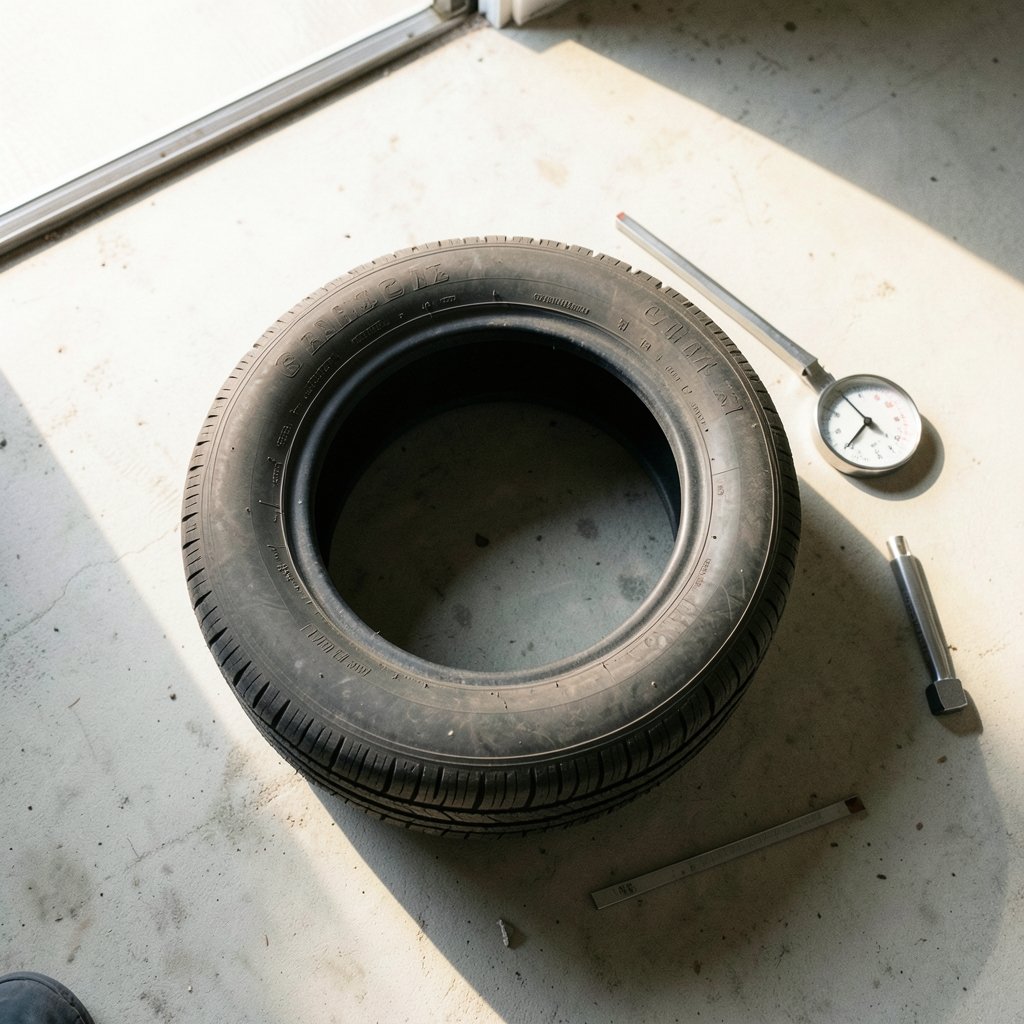
A tire only touches the road across a patch roughly the size of a hand. Everything the car does, accelerating, braking, turning, and absorbing bumps, has to pass through that small area. When pressure, geometry, or suspension health drifts even slightly, the load shifts to one part of the tread and that part wears faster.
A study of tire wear scars put it plainly: wear is affected by air pressure, wheel alignment, driving speed, road conditions, and starting and braking habits, and most wear problems trace back to improper adjustment of the revolving components. In other words, uneven wear is usually a maintenance signal, not a manufacturing defect. The pattern tells you which maintenance item was missed.
The Five Main Causes, Ranked by How Often They Show Up
Tire Pressure: The Easiest Thing to Get Wrong
Pressure is the first thing to check because it is free and it explains two of the most common patterns. Too much air makes the center of the tread bulge outward, so the middle carries most of the load and wears early. Too little air lets the sidewalls flex, the edges take the weight, and both shoulders wear down while the center stays healthy.
The sneaky part is that pressure is not static. It drops with temperature, leaks slowly through beads and valves, and rises on long highway runs. A tire that was perfect in spring can be several pounds low by the first cold snap, and a driver who never checks will wear out a set of shoulders without ever noticing.
Wheel Alignment: When the Tire Drags Instead of Rolls
Alignment problems produce the most dramatic uneven wear, and toe is usually the villain. Toe is the angle of the wheels relative to each other. When a wheel points slightly inward or outward, the tire scrubs sideways with every rotation instead of rolling cleanly. That scrubbing shaves a feathered edge onto the tread, and a hand run across the surface will feel sharp one way and smooth the other.
Camber is the tilt of the wheel when viewed from the front. Too much negative camber leans the top of the tire inward and chews the inner shoulder; too much positive camber does the same to the outer shoulder. A workshop bulletin on one-sided shoulder wear lists misadjusted suspension, driving style, unapproved wheels and tires, and incorrect pressure as the usual suspects, and notes that alignment should be checked against factory specifications.
Worn Suspension and Steering Parts
Ball joints, tie rod ends, control arm bushings, and shock absorbers all hold the tire in its proper position. As they wear, the geometry moves around while the car is driving, and no alignment rack can compensate for slop. An alignment performed on worn parts is money wasted, because the angles will drift again within a few thousand miles.
Worn shocks deserve special attention. A shock absorber that no longer controls the spring lets the tire bounce instead of staying planted. The bouncing tire skips and slaps the pavement, which carves the wavy, scooped pattern known as cupping or scalloping.
Wheel Balance and Bent Wheels
A wheel that is out of balance creates a vibration that hammers one spot on the tread every time the heavy side comes around. The result is a patchy, spotty wear pattern rather than a clean band. Bent rims and damaged wheels do the same thing, only worse, because the tire is being forced to deform on every rotation.
Driving Habits and Road Conditions
Aggressive cornering, hard braking, rapid acceleration, and heavy loads all concentrate wear. So do rough roads, potholes, and curbs, which bend components and knock alignment out of spec in a single hit. A driver who commutes on smooth highway will see very different wear from one who lives on broken pavement and takes every corner hard.
Match the Pattern to the Cause
| What the tread looks like | Most likely cause | What to do |
|---|---|---|
| Center worn, edges fine | Overinflation | Reset to the door-jamb pressure |
| Both edges worn, center fine | Underinflation | Reset pressure, check for slow leaks |
| Inner or outer shoulder worn | Camber or toe misalignment, worn suspension | Four-wheel alignment after inspecting parts |
| Feathered, sharp-edged tread blocks | Toe out of spec | Alignment |
| Wavy dips or scoops (cupping) | Worn shocks, unbalanced wheel, bad alignment | Test shocks, rebalance, then align |
| Random bald patches | Wheel imbalance, faulty brakes, damaged suspension | Balance and brake inspection |
| Diagonal or crisscross wear | Misalignment, failing suspension, uneven weight | Full suspension and alignment check |
One more pattern worth knowing is shoulder step wear, a partial depression along the inside or outside shoulder that shows up on radial tires in slow-wearing, long-distance service. It looks alarming but is often cosmetic, and the usual advice is to keep running the tire or rotate it rather than replace it.
How to Check Your Own Tires in Ten Minutes
- Park on level ground and let the car sit so tires are cold.
- Read the recommended pressure from the driver’s door jamb, not the number molded on the sidewall. The sidewall figure is a maximum, not a target.
- Check every tire with a gauge, including the spare, and note any tire that is consistently low.
- Run a hand slowly around each tread, both directions, feeling for sharp edges or waves.
- Look across the tread with a light at a low angle. Shadows reveal cupping and shoulder steps that are invisible from above.
- Measure tread depth at the center and both edges of each tire.
- Note any pull, vibration, or shimmy at speed, and write down when it happens.
That last step matters more than people think. A vibration that appears at 60 mph and fades at 70 points toward balance. A pull that shows up only under braking points toward brakes or a caliper. Details like these save a mechanic twenty minutes and save the driver a guess.
Common Mistakes That Make It Worse
The biggest mistake is replacing tires without fixing the cause. New rubber on a misaligned car will wear out in exactly the same pattern, only faster, because fresh tread blocks are taller and more vulnerable to scrub.
The second mistake is skipping rotation. Front and rear tires do different jobs, and swapping them on schedule evens out the wear so all four finish together. It also gives a driver a chance to spot a pattern developing on a tire that was previously on the other axle.
The third mistake is trusting the sidewall pressure number. It is a maximum cold pressure for load capacity, not the manufacturer’s recommendation for normal driving.
The fourth is ignoring the spare and the rear tires. Rear tires on front-wheel-drive cars often wear on the inside edge where nobody looks, and by the time the wear is visible from outside, the tire is already compromised.
When to Repair, When to Replace
A single alignment is inexpensive compared with a set of tires, so the sensible order is always inspect, repair, align, then replace. Worn parts should be replaced before the alignment, since aligning worn components just locks in a moving target.
Replace a tire when tread depth reaches the wear bars, when the wear is uneven enough to affect grip, or when the sidewall shows damage. If one tire is much worse than the others, the cause is still lurking, and the new tire will follow the old one’s fate.
Drivers who care about how a car looks as well as how it drives tend to notice tire wear early, the same way they notice the details covered in this guide to sweetheart necklines and who they suit. It is the small, overlooked element that changes the whole picture.
Prevention: A Simple Maintenance Rhythm
Monthly pressure checks, a tread inspection at every oil change, rotation at the interval in the owner’s manual, and a four-wheel alignment once a year or after any hard curb strike will prevent most uneven wear. Shocks and struts typically need attention somewhere past 50,000 miles, and a bouncing test, pushing down on a corner and watching whether the car settles once or keeps rocking, gives a rough early warning.
It helps to think of tire care the same way as building a personal style that actually fits: it is the unglamorous maintenance that makes the visible result work. The same principle runs through boho fashion and how to wear a free-spirited look without looking costumed and through Princess Diana’s fashion legacy and how it still shapes what we wear. Small, consistent choices beat one big correction every time.
Conclusion
Uneven tire wear almost always has a specific, findable cause, and the tread pattern is the map. Center wear means too much air, edge wear means too little, one-sided wear means alignment or suspension, cupping means bouncing, and patchy spots mean imbalance. None of these problems fix themselves, and none are fixed by new tires alone.
The practical routine is simple: check pressure cold and often, feel the tread with your hand, get a four-wheel alignment on healthy parts, and rotate on schedule. Do that, and a set of tires will wear flat and even all the way to the wear bars, which is exactly what it is supposed to do.
How often should tire pressure be checked?
At least once a month and before any long trip. Pressure drops slowly through normal leakage and shifts with temperature, so a monthly cold check catches small losses before they turn into shoulder wear. Tires that are consistently low need a leak inspection at the bead and valve.
Can uneven tire wear fix itself after an alignment?
No. Alignment stops the damage from getting worse but cannot restore rubber that has already been scrubbed away. If the wear is mild and even across the tread, the tire can often run to the end of its life. If one edge is badly worn, the tire should be replaced.
Is cupping always caused by bad shocks?
Not always. Cupping can come from worn shocks, an unbalanced wheel, misalignment, or incorrect pressure, and often from a combination. The way to tell them apart is to have the suspension and balance checked first, then the alignment, since a bouncing tire can mimic several faults at once.
Do front and rear tires wear differently?
Yes. Front tires carry steering loads and usually wear on the shoulders, while rear tires on front-wheel-drive cars often wear on the inner edge. That is exactly why rotation matters: it spreads the load so all four tires reach replacement at roughly the same time.
Does driving style really change wear that much?
It does. Hard cornering, late braking, rapid acceleration, and heavy loads all concentrate force on small areas of the tread. A gentle highway commuter and an aggressive city driver can run identical tires and see completely different wear patterns and lifespans.
How do I know if my suspension is worn enough to cause wear?
Look for a car that keeps rocking after a push test, clunks over bumps, wanders at highway speed, or shows cupping on the tread. Any of those signs means the suspension should be inspected before an alignment is performed, because aligning worn parts will not hold.











