


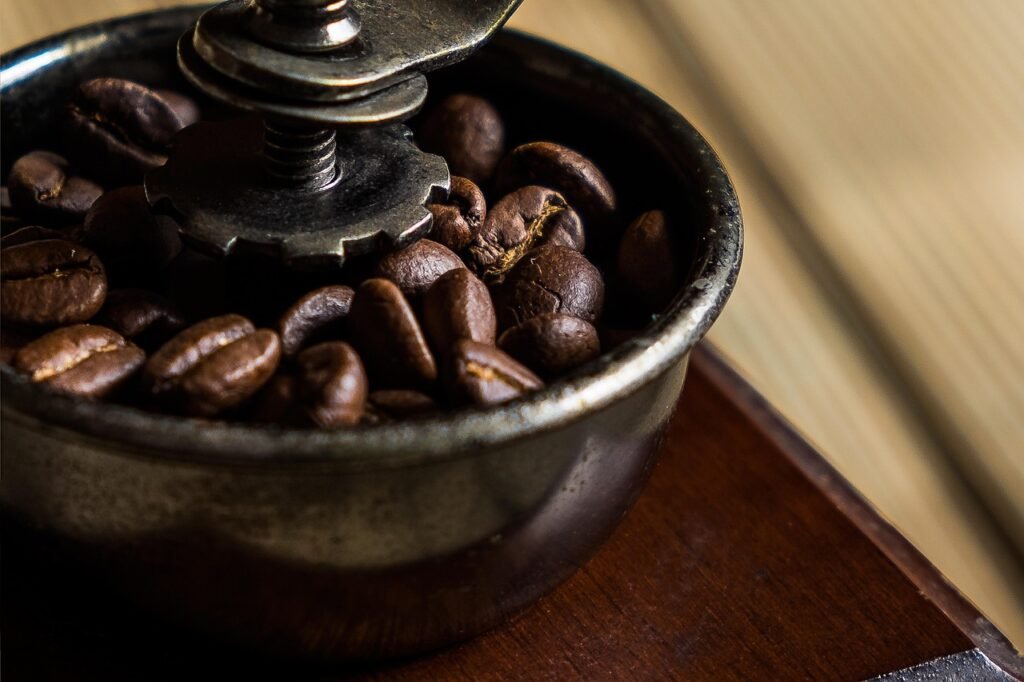
What if the biggest upgrade to your morning coffee isn’t a new machine, but the thing that sits quietly beside it and turns beans into grounds? That question sounds almost too simple, yet it explains why so many people spend hundreds on a brewer and then feed it stale, unevenly chopped coffee. The grinder is the most overlooked piece of gear in most kitchens, and it has a bigger effect on flavor than almost anything else on the counter.
This guide walks through what actually separates a good grinder from a frustrating one, where money is well spent, and which features matter for espresso versus filter brewing. No hype, no brand cheerleading, just the decisions that change what ends up in your cup.
Why the grinder matters more than most people think
Coffee is a seed, and flavor lives inside it. Once beans are ground, the surface area exposed to water jumps dramatically, and so does the rate at which aromatics escape. Pre-ground coffee starts losing its best qualities within hours. Grinding right before brewing is one of the few genuinely free improvements available to any coffee drinker. (Coffee ground medium use spent grounds growing plants)
The second reason is particle consistency. When water hits a bed of grounds, it flows toward the easiest paths. If the bed contains a mix of powder-fine dust and coarse chunks, water rushes through the coarse gaps and over-extracts the fine ones. The result is a cup that tastes simultaneously bitter and sour, a muddled flavor that no brewing adjustment can fix. A grinder’s real job is producing particles of a similar size.
There’s a parallel in roasting: heat applied unevenly to green beans produces a roast that is both underdeveloped and scorched at once. The same logic applies to grinding. Uneven input, uneven output. Anyone curious about that parallel can read how coffee roasting turns green beans into your morning cup, because the principle of even energy transfer is nearly identical.
Burr versus blade: the only decision that really matters

Almost every grinder falls into one of two categories, and the difference is not subtle.
| Feature | Burr grinder | Blade grinder |
|---|---|---|
| Grinding method | Crushes beans between two abrasive surfaces | Chops with a spinning blade |
| Particle consistency | Fairly even, adjustable | Uneven mix of fines and coarse pieces |
| Adjustment control | Dialed settings, often many steps | None, only run time |
| Best for | Espresso, pour-over, French press, drip | Coarse chopping, spice grinding, tight budgets |
| Typical result | Repeatable, predictable extraction | Inconsistent flavor, hard to troubleshoot |
A burr grinder crushes beans between two abrasive surfaces, either a cone inside a ring or two parallel discs. Because the gap between those surfaces can be set precisely, the output is far more uniform. A blade grinder spins a blade like a small food processor. It works, but it produces a random mix of dust and boulders, and there is no way to control the result beyond how long you hold the button.
If someone is choosing one upgrade, it should be burr over blade. A modest burr grinder beats a fancy blade model every time.
Conical versus flat burrs
Within burr grinders, the two geometries are conical (a cone rotating inside a ring) and flat (two parallel discs). Conical burrs are common in home and hand grinders and tend to be forgiving. Flat burrs are common in commercial and high-end home machines and can produce a narrower particle spread.
Which tastes better is genuinely contested. Many espresso enthusiasts prefer flat burrs for clarity, while many home brewers prefer conical for ease and consistency across methods. This is a preference question, not a fact question, and anyone who insists otherwise is selling something.
Stepped versus stepless adjustment
Stepped grinders click between fixed settings. Stepless grinders adjust continuously, which lets you make tiny changes. For filter brewing, stepped is usually fine. For espresso, where a small shift in fineness can change a shot from gushing to choked, stepless adjustment is a real advantage.
Match the grinder to how you actually brew
Buying for the coffee you make daily is more useful than buying for the coffee you imagine making.
For espresso
Espresso demands a fine, highly consistent grind. Small inconsistencies cause channeling, where water punches through weak spots in the puck and leaves the rest under-extracted. Stepless adjustment, low retention, and burrs designed for fine grinding all matter here. Expect to spend more, and expect a learning curve.
For filter and pour-over
Medium grinds are more forgiving, so a wider range of grinders works well. Consistency still matters, but the margin for error is larger. A good hand grinder can produce excellent pour-over for a fraction of the cost of an espresso-capable electric model.
For French press and cold brew
Coarse grinds tolerate more variation, but too many fines (tiny dust particles) slip through the mesh and make the cup muddy. A grinder that produces few fines is worth more here than one that reaches extreme fineness.
For travel and small kitchens
Hand grinders trade speed for cost and portability. They typically use conical burrs and pack into a bag easily. Grinding 20 grams by hand takes roughly 30 to 60 seconds depending on the model and how fine you go. For one or two cups a day, that is a reasonable trade.
Features worth paying for, and features that are noise
Not every specification improves the cup. Here is how to sort them.
Worth it:
- Consistent burr geometry. The burrs do the work; everything else is support.
- Low retention. Retention means grounds left inside the chute that never reach your dose. It throws off your recipe and stales between sessions. Anti-static design and bellows help.
- Static control. Static makes grounds cling to the catch cup and spray across the counter. It is a small annoyance that becomes a daily one.
- Repairable burrs. Burrs wear out and are usually replaceable. A grinder with available replacement parts lasts far longer.
- A clear adjustment mechanism. If you cannot tell what setting you are on, you cannot repeat a good result.
Often noise:
- Huge step counts that do not correspond to meaningful changes in particle size.
- Motor wattage bragging. Power matters for speed, not for grind quality.
- Digital displays on machines that cannot hold a setting.
- A “best for everything” claim. No single grinder excels at both Turkish-fine and French-press-coarse.
Practical tips that save money and frustration
These are the habits that separate people who love their grinder from people who resent it.
- Buy for the brew method you use most. If 90 percent of your coffee is drip, an espresso-focused grinder is money spent on a feature you will not use.
- Calibrate your palate first. Before upgrading, try a bag of freshly ground coffee from a local shop and compare it to your home-ground version. The gap tells you how much room there is to improve.
- Clean the burrs monthly. Oils and fine dust build up and dull flavor. A few grams of raw rice or a dedicated cleaning tablet, run through and discarded, is a common routine.
- Weigh your dose. A scale removes the guesswork that retention and settling introduce.
- Grind just before brewing. This is the single highest-return habit in coffee.
- Do not chase the finest setting. If a recipe tastes bitter and hollow, go coarser before you assume the grinder is at fault.
A common mistake is buying the most expensive grinder available and then never adjusting it. Another is judging a grinder by its first use, before the burrs have settled in. Many burrs perform noticeably better after a few pounds of coffee have passed through them.
There is also a measurement trap worth knowing about. Recipes often specify volumes, and a cup is not always a cup. The tiny 1 oz measure that shows up in coffee and cooking is a good reminder that units deserve a second look before you trust a recipe.
What about instant coffee and other shortcuts?
Some readers will reasonably ask whether any of this matters if they drink instant. It does, just differently. Instant coffee is already extracted and dried, so grinding is irrelevant to it. But the quality gap between instant brands is real, and knowing what actually makes the best instant coffee worth drinking is a separate skill from grinder shopping.
Similarly, if you are exploring coffee styles rather than equipment, the butter coffee question, including who should skip it, is worth a look. And for anyone in a city at midnight, knowing where the late-night coffee shops are and what to order is its own kind of expertise.
How much should you spend?
Price tiers shift every year, and specific model recommendations date fast, so treat any hard number with suspicion. A more durable way to think about it:
- Entry level: Hand grinders and basic electric burr models. Fine for filter coffee and a genuine step up from blade grinding.
- Mid range: Better burrs, stepless or fine-stepped adjustment, lower retention. This is where most home brewers land happily.
- High end: Espresso-grade burrs, precise adjustment, robust build. Worth it if espresso is a daily ritual and you enjoy dialing in.
The honest rule: spend enough to get consistent burrs, then stop. Beyond that, the returns flatten quickly, and technique matters more than the badge on the machine.
Common mistakes to avoid
- Buying a blade grinder “for now.” It becomes permanent, and it teaches you bad habits.
- Ignoring retention. If you dose 18 grams and 17 come out, your recipe is wrong every time.
- Grinding for the wrong method. Espresso-fine grounds in a French press produce sludge, not richness.
- Storing beans in the hopper for weeks. Whole beans stay fresh longer than grounds, but not forever. Grind what you need.
- Skipping maintenance. Dull, dirty burrs produce inconsistent particles no matter how much the grinder cost.
Conclusion
The best coffee grinder is not the most expensive one or the one with the longest feature list. It is the one whose burrs produce consistent particles for the brew method you actually use, with adjustment you can repeat and retention low enough that your recipe means something. Start with burr over blade, match the grinder to your daily cup, and put the saved money into fresh beans. Do that, and the improvement in your morning coffee will be obvious within a single bag.
Frequently Asked Questions
Is a burr grinder really worth it over a blade grinder?
Yes, for anyone who cares about flavor. Burr grinders produce a far more even particle size, which makes extraction predictable and lets you adjust a recipe with confidence. Blade grinders chop unevenly, so the same beans and the same brewing method can taste different every day. The gap is largest for espresso, but it is noticeable in filter coffee too.
Do I need a separate grinder for espresso and filter coffee?
Not necessarily, but it helps. A grinder that can go fine enough for espresso usually can go coarse enough for filter, so one good machine can cover both. The catch is that switching back and forth means re-dialing settings, and some grinders hold onto grounds between doses. If espresso is a daily habit, many people keep a dedicated setup for it.
How often should I clean my grinder?
Monthly is a reasonable baseline for daily use, and more often if you grind dark, oily beans. Built-up oils and fine dust affect flavor and can make the grind less consistent. Running a small amount of a cleaning medium through the burrs and discarding it is a common routine, followed by a quick brush-out.
What is grinder retention and why does it matter?
Retention is the coffee left behind in the chute and burr chamber after grinding. It matters because it means your dose is smaller than you think, and the leftovers go stale and mix into your next batch. Low-retention designs, anti-static features, and bellows help reduce it. Weighing your output catches the problem quickly.
Are hand grinders good enough for daily use?
For filter coffee and one or two cups a day, absolutely. Hand grinders typically use conical burrs and can match the particle consistency of electric models costing considerably more. The trade-off is effort and time. For espresso, hand grinding fine enough is doable but genuinely tiring.
Does a more expensive grinder make better coffee?
Only up to a point. Money buys better burrs, finer adjustment, lower retention, and sturdier build, all of which help. Past the mid range, the gains get smaller, and technique, fresh beans, and a consistent recipe start to matter more than the machine itself.











