

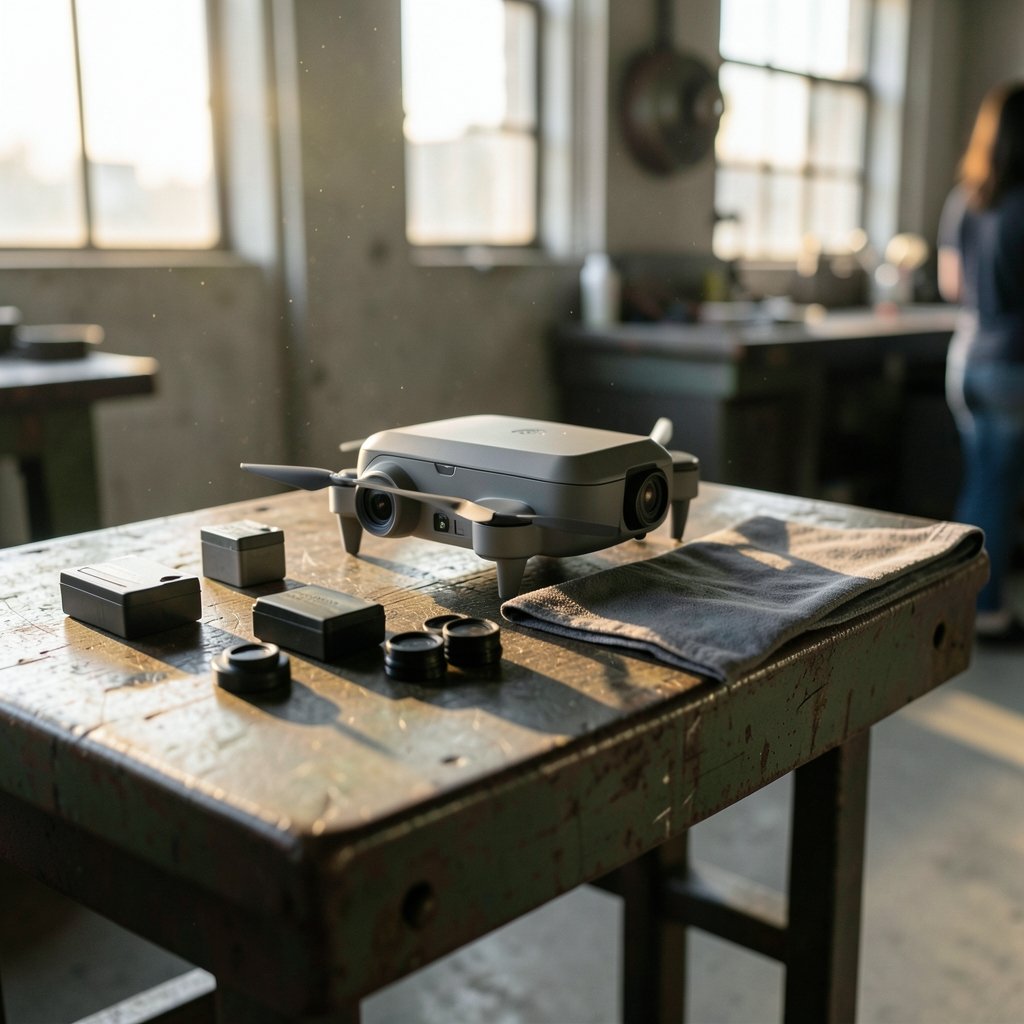
What separates a drone that takes beautiful photos from one that leaves you squinting at soft, shaky footage? It is almost never the headline megapixel number. It is the sensor, the gimbal, the flight time, and whether the aircraft fits how you actually plan to fly. Buyers who understand that relationship usually end up happier than those who chase the longest spec sheet.
This guide walks through the decisions in the order most buyers face them: what you want to shoot, which camera hardware matters, which drone type fits, and where the money goes. Along the way it flags the mistakes that show up again and again in forums and review comments.
Start With What You Will Actually Do With the Footage
The single most useful question is where the video ends up. If the answer is social media, stabilized Full HD footage is often enough, and paying for a big sensor is money spent on a problem you do not have. If the answer is a short film, a client deliverable, or anything that needs color grading, the calculus changes: you want a larger sensor, 4K recording, and support for color profiles that give you room to push the image in editing.
That distinction shows up clearly in professional buying advice. Reviewers consistently separate casual sharing from commercial or narrative work, and recommend matching the camera spec to the output rather than buying the biggest number available.
A practical exercise: open the last ten videos you loved and note whether they were shot in low light, at golden hour, or in bright midday sun. Low-light footage is where small sensors fall apart first, with noise and smeared detail that no amount of editing rescues. If most of your flying happens at dusk or in shade, sensor size should jump to the top of your list.
The Camera Specs That Actually Change Your Results

Sensor size beats megapixels
A 100 MP main camera sounds extraordinary, and in the right aircraft it is. The DJI Mavic 4 Pro pairs a 100 MP 4/3 CMOS Hasselblad main camera with 6K/60fps HDR video, and owner reviews describe printing photos as clear posters. But the reason that camera performs is the physical sensor area behind the lens, not the pixel count. A tiny sensor crammed with pixels produces softer, noisier images than a larger sensor with fewer pixels.
For most buyers, the useful hierarchy is: sensor size first, then lens brightness, then resolution, then frame-rate options.
Gimbal and stabilization
A three-axis gimbal is what makes drone video watchable. Without it, every stick input becomes a jolt. When comparing models, look for mechanical stabilization rather than electronic crop-based smoothing, which throws away resolution to steady the frame.
RAW and color profiles
RAW photo capture and log-style video profiles matter if you edit. They give you latitude to recover highlights and fix white balance. If you never open an editor, they are features you will not miss. This is one of the clearest places where paying for capability you will not use is a waste.
Flight time and transmission range
Battery life determines how you shoot, as well as how long you fly. A drone with roughly 50 minutes of advertised flight time lets you scout, compose, and reshoot a take without panic. Shorter flights push you into rushed decisions. Published figures for current models range widely, from around 18 to 19 minutes on palm-sized aircraft up to about 51 to 52 minutes on larger machines. Treat advertised numbers as a ceiling: real-world time drops in wind and cold.
Transmission range is similarly optimistic. Advertised distances of 8,000 m to 15,000 m appear on spec sheets, but local regulations almost always require keeping the aircraft in visual line of sight, which makes those numbers largely irrelevant for legal flying.
Which Type of Drone Fits Your Kind of Flying
Drone categories are not marketing fiction; they describe genuinely different machines with different priorities.
| Type | Strength | Trade-off | Best for |
|---|---|---|---|
| Folding quadcopter | All-round camera quality, portable | Larger and pricier as sensors grow | Travel, landscapes, client work |
| Palm-sized / selfie drone | Launches from the hand, very light | Short flight time, small sensor | Vlogs, quick social clips |
| FPV drone | Speed, agility, immersive flight | Camera quality secondary, needs a headset | Cinematic motion, racing |
| 360-capable drone | Reframe any angle after the flight | Specialized workflow | Creative and immersive video |
Folding quadcopters remain the most popular category because they balance camera quality with a bag-friendly design. FPV machines are built for the thrill of flight rather than image quality, and they are flown through a headset for a first-person experience. A newer niche is the 360-degree camera drone, which captures everything around it so you choose the framing later.
Weight deserves its own line. Sub-250 g aircraft sit in a lighter regulatory category in many countries, which is why manufacturers fight hard to hit that number. One popular model lists 249 g with the battery installed; another palm-sized option lists 135 g. If avoiding registration paperwork matters to you, check the current local rules rather than trusting a review, because they change.
Matching Camera Gear to the Rest of Your Kit
A drone is a camera, and it should fit the way you already shoot. If you are building a broader setup, the same logic that governs your main camera applies in the air. A guide on how to pick the best camera for photography without wasting money makes the point well: lenses and sensors matter more than badge names. The same is true here.
There are also practical overlaps worth planning for. If you shoot vlogs, the best cameras for vlogging that actually work in real conditions are usually the ones with reliable stabilization and clean audio, and a drone becomes a second angle rather than a replacement. If you are weighing a compact versus a larger body for travel, the reasoning in how to pick the best digital camera for your actual needs transfers directly to choosing an aircraft.
Two less obvious crossovers: pilots who film car content often want both aerial and ground coverage, so it helps to understand the real differences in parking sensors versus reversing camera detection in bad weather before wiring up a vehicle rig. And anyone who follows step-by-step installation guides, such as how to install a reversing camera without cutting the wrong wire, will recognize the same discipline that drone setup demands: read the manual, update firmware first, and calibrate before the first flight.
Budget: Where the Money Actually Goes
Prices for camera drones span an enormous range. Current listings show palm-sized models starting around the equivalent of a few hundred dollars and flagship triple-camera aircraft reaching well into four figures. The jump between tiers buys specific things:
- A larger sensor and better low-light performance
- Additional cameras at different focal lengths, such as a medium tele or a long tele
- Longer flight time and more robust obstacle avoidance
- Better transmission and more professional video codecs
The middle of the market is where most buyers should look. A dual-camera travel drone with a 1-inch wide-angle sensor and a medium tele camera covers landscapes, portraits of subjects at distance, and general travel footage without flagship pricing. Moving up to a triple-camera flagship adds a 4/3 CMOS Hasselblad main camera, 6K/60fps HDR, longer flight time, and a 168 mm tele camera, which is genuinely useful for compression and distance, but only if you will use those focal lengths. (Install reversing camera step by step without cutting wrong)
One caution on budget picks: model lines get discontinued. Autel has discontinued its Lite and Nano series of consumer drones, which affects long-term parts and firmware support. Before buying any discounted model, confirm the line is still active.
Obstacle avoidance also deserves scrutiny beyond the checkbox. Some systems stop the aircraft before a hazard; others route around it. Three-way avoidance that only brakes is still valuable, but it is not the same as full omnidirectional sensing, and marketing pages blur the difference.
Common Mistakes Buyers Make
Buying on megapixels alone. A high pixel count on a small sensor produces soft images. Look at sensor size and sample footage instead.
Ignoring the controller and app. A brilliant camera attached to a clumsy control experience ruins the day. Reviews of popular models frequently praise ease of operation as a top reason for satisfaction, alongside image quality and battery life.
Skipping the firmware update. New aircraft often ship with older firmware. Updating before the first flight avoids gimbal quirks and connection drops that get blamed on hardware.
Flying without checking rules. Registration thresholds, altitude limits, and no-fly zones vary by country and change over time. Check the current official guidance for where you fly.
Underestimating wind. Advertised flight times assume calm air. Coastal and mountain pilots should plan for noticeably shorter sessions.
Forgetting the extras. Extra batteries, ND filters, a landing pad, and a case add real cost. Budget for them up front rather than discovering the gap on your first trip.
What Independent Testing Adds
Manufacturer specs are a starting point, not a verdict. Independent testing is where the real picture emerges. One consumer council tested 11 drones from eight brands, priced from about $2,999 to $10,380, covering flight performance, video and photo quality, battery behavior, feature variety, safety design, and setup ease. Its findings noted that several models flew stably, handled responsively, and produced accurate colors, and that some lower-priced models performed well enough to suit beginners. That last point is worth repeating: price and performance do not move in lockstep.
Retail ranking data tells a complementary story. Bestseller lists show strong demand for lightweight models around 249 g with 4K capture, GPS return-to-home, and folding arms, alongside heavier flagship aircraft over 1 kg. The market is clearly split between convenience-first and quality-first buyers, and both groups are well served.
Conclusion
The best drone with a camera is the one whose sensor, stabilization, flight time, and weight match the footage you actually plan to make. Start with your output, not the spec sheet. If you share clips on social media, a stabilized lightweight model will serve you well and keep you under regulatory thresholds. If you produce work for clients or grade your footage, invest in a larger sensor, RAW capture, and a gimbal you can trust. Then verify the details that marketing pages gloss over: whether obstacle avoidance routes or merely stops, whether the model line is still supported, and what the current rules require where you fly. Do that homework, and the aircraft you choose will still feel right long after the novelty of the first flight wears off.
Frequently Asked Questions
What is the most important spec when choosing a camera drone?
Sensor size. A larger sensor captures more light, which means cleaner images in shade and at dusk and more flexibility when editing. Resolution, frame rates, and color profiles matter, but they cannot compensate for a sensor that struggles in real conditions.
Do I need 4K video, or is Full HD enough?
It depends on your output. Stabilized Full HD is fine for social sharing. For short films, commercial work, or anything you plan to color grade, 4K recording with support for color profiles gives you the editing room you will want.
What does the sub-250 g weight class actually get me?
In many countries, aircraft under 250 g fall into a lighter regulatory category, which can mean simpler registration or none at all. Rules vary and change, so confirm the current requirements for your location before you fly rather than relying on a review.
Is a drone with obstacle avoidance worth the extra cost?
Usually yes for newer pilots. It reduces the chance of a crash during the learning phase. Just check whether the system stops before an obstacle or actively routes around it, because the two behave very differently in tight spaces.
How long can I really fly on one battery?
Less than the advertised figure. Current models list anywhere from roughly 18 minutes on palm-sized aircraft to about 51 minutes on larger machines, but wind, cold, and hovering all cut into that. Buy at least one spare battery.
Should I buy a discontinued drone model at a discount?
Only with caution. Discontinued lines can lose firmware updates and parts availability over time. A discount is worthwhile if you accept that risk, but confirm the model is still supported before committing.











