


What if the quickest way to change how you look wasn’t a haircut or a new wardrobe, but a two-hour appointment that adds length you didn’t grow? That’s the promise behind eyelash and hair extensions, two treatments that have moved from red-carpet luxury to neighborhood salon staple. They share a name and little else. One glues synthetic fibers to individual hairs on your eyelid; the other bonds, tapes, or clips strands into the hair on your scalp. The risks, costs, and maintenance schedules don’t overlap neatly, and treating them as the same category is where a lot of disappointment starts.
This guide separates the two, explains how each works, and covers what actually goes wrong in practice, from allergic reactions to adhesive fumes to the slow damage of constant tension. It also covers how to choose a provider, what to ask before you sit in the chair, and which signs mean you should walk out.
Eyelash extensions versus hair extensions: two very different procedures
An eyelash extension is a single synthetic or mink-style fiber attached to one natural lash with a fast-curing adhesive, usually a cyanoacrylate. A full set involves 80 to 140 individual bonds per eye, applied with tweezers while your eyes stay closed. A hair extension, by contrast, adds volume or length to scalp hair using wefts, tapes, bonds, or clips. Some methods are semi-permanent and last months; others come out before bed.
| Feature | Eyelash extensions | Hair extensions |
|---|---|---|
| What’s added | Individual fibers on natural lashes | Strands, wefts, or tapes on scalp hair |
| Typical duration | 3 to 5 weeks with refills | 6 weeks to 3 months, depending on method |
| Main adhesive or attachment | Cyanoacrylate glue | Keratin bonds, tape, micro-rings, thread, clips |
| Common complaint | Irritation, lash loss, glue fumes | Tension, slippage, matting at the roots |
| Removal | Professional solvent remover | Professional removal or gentle at-home removal |
The distinction matters because the health evidence is different. Most regulatory attention on lash work focuses on the adhesive. Most concern about scalp extensions focuses on tension and on the sourcing and processing of the hair itself.
How eyelash extensions are applied and why the glue matters
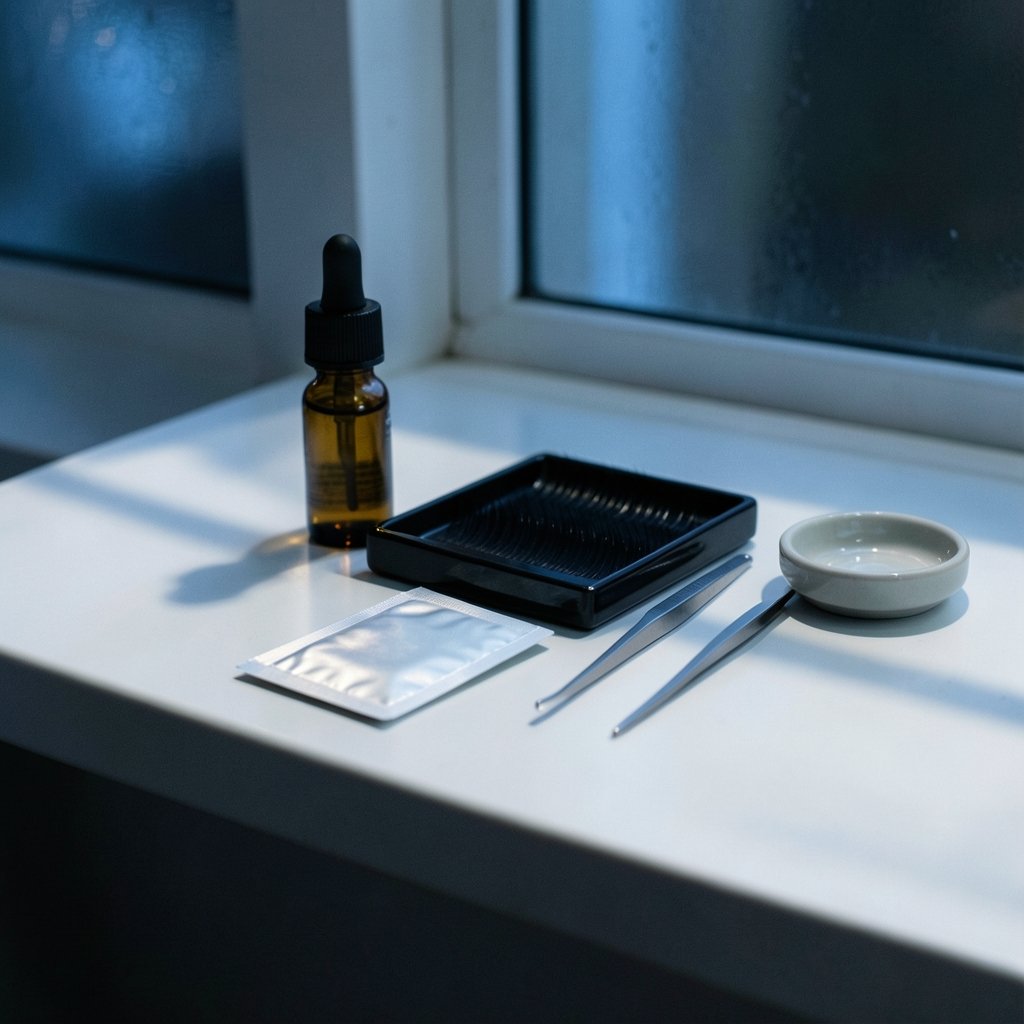
The adhesive is the whole game. Cyanoacrylate glues polymerize on contact with moisture, which is why they set so fast in a humid room and why they can bond to skin as readily as to a lash. Cyanoacrylate is a recognized skin sensitizer, and that sensitization can be permanent. Once someone reacts, repeat exposure tends to produce a stronger response, not a milder one.
Formaldehyde is the other recurring worry. Some lash adhesives have been found to contain formaldehyde or to release it, and professional bodies have warned against products that do. Market-wide prevalence is not well quantified, so treat any claim that a glue is “formaldehyde-free” as something to verify on the safety data sheet rather than accept from a label.
Patch testing is more complicated than it sounds
Many salons offer a patch test before a first full set. It sounds reassuring, but standard patch testing with cyanoacrylate monomers is problematic: the monomer is a strong irritant and can itself trigger sensitization. Dermatology guidance generally advises against routine patch testing with the monomer for that reason. Practice varies by country and by insurer, and there is no single global standard. If a salon insists a patch test guarantees safety, that’s a sign to ask more questions, not fewer.
What actually goes wrong in practice
The most common problems aren’t dramatic. They’re cumulative:
- Isolation failure. A rushed technician glues two or three natural lashes together. When one sheds, the others get pulled. Over months, density drops.
- Over-weighting. Fibers that are too thick or too long for the natural lash cause premature shedding and, occasionally, follicle stress.
- Poor aftercare. Oil-based cleansers break down the bond; skipping cleansing entirely lets debris build at the lash line and invites irritation.
- Fumes in a small room. Adhesive vapor in an unventilated space bothers technicians and clients alike.
Hair extensions: methods, tension and the traction alopecia question
Scalp extensions come in more varieties than most people realize, and the method you choose determines how your hair behaves afterward. For a deeper breakdown of bonding, tape-in, and clip-in options with cost comparisons, see this guide to hair extensions: types, costs and damage compared. The short version: semi-permanent methods sit closer to the scalp and last longer, while clip-ins are the lowest-commitment option and the easiest to remove.
The central risk with any long-wear method is traction alopecia, a form of hair loss caused by sustained tension on the follicle. Tight braids, weaves, and heavy extension installations can all contribute. It usually starts as tenderness at the attachment points, then thinning at the temples or along the part line. Caught early, it’s often reversible; left for years, it may not be.
Practical signs an installation is too tight
- You feel pulling when you raise your eyebrows or turn your head.
- The scalp is tender for more than a day or two after installation.
- Small bumps or scabs appear at the bond sites.
- You can’t slide a fingertip under the attachment without lifting it.
A good stylist will redistribute weight, keep the attachment points small, and schedule a check-in within the first two weeks. If the tension doesn’t ease, the installation comes out. That’s not a failure; it’s the correct call.
Sourcing and processing
Much of the human hair used in extensions is sourced internationally, and standards for collection and processing are uneven. Provenance and labor conditions have been documented as concerns in reporting through the 2010s and 2020s. Ask where the hair comes from and how it was processed. A supplier who can’t answer is telling you something.
Cost, maintenance and the real time commitment
Neither treatment is a one-off purchase. Both are subscriptions.
Lash extensions typically need a refill every two to three weeks to look full, and a full removal and reset every few months. Hair extensions need tightening or reinstallation every six to ten weeks depending on growth rate, plus specialized washing, brushing, and drying. Sleep position matters for both: face-down sleeping shortens lash life and stresses scalp bonds.
The hidden cost is usually product. Sulfate-free cleansers, lash-safe makeup removers, bond-safe brushes, and satin pillowcases add up. Budget for them from the start, or the maintenance will feel like a series of unpleasant surprises. If you’re weighing specific looks, browsing blonde hair shades before a color-matched install can save you from an expensive mismatch.
Occupational health: what salon workers are exposed to
Hairdressers face elevated rates of occupational contact dermatitis and asthma, linked to bleaching, dyeing, and adhesive products. That’s not a reason to avoid salons; it’s a reason to notice whether yours is ventilated, whether technicians wear gloves and eye protection, and whether they take breaks from adhesive work. A studio that treats ventilation as an afterthought is also a studio more likely to rush your appointment.
Regulation is messier than most clients assume
Whether an eyelash adhesive counts as a cosmetic, a medical device, or an industrial chemical varies by jurisdiction, and that classification determines what testing and labeling apply. In the EU, cosmetics fall under Regulation (EC) No 1223/2009, which requires a safety assessment and a responsible person, and restricts substances through its annexes. In the US, hair extensions are generally treated as cosmetics under the Federal Food, Drug, and Cosmetic Act, and labeling and adulteration rules apply, but the FDA does not pre-approve cosmetics before sale. Formaldehyde in hair-smoothing products has drawn specific warnings, and occupational guidance on salon formaldehyde exposure exists separately.
The practical takeaway: a product being legal to sell does not mean it has been independently tested for your specific use. Ask for the safety data sheet. A professional will have it.
How to choose a provider without guessing
Credentials vary widely, and in many places lash and extension work requires no separate license beyond a general cosmetology or esthetics credential. That puts the burden on you.
- Ask what adhesive or attachment method they use, and request the safety data sheet.
- Look at the room. Is there airflow? Are tools sanitized between clients?
- Ask how they handle a reaction. A vague answer is a red flag.
- Confirm they’ll remove work that isn’t settling well, and know the removal cost up front.
- Book a consultation, not a full set, for your first visit.
- Check whether they isolate lashes under magnification. If not, ask why.
For readers comparing methods more broadly, these types of hair extensions and the best hair extensions roundups are useful starting points before a consultation. If you’re considering a surgical route for thinning instead, hair transplant recovery timelines are worth understanding first, because extensions and transplants don’t mix well during healing.
When to remove extensions immediately
Stop and remove if you notice swelling, a burning sensation, discharge, or a rash spreading beyond the application site. For lashes, that means a professional removal with solvent, not picking. For scalp extensions, it means loosening the tension the same day. Reactions to cyanoacrylate can escalate with repeated exposure, so a mild first reaction is a warning, not a fluke to push through. Anyone who has reacted once should be cautious about re-exposure, and should mention it to any future provider.
Conclusion
Eyelash and hair extensions are legitimate tools for changing your look quickly, and millions of people use them without incident. The problems that do occur are rarely mysterious: adhesive sensitization, tension-related hair loss, rushed application, and skipped aftercare. None of those require bad luck. They require a provider who cuts corners or a client who ignores early warning signs. Go in with a consultation rather than an impulse booking, ask for the safety data sheet, treat tenderness as a stop signal, and budget for maintenance from day one. Do that, and extensions become a manageable styling choice rather than an expensive lesson.
Frequently asked questions
Are eyelash extensions safe?
For most people, yes, with caveats. The adhesive is typically cyanoacrylate, a recognized skin sensitizer, and sensitization can be permanent. Reactions range from mild irritation to swelling. Anyone with a history of adhesive allergy, eczema around the eyes, or prior reaction should consult a dermatologist before booking.
How long do hair extensions last?
It depends on the method. Clip-ins last a day per wear and can be reused for months. Tape-in and bonded methods typically need tightening or reinstallation every six to ten weeks as your natural hair grows out. Leaving them in longer than recommended increases matting and tension risk.
Can extensions cause permanent hair loss?
They can contribute to traction alopecia when installed too tightly or worn continuously without breaks. Caught early, tension-related thinning often reverses once the tension is removed. Years of constant pull can cause lasting damage, which is why tenderness at the attachment points should never be ignored.
Is formaldehyde really in lash glue?
Some adhesives have been found to contain formaldehyde or release it, and professional bodies have warned against such products. Prevalence across the market isn’t well quantified. Ask for the safety data sheet and don’t rely on front-label claims alone.
How often do lash extensions need refills?
Most people need a refill every two to three weeks to maintain fullness, since natural lashes shed on a continuous cycle. A full removal and reset every few months is common. Sleeping face-down, oil-based products, and rubbing your eyes all shorten the interval.
Do I need a patch test before lash extensions?
It’s more complicated than a simple yes. Standard patch testing with cyanoacrylate monomers is generally discouraged in dermatology because the monomer is a strong irritant and can itself sensitize. Salon and insurer practices vary by country, so ask your provider what they do and why, rather than assuming a patch test guarantees safety.









