

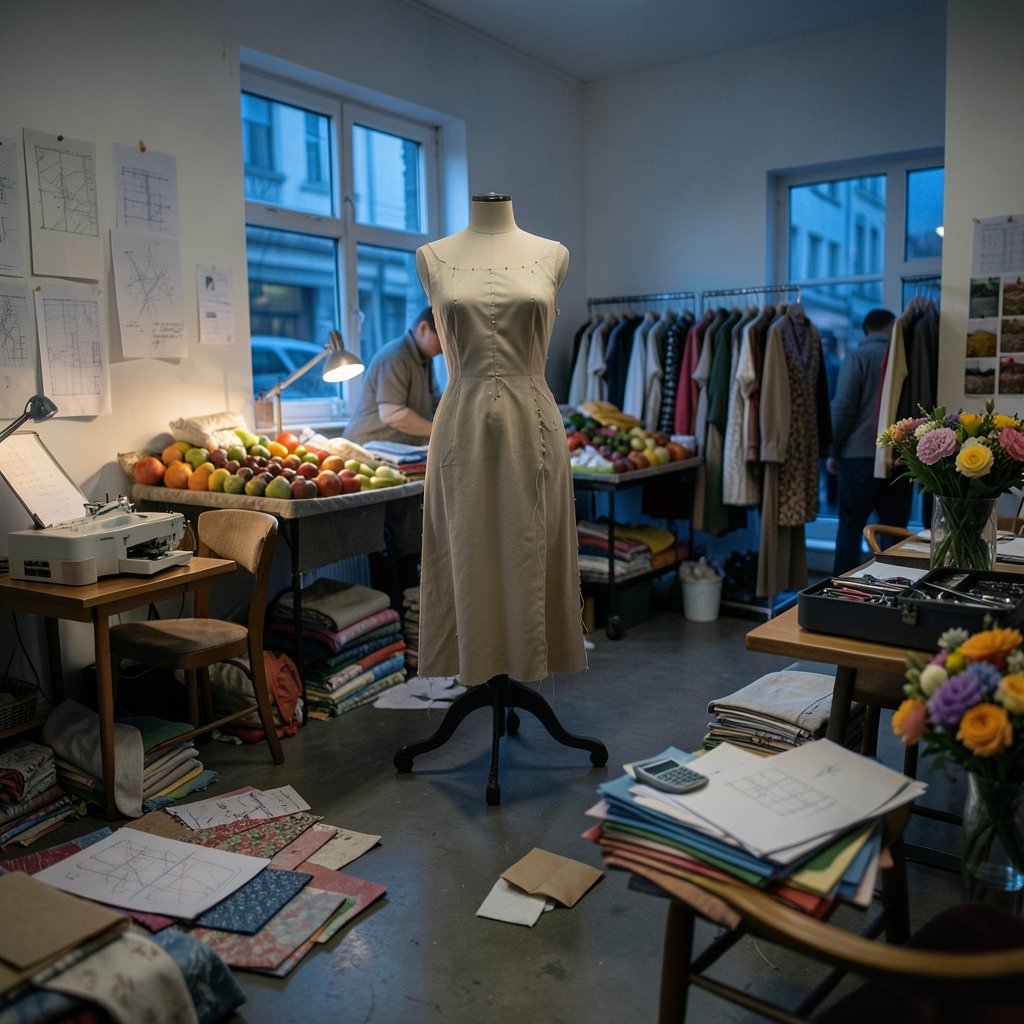
What does a fashion designer actually earn? Ask five people and you’ll get five wildly different answers, from “barely minimum wage” to “seven figures and a fragrance deal.” Both extremes exist, but neither tells you much about the typical paycheck. The reality sits somewhere in the middle, shaped by geography, industry, seniority, and whether the designer works for a label or runs one. (Designer furniture)
This guide breaks down what official wage data shows, where the money concentrates, and what the numbers miss. It also covers the practical side: how to read a salary figure without being misled, and what actually moves pay upward over a career.
The Baseline: What Official Wage Data Shows
The most reliable starting point for US pay is the Bureau of Labor Statistics, which tracks fashion designers under occupation code 27-1022. According to BLS wage data from May 2023, the median annual wage for fashion designers was about $76,700. That means half earned more and half earned less. (Italian luxury fashion)
The spread around that median is wide. The lowest 10% of designers earned in the $40,000s, while the top 10% cleared $130,000 to $150,000. That gap is not random noise. It reflects the difference between an assistant designer cutting patterns in a mid-market factory and a creative director steering a global brand’s seasonal direction.
Two caveats matter here. First, the BLS figure is dated. Wage data lags reality by a year or more, and inflation plus post-pandemic salary adjustments mean the current effective median is likely higher. Second, the BLS excludes self-employed workers entirely. Since a large share of fashion designers freelance or run their own small labels, official statistics capture only part of the profession.
The employment outlook is another sobering data point. The BLS projected roughly flat to slightly declining employment for fashion designers over the 2023–2033 decade, with a low single-digit percentage change. Fashion is a mature industry in high-wage countries, and much of the growth in production and design capacity has shifted toward Asia. That does not mean jobs are vanishing, but it does mean competition for established roles stays fierce.
Why the Average Is Misleading

A national median hides more than it reveals in this field. Fashion design is one of the most geographically concentrated occupations in the creative economy. Pay clusters in a handful of hubs: New York, Los Angeles, London, Paris, and Milan. A designer in New York competing for a role at a major house faces a very different salary market than one working for a regional sportswear brand in the Midwest.
Cost of living compounds the distortion. A $75,000 salary in New York City and a $60,000 salary in a smaller market may leave the second designer with more disposable income. National medians understate hub pay and overstate pay elsewhere, which is why comparing a single number across cities is a trap.
Industry segment matters just as much. Design and wholesale firms, along with apparel manufacturing, tend to pay better than retail. A designer working directly for a brand’s product team usually earns more than one working for a retailer’s private label or a small boutique operation. The type of employer shapes the ceiling as much as the job title does.
The Salary Ladder by Seniority
Career stage is the single biggest driver of pay variation. The table below shows typical patterns based on recruiter and trade salary guides, which are estimates rather than official statistics.
| Role level | Typical experience | Pay pattern |
|---|---|---|
| Assistant / associate designer | 0–3 years | Entry-level; often modest, with heavy learning |
| Designer | 3–6 years | Mid-range; solid professional salary |
| Senior designer | 6–10 years | Upper mid-range; ownership of categories |
| Design director / head of design | 10+ years | Multiple of median; team and strategy responsibility |
| Creative director | 15+ years | Top of market; brand-level influence |
The jump from assistant to designer is usually the hardest financially. Entry-level roles in fashion hubs often pay little relative to local living costs, and many assistants supplement income with freelance work or side projects. The leap from senior designer to director is where compensation accelerates sharply, because the job shifts from executing designs to shaping strategy, managing teams, and representing the brand.
Recruiter guides are the usual source for this ladder, and they should be read as directional rather than definitive. They are built from placements and self-reported data, not from a census of the profession.
How Fashion Design Pay Compares Across Markets
Cross-border comparisons are trickier than they look. The UK’s Office for National Statistics publishes occupation-level earnings through the Annual Survey of Hours and Earnings, but fashion design is not a standalone occupation code there. UK figures are usually proxies drawn from broader design occupations, which blurs the picture.
Job boards and trade surveys fill the gap, but with caveats. A trade salary survey, for instance, collects self-reported figures from industry professionals. Those numbers are useful for spotting trends and comparing cities, but they are not official statistics and tend to skew toward people who choose to respond.
Currency conversion adds another layer. Any comparison between a US dollar figure and a euro or pound figure depends on the exchange rate on the day it was calculated. A salary that looks generous in one currency may look ordinary in another six months later. Always check the date and currency behind any figure before drawing conclusions.
The Freelance and Self-Employed Blind Spot
Official wage statistics measure employees. They do not capture the self-employed, and fashion has a large freelance contingent. Pattern makers, sample developers, print designers, and independent label founders often work project to project through agencies or direct contracts.
Freelance income is volatile by design. A designer might earn well in a busy season and very little during a slow one. Annualized earnings can land anywhere from modest to substantial, and there is no central dataset tracking them. This is a known measurement gap, not a hidden figure waiting to be discovered.
The practical implication is simple: if you are comparing an employed salary offer against freelance rates, compare total annual earnings after expenses, not day rates. Freelancers carry their own equipment, software, insurance, and unpaid admin time. A day rate that looks double an employee’s hourly equivalent often is not, once those costs are subtracted.
What Actually Moves Pay Upward
Experience alone does not guarantee a higher salary. Designers who earn well tend to share a few characteristics that go beyond raw talent.
Commercial awareness is the big one. A designer who understands margin, sell-through, and costing is worth more than one who only understands aesthetics. Brands pay for people who can make beautiful things that also sell.
Technical breadth matters too. Proficiency in digital design tools, 3D sampling software, and technical pack creation expands the roles a designer can fill. The industry has been steadily digitizing its development process, and designers who can work fluently in that environment command a premium.
Category expertise creates leverage. A designer who has spent years specializing in knitwear, denim, or outerwear becomes harder to replace than a generalist. Depth in a category translates directly into negotiating power.
Portfolio quality still outweighs almost everything at the entry level. Hiring managers review portfolios in seconds. A tight, well-edited book showing finished product, technical understanding, and a clear point of view beats a sprawling collection of student work every time.
Common Mistakes That Cost Designers Money
A few avoidable errors show up again and again in salary conversations.
The first is not researching the local market before naming a number. Candidates who quote a national average in a hub city often undersell themselves, while those who quote hub pay in a smaller market can price themselves out. Research the specific city and segment.
The second is accepting the first offer without asking about scope. Salary is only part of compensation. Title, category ownership, travel expectations, and bonus structure all affect total value. A slightly lower base with a clear path to seniority can beat a higher base in a dead-end role.
The third is ignoring the freelance math. Independent designers who quote day rates without accounting for downtime, taxes, and business costs routinely discover their effective hourly earnings are far lower than expected. Budget for non-billable weeks from the start.
The fourth is treating salary data as a verdict rather than a starting point. A median tells you where the middle sits. It does not tell you what you are worth, what a specific employer can pay, or how a role will grow. Use the numbers to frame a conversation, not to end one.
Where the Profession Is Heading
The broader direction of fashion matters for anyone planning a career in it. The industry’s center of gravity has been shifting for years, with design and production influence spreading well beyond the traditional European and American houses. That shift changes where jobs are, what they pay, and which skills are in demand.
Digital design, sustainability requirements, and direct-to-consumer business models are all reshaping the design role. Designers who can work across those areas, and who understand the commercial side of the business, are better positioned than those who specialize narrowly in one craft. The same pattern shows up across creative industries: the people who connect design decisions to business outcomes tend to earn more and last longer. It is a theme that runs through how Asian fashion designers moved beyond imitation and rewrote global style, and it applies just as directly to individual salary trajectories.
For designers thinking about the next decade, the practical takeaway is to build a portfolio of skills rather than a single specialty. Technical fluency, commercial literacy, and a clear design point of view are the combination that employers pay for.
Conclusion
The honest answer to “what does a fashion designer earn?” is a range, not a number. A median around $76,700 based on May 2023 US data gives a useful anchor, but the real figure depends on where you work, what segment you work in, how senior you are, and whether you are employed or freelance. Official statistics capture employees well and self-employed designers poorly, so any single figure tells only part of the story.
What the data does show clearly is that pay follows value. Designers who understand the commercial side of the business, who specialize in a category, and who can work fluently with modern design tools earn more than those who rely on aesthetics alone. The ladder is real, the hubs pay more, and the freelance path offers freedom at the cost of stability. Knowing which trade-offs you are willing to make is more useful than memorizing a median.
FAQ
What is the median salary for a fashion designer?
Based on US wage data from May 2023, the median annual wage for fashion designers was about $76,700. Half of designers earned more than that figure and half earned less. Because the data is dated and excludes self-employed designers, the current effective median is likely somewhat higher.
Do fashion designers earn more in New York or Los Angeles?
Both cities are major hubs where pay runs above the national median, largely because of cost of living and the concentration of major brands. Comparing the two directly is difficult without role-specific data, but both consistently outpace smaller markets. A national median understates pay in these hubs and overstates it elsewhere.
How much do entry-level fashion designers make?
Entry-level assistant and associate designers typically earn modest salaries, often in the lower range of the profession’s pay spread. The first few years are usually the tightest financially, especially in expensive hub cities. Many assistants supplement their income with freelance work or side projects while building their portfolios.
Can fashion designers make six figures?
Yes. The top 10% of US fashion designers earned above roughly $130,000 to $150,000 according to May 2023 data. Those figures typically belong to design directors, heads of design, and creative directors who manage teams and shape brand strategy. Reaching that level usually takes a decade or more of experience.
Why do salary figures for fashion designers vary so much?
Variation comes from geography, industry segment, seniority, and employment type. Design and wholesale firms tend to pay more than retail, hub cities pay more than smaller markets, and senior roles pay multiples of entry-level ones. Self-employed designers are excluded from official wage data entirely, which widens the gap between published figures and real earnings.
Is fashion design a growing field?
Employment was projected to be roughly flat to slightly declining over the 2023–2033 decade in the US, with only a low single-digit percentage change. That does not mean opportunities disappear, but competition for established roles remains strong. Designers with commercial awareness and technical breadth tend to fare better in a tight market.














