


What if the most famous fashion quote on the internet was never actually said by the person credited with it? That question hangs over nearly every list of fashion quotes you have ever scrolled past. The line about fashion being a form of ugliness, the one about style remaining while fashion fades, the crack about naked people having little influence on society: all of them get shared thousands of times a day, and all of them carry attribution problems that most listicles quietly ignore. This guide walks through the quotes that genuinely matter, explains what they actually mean in practice, flags which attributions are shaky, and shows how to use a good line without embarrassing yourself.
Why Fashion Quotes Spread So Easily
Fashion is a visual industry built on words. Designers explain collections in interviews, editors caption runway images, and street-style photographers narrate what they see. A sharp sentence about clothing travels faster than a photograph because it fits in a caption, a bio, a group chat, or the opening slide of a brand deck.
There is also a practical reason. Fashion changes constantly, and people need language to describe that churn. A quote like “fashion is made to become unfashionable” gives readers a compact way to process why last year’s coat suddenly looks wrong. Quotes do emotional work that trend reports cannot. They turn a confusing cycle into something that feels almost philosophical.
The problem is that compression breeds error. When a line gets shortened for social media, the source gets dropped first, then the wording drifts, then someone adds a famous name to make it stickier. That is how misattribution becomes folklore.
The Quotes Worth Knowing, and What They Actually Say
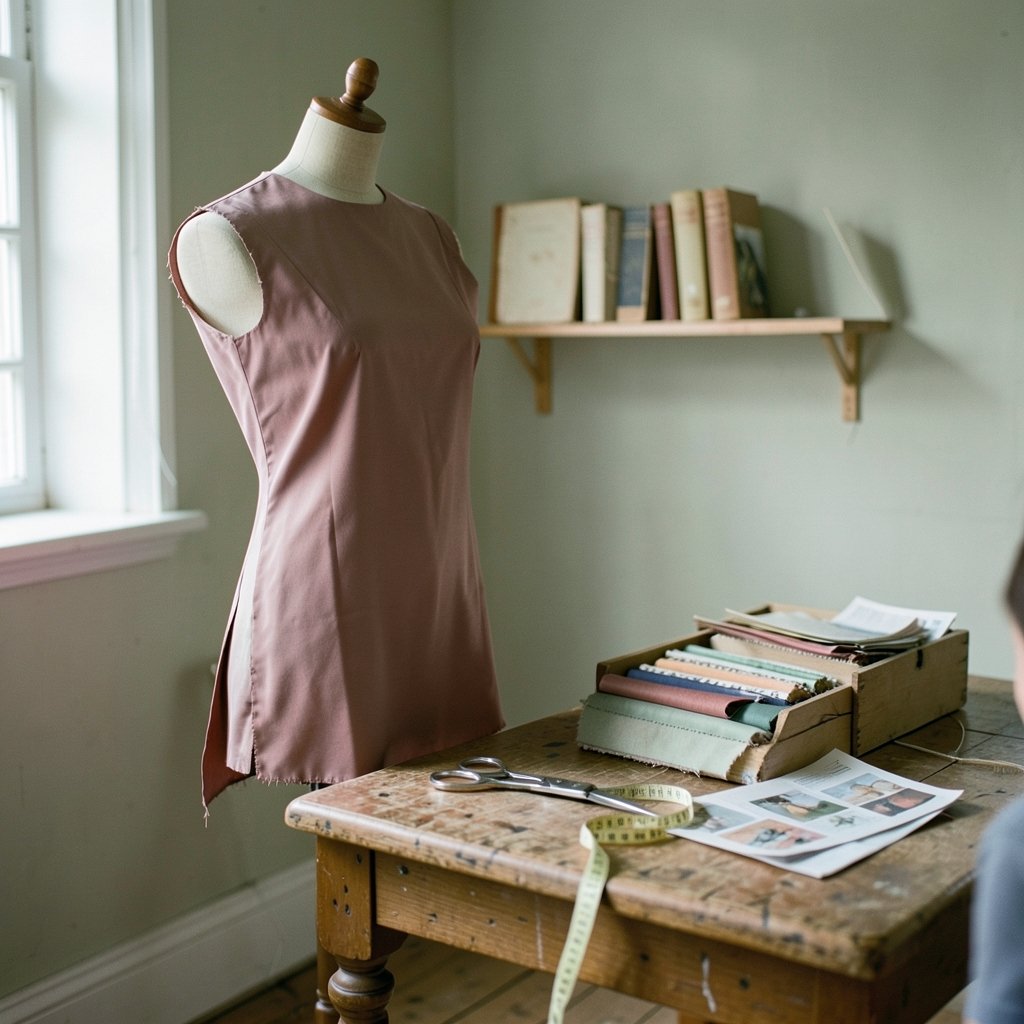
Oscar Wilde on fashion’s restlessness
The most quoted fashion line in English is usually rendered as: “Fashion is a form of ugliness so intolerable that we have to alter it every six months.” It is witty, slightly cruel, and perfectly built for sharing. It is also attributed rather than verified. The line is widely repeated but has not been securely traced to a primary Wilde text, which means careful writers label it “attributed to Oscar Wilde” rather than stating it as fact.
What makes the quote durable is its target. Wilde is not mocking clothes. He is mocking the insecurity of people who need the new thing precisely because the old thing has become visible as a costume. Read that way, the line is less about fashion than about self-consciousness, which is why it still lands in discussions of Italian luxury fashion and the endless reinvention of heritage houses.
Coco Chanel on fading and remaining
“Fashion fades, only style remains the same” is the second most circulated line in the category, and it comes with the same warning label. Chanel’s aphorisms are heavily recycled and poorly sourced, and many are paraphrases assembled from interviews rather than clean quotations from a single text. The wording also varies between collections, with some versions using “passes” instead of “fades.” Quote the version you can actually source, and say where it came from.
The idea itself is useful. It separates trend from taste. A trend has a start date and an expiry date. Taste is the accumulated judgment that lets someone wear a fifteen-year-old jacket and look current. Anyone building a wardrobe around the 2026 fashion trends female cycle should internalize the distinction, because it is the difference between buying well and buying often.
Bill Cunningham on armor
Bill Cunningham, the New York Times street-style photographer who worked at the paper from the late 1970s until his death in 2016, is credited with the line: “Fashion is the armor to survive the reality of everyday life.” The quote appears widely in obituaries and profiles, though a specific primary interview source is not confirmed.
This is the most humane quote on the list. Cunningham spent decades photographing ordinary people on sidewalks as well as editors outside shows, and the armor metaphor fits that work. Getting dressed is a daily act of preparation. A person who chooses a structured coat before a difficult meeting is doing something practical, not frivolous.
Mark Twain on clothes and influence
“Clothes make the man. Naked people have little or no influence on society.” Twain quotation collections include it, but it has not been reliably located in his published works. Treat it as attributed. It is also the funniest line here, and the one most likely to appear in a pitch deck.
Gore Vidal on style and self-knowledge
“Style is knowing who you are, what you want to say, and not giving a damn.” Attributed to Gore Vidal, appearing in quotation collections without a verified primary source. The construction is the point: style requires three things, and two of them are internal. That framing is why the line survives in style manuals and personal-branding advice.
Karl Lagerfeld on fashion as language
“Fashion is a language that creates itself in clothes to interpret reality.” Attributed to Karl Lagerfeld, who gave so many interviews that the line appears in collections without a confirmed specific source. It is the most abstract quote in the group, and the most useful for anyone writing about design as communication rather than decoration.
Chanel on fashion being everywhere
“Fashion is not something that exists in dresses only. Fashion is in the sky, in the street.” Again attributed to Chanel, again with uncertain provenance. The sentiment anticipates the modern understanding that trends emerge from streets, subcultures, and music scenes before they reach a runway, a dynamic explored in accounts of how 2010s fashion athleisure streetwear Instagram rewrote rules.
A Quick Reference Table for the Most-Shared Lines
| Quote (short form) | Attributed to | Verification status | Best used for |
|---|---|---|---|
| Fashion is a form of ugliness so intolerable that we have to alter it every six months | Oscar Wilde | Attributed, not traced to a primary text | Critiques of trend cycles |
| Fashion fades, only style remains the same | Coco Chanel | Attributed, wording varies between collections | Wardrobe advice, buying well |
| Fashion is the armor to survive the reality of everyday life | Bill Cunningham | Widely quoted in profiles and obituaries | Personal style and confidence |
| Clothes make the man. Naked people have little or no influence on society | Mark Twain | Attributed, not reliably located in his works | Lighthearted presentations |
| Style is knowing who you are, what you want to say, and not giving a damn | Gore Vidal | Attributed, primary source unverified | Personal branding |
| Fashion is a language that creates itself in clothes to interpret reality | Karl Lagerfeld | Attributed, specific interview unconfirmed | Design and communication |
| Fashion is not something that exists in dresses only | Coco Chanel | Attributed, provenance uncertain | Street style, cultural trends |
How to Check a Fashion Quote Before You Use It
Most people repeat quotes without checking, and most of the time nothing bad happens. But if you are writing for a brand, publishing a book, or teaching, a wrong attribution is a small credibility leak that compounds. Here is the method that actually works, drawn from the standard practice of quotation research: trace the earliest printed appearance rather than the most popular one.
- Search the exact phrasing in a standard quotation dictionary. The Oxford Dictionary of Quotations and Bartlett’s Familiar Quotations are the conventional authorities, and an entry without a primary citation is a warning sign.
- If the dictionary has no entry, look for the earliest dated use in books, newspapers, or archived interviews. The first appearance is usually less flattering than the version circulating now.
- Check whether the wording varies. If you find “fades” and “passes” in different collections, you are looking at a paraphrase tradition, not a quotation.
- Label what you cannot verify. Writing “attributed to” costs nothing and protects you.
- Avoid the temptation to upgrade. A line does not become more true because a famous name is attached.
Common mistake: citing a quote collection as if it were a primary source. A collection is evidence that a line circulated, not evidence that the credited person said it. Another frequent error is trusting the first search result, which is often a listicle that copied another listicle.
What These Quotes Reveal About the Industry Itself
Read together, the canonical fashion quotes share a suspicion of novelty. Wilde says we change clothes out of discomfort. Chanel says the change is superficial and style is not. Cunningham says clothing is a practical defense. None of them treat fashion as trivial, and none of them treat it as permanent.
That tension is the actual subject of the industry. Designers spend months producing objects that will be declared outdated on a schedule. Writers produce trend forecasts that are designed to expire. The 2026 fashion trends guide format exists precisely because readers want a map of what is coming and what is going, and the best versions of that format acknowledge the cycle rather than pretending to escape it. For a deeper look at how the coming season is being framed, the fashion trends 2026 coverage shows how quickly language shifts from “new” to “everywhere” to “over.”
Quotes also do something the industry needs: they slow it down. A sentence that takes ten seconds to read can reframe how someone feels about their own closet. That is why fashion writing keeps returning to aphorism even when the attributions are messy. The ideas outlast the sourcing.
Using Quotes Well in Fashion Writing and Content
For anyone producing fashion content, quotes are a tool with specific uses and specific limits. They work best as a hinge: a short line that opens a section and gives the reader a frame for the paragraphs that follow. They work worst as a substitute for reporting. A post that strings together eight famous lines without any original observation is not fashion writing; it is decoration.
Practical guidance that holds up in real editorial work:
- Use one quote per piece, or two at most. Density kills impact.
- Always name the attribution status. “Attributed to” is not a weakness; it signals care.
- Match the quote to the argument. Cunningham’s armor line belongs in a piece about confidence or uniform dressing, not in a trend forecast.
- Cut the quote if the paragraph says the same thing better. Many drafts improve when the epigraph goes.
- Check the wording against a dictionary before publication, especially for Chanel and Wilde, where variants are everywhere.
The same discipline applies to adjacent formats. Fashion illustration, for instance, turns runway moments into images rather than sentences, and the way Angelica Hicks turns runway moments into visual commentary shows how a single well-chosen detail can carry more meaning than a paragraph. Long-form projects do this too; the Barbie world tour book delivers fashion movie only hinted at by expanding on what a two-hour film could only sketch.
For readers who want more fashion writing in their week, the practical route is curation rather than volume. Learning to find the best fashion substacks without wasting your inbox is a skill in itself, and it matters more than collecting quotes, because good writers explain why a line works instead of just repeating it.
The Honest Conclusion About Fashion Quotes
The best fashion quotes are not reliable history. They are compressed arguments, and their value lies in what they help you notice: the speed of the trend cycle, the difference between style and fashion, the daily practicality of getting dressed. The attributions are often shaky, sometimes invented, and almost always more confident than the evidence allows.
That is not a reason to stop using them. It is a reason to use them honestly. Credit the line, flag the uncertainty, and then say something of your own. A quote is a door, not a room. The writers and designers worth reading walk through it.
Frequently Asked Questions
Who actually said “fashion fades, only style remains the same”?
The line is attributed to Coco Chanel, but like many Chanel aphorisms it is poorly sourced and appears in quotation collections without a clean primary citation. The wording also varies, with some versions using “passes” instead of “fades.” The safe approach is to credit it as attributed to Chanel and to note which version you are quoting.
Is the Oscar Wilde fashion quote real?
It is widely repeated but has not been securely traced to a primary Wilde text. It circulates as “fashion is a form of ugliness so intolerable that we have to alter it every six months,” and it sounds like Wilde, which is exactly why it spread. Label it attributed rather than verified, and do not present it as a confirmed line from a specific work.
What is the most reliable way to verify a fashion quote?
Trace the earliest printed appearance. Start with a standard quotation dictionary such as the Oxford Dictionary of Quotations or Bartlett’s Familiar Quotations. If neither has an entry with a primary citation, look for the first dated use in books, newspapers, or archived interviews. If the wording varies across sources, you are dealing with a paraphrase tradition rather than a quotation.
Why are so many celebrity fashion quotes misattributed?
Because a famous name makes a line travel faster. Social media captions and listicles strip sources first, then wording drifts, then someone attaches a plausible author. Fashion is especially vulnerable because designers and editors give hundreds of interviews, which makes almost any sentence sound like something they might have said.
What is the difference between a fashion quote and a style quote?
Fashion quotes tend to be about the cycle: what is new, what is over, why things change. Style quotes tend to be about the person: taste, self-knowledge, confidence. Chanel’s fading line and Vidal’s line about knowing who you are sit on the style side, while Wilde’s six-months line sits firmly on the fashion side.
Can I use these quotes in brand content or a book?
Yes, with care. Short quotations used for commentary are generally low risk, but attribution accuracy is your responsibility. Name the person, mark uncertain attributions as attributed, avoid implying endorsement, and check the exact wording against a reference source before publication. When in doubt, paraphrase the idea and credit the thinker.














