

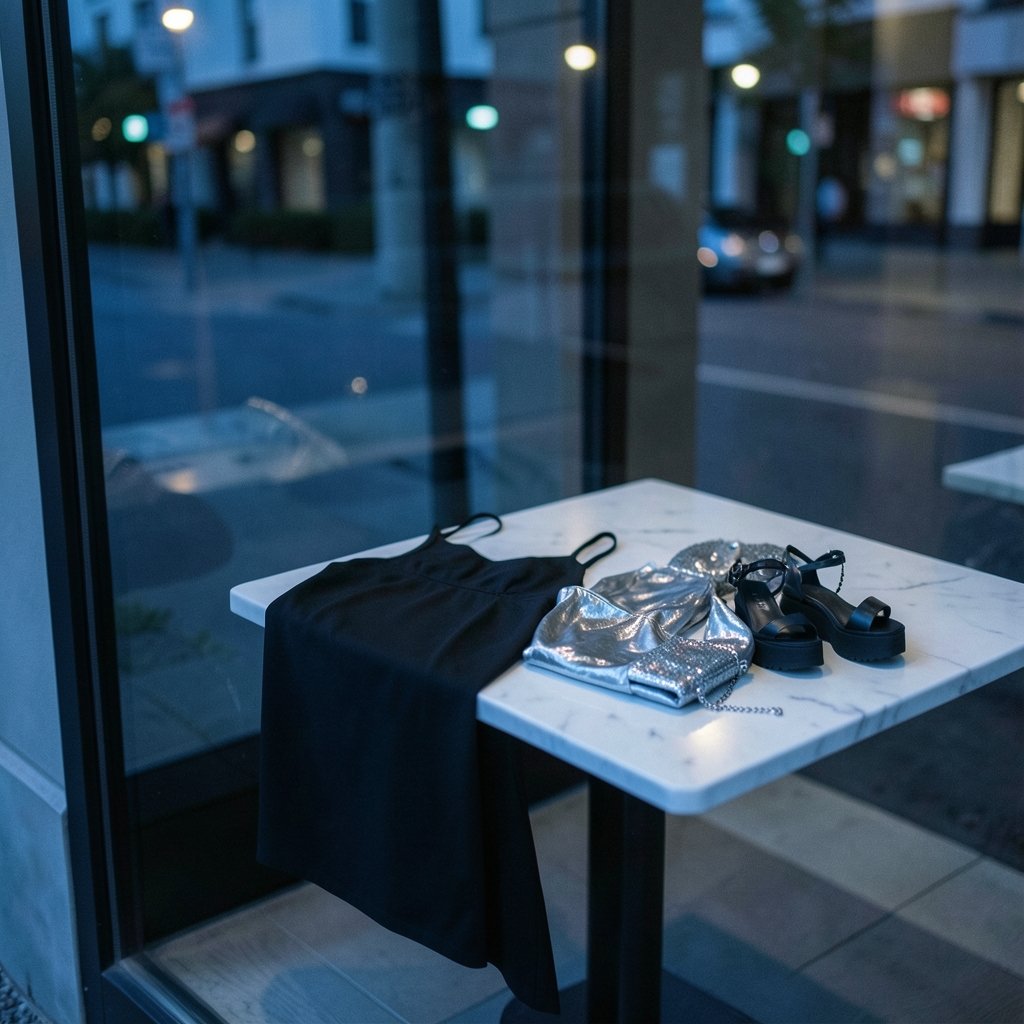
What happens when a nightclub’s door policy becomes a fashion filter, and the people who pass through it end up shaping what the rest of the world wears? That is the story of Studio 54, the Manhattan club that opened on April 26, 1977, at 254 West 54th Street in the former CBS television studio and opera house. It ran for less than three years, closing in early 1980 after its founders were convicted of tax evasion. Yet its visual legacy, from halter dresses to lamé jumpsuits, still feeds runways and red carpets decades later.
This article looks at what people actually wore inside Studio 54, why the club’s aesthetic mattered, and how to borrow the look today without turning yourself into a costume.
The Door Was the First Fashion Show
Before anyone reached the dance floor, they had to get past Steve Rubell and Ian Schrager’s door. Rubell’s selection process was famously arbitrary and image-driven. He favored striking looks, and that made being seen at the door part of the club’s mythology. Accounts of “the list” are largely anecdotal rather than systematically recorded, so treat specific claims with caution. Still, the broad point holds: appearance was the entry ticket.
That single fact changed how people dressed for a night out. If the door rewarded a look, then getting dressed became a creative act with stakes. People did not dress to blend in. They dressed to be chosen.
What the Door Rewarded
Based on memoir and press accounts from the era, the door tended to favor:
- Strong silhouettes that read instantly across a crowded room
- Shine and texture, such as sequins, lamé, and metallic fabrics
- Unisex glamour, where men and women borrowed freely from each other’s wardrobes
- Confidence, which sounds vague but shows up in how a garment is worn
The practical lesson for anyone styling a bold look today is simple. A single strong piece beats five medium ones. Pick the sequined jacket or the metallic jumpsuit, then keep everything else quiet.
Halston and the Minimal Side of Maximal Nights
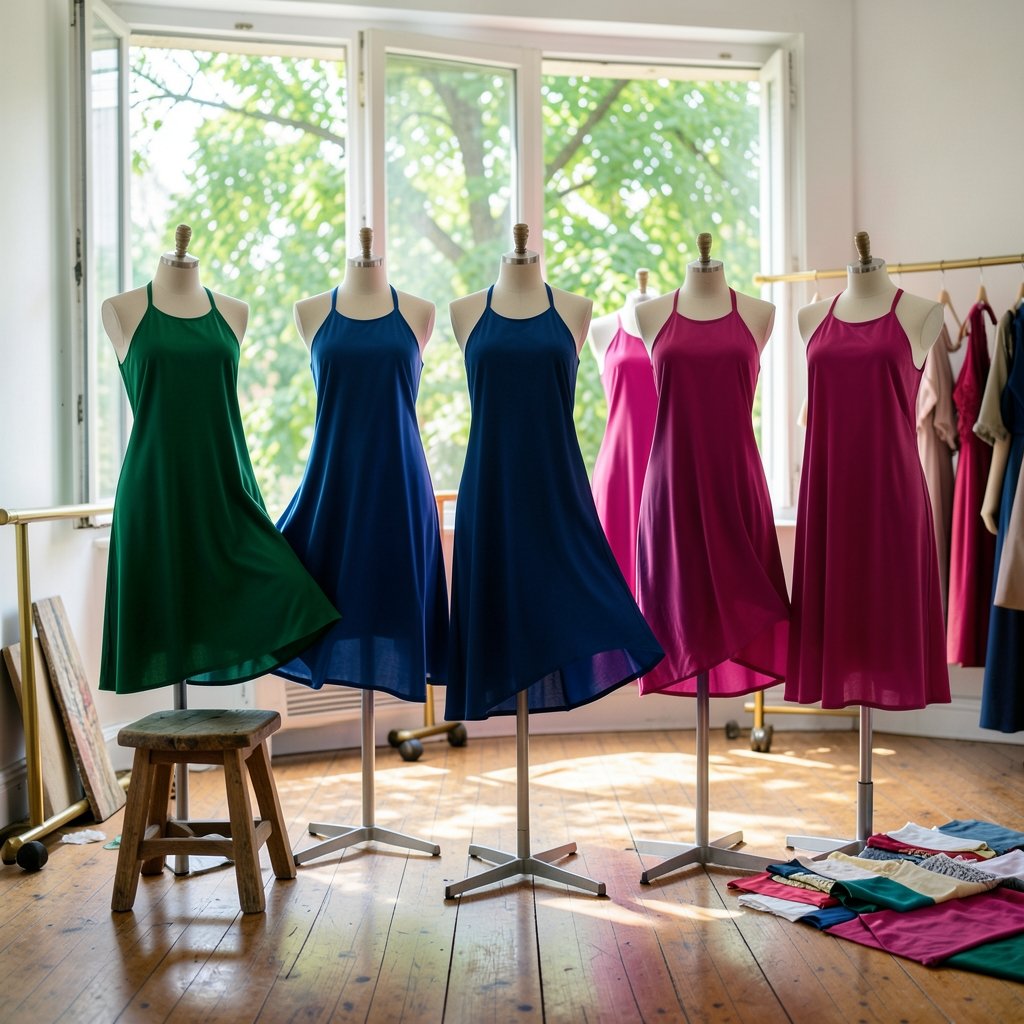
It is tempting to imagine Studio 54 as wall-to-wall glitter. The reality was more interesting. Halston was a regular, and his design language, built on minimal, unstructured jersey, halter dresses, caftans, and Ultrasuede, is closely tied to the club’s visual culture. This connection is widely reported in fashion history, though it is often asserted rather than tied to one primary document. Present it as consensus, not hard fact.
Halston’s approach was the opposite of sparkle. It was about drape, ease, and the body moving freely. On a dance floor, that makes sense. A heavy beaded gown looks spectacular standing still and becomes a burden by midnight. A jersey halter dress looks like nothing on a hanger and comes alive when someone is dancing.
That contrast is the most useful styling insight from the era. The best nightlife clothes are built for movement first and photographs second. If a piece only works when you are standing still, it is a photo prop, not an outfit.
Bianca Jagger and the Power of One Image
Bianca Jagger’s entrance on a white horse for her 1977 birthday celebration is one of the most cited images of the era. Some accounts place the date at May 2, 1977, though sources differ. A model reportedly led the horse, dressed in white.
The detail that matters for fashion is not the horse. It is the restraint. Jagger was a Halston client and friend, and her white suit and halter looks are frequently cited as emblematic of the club’s style. White, clean lines, no clutter. In a room full of sequins, the woman in a white suit stands out more, not less.
That is a counterintuitive rule worth remembering. When everyone around you is maximizing, minimalism becomes the loudest choice in the room.
Andy Warhol, Interview, and the Documentation of Style
Andy Warhol was a fixture at the club and documented the scene in his diaries and in Interview magazine. His published diaries, released in 1989, remain a primary source for who wore what and when. This matters because fashion history often runs on photographs alone. Written accounts tell you what a photograph cannot: who was there with whom, what the room felt like, and which outfits were considered a triumph versus a misfire.
For anyone studying the era, the takeaway is to look beyond the famous images. The written record shows that the club’s style was not a single uniform. It was a rotating cast of personal signatures.
The Studio 54 Look, Broken Down
Fashion-history writing routinely describes the club as a bridge between 1970s glam rock and disco dressing and the designer-driven nightlife of the 1980s. That synthesis is interpretive rather than a single sourced claim, but it is a useful frame. Here is how the era’s key elements compare.
| Element | What It Looked Like | Why It Worked | Modern Equivalent |
|---|---|---|---|
| Sequins and lamé | Liquid metallic fabrics, often head to toe | Caught the light in a dark room | A single metallic skirt or blazer |
| Jumpsuits | Wide legs, deep necklines, belted waists | One piece, no fuss, easy to dance in | A tailored wide-leg jumpsuit |
| Halter dresses | Bare shoulders, draped jersey | Cool, unstructured, movement-friendly | A simple jersey midi halter |
| Platform shoes | Chunky soles, often metallic | Height plus stability on a crowded floor | A block-heel platform sandal |
| Unisex glamour | Men in satin, eyeliner, and heels | Broke the rules and got attention | Gender-fluid tailoring and jewelry |
| White suiting | Clean lines, sharp shoulders | Stood out against maximalism | A white blazer with matching trousers |
The table reveals something useful. Most of these elements are not extreme. They are ordinary garments pushed in one direction, usually shine, volume, or bare skin. That is why the look is easy to adapt now.
How to Wear the Look Without Looking Like a Costume
The most common mistake people make with retro glamour is going all in at once. Sequins plus platforms plus a metallic bag plus dramatic makeup reads as fancy dress, not fashion. The people who looked best at Studio 54 were not wearing every trend at once. They were wearing one idea, executed well.
Here is a practical approach that works in real life.
- Choose one focal point. Pick a single statement piece, such as a lamé skirt, a sequined jacket, or a metallic jumpsuit. Build the rest of the outfit around it in plain black, white, or cream.
- Prioritize movement. Test the garment by sitting, standing, and walking. If it restricts you, it will not survive a long night.
- Check the fabric in low light. Shine behaves differently under club lighting than in a fitting room. Hold the piece near a dim lamp and see whether it glows or glares.
- Keep shoes realistic. Platforms are iconic, but stability matters more than height. A block heel gives the silhouette without the wobble.
- Add one unisex touch. A satin shirt, a wide collar, or a chunky chain nods to the era’s fluidity without a full transformation.
- Skip the full theme. No need for a headband, a feather boa, and a cigarette holder. One era reference is enough.
That last point deserves emphasis. The fastest way to make a vintage-inspired outfit look dated is to treat it as a costume. The fastest way to make it look current is to wear it as if it were simply your clothes.
Lessons From the 2010s and the 2026 Runways
Nightlife style keeps recycling because the mechanics never change. The 2010s gave us athleisure and streetwear reshaped by Instagram, a period when the camera moved from the club photographer to everyone’s pocket. That shift echoed what Studio 54 did with the door: it made being seen the point. If that history interests you, the story of how 2010s fashion athleisure streetwear and Instagram rewrote the rules is a useful parallel.
The same instinct drives current runways. Designers keep returning to disco-era shine, but they cut it differently. For a broader view of where that is heading, the 2026 fashion trends guide maps what is in, out, and worth buying. If you prefer browsing by tag, the fashion trends 2026 archive collects related coverage in one place.
There is also a specific thread worth following: Italian luxury fashion has long treated eveningwear as a craft problem, which is exactly how the best Studio 54 outfits were built. And for anyone who wants to see how runway moments get translated into something more personal, Angelica Hicks turns runway moments into illustrations that capture the attitude rather than the exact garment.
Why the Look Still Works
The club’s style survived because it solved a real problem. It gave people a way to be visually bold in a dark, crowded room without sacrificing comfort. Sequins catch light. White stands out. A jumpsuit removes decision-making. A halter dress lets you move.
None of that depends on the year. It depends on understanding the room.
There is also a cultural reason. The club’s brief life, from 1977 to early 1980, gave it a mythic quality. The 1998 film 54, written and directed by Mark Christopher, dramatized the era, and a director’s cut released in 2015 restored material cut from the theatrical version. That afterlife keeps the imagery circulating, even for people who were never there.
Conclusion
Studio 54 fashion was never really about a dress code. It was about a door that rewarded nerve, and a crowd that treated getting dressed as part of the performance. Halston’s jersey halters, Bianca Jagger’s white suit, the sequins, the jumpsuits, the platforms: these were tools, not rules.
The practical takeaway is refreshingly simple. Pick one strong piece. Make sure you can move in it. Keep the rest quiet. Wear it like it is yours, not like it is a costume. Do that, and you have understood the era better than any photograph can show.
Frequently Asked Questions
What did people wear to Studio 54?
The most common elements were sequins, lamé, metallic fabrics, jumpsuits, halter dresses, platform shoes, and sharp white suiting. The mix leaned toward unisex glamour, with men and women borrowing from each other’s wardrobes. Halston’s minimal jersey pieces were also widely associated with the club’s visual culture.
Who was the best-dressed regular at Studio 54?
There is no objective answer, but Bianca Jagger is the most frequently cited. Her white suit and halter looks, often designed in connection with Halston, became emblematic of the club’s style. Andy Warhol and the Interview magazine crowd also shaped the room’s aesthetic through constant documentation.
Was Studio 54 fashion all sequins and glitter?
No. That is the biggest misconception. Halston’s unstructured jersey halters and caftans were the opposite of sparkle, and white suiting was a major look. The era worked on contrast, with minimal pieces standing out against maximal ones.
How can I recreate the Studio 54 look today?
Choose one focal piece, such as a metallic skirt or a sequined jacket, and keep everything else plain. Prioritize fabrics you can move in, keep shoes stable rather than sky-high, and add one unisex detail like a satin shirt. Avoid stacking multiple era references at once, which reads as costume rather than style.
Why did Studio 54 close?
The club closed in early 1980 after its founders, Steve Rubell and Ian Schrager, were convicted of tax evasion. The exact final night is reported differently across accounts, so specific closing dates should be treated with caution. A later brief reopening under new ownership is a separate chapter.
Did Studio 54 influence mainstream fashion?
Yes, though the influence is easier to describe than to measure. Fashion-history writing routinely frames the club as a bridge between 1970s disco dressing and the designer-driven nightlife of the 1980s. Sequins, jumpsuits, and metallic eveningwear keep returning to runways, which suggests the formula still works.














