


What makes a plate of arroz negro worth a detour, and how do you find the good stuff without wasting a night on a mediocre version? That is the question this guide answers. Arroz negro looks dramatic, tastes of the sea, and is easy to get wrong. The good news is that a few clear signals separate a kitchen that respects the dish from one that simply dyes rice black and hopes nobody notices.
What Arroz Negro Actually Is
Arroz negro is a rice dish cooked in a sofrito base with cuttlefish or squid and seasoned with squid ink, which gives it its near-black color and a deep, briny, faintly metallic flavor. It comes from Valencia and Catalonia, where it is often cooked in a paella pan over fire and finished with a layer of socarrat, the crisp, caramelized rice at the bottom of the pan.
It is closely related to paella negra but not identical. The terms overlap in restaurants, and many kitchens use them interchangeably. Broadly, arroz negro leans on cuttlefish and ink with a simpler base, while paella negra is more likely to include shrimp, mussels, and a broader seafood mix. Regional versions differ too. Valencian renditions tend toward cuttlefish and a restrained sofrito, Catalan versions often add fish stock and aioli on the side, and Andalusian kitchens may lean more heavily on shellfish.
That variation matters when you are choosing where to eat. A menu that names its region, its rice, and its seafood is usually a menu written by someone who cares.
Why the Dish Is a Reliable Test of a Kitchen
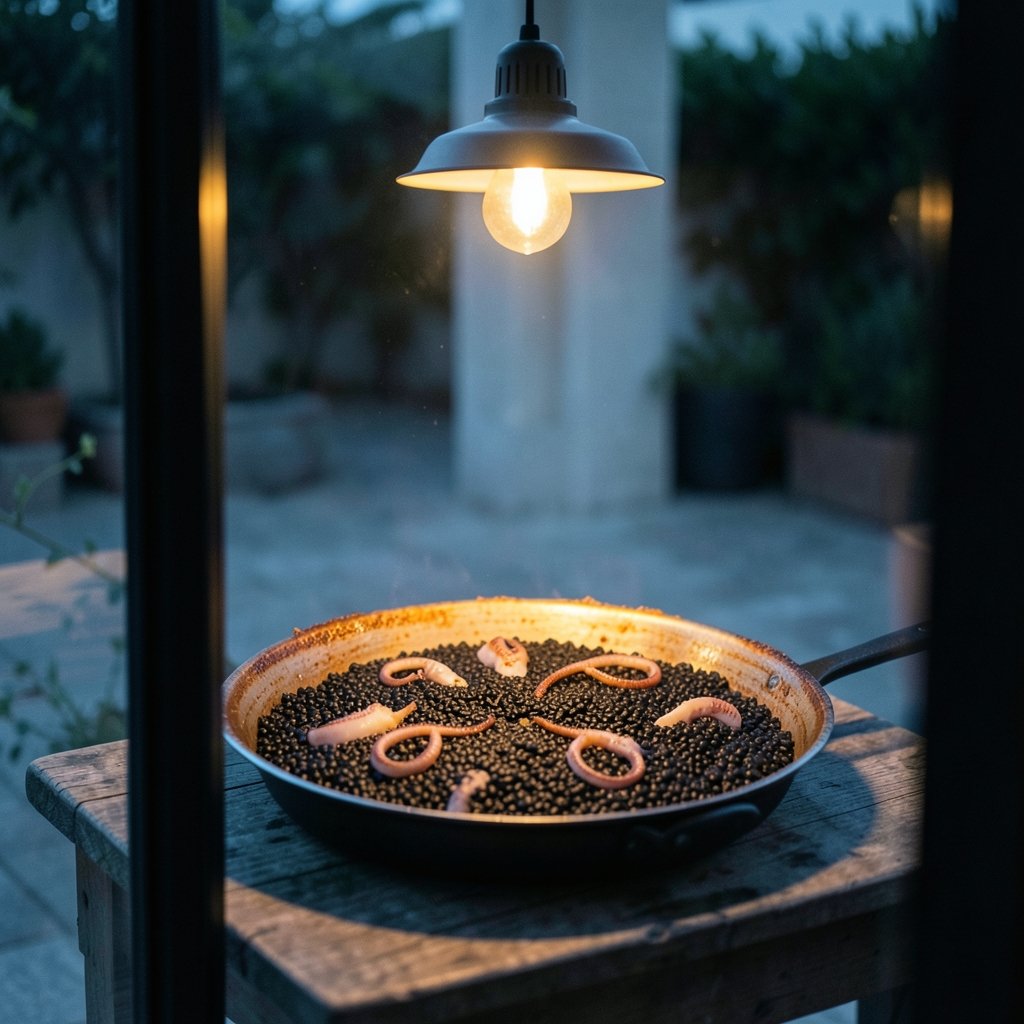
Ordering arroz negro tells you a lot about a restaurant in one plate. The dish cannot hide behind sauce or garnish. It depends on stock quality, rice discipline, and fire control. A kitchen that nails it is usually solid across the menu. A kitchen that serves gray, clumped rice with rubbery squid is telling you something too.
Three things tend to go wrong. First, the rice is overcooked, so the grains collapse into porridge. Second, the ink is used as a gimmick without enough stock and sofrito to support it, so the plate tastes flat and metallic. Third, the socarrat is either missing or burnt, because the cook was afraid of the heat or forgot the pan. When you taste a version that gets all three right, you remember it.
The Signals That Separate Good From Great
Rice and Stock
Look for a menu that names the rice. Bomba and senia are the two most common choices for this dish, and both absorb liquid well without turning mushy. Bomba holds its shape and takes on flavor slowly. Senia is a little more forgiving on heat.
Stock is the invisible ingredient. A proper fish or shellfish stock gives the rice its backbone. If the rice tastes of nothing but salt and ink, the stock was weak or the kitchen leaned on a concentrate.
The Squid or Cuttlefish
Fresh cuttlefish should be tender, not chewy like a tire. It should taste sweet and clean. If it is rubbery, it was either frozen badly, cooked too long, or both. Some kitchens use squid instead of cuttlefish for cost reasons, which is fine if it is handled well, but the texture and sweetness will be different.
The Socarrat
This is the crisp layer at the bottom. A good socarrat is golden-dark, crunchy but not acrid, and comes away from the pan in shards. A burnt one tastes bitter and ruins the last few bites. Ask whether the kitchen finishes the rice on high heat at the end. The answer tells you a lot.
Aioli and Lemon
Many Spanish kitchens serve arroz negro with alioli on the side, and sometimes lemon. The aioli cuts the richness of the ink and the oil. A house-made aioli is a small but telling detail. Squeeze bottles are a warning sign.
What the Menu Says About Sourcing
A menu that mentions the port, the fish market, or the rice variety is usually proud of its ingredients. That pride tends to show up on the plate. You do not need a paragraph, but a line or two is a good sign.
How to Search for It Without Wasting Time
Searching “best arroz negro near me” returns a mix of review sites, maps results, and restaurant pages. The trick is to filter fast.
Start with maps and sort by rating, then read the most recent reviews. Look for photos of the dish itself, not the interior. A photo tells you whether the rice looks loose and glossy or clumped and gray. Recent photos matter more than old ones because kitchens change.
Cross-check with a second source. If a place has strong reviews on maps but nothing on food-specific sites, treat it as unproven. If you are planning a trip or relocating, it helps to read a broader guide on how to vet local businesses before you commit an evening. A short piece on laser hair removal near me is not about food, but it models the same discipline: check recent reviews, verify credentials, and ignore the loudest marketing. The same logic applies when you are choosing between two restaurants a block apart.
If you are searching by neighborhood rather than city, be specific. “Arroz negro near me” plus a district name narrows results fast. And if you are comparing a few options in one evening, a quick read on how to find a good Chinese restaurant fast is a useful reminder that speed and quality can coexist when you know which signals to trust.
A Short Checklist Before You Book
- Check that the menu names the rice variety or the seafood.
- Look for recent photos of the dish, not the dining room.
- Confirm the kitchen serves it for two or more, which usually means it is cooked to order.
- Ask whether the socarrat is intentional.
- Read the last twenty reviews, not the top three.
Common Mistakes Diners Make
The biggest mistake is ordering arroz negro at a place that treats it as a novelty. If the menu lists it next to burgers and pasta, the kitchen is probably not set up for it. Rice dishes like this need a dedicated pan, a steady fire, and a cook who has made it hundreds of times.
Another mistake is expecting it to arrive quickly. Good versions are cooked to order and often take thirty to forty minutes. If it lands at your table in ten minutes, it was likely par-cooked and finished, which rarely produces a proper socarrat.
A third mistake is skipping the aioli because the rice looks rich enough. The aioli is there for balance. Use it.
Finally, do not judge the dish by color alone. Very black rice can mean too much ink, which tastes harsh. The best versions are deep, almost charcoal, but the flavor is savory and round, not bitter.
Comparing the Main Styles
| Style | Typical Seafood | Rice | Serving Note |
|---|---|---|---|
| Valencian | Cuttlefish, sometimes squid | Bomba | Often cooked over fire, socarrat expected |
| Catalan | Cuttlefish, fish stock | Bomba or senia | Frequently served with alioli |
| Andalusian | Mixed shellfish and squid | Bomba | More seafood-forward, sometimes looser texture |
| Restaurant “paella negra” | Shrimp, mussels, squid | Bomba | Broader seafood mix, ink used as seasoning |
The table is a rough guide, not a rulebook. Many kitchens blend styles, and a good cook will tell you what they are aiming for if you ask.
What to Order Alongside
Arroz negro is rich, so pair it with something bright. A simple tomato and onion salad, grilled vegetables, or pickled fish works well. If the restaurant serves fideuà or a dry white wine from the region, those are safe companions. Avoid heavy cream sauces and fried starters, which overwhelm the ink.
For drinks, a crisp white or a dry cava cuts through the oil and salt. If you prefer red, choose something light. The dish is about the sea, not the cellar.
When to Ask Questions
Good restaurants welcome a question about the rice. Ask how long it takes, whether the socarrat is intentional, and what seafood is in it that day. If the server cannot answer, that is information too. A kitchen that cooks this dish regularly will have a ready answer, and often a recommendation about how many portions to order.
If you are dining with someone who has never tried it, order one portion to share and a second dish alongside. The flavor is intense, and a whole plate can be a lot for a first timer.
How to Judge Value
Price is not a reliable signal here. Some of the best versions are in modest neighborhood restaurants, and some of the worst are in places with white tablecloths and a view. Look at portion size relative to price, the freshness of the seafood, and whether the rice is cooked to order. A place that charges a little more but uses real cuttlefish and a proper stock is usually the better deal.
If you are comparing clinics or services in other areas of your life, the same principle applies. A guide like Laser Hair Removal Near Me: How to Choose a Clinic makes the point well: the cheapest option is rarely the best, and the signals that matter are credentials, recent results, and honest answers to direct questions.
A Note on Seasonality and Freshness
Seafood quality shifts with the season and the market. Cuttlefish is generally available year-round, but freshness varies. Ask what came in that day. In coastal cities, the difference between same-day and two-day-old seafood is obvious in the first bite. If you are inland, a kitchen that sources frozen-at-sea cuttlefish and handles it well can still produce a very good plate. How it is treated matters as much as where it came from.
Conclusion
Finding the best arroz negro near you comes down to a handful of signals: rice variety on the menu, fresh cuttlefish, a real stock, and a socarrat the kitchen is proud of. Search with recent photos and recent reviews, ask direct questions, and do not confuse a dramatic black plate with a well-made one. The dish rewards curiosity. Order it at a place that cooks it to order, use the aioli, and pay attention to the bottom of the pan. That is where the best bites are hiding.
Frequently Asked Questions
What is the difference between arroz negro and paella negra?
Arroz negro usually centers on cuttlefish or squid with squid ink and a simpler sofrito, while paella negra more often includes a broader seafood mix such as shrimp and mussels. Many restaurants use the names interchangeably, so ask what is in the dish before you order.
Why is arroz negro black?
The color comes from squid ink, which is stirred into the stock or sofrito. The ink also adds a briny, savory flavor. Too much ink tastes harsh and metallic, so the best versions use it as a seasoning rather than a dye.
What is socarrat and why does it matter?
Socarrat is the crisp, caramelized layer of rice at the bottom of the pan. It adds texture and a toasted flavor that many diners consider the best part of the dish. A good socarrat is dark golden and crunchy, not burnt and bitter.
How long should arroz negro take to cook?
A proper version is cooked to order and typically takes thirty to forty minutes, especially for two or more portions. If it arrives in ten minutes, it was likely prepared in advance and finished quickly, which usually means a weaker socarrat.
Do I need to order it for two people?
Many restaurants require a minimum of two portions because the rice is cooked in a wide pan. Ask when you book. If you are dining alone, some kitchens will make a single portion, but it is worth confirming.
Is arroz negro safe to eat if I am pregnant or avoiding seafood?
The dish contains squid or cuttlefish and fish stock, so it is not suitable for anyone avoiding seafood. Squid ink itself is a normal food ingredient, but anyone with specific dietary concerns should ask the restaurant about ingredients and preparation before ordering.














