A tie bar is a small piece of metal, and it does a surprising amount of work. It holds the tie against the shirt, stops it swinging into your coffee, and adds the one quiet flash of metal that finishes a suit. The question most men ask first is the simplest one: gold or silver? The answer is not about which metal is better. It is about which one suits your skin, your watch, your suit, and the room you are walking into.
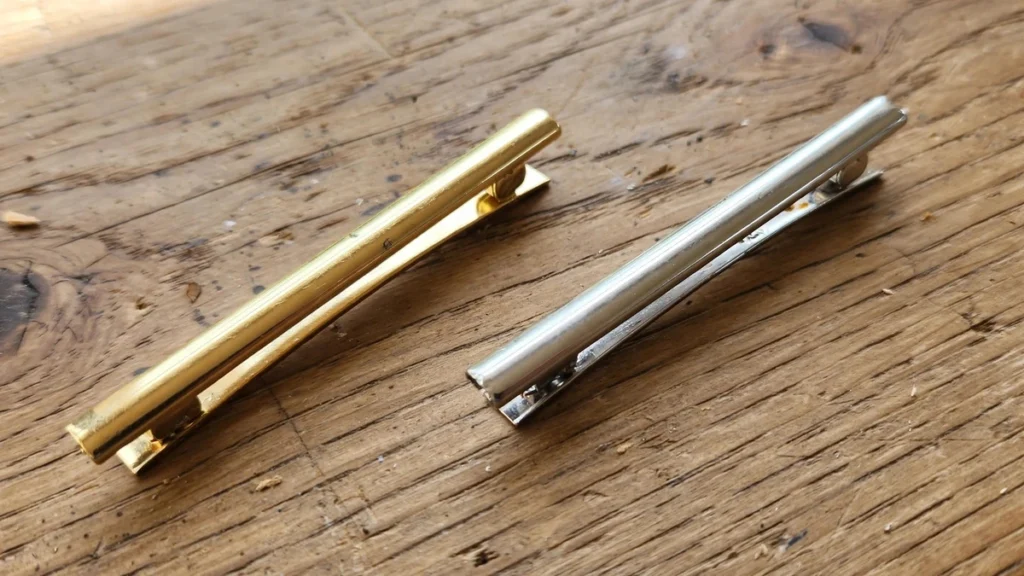
Gold tie bars read warm. They suit warm skin tones, brown and navy suits, and occasions where a little richness is welcome, such as weddings and evening events. Silver tie bars read cool. They suit cool skin tones, grey and black suits, and settings where restraint matters, such as the office and formal business dress. The mistake is choosing by habit, then wearing it with a watch in a different metal, which makes the outfit look undecided.
Below are nine comparisons that matter in 2027, from colour and formality to care, weight, and value over time.
Key takeaways
- Gold reads warm and suits warm skin tones, brown and navy suits, and evening occasions; silver reads cool and suits cool skin tones, grey and black suits, and formal business dress.
- Match your tie bar to your watch, belt buckle, and cufflinks.
- Gold-plated bars cost far less than solid gold, but the plating wears, while solid silver tarnishes and needs polishing.
- A tie bar should span about three quarters of your tie’s width and sit between the third and fourth shirt buttons.
- No tie bar suits every suit, every skin tone, and every occasion, and a cheap bar with a rough clasp can snag silk and leave a mark on a good tie.
What gold and silver tie bars actually are
A tie bar, also called a tie clip or tie slide, is a short bar of metal that fastens across the tie and the shirt placket, holding the tie flat against the chest. Practically, it stops the tie swinging forward when you lean over a desk or walk against the wind. Decoratively, it is the one piece of jewellery most men wear every day.
Gold tie bars are usually made from solid gold, gold-filled metal, or gold-plated base metal. Gold-filled bars have a thick layer of gold bonded to a base metal, which lasts far longer than plating. Gold-plated bars have a thin layer of gold over brass or steel, which looks the part at first but wears through with regular use, especially at the edges and the clasp. Silver tie bars are usually made from sterling silver, which is 92.5 percent pure silver, or from stainless steel finished to look like silver. Sterling silver has a soft shine and develops a gentle patina, while stainless steel stays bright and needs almost no care.
The difference between the two metals is not only colour. Gold is heavier and softer, which means a solid gold bar feels substantial in the hand but can scratch more easily. Silver is lighter and harder, which means it holds a crisp edge but can feel less weighty. Both are worn the same way, clipped across the tie at the level of the third and fourth shirt buttons. The choice is about tone, not function.
How we chose these comparisons and what to look for
Look first at the metal itself. Check whether a gold bar is solid, gold-filled, or gold-plated, because that single detail decides how long it will look good. Gold-plated bars can look identical on day one and tired within a year of regular wear. For silver, check whether it is sterling silver or stainless steel. Sterling silver is a precious metal with real value, but it tarnishes and needs polishing.

Look next at the clasp. A good tie bar has a firm spring clip that grips the shirt and the tie without pinching, and a smooth back that slides on without catching silk. Cheap bars often have a stiff clip that crushes the fabric, or a rough edge that snags a tie the first time you put it on. Try the clip on a shirt you own before you trust it on a good tie. If it leaves a dent in the fabric, or if it slides off too easily, it is not worth the price, however good the metal looks. Our guide to the best silk ties for men is worth reading alongside this one, because a tie bar is only as good as the tie it holds, and a rough clasp can ruin a silk tie in a single wear.
Finally, look at the width and the finish. A tie bar should cover about three quarters of the width of your tie, never the full width, and never wider than the tie. The finish matters too. Polished gold and polished silver are the brightest and most formal. Brushed and matte finishes are quieter, show fewer fingerprints, and suit everyday wear better.
The 9 comparisons that matter in 2027
Colour and warmth against skin
What we like: Gold has a warm, yellow tone that flatters warm skin, olive skin, and tanned skin, and it glows against brown and navy fabrics. Silver has a cool, bright tone that flatters cool and fair skin, and it looks clean against grey, black, and white shirts. What to consider: The wrong metal can wash you out. Best for: Gold for warm undertones and evening wear; silver for cool undertones and daytime wear. Material: Solid gold, gold-filled, or gold-plated; sterling silver or stainless steel. Price range: Gold-plated bars from around $25 to $80; solid gold from around $300; sterling silver from around $60 to $250.
Formality and occasion
What we like: Gold feels richer and more celebratory, which suits weddings, evening events, and festive occasions. Silver feels cleaner and more restrained, which suits the office, interviews, and formal business dress. What to consider: Gold can look too dressy for a plain office day, and silver can look too plain for a black-tie evening. Best for: Gold for weddings and evenings; silver for work and formal daytime events. Material: Polished gold for occasions; brushed silver for the office. Price range: Occasion bars in solid metal from around $150 to $500; everyday bars from around $30 to $120.
Matching a watch and other jewellery
What we like: Matching metals make an outfit look considered. A gold tie bar with a gold watch and gold cufflinks reads as one decision. A silver tie bar with a steel watch and silver cufflinks reads the same way. What to consider: Mixed metals are the most common mistake. Best for: Men who already own a good watch, because the watch decides the metal. Material: Match gold to gold, silver to silver or steel. Price range: A matching set can be built gradually, starting with the bar at around $40 to $200.
Matching a suit and shirt
What we like: Gold works best with navy, brown, charcoal, and cream shirts, where its warmth adds depth. Silver works best with grey, black, and white shirts, where its coolness adds contrast. What to consider: A gold bar on a pale grey suit can look heavy, and a silver bar on a warm brown suit can look cold. Best for: Gold with navy and brown suits; silver with grey and black suits. Material: Warm gold tones for warm fabrics; cool silver tones for cool fabrics. Price range: No price difference for the same design in either metal at the plated level.
Durability and everyday wear
What we like: Solid gold is soft but does not tarnish, so it keeps its colour for decades with gentle care. Sterling silver is harder and holds a crisp edge, and stainless steel is the toughest of all, resisting scratches and dents. What to consider: Gold-plated bars wear through within a year or two of daily use, and sterling silver scratches and tarnishes if it is not polished. Best for: Solid gold or stainless steel for daily wear; gold-plated and sterling silver for occasional wear. Material: Solid gold, gold-filled, sterling silver, or stainless steel. Price range: Stainless steel from around $20 to $60; solid gold from around $300.
Tarnish, care and cleaning
What we like: Gold needs almost no care. A wipe with a soft cloth keeps it bright, and it does not tarnish. Stainless steel is the same. Sterling silver needs more attention, but a silver cloth restores its shine in a minute. What to consider: Sterling silver tarnishes in air, especially in humid rooms, and a neglected silver bar looks dull and grey. Best for: Gold and stainless steel for low-maintenance wear; sterling silver for men happy to polish. Material: Gold, stainless steel, or sterling silver with a polishing cloth. Price range: A silver polishing cloth costs a few dollars; a jeweller’s clean costs around $20.
Weight and how they feel in the cuff
What we like: Gold is dense, so a solid gold bar feels weighty and substantial on the tie, and it stays in place. Silver is lighter, so a sterling silver bar feels comfortable all day and is easy to forget you are wearing. What to consider: A heavy bar can pull a light silk tie forward, and a very light bar can slide out of position on a thick wool tie. Best for: Gold for heavier ties and wool suits; silver for lighter silk ties and summer suits. Material: Solid gold for weight; sterling silver or steel for lightness. Price range: Weight follows metal, not price, at the same size.
Price and value over time
What we like: Gold holds its value. A solid gold bar is worth its weight in gold, and it can be sold or remade. Sterling silver holds some value, and stainless steel holds none, but it costs very little to begin with. What to consider: Gold-plated bars look like gold and cost like steel, but they lose their finish and have no resale value. Best for: Solid gold as a long-term buy; stainless steel as a low-cost everyday buy. Material: Solid gold, sterling silver, or stainless steel. Price range: Stainless steel $20 to $60; sterling silver $60 to $250; solid gold $300 and up.
Resale and longevity
What we like: A solid gold tie bar lasts a lifetime and can be passed on, sold, or melted down and remade. A sterling silver bar lasts decades with care and keeps a modest resale value. A good stainless steel bar lasts years and costs so little that replacement is painless. What to consider: Gold-plated bars have no longevity and no resale value, and a scratched plated bar cannot be restored. Best for: A simple solid bar in either metal, bought once and worn for years. Material: Solid gold or sterling silver for heirloom value. Price range: A simple solid bar from around $150 in silver to $300 and up in gold.
Which tie bar is right for you
Start with your watch. If you wear a gold watch most days, choose a gold tie bar. If you wear a steel or silver watch, choose silver.
Next, look at your suits. If your wardrobe is mostly navy and brown, gold will work harder for you. If it is mostly grey and black, silver will work harder. If you own both, you may want one bar in each metal, and that is a sensible, inexpensive way to cover every outfit. A single good bar in each metal is better than five cheap plated bars in the wrong one. Our guide to the best luxury watches can help here, because the watch is the anchor, and the tie bar should follow it, not fight it.
Finally, think about how often you will wear it. If the bar is for daily office wear, choose stainless steel or sterling silver, which are light, hard-wearing, and easy to keep clean. If it is for weddings and evenings, choose solid gold or gold-filled, which feel richer and look better in photographs.
The caveats that matter
A tie bar is a small accessory, but it can damage a good tie if it is chosen badly. A rough clasp snags silk. A bar that is too wide bends the tie. A heavy bar pulls a light tie forward and leaves a crease.
| Detail | What is known |
|---|---|
| Best skin tone for gold | Warm, olive, and tanned skin; gold adds warmth |
| Best skin tone for silver | Cool and fair skin; silver adds crispness |
| Best suits for gold | Navy, brown, and charcoal; evening and weddings |
| Best suits for silver | Grey, black, and white shirts; office and formal dress |
| Care needed | Gold needs a soft cloth; sterling silver needs regular polishing |
| What wears out first | Gold plating at the edges; silver tarnish if neglected |
| Value over time | Solid gold holds value; steel holds none but costs little |
| What to avoid | Mixed metals, bars wider than the tie, rough clasps on silk |
If you have a metal allergy, check the metal before you buy. Nickel is a common allergen and is used in some cheap plated bars and in some stainless steel. Sterling silver, solid gold, and high-quality stainless steel are usually safe, but a cheap bar with no metal marking is a risk.
Checklist: choosing a tie bar honestly
Use these checks before you buy, and again after a week of wear.
- Check the metal: solid, gold-filled, or plated for gold; sterling silver or stainless steel for silver.
- Check the width: it should cover about three quarters of your tie, never the full width.
- Check the clasp: firm, smooth, and gentle on silk, with no rough edges.
- Match the metal to your watch, belt buckle, and cufflinks before you buy.
- Check the finish: polished for occasions, brushed or matte for everyday wear.
- Wear it at the right height: between the third and fourth shirt buttons, clipped through tie and shirt.
Frequently asked questions
Should a tie bar match my watch?
Yes, whenever you can. Matching metals make an outfit look considered, and a gold bar with a steel watch is the most common small mistake in formal dress.
How wide should a tie bar be?
About three quarters of the width of your tie, and never wider than the tie. A slim bar suits a narrow tie and a modern suit. A wider bar suits a classic tie and a traditional suit.
Where should a tie bar sit?
Between the third and fourth shirt buttons, roughly at mid-chest. Higher looks fussy and pulls the tie. Lower looks careless and lets the tie swing.
Is gold or silver better for a wedding?
Gold is the usual choice for weddings, because it reads warmer in photographs and suits evening light. Silver works well for a daytime wedding in a grey suit.
Does a tie bar damage a silk tie?
It can, if the clasp is rough or the bar is too heavy. Check the back of the bar for sharp edges, and test it on a shirt before you trust it on silk. A smooth, well-made bar used at the right height will not damage a tie, but a cheap bar with a stiff spring can leave a mark in a single wear. Our guide to buying a tie explains how to judge tie quality, which matters here, because a well-made tie resists a clip far better than a thin, loosely woven one.
Can I wear a tie bar without a jacket?
Yes. A tie bar looks good with a shirt and tie alone, and it is arguably more useful without a jacket, because the jacket is not there to hold the tie in place.
The bottom line
Gold and silver tie bars do the same job, and the better choice is the one that suits your skin, your suits, and your watch. Gold adds warmth and suits navy, brown, and evening occasions. Silver adds crispness and suits grey, black, and the office.
One good bar in the right metal is worth more than a drawer of cheap ones. Let the bar do its quiet work: holding the tie still and finishing the suit.