A Guide to Buying a Tie Bar 2027
A tie bar is one of the smallest things you can buy for a tailored outfit, and one of the easiest to get wrong. It costs little, it takes seconds to put on, and yet a bar that is too long, too heavy, or in the wrong metal can make an otherwise careful outfit look careless. The good news is that buying a tie bar is simple once you know what to check, and most of the mistakes are easy to avoid.
The reason a tie bar matters is that a tie is a loose piece of fabric. Without anything holding it, it swings when you walk, lifts when you sit, and dips forward when you lean over a table. A tie bar pins it to your shirt, so it stays flat and in place all day. It also adds a small, deliberate detail to the centre of your outfit, which is why a suit with a tie bar looks more finished than the same suit without one.
This guide walks through nine steps to buying a tie bar in 2027, from deciding when you will wear it to keeping the box and the care instructions. Follow them in order, and you should end up with a bar that fits your tie, matches your jewellery, and lasts for years rather than a season.
Key takeaways
- Buy for the tie you actually wear: the bar should cover about three quarters of the tie’s width and sit between the third and fourth shirt buttons.
- Match the metal to your jewellery and your watch, so gold sits with gold and silver sits with silver.
- Choose a clasp that grips firmly without biting into the fabric, and test it on your own tie before you commit.
- Set a budget before you shop, and compare bars of the same metal and size, because prices vary widely for similar pieces.
- No tie bar fixes a tie that is too long, a knot that is badly tied, or a shirt that does not fit, so sort the basics first.
What buying a tie bar actually involves
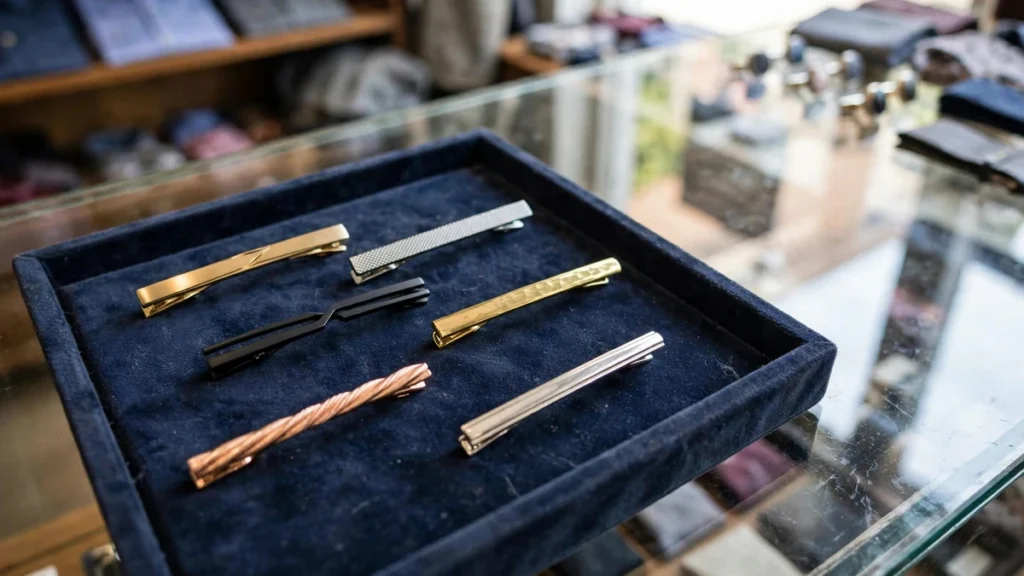
Buying a tie bar involves three decisions, and they are all small. First, the size: how long and how heavy the bar should be for your tie. Second, the metal and finish: gold, silver, rose gold, or black, polished or matte. Third, the clasp: the mechanism that holds the bar to your shirt. Get those three right, and almost any bar you buy will work well.
The size decision matters most, because it is the one people get wrong most often. A bar that is wider than the tie looks clumsy, with the ends sticking out past the edges. A bar that is much shorter than the tie does not hold it properly. The right length is about three quarters of the width of the tie at the point where the bar sits, which is usually between the third and fourth buttons of your shirt.
Weight matters too, especially on a silk tie. A heavy bar on a light tie will slowly drag the tie down through the day, and you will find yourself adjusting it every hour. A light bar stays where you put it. Hold the bar in your hand before you buy it if you can. If it feels heavy for its size, it will feel heavy on your tie.
How we chose these steps and what to look for
Look first at the tie you wear most often. Measure its width at the third button, and write the number down. That measurement is the single most useful piece of information you can take shopping, because it tells you the right bar length in seconds. Most ties worn by women are between 5 and 7 centimetres wide at that point, which means a bar of 4 to 5 centimetres is usually right.

Look next at your jewellery and your watch. A tie bar sits on your chest, close to your face, so its metal should match the metal you wear elsewhere. If your watch is gold and your rings are gold, buy a gold bar. If they are silver, buy silver. This is a small detail, but it is one people notice, even if they cannot say why an outfit looks considered. Our guide on how to wear a necktie covers the same idea for the tie itself, because a tie, a bar, and the rest of your outfit should all work together rather than compete.
Finally, look at the clasp and the finish. The clasp should open and close smoothly, grip firmly, and have no sharp edges. The finish should be even, with no bubbles, rough patches, or thin spots in the plating. A well-made bar feels solid and smooth in the hand, even if it is light. A cheap bar often feels rough or flimsy, and that is a sign it will not last.
The 9 steps to buying a tie bar in 2027
Decide when you will wear it
What we like: Starting with the occasion keeps the choice simple, because work, weddings, and evenings need different bars. What to consider: A bar bought for one occasion may not suit another, so be honest about how often you will wear a tie. Best for: Anyone buying their first tie bar. Cost: Nothing, this step is just thinking. Time needed: A few minutes.
Choose the metal that matches your jewellery
What we like: Matching metals makes an outfit look considered without any extra effort. What to consider: Plated metals wear over time, so solid or well-plated bars last longer than very cheap ones. Best for: Anyone who wears the same jewellery most days. Cost: Around £20 to £70 for a good plated bar. Time needed: A few minutes to check your jewellery box.
Pick a size that sits right
What we like: A bar that covers three quarters of the tie looks neat and holds the tie properly. What to consider: Tie widths vary, so measure your own tie rather than guessing. Best for: Anyone with slim or unusually wide ties. Cost: Nothing, just a tape measure. Time needed: A minute.
Match the finish to the occasion
What we like: A polished finish suits evenings and formal events, while a brushed or matte finish suits daytime. What to consider: Polished metal shows fingerprints, while matte metal hides them. Best for: Anyone who wants one bar to cover most occasions. Cost: No extra cost, finishes are usually priced the same. Time needed: A few minutes of looking.
Check the fastening and how it closes
What we like: A spring clip grips firmly and stays put all day. What to consider: A clasp that is too strong can crease a silk tie, so test it first. Best for: Anyone who wears silk or fine ties. Cost: Nothing to check, just try it on the tie. Time needed: A minute in the shop.
Choose a shape that suits your sleeve
What we like: A slim, straight bar suits most ties and most outfits. What to consider: Curved or decorative bars can look odd on a very slim tie. Best for: Anyone who wants a bar that works with everything. Cost: No extra cost. Time needed: A few minutes of comparison.
Most tie bars are straight, and straight is the safest shape. Curved bars exist, and they can follow the shape of the chest, but they suit wider ties better than slim ones. Decorative bars with a shape or a motif are best saved for occasions, because they draw the eye and can fight with a patterned tie.
Decide between a set and a single pair
What we like: A set gives you two metals for the price of one and a half, and covers more outfits. What to consider: Sets often include a bar you will never wear, so check each piece before you buy. Best for: Anyone starting a collection. Cost: Around £40 to £100 for a set of two. Time needed: A few minutes to compare.
A set usually pairs a gold bar with a silver one, which is useful if you wear both metals. But do not buy a set just because it looks like a bargain. If one of the bars is a shape or a finish you would never choose on its own, you are paying for something you will not wear.
Set a budget and compare like with like
What we like: A clear budget stops you overpaying for a small accessory. What to consider: Very cheap bars often have thin plating and weak clasps, so the cheapest option is rarely the best value. Best for: Anyone shopping online, where prices vary widely. Cost: Around £20 to £70 for a good bar, more for solid silver or gold. Time needed: Ten minutes of comparison.
Compare bars of the same metal, the same length, and the same clasp type. A £25 gold-plated bar and a £60 gold-plated bar may look the same in a photograph, but the more expensive one usually has thicker plating and a stronger clasp. Read the description carefully, and check the returns policy before you buy.
Keep the receipt and the care instructions
What we like: Keeping the receipt makes returns simple, and the care instructions tell you how to keep the finish clean. What to consider: Plated bars need gentle cleaning, so harsh polish can strip the finish. Best for: Anyone buying a bar as a gift or for a special occasion. Cost: Nothing. Time needed: A minute to file the receipt.
Keep the receipt until you have worn the bar at least once, in case the clasp does not suit your tie. Keep the care instructions too, because different finishes need different cleaning. A soft cloth is enough for most bars. Avoid silver dip and abrasive polish on plated metal, because they can strip the plating and leave the bar looking worse than before.
Which tie bar is right for you
Start with the tie you wear most. Measure it, note its fabric, and think about how often you wear it. A heavy wool tie can take a heavier bar, while a silk tie needs a light one. A slim tie needs a short bar, while a wide tie needs a longer one. The tie decides the size, and everything else follows from that.
Next, look at your jewellery and your watch. The metal of your tie bar should match the metal you wear most often, because a tie bar sits close to your face and people notice when the metals clash. If you wear a gold watch, buy a gold bar. If you wear silver, buy silver. If you mix metals, a two-tone bar is the simplest answer. A guide to luxury watches is worth a look here, because the same thinking about matching metals and finishes applies to a watch as to a tie bar.
Finally, be honest about your budget. A good tie bar costs between £20 and £70, and that is enough for a well-made, plated bar that will last for years. Solid silver and solid gold cost more, and they are lovely, but they are not necessary. A well-chosen plated bar, looked after properly, will serve you just as well.
The caveats that matter
The most common mistake when buying a tie bar is buying for the wrong tie. People buy a bar they like the look of, then find it is too long for their tie, or too heavy for their silk, or the wrong metal for their jewellery. Measure your tie first, check your jewellery second, and only then choose the bar. That order saves money and disappointment.
| Detail | What is known |
|---|---|
| Right bar length | About three quarters of the width of the tie at the third button |
| Best length for most women | About 4 to 5 centimetres, depending on the width of the tie |
| Which metal to choose | Match it to your watch and your other jewellery |
| Which clasp is most secure | A spring clip grips best, while a slide bar is lighter and simpler |
| What a good bar costs | Around £20 to £70 for a well-made plated bar |
| What to avoid on silk | Heavy bars and rough clasps, which can drag the tie down or snag it |
| How to check quality | Smooth edges, even plating, and a clasp that opens and closes cleanly |
| What a tie bar does not do | It does not fix a badly knotted tie, a tie that is too long, or a shirt that does not fit |
A tie bar can also damage a tie if it is too tight or too rough. Always test the clasp on the tie before a full day of wear, and check the fabric afterwards for creases or snags. If the bar marks the tie, return it and choose a lighter one with a smoother clasp. A tie bar should hold your tie, not hurt it.
Checklist: buying a tie bar honestly
Use these checks before you buy, and again when the bar arrives.
- Measure your tie at the third button and choose a bar that covers about three quarters of its width.
- Check your jewellery and watch, and buy the metal that matches them.
- Hold the bar in your hand and make sure it is light enough for your tie.
- Open and close the clasp, clip it to your tie, and check that it grips without marking the fabric.
- Run a finger along the edges and make sure there are no sharp points that could snag silk.
- Keep the receipt and the care instructions, and store the bar in its box or a soft pouch.
Frequently asked questions
How much should I spend on a tie bar?
Between £20 and £70 buys a well-made plated bar that will last for years. Cheaper bars often have thin plating and weak clasps, while solid silver and solid gold cost more and are a luxury rather than a necessity.
What size tie bar do I need?
About three quarters of the width of your tie at the third button. For most women, that means a bar of 4 to 5 centimetres, but measure your own tie first, because tie widths vary.
Is a clip or a slide tie bar better?
A spring clip is more secure, because it grips the shirt and the tie together. A slide bar is lighter and simpler, but it can slip on smooth silk. For a busy day or a silk tie, a clip is usually the safer choice.
Can I wear a tie bar with a slim tie?
Yes, and a slim tie is where a tie bar looks best. Choose a short, light bar of about 4 centimetres, so it sits neatly across the tie without sticking out past the edges.
Should a tie bar match my watch?
Yes, as a general rule. Match the metal of the bar to the metal of your watch and your other jewellery, so gold sits with gold and silver sits with silver. If you mix metals, a two-tone bar is a simple way to match both.
Can I give a tie bar as a gift?
Yes, a tie bar makes a good gift, especially for someone who wears a tie often. Choose a classic gold or silver bar in a common length, keep the receipt, and include the box. Our guide to luxury gifts under £1,000 has more ideas for tailored accessories that make thoughtful presents.
The bottom line
Buying a tie bar is simple when you start with the tie. Measure its width, match the metal to your jewellery, choose a clasp that grips without damaging the fabric, and set a budget of £20 to £70 for a well-made bar. A classic gold or silver bar is the safest first buy, and it will cover work, weddings, and most formal occasions.
Keep the receipt, store the bar in its box, and clean it with a soft cloth. A tie bar is a small purchase, but a good one lasts for years, and it is the detail that makes a tailored outfit look finished rather than almost finished.