A body scrub exfoliates the skin on your body. It is usually a thick cream, oil or gel filled with small gritty particles, such as sugar, salt or coffee grounds, massaged over damp skin in the shower and then rinsed away. The particles lift away dead skin cells that build up naturally, leaving skin smoother and softer.
Body skin is easy to neglect: under clothes most of the year, it is usually only noticed when it feels rough or looks dull. Yet the skin on your arms, legs, back and shoulders renews itself just like facial skin. When that slows, in cold weather or with age, dead cells accumulate: rough elbows and knees, dry flakes on the shins, dullness lotion cannot fix.
A body scrub makes the rest of your body care work better: clearing dead skin helps moisturiser sink in, makes skin look more even, and can help with ingrown hairs and rough texture. This guide explains what a body scrub is, the main types, how to use one, and who should skip it.
Key takeaways
- A body scrub is a physical exfoliant: gritty particles in a cream, oil or gel base that lift dead cells away when massaged over damp skin.
- Used once or twice a week, it leaves skin smoother and more even, helps moisturiser absorb better, and can reduce ingrown hairs.
- Sugar scrubs are the gentlest everyday choice, salt scrubs are stronger and suit rough areas, coffee sits in between.
- Use it on damp skin with light pressure, never on broken, sunburnt or irritated skin, and moisturise afterwards.
- A body scrub is for the body only, not the face, and it cannot fix eczema or psoriasis: sore, red or flaking skin needs a dermatologist.
What a body scrub actually is
A body scrub has two parts. The first is the exfoliant: fine particles that loosen dead cells. Sugar is the most common: soft, rounded crystals that dissolve in warm water, so the scrub becomes gentler as you rub. Sea salt is harder and sharper, more effective on thick, rough skin but too harsh for delicate areas. Coffee grounds and jojoba beads are also used.
The second part is the base that carries those particles: usually an oil, butter, cream or gel. Shea butter, coconut oil and sweet almond oil are common. A good base cushions the particles so they polish rather than scratch and leaves moisture behind; the same particles in a thin gel feel much harsher than in a rich butter.
Many scrubs also contain fragrance or extras such as vitamin E or ceramides. Fragrance is the most likely irritant, so reactive skin should choose unscented. The job is mechanical: it removes dead cells from the surface. It cannot rebuild collagen or erase stretch marks.
What a body scrub does for your skin
The most obvious benefit is texture. Dead cells make the surface feel rough and look grey or ashy, particularly on the shins, elbows and knees. Removing them reveals newer skin below, which is smoother and reflects light more evenly, so skin looks brighter at once.
The second benefit is absorption. Dead cells act as a barrier between skin and everything you put on it; once cleared, lotion and oil can reach living skin and work properly. Scrub and moisturiser work best as a pair: the scrub clears the way, the moisturiser seals in the softness. Use one of the best body lotions straight after scrubbing, while skin is still slightly damp.
Scrubbing also helps with ingrown hairs and clogged pores, both less likely when the surface is kept clear. Scrubbing a day or two before shaving or waxing frees trapped hairs and lets the razor glide more evenly. Never scrub immediately before or after hair removal, though: shaving and waxing already create tiny abrasions, and scrubbing over them stings. A scrub does not detox the body, shrink fat or remove cellulite, whatever the label promises.
The main types of body scrub
Sugar scrubs are the best starting point for most people. The crystals are soft, dissolve as you work, and sugar is a natural humectant, drawing a little moisture into the skin as it exfoliates. Brown sugar is slightly softer than white; coarse raw sugar is best avoided except on feet. It suits arms, legs and torso, and is gentlest for first-time users.
Salt scrubs are the stronger alternative: sea salt crystals are harder and keep their edge longer, exfoliating more aggressively, though they can sting on dry, cut or freshly shaved skin. They suit thick, rough areas such as elbows, knees and heels, but even fine salt is too much for sensitive skin.
Coffee scrubs use finely ground coffee, often mixed with sugar and oils: a good weekly treatment for normal skin. Beyond these three are jojoba bead scrubs, among the gentlest exfoliants, scrubs combining fine particles with acids such as lactic or glycolic acid, and grit-free enzyme exfoliants. Avoid plastic microbeads and large particles such as apricot shells, which dermatologists warn can tear the skin.
| Type | Main particle | How gentle | Best for | Watch out for |
|---|---|---|---|---|
| Sugar scrub | Sugar crystals | Gentle | Everyday use | Can feel sticky |
| Salt scrub | Sea salt | Strong | Rough elbows and heels | Stings on cuts |
| Coffee scrub | Ground coffee | Medium | Weekly, normal skin | Can be rough; messy |
| Jojoba bead scrub | Wax beads | Very gentle | Sensitive skin | Too mild for rough skin |
| Sugar and salt blend | Both | Medium | Weekly polish | Harsh on delicate areas |
| Acid body scrub | Particles plus AHAs | Medium to strong | Bumpy skin | Raises sun sensitivity |
| Enzyme exfoliant | Enzymes | Very gentle | Grit-sensitive skin | Slower result |
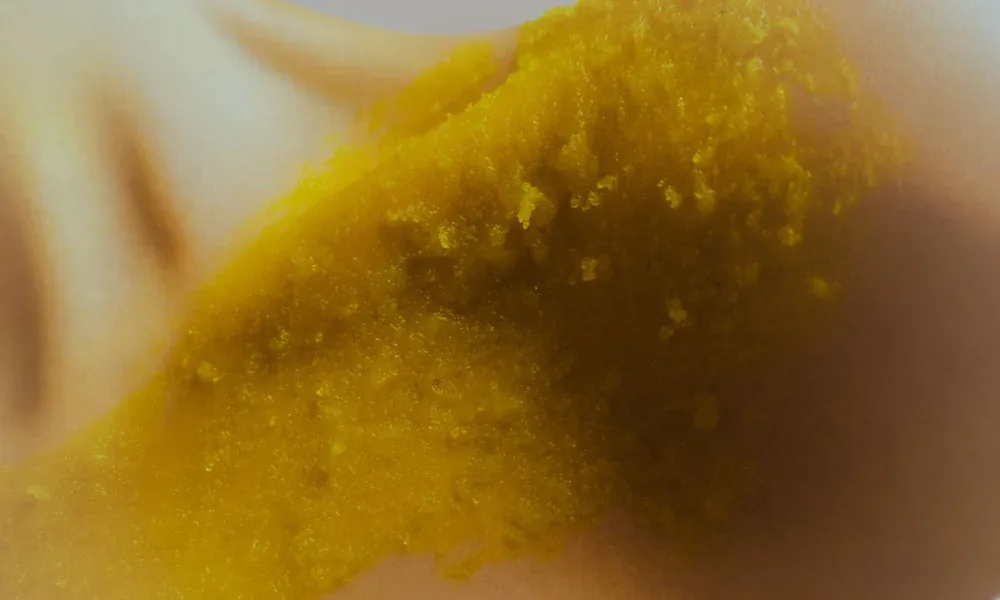
How to use a body scrub, step by step
Wash first. Rinse with warm water, not hot, which strips the skin and invites irritation. Step out of the stream so the scrub does not wash away.
Take about a tablespoon per limb, warm it between your hands, and massage it onto damp skin in slow, small circles, working upwards from the ankles. Use the flat of your hand or a washable glove, and keep the pressure light: you should feel the grains moving, not scratching. Spend no more than thirty seconds on any area, and go gently over the chest and inner arms.
Focus on the elbows, knees, heels and backs of the upper arms; skip anywhere cut, sunburnt, irritated or freshly shaved. Rinse with lukewarm water and pat dry instead of rubbing. Leave skin damp and moisturise at once to lock in the softness. A full body skincare routine built around this order, cleanse, scrub, moisturise, beats any single product on its own. Avoid loofahs, which often harbour bacteria; hands or a washable glove are cleaner.
How often should you use a body scrub?
For most people, once or twice a week is right: enough to keep dead cells from building up without stripping the skin barrier, the thin layer that keeps moisture in and irritants out. Start with once a week, adding a second session after two or three weeks if your skin is happy.
Frequency depends on your skin and on the scrub. Oily or resilient skin can usually tolerate two or three times a week with a gentle formula. Dry skin should stick to once a week or less, and sensitive skin may only manage once every two weeks with a gentle scrub. Red, tight, stinging or flaky skin means you are scrubbing too often or too firmly. Never scrub every day: it removes new cells faster than skin can replace them, leaving it dry and irritated.
Body scrub versus other exfoliators
A chemical exfoliant, such as a lotion with lactic, glycolic or salicylic acid, dissolves the bonds between dead cells without any grit. It works gradually and evenly, suits bumpy skin, and is often gentler over time, though it raises sun sensitivity.
A dry brush, used on dry skin before showering, exfoliates lightly, but is less effective than a scrub and too harsh for sensitive or broken skin. Ordinary body wash does not exfoliate at all: it cleans, and that is its job. If you want a wash that also exfoliates, look for one of the best exfoliating cleansers. A body scrub is not a face scrub: facial skin is thinner, and body scrub particles are far too coarse for it. Keep body products below the neck.
Choosing the right body scrub for your skin
Start with your skin type, not the prettiest jar. Dry or sensitive skin needs a fine sugar or jojoba bead scrub in a rich oil or butter base, unscented if possible, used once a week at most; ceramides, vitamin E or hyaluronic acid help skin recover. Normal or oily skin can pair a sugar scrub for regular use with a salt scrub for rough patches. For bumpy skin or frequent ingrown hairs, look for particles paired with salicylic or lactic acid.
Read the ingredient list before you buy: fine, soft particles are a good sign; large, jagged ones are not. A short list beats a long one full of fragrance and dyes, and price is a poor guide: an expensive scrub is often pricey because of packaging, not particles. Patch-test on the inside of your forearm first. A homemade version is half a cup of fine sugar, a quarter of a cup of sweet almond or olive oil and a teaspoon of honey, used once a week in small batches.
Before you scrub: a quick checklist
- Skin is clean, damp and free of cuts, sunburn or breakouts.
- No shaving or waxing in the last twenty-four hours.
- A scrub made for the body, not a face scrub or a foot file.
- Light pressure, slow circles, thirty seconds per area at most.
- Moisturiser ready to apply while skin is still damp.
- Sunscreen for any exfoliated skin that will see the sun.
Frequently Asked Questions
What is a body scrub used for?
To exfoliate the skin on your body: remove dead cells, smooth rough patches and help prevent ingrown hairs. It also helps moisturiser absorb better. It is a weekly treatment, not a daily cleanser, used in the shower on damp skin.
How often should I use a body scrub?
Start with once a week, rising to twice a week if your skin tolerates it. Oily skin can manage two or three times a week; dry or sensitive skin should stay at once a week or less. Red, tight or flaky skin means scrub less often or go gentler.
Can I use a body scrub on my face?
No. Body scrubs are too coarse for facial skin, which is thinner and more reactive. Use a separate face exfoliant, with finer particles or a mild acid, and keep body scrubs below the neck.
Should I use a body scrub before or after shaving?
Before, but not immediately before. Scrub a day or two ahead of shaving or waxing, when the skin is calm: it frees trapped hairs and lets the razor glide more evenly. Never scrub straight before or after hair removal: shaving and waxing already create tiny abrasions.
Is a sugar scrub or a salt scrub better?
It depends on your skin. Sugar is gentler, dissolves as you rub and draws moisture in, so it suits most people. Salt is stronger and better for thick, rough skin such as elbows, knees and heels, but it stings on cuts or freshly shaved skin. Many people keep both.
Can I use a body scrub if I have sensitive skin or eczema?
If your skin is sensitive, try a gentle sugar or jojoba bead scrub once every two weeks, with light pressure and an unscented formula, stopping if it causes redness. With eczema, psoriasis, infection, sunburn or open wounds, skip scrubs until the skin has healed, and speak to a dermatologist first.
The Bottom Line
A body scrub is a simple product with a simple job: gritty particles in a nourishing base that lift dead skin away, leaving skin smoother, brighter and better able to absorb moisturiser. Used once or twice a week, on damp skin, with light pressure and moisturiser afterwards, it is one of the easiest upgrades to a body care routine. Start with a gentle sugar scrub, keep salt for rough patches, skip it when skin is broken, and never use it on your face.
Note: This article is for general information only and is not medical advice. If you have eczema, psoriasis or severe acne, or you are pregnant or using prescription skincare, speak to a dermatologist before starting a body scrub.