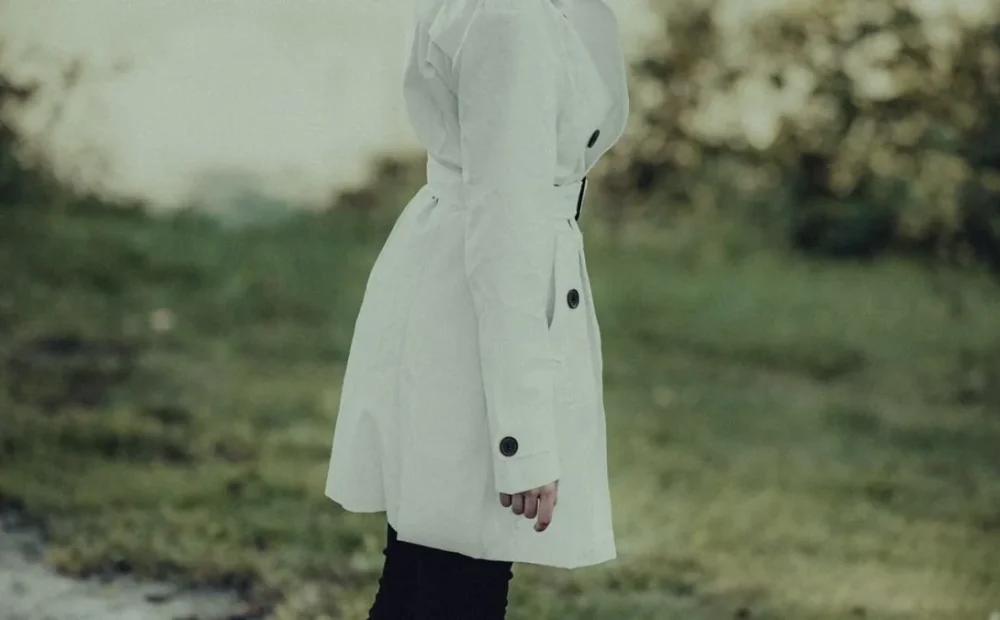
A Guide to Choosing the Perfect Trench Coat
A trench coat is one of the few pieces of clothing that can genuinely last a decade. It has barely changed since: a double-breasted front, a belted waist, a storm flap and a collar that stands up against the weather.
That familiarity is why it is so easy to buy badly. Almost any long beige coat can pass for a trench on a hanger, and the differences only show up in the rain, or a year later when the fabric has gone limp.
Choosing well is not about the most expensive coat or the most famous label. It is about four decisions: the fabric, the length, the fit and the details. This guide walks through each one.
Key takeaways
- Start with the fabric: tightly woven cotton gabardine sheds light rain, breathes and improves with age, while thin polyester copies lose their shape fast.
- Knee length suits most heights; the hem should end at a narrow point of the leg, never at the widest part of the calf.
- Try the coat on over your bulkiest layer, and check the shoulders, the sleeve length, and whether you can raise your arms and sit down without pulling.
- A real trench has working details: a storm flap, a back storm shield, a belt at your natural waist, cuff straps and a collar with a throat latch.
- Choose a colour that connects with the shoes, bags and knitwear you already own.
Start with how you will actually wear it
Before looking at a single coat, think about the three outfits you will wear it with most often. For most people that is jeans and a knit top, work trousers with a blouse, and a dress or a skirt. If a trench does not work with all three, it will not earn regular wear.
Your climate decides the fabric weight. In a mild, rainy spring and autumn, a classic cotton gabardine trench sheds showers and layers over a jumper. In a colder climate, a wool-blend trench or one with a removable quilted lining does the same job.
Fabric first: what the cloth tells you

Fabric is the biggest difference between a trench that lasts ten years and one that looks tired after one season. The classic cloth is cotton gabardine, a densely woven twill invented by Thomas Burberry in the 1870s. Its diagonal weave is packed so tightly that rain beads on the surface, and the cloth softens with age instead of wearing out.
Weight is the quickest quality test you can do. Proper trench cloth is heavy enough that the skirt swings rather than flutters and the belt gathers folds that hold their shape. Lighter fashion-tier trenches look right on the rail and repel very little, and their sprayed water-repellent finish often washes out within a season or two. Polyester blends handle heavy rain well but breathe poorly, while wool blends are warmer and more tailored. Read the composition label before you buy: if it says a polyester-rich blend, assume cotton is a minor part of the cloth.
Check the lining too. A full smooth lining — often rayon, viscose or a polyester blend — helps the coat slide over knitwear and holds its shape. An unlined trench is lighter and cooler, which suits warm weather, but it should still have bound, neatly finished seams inside.
Finding your length
Length changes your proportions more than any other decision. There are four common lengths, and the rule for all of them is the same: the hem should end at a narrow point of your leg, just above or just below the knee, or at mid-calf below the widest part of the calf.
Knee length is the safest first buy. It covers dresses and longer tops while still working with trousers, and it suits almost every height. A short, mid-thigh trench feels lighter and more casual, suits petite frames well, and is the easiest length for cycling, driving and commuting. A midi trench ending at mid-calf gives a long vertical line and looks particularly good on taller frames.
The fit check: shoulders, sleeves, waist and movement
Put the coat on over the top you expect to wear most often — ideally a blazer or a chunky knit, not a thin T-shirt — because a trench that fits over a T-shirt will pull tight over a jumper. The shoulder seam should sit close to the edge of your shoulder, unless the design is intentionally roomy. The sleeve should end near the wrist bone when your arms rest naturally.
Then test movement. Raise both arms overhead, reach forward as if opening a door, and sit down. The back should not pull tight across the shoulders, and the belt should not ride up. Finally, check the waist: the belt should sit at your natural waist, the double-breasted front should close over a blazer without the buttons gaping, and the pockets should not gape when the coat is belted.
Fabric and length at a glance
Once you know your climate and your height, the choice narrows quickly. This table matches fabrics and lengths to the situations they suit best.
| Fabric or length | Best for | Water resistance | Care |
|---|---|---|---|
| Cotton gabardine | Spring and autumn | Good, sheds light rain | Dry clean |
| Polyester blend | Heavy rain | Very good, repellent finish | Machine washable |
| Wool blend | Cold weather | Fair, light showers | Dry clean |
| Cotton-linen, unlined | Warm weather | Light, not heavy rain | Machine washable |
| Short, mid-thigh | Petite frames, driving | Less leg coverage | Slim trousers, ankle boots |
| Knee length | Almost every height | Covers dresses, trousers | Suits, skirts, jeans |
| Midi or maxi | Tall frames | Most coverage | Slim trousers, heeled boots |
Details that separate a real trench from a lookalike
The classic trench is covered in small details, and each one has a job. The storm flap — the extra layer of fabric on the right side of the chest — stops water seeping through the gap where the double-breasted buttons meet, and the storm shield mirrors it across the upper back. Both are extra cloth and extra stitching, which is why cost-cut copies skip them.
The collar should stand up on its own, and a hooked throat latch — the small closure under the right collar point — lets you shut the collar up to your chin in driving rain. Look at the buttons and stitching too: horn or reinforced buttons sewn on tightly will last, while thin plastic buttons that wobble are the first thing to fail.
Colour: the shade that earns its keep
Warm beige, stone, navy, black, olive and soft grey are the easy starting points, and the right one is the shade that connects with the shoes, bags, trousers and knitwear you already own. A warm beige or honey trench is the classic choice and goes with almost everything, from denim to tailoring. Navy is the smartest dark option — softer than black, and it pairs beautifully with brown leather.
Think about your wardrobe before you choose, not after. If you live in black, grey and white, a stone or camel trench will warm the whole outfit up. If you wear a lot of brown leather, navy or olive will sit better than beige. If your wardrobe needs a proper sort-out first, our guide on how to organize your closet will help you see what you actually wear.
Weather, lining and care
A trench is a rain coat first and a fashion piece second, so be honest about how much weather it needs to handle. Cotton gabardine sheds light rain on its own, but it is not a fully waterproof coat. If you regularly walk in heavy rain, look for a polyester blend with a durable water-repellent coating and taped seams, or keep an umbrella with you.
The lining decides how warm the coat feels and how easily it layers. A full smooth lining helps the coat slide over a blazer or a chunky knit, while a quilted or insulated lining adds genuine warmth — some coats have a removable lining, the most flexible option of all. For truly cold weather, though, a trench alone is not enough, and you would be better off choosing from our round-up of the best winter coats for women instead.
Before you buy: the 6-point checklist
Run through this checklist in the fitting room, in order.
- Fabric: the cloth feels smooth, dense and substantial, with a tight diagonal weave, and the label says what you expected.
- Length: the hem ends at a narrow point of your leg — just above or below the knee, or at mid-calf — and the back falls cleanly.
- Shoulders and sleeves: the shoulder seam sits at the edge of your shoulder, the sleeve ends at your wrist bone, and you can raise your arms and sit down without pulling.
- Waist and closure: the belt sits at your natural waist, the front closes over a blazer without gaping, and the pockets do not gape when belted.
- Details: the storm flap and back storm shield are present, the collar stands on its own, the buttons are solid and tightly sewn, and the inside seams are bound.
- Three outfits: you can picture the coat with jeans and a knit, with work trousers and a blouse, and with a dress or a skirt.
Common mistakes to avoid
The most common mistake is buying the wrong size because the coat felt fine over a thin top — always try a trench over the bulkiest layer you will wear under it. The second is choosing a length that lands on the widest part of the leg, usually the calf. The third is falling for a colour that clashes with everything in your wardrobe.
Frequently asked questions
How long should a trench coat be?
For most people, knee length is best: the hem ends just above or below the knee, covering dresses and longer tops while still working with trousers. The hem should end at a narrow point of your leg, never at the widest part of your thigh or calf.
What is the best fabric for a trench coat?
Tightly woven cotton gabardine is the classic and most versatile choice: it sheds light rain, breathes well and improves with age. Polyester blends handle heavier rain and are usually machine washable, but they breathe less well and can pill.
Should a trench coat be tight or loose?
Neither. A trench should fit cleanly through the shoulders, close over a blazer without the buttons gaping, and leave enough room to move your arms freely and sit down without pulling. The belt then defines the waist.
Can you wear a trench coat in the rain?
Yes, that is what it was designed for — cotton gabardine sheds light rain and showers, and a water-repellent finish helps further. In heavy, sustained rain, a classic trench will eventually wet through, so either choose a coated polyester blend with taped seams or carry an umbrella.
What colour trench coat should I buy first?
Warm beige or honey is the classic first choice and works with almost everything, from denim to tailoring. Stone and navy are excellent alternatives if your wardrobe runs cool-toned or you wear a lot of brown leather. If you are still deciding between styles, our round-up of the best trench coats for 2027 shows how each colour works in a full outfit.
How do I care for a trench coat so it lasts?
Read the care label first: most cotton gabardine trenches need spot cleaning or professional dry cleaning, and a water-repellent spray every season or two keeps them shedding rain.
The bottom line
The perfect trench coat is not the most expensive one or the most famous one — it is the one that fits your shoulders, suits your climate, ends at the right point on your leg and works with the clothes you already own.
Take your time, and do not be talked into a coat that fails the checklist. A good trench is one of the best investments in a wardrobe because it is worn for years, in every season but the coldest, and it makes ordinary outfits look finished.
Note: Brands and styles vary, so always try a coat on, or check measurements and returns carefully when buying online.