The luxury electric sedan no longer asks you to choose between indulgence and range. In 2027, the best electric sedans glide silently past petrol flagships, charge in the time it takes to drink a coffee, and wrap passengers in cabins that feel closer to a private lounge than a car interior. The question is no longer whether an electric sedan can be luxurious. It is which one fits the way you live, drive and travel.
This year the field is wider than ever. The range leader now travels more than 500 miles on a single charge, the German flagships have been updated with faster charging and new cabin technology, and a new wave of smaller luxury electric sedans brings genuine 300-plus-mile range to a far lower price. Whether you want a chauffeur-grade limousine, a driver’s car with instant torque, or a discreet daily sedan that happens to be electric, there is a serious contender for you.
This guide stays firmly with electric sedans: four-door cars with a sleek fastback silhouette, battery power only, and a luxury brief. No SUVs, no petrol hybrids. We compare the leading models on range, charging, comfort, technology and value, then finish with a checklist and the questions buyers ask most. Prices and ranges vary by trim, wheels and market. For the wider luxury car landscape, see our guide to the best luxury cars of 2027.
Key takeaways
- The Lucid Air remains the range leader, with the Grand Touring rated at up to 512 miles of EPA-estimated range.
- The updated 2027 Mercedes-Benz EQS is the long-distance comfort pick, with up to 443 miles of range and 800-volt charging at up to 350 kW.
- The refreshed 2027 BMW i7 is the rear-seat limousine of the class, with up to 373 miles of EPA range and a redesigned cabin.
- The Audi A6 e-tron is the best all-rounder, pairing around 402 miles of range with fast charging and a starting price under $70,000.
- New entry points have real range at last: the Mercedes-Benz CLA and Lexus ES electric sedans both travel more than 300 miles on a charge.
Range, charging and the numbers that matter

Three numbers decide how an electric sedan feels in daily life, and only one of them is range. EPA-estimated range tells you how far the car travels on a full charge in standardised testing, but real range moves with speed, weather, wheel size and cabin heating. Treat the headline figure as a best case, and choose smaller wheels if maximum distance matters: on several models, the largest wheels cut tens of miles from the rating.
Charging speed is the number buyers most often overlook. Measured in kilowatts, it decides how quickly a fast charger refills the battery. The fastest luxury sedans in 2027 use 800-volt or 900-volt systems and accept 270 kW or more, adding roughly 200 miles of range in about fifteen minutes at a suitable charger. A sedan limited to 150 kW is not slow, but the same stop takes noticeably longer. Battery size alone does not tell the story either: the Lucid Air travels further than rivals with a similar-sized battery because it uses energy more efficiently, so compare range and charging together, and ask your dealer for the figures on the exact trim and wheels you would buy.
The range leaders: Lucid Air and Mercedes-Benz EQS
If distance is your priority, the 2027 Lucid Air is still the sedan to beat. The Air Grand Touring is EPA-rated at up to 512 miles on its smallest wheels, the longest range of any electric car on sale in the United States, and even the entry-level Air Pure is rated at up to 420 miles. Prices start at $72,400 and rise to $250,500. Its 900-volt architecture supports DC fast charging at up to 300 kW, and the cabin is notably quiet and spacious.
The updated 2027 Mercedes-Benz EQS is the Air’s closest rival and the more traditional choice. The facelift brings a new 800-volt architecture, charging at up to 350 kW, and an EPA rating of up to 443 miles for the EQS 500 4MATIC, which starts at $104,450. Mercedes claims up to around 200 miles of range can be added in ten minutes at a suitable charger. The cabin is hushed and richly equipped, with the refinement that has defined the S-Class for decades. If the Lucid is the efficiency champion, the EQS is the comfort champion.
The driver’s sedans: Porsche Taycan, Audi e-tron GT and BMW i5
Not every luxury electric sedan is built for the rear seat. The Porsche Taycan, starting at $114,250 and rising to $246,050, remains the most engaging car in this class. Its steering, balance and braking feel like a proper sports car, its 800-volt system charges at up to 270 kW, and its range reaches around 318 miles depending on trim. For buyers who love driving, the Taycan is the benchmark every rival is measured against.
The more accessible driver’s choice is the BMW i5, the electric 5 Series, starting at $68,550. It is refined, comfortable and quiet, and independent testing has recorded around 321 miles of range. It may not have the Taycan’s drama, but it is the sedan most buyers in this class will actually live with: easy to drive and polished in every detail.
The flagship limousines: BMW i7 and Mercedes-Benz EQS
At the top of the class sit two full-size flagships built as much for passengers as for drivers. The heavily updated 2027 BMW i7 is the electric 7 Series, and the refresh tackles its old weakness: range. The EPA now rates the i7 at up to 373 miles, roughly 50 miles more than before, thanks to new sixth-generation battery cells with 112.5 kWh of usable capacity. Prices start at $106,200 for the i7 50 xDrive, plus a $1,550 destination charge, rising to $124,700 for the 60 xDrive.
The i7’s cabin has been completely redesigned, with a 17.9-inch central touchscreen, a 14.6-inch passenger display and a pillar-to-pillar Panoramic Vision screen in place of a traditional instrument cluster. Rear passengers get limousine space, and the optional theatre screen turns the back seat into a private cinema.
The Mercedes-Benz EQS earns its place here too: its rear seats, ride comfort and silence make it a natural rival to the i7, and it charges faster. The BMW is bolder and more theatrical inside, the Mercedes more serene and traditional. Either will carry you to dinner, to the airport or to a weekend away in first-class comfort. If your travels take you to Paris, our guide to the best luxury hotels in Paris for 2027 pairs well with an arrival in one of these two.
The smart-value entries: Audi A6 e-tron, Mercedes-Benz CLA and Lexus ES
The good news of 2027 is that you no longer need six figures for a proper luxury electric sedan. The Audi A6 e-tron, starting at $68,095, is one of the most well-rounded luxury EVs on sale: quiet, smooth, generously equipped, and rated at around 402 miles of range in independent testing, with very quick charging from its 800-volt system.
Below that, the redesigned Mercedes-Benz CLA electric is the least expensive car yet tested with more than 400 miles of real-world range. The CLA 250+ starts at $47,950 with an EPA rating of 374 miles, and independent testing recorded 434 miles, adding 100 miles in about seven minutes at a fast charger.
The electric Lexus ES, new for 2026, takes the opposite approach: space, comfort and equipment over outright speed. The ES 350e starts at $48,895 with up to 307 miles of EPA-estimated range, while the dual-motor ES 500e manages up to 276 miles. Its 150 kW charging is slower than the CLA’s, needing about thirteen minutes to add 100 miles, but the ES is bigger, with more standard features.
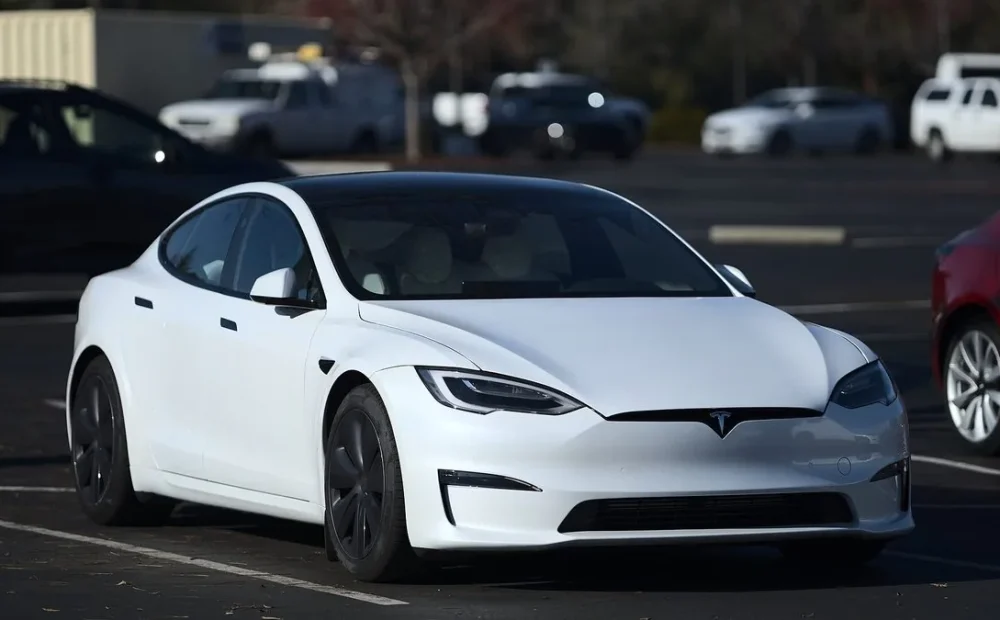
Two more names deserve a mention. The new BMW i3, the electric 3 Series, arrives for 2027 from $62,850 with an EPA rating of up to 468 miles. The hand-built Cadillac Celestiq starts at around $400,000, a hyper-luxury flagship for buyers who want exclusivity as well as silence. The Tesla Model S remains in the mix with up to 402 miles of EPA range and a price from the mid-$70,000s.
The 2027 luxury electric sedans at a glance
| Model | Starting price (approx.) | EPA range (up to) | Max DC charging | Best for |
|---|---|---|---|---|
| Lucid Air | $72,400 | 512 miles | 300 kW | Maximum range |
| Mercedes-Benz EQS | $104,450 | 443 miles | 350 kW | Long-distance comfort |
| BMW i7 | $106,200 | 373 miles | 195 kW | Rear-seat luxury |
| Audi A6 e-tron | $68,095 | 402 miles | 270 kW | Best all-rounder |
| Porsche Taycan | $114,250 | 318 miles | 270 kW | Driving pleasure |
| BMW i5 | $68,550 | 321 miles | 205 kW | Everyday refinement |
| Mercedes-Benz CLA | $47,950 | 374 miles | 320 kW | Value and efficiency |
| Tesla Model S | Mid-$70,000s | 402 miles | 250 kW | Proven long-range EV |
Figures are published ratings and vary by trim, wheels and market.
Your pre-purchase checklist
- Test the exact trim and wheels you would buy: larger wheels can cut tens of miles from the quoted range.
- Check fast-charging speed on your regular routes, and confirm the car can use the chargers near your home and workplace.
- Sit in the rear seats and check headroom, legroom and boot space with your own luggage.
- Get a home-charging quote before you order, including the wall box, installation and any electrical upgrades.
- Compare insurance, servicing and tyre costs across your shortlist; these vary widely between brands.
- Take an extended test drive with a motorway run, a fast-charging stop and a night parked at home.
Frequently asked questions
What is the longest-range luxury electric sedan in 2027?
The Lucid Air Grand Touring, EPA-rated at up to 512 miles on its smallest wheels. The Mercedes-Benz EQS follows at up to 443 miles, and the Audi A6 e-tron and Tesla Model S both reach just over 400 miles.
How long does it take to charge a luxury electric sedan?
At a suitable DC fast charger, the fastest models add roughly 200 miles of range in about fifteen minutes, and a full charge from near-empty typically takes twenty to forty minutes.
Are luxury electric sedans cheaper to run than petrol flagships?
Usually, yes. Electricity typically costs less per mile than petrol, servicing is simpler, and brake wear is lower thanks to regenerative braking. Insurance and tyre costs can be higher, so compare full running costs rather than fuel alone.
Which luxury electric sedan has the best rear seats?
The BMW i7, with limousine space and an optional theatre screen for rear passengers. The Mercedes-Benz EQS is a close second, with a quieter, more traditional take on rear-seat luxury.
Do luxury electric sedans hold their value?
Electric luxury cars have depreciated faster than petrol equivalents, partly because battery and charging technology improves so quickly. A model with the latest 800-volt or 900-volt charging and strong range helps, as does a popular trim and colour.
Should I buy a luxury electric sedan now or wait?
If you need a car now, the 2027 models are a strong generation to buy. If you can wait, the next wave due in 2028 and 2029 promises even faster charging and new flagship designs.
The bottom line
For most buyers, the choice comes down to three cars. The Lucid Air is the range champion and the most efficient electric sedan you can buy. The Mercedes-Benz EQS is the most comfortable way to travel long distances on electricity. And the Audi A6 e-tron is the best balance of range, charging, luxury and price for everyday life. The BMW i7 wins if rear-seat theatre matters most, the Porsche Taycan if driving pleasure does, and the CLA if you want remarkable range for under $50,000.
Whichever you choose, buy the sedan for the journeys you actually make, not the ones you imagine. Check the range on your worst winter day, the charging on your longest regular route, and the rear seats with your family in them. Get those three things right and an electric luxury sedan is not a compromise at all: it is the quietest, smoothest and most modern way to travel. It also pairs well with the details around it, from the watch on your wrist, see our guide to the best luxury watches of 2027, to the hotel at the end of the drive.
Note: Prices, ranges and charging figures are approximate published ratings that vary by trim, wheels and market. Confirm the exact specification and price with your dealer before ordering.