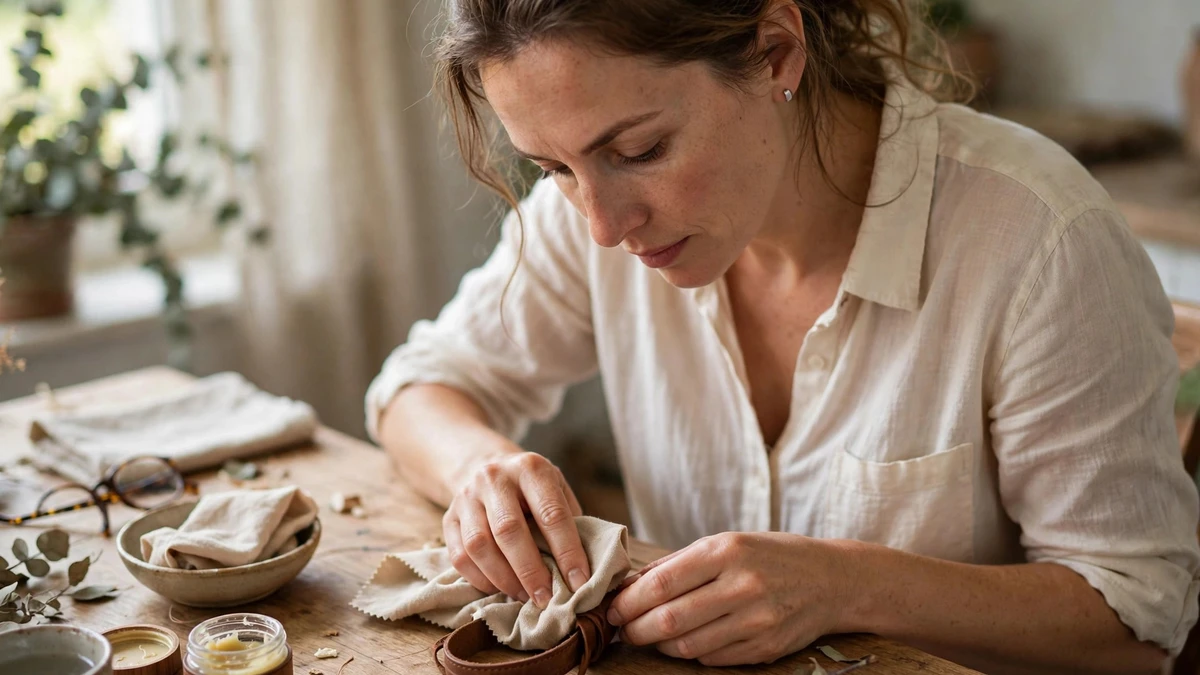

A leather bracelet picks up more dirt than almost any other piece of jewellery. It sits against the skin all day, absorbing sweat, skin oils, dust and sunscreen, and it is rarely cleaned as often as it should be. The result is a bracelet that darkens unevenly, smells faintly stale, and feels stiff or sticky, even though the leather itself is still in good condition.
Cleaning leather is not difficult, but it is easy to get wrong. Too much water will stiffen and warp the leather. Harsh soap will strip its natural oils. A rough brush will scratch the surface. The good news is that a gentle, patient routine, done every few weeks, is enough to keep a bracelet looking and smelling fresh for years, and it takes less than fifteen minutes.
Below are nine steps that cover the full process, from inspecting the bracelet to storing it properly afterwards. Each step explains what to do, what to avoid, how long it takes, and which type of leather it suits, so you can clean with confidence rather than guessing.
Key takeaways
- Clean a leather bracelet every few weeks with a dry cloth, and do a deeper clean only when it looks dull or smells stale.
- Always test any soap or conditioner on a hidden spot first, because leather reacts differently to products.
- Use as little water as possible: a barely damp cloth is enough, and soaking leather will stiffen and warp it.
- Condition lightly after cleaning, because soap removes natural oils and dry leather cracks more easily.
- No cleaner removes deep stains or sun fading completely, and a bracelet that has cracked, split or gone mouldy may be beyond home cleaning.
What cleaning a leather bracelet actually involves
Cleaning leather is a gentle process of removing surface dirt without stripping the oils that keep the material supple. Unlike metal jewellery, which can be soaked and scrubbed, leather needs a light touch. The goal is not to make the bracelet look new. It is to remove the dirt and oils that make it look dull, while leaving the leather itself intact and conditioned.
Most dirt on a leather bracelet is surface dirt: dust, dried sweat, sunscreen and skin oils. This comes off easily with a soft cloth. Deeper marks, such as dark patches where the bracelet touches the skin, need a little more work, usually a small amount of saddle soap worked in gently. Stains from ink, food or chemicals are harder, and some will not come out fully. Knowing the difference saves you from scrubbing a stain that will not move and damaging the leather in the process. Our guide to cleaning gold jewellery shows how different the approach is for metal, where soaking is safe; leather is the opposite, and water is the thing to use least.
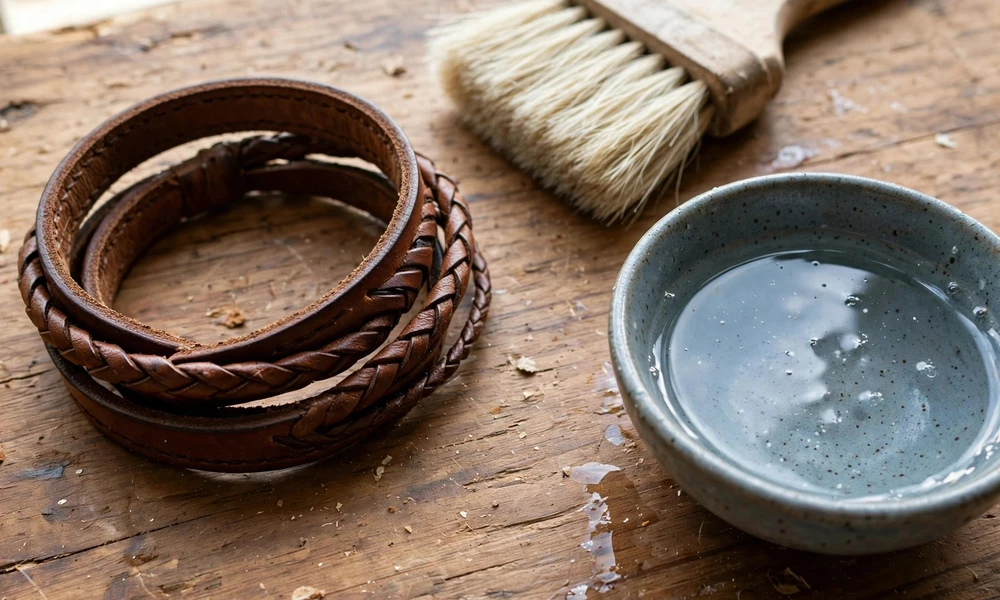
Before you start, gather what you need: a soft, dry cloth, a second clean cloth, a soft-bristled brush, a small bowl of lukewarm water, a little saddle soap or mild leather cleaner, and a leather conditioner. That is everything. You do not need special equipment, and you should not need anything stronger than saddle soap for a home clean.
How we chose these steps and what to look for
Look first at the type of leather you are cleaning. Smooth full-grain and top-grain leather are the most forgiving, and they respond well to saddle soap and conditioner. Suede and nubuck are different materials and should not be cleaned this way; they need a suede brush and a suede-specific cleaner, and water will stain them. Bonded leather is also risky, because the surface layer can peel when it gets damp. If you are not sure what kind of leather you have, treat it as gently as possible and test everything on a hidden spot first.
Look next at the hardware. Clasps, beads and charms need different care from the leather itself. Stainless steel can be wiped with a damp cloth and dried immediately. Brass and silver need a gentle polish, and should be kept dry where they meet the leather, because polish residue can stain it. If the bracelet has beads or a charm, clean around them rather than soaking the whole piece. Our guide to leather bracelets explains the different styles and materials, which helps you work out what your bracelet is made of before you clean it.
Finally, think about timing. A quick wipe after wear takes seconds and prevents most dirt from building up. A deeper clean every few weeks, or whenever the bracelet looks dull or smells stale, is enough for most people. Cleaning more often than that is unnecessary, and it can dry the leather out if you use soap every time.
The 9 steps to clean a leather bracelet
Take the bracelet off and inspect it first
What to do: Remove the bracelet, lay it on a clean surface in good light, and look closely at the leather, the stitching, the clasp and any beads. Note any cracks, loose stitching, stains or areas where the surface is peeling. What to avoid: Do not start cleaning before inspecting, or you may scrub a damaged area and make it worse. Best for: Every bracelet, every time. Time needed: 2 minutes. Standout tip: Photograph any damage before you clean, so you can see whether it changes.
Brush off surface dust with a soft, dry cloth
What to do: Wipe the whole bracelet with a soft, dry cloth, using light, even strokes. Use a soft-bristled brush for braided or textured leather, where dust collects between the strands. What to avoid: Do not use a rough cloth, paper towel or stiff brush, which can scratch the surface. Best for: All leather types, including suede. Time needed: 2 minutes. Standout tip: A dry wipe after every few wears prevents most dirt from building up.
Test any cleaner on a hidden spot first
What to do: Put a tiny amount of saddle soap or leather cleaner on a cotton bud, and test it on the inside of the bracelet or another hidden area. Wait a few minutes and check for darkening, discolouration or stiffness. What to avoid: Do not apply cleaner to the most visible part of the bracelet first, and do not use household soap, washing-up liquid or alcohol-based wipes. Best for: Any bracelet you have not cleaned before. Time needed: 5 minutes. Standout tip: If the test spot darkens slightly and then returns to normal as it dries, the cleaner is safe to use.
Wipe gently with a barely damp cloth
What to do: Dampen a soft cloth with lukewarm water and wring it out until it is barely damp, then wipe the bracelet in light, even strokes. Work in small sections and dry each one as you go. What to avoid: Do not soak the cloth, do not run the bracelet under a tap, and do not leave it wet. Best for: Smooth full-grain and top-grain leather. Time needed: 3 minutes. Standout tip: If the cloth drips when you squeeze it, it is too wet.
Clean the creases and stitching with a soft brush
What to do: Use a soft-bristled brush, such as a clean toothbrush, to work gently into creases, stitching and the gaps in braided leather, where dirt collects. Brush lightly, in the direction of the grain. What to avoid: Do not press hard, do not use a wire or stiff brush, and do not brush against the grain on smooth leather. Best for: Braided, stitched and textured bracelets. Time needed: 3 minutes. Standout tip: Hold the brush loosely and let the bristles do the work, not your hand.
Treat stubborn marks with a little saddle soap
What to do: Dampen a cloth, pick up a small amount of saddle soap, and work it into the mark in small circles. Wipe away the residue with a clean, barely damp cloth, then dry the area immediately. What to avoid: Do not use a large amount of soap, do not leave soap sitting on the leather, and do not scrub hard. Best for: Dark patches, sweat marks and ingrained dirt on smooth leather. Time needed: 5 minutes. Standout tip: Less soap is more: a pea-sized amount is enough for a whole bracelet.
Saddle soap is designed for leather, and it cleans without stripping as aggressively as household soap. Use it sparingly, only where the damp cloth did not work, and always wipe it off fully afterwards.
Condition the leather lightly
What to do: Once the bracelet is clean and dry, apply a small amount of leather conditioner with a soft cloth, rubbing it in with light, even strokes. Leave it to absorb for a few minutes, then buff off any excess. What to avoid: Do not over-condition, do not use oils meant for other purposes, and do not condition suede or nubuck. Best for: Smooth full-grain and top-grain leather after a soap clean. Time needed: 5 minutes. Standout tip: Condition after every soap clean, but not after every wipe, or the leather can become too soft.
Soap removes natural oils along with dirt, and conditioner replaces them. A lightly conditioned bracelet stays supple and resists cracking, while an over-conditioned one feels greasy and attracts dust.
Dry it slowly, away from heat
What to do: Lay the bracelet flat on a clean towel in a cool, shaded place and let it dry naturally. Reshape it gently if it has curled, and leave it until it feels completely dry to the touch. What to avoid: Do not use a hairdryer, radiator or direct sunlight, and do not hang the bracelet while it is damp. Best for: Every bracelet after any wet cleaning. Time needed: 1 to 2 hours, mostly waiting. Standout tip: Patience is the step: heat dries leather fast and makes it stiff and cracked.
Leather dries slowly, and that is fine. Heat is the enemy here. A bracelet dried on a radiator will feel stiff and may crack along the creases, while one dried slowly in the shade will stay supple.
Store it properly straight away
What to do: Once the bracelet is fully dry, store it flat in a pouch, a box or a drawer, away from direct sunlight and humidity. Keep it separate from metal jewellery that could scratch it. What to avoid: Do not store a damp bracelet, do not leave it in a bathroom, and do not pile other jewellery on top of it. Best for: Every bracelet, after every clean. Time needed: 1 minute. Standout tip: A small fabric pouch costs almost nothing and prevents most storage damage.
Storage is part of cleaning, not an afterthought. A clean bracelet left loose in a drawer will pick up dust and scratches within days, while one kept in a pouch will stay clean until you wear it again. Our guide to storing bracelets covers the details, including how to keep leather away from metal pieces that can mark it.
Which leather needs which care
Smooth full-grain and top-grain leather are the easiest to clean. They respond well to a damp cloth, saddle soap and conditioner, and they are the leathers this guide is written for. They can handle occasional light moisture, and they recover well from a gentle clean.
Suede and nubuck need a different approach entirely. Never use water or saddle soap on them. Use a suede brush to lift dirt, a suede eraser for marks, and a suede protector spray to keep them clean. If a suede bracelet gets wet, let it dry naturally and then brush it to restore the nap. Bonded leather is the most fragile of all: it can peel when it gets damp, so clean it only with a dry cloth, and accept that it will not last as long as full-grain leather whatever you do.
Distressed and oiled leather sits in between. It can be cleaned like smooth leather, but it may darken where it gets wet, and conditioner can change its colour. Test everything on a hidden spot, and use less product than you think you need.
The caveats that matter
Home cleaning has limits. It removes surface dirt and light marks, but it will not remove deep stains, sun fading or dye transfer from clothing. It will not repair cracks, splits or peeling, and it will not bring back leather that has dried out completely. If a bracelet has structural damage, a cobbler or leather repair specialist is a better option than more cleaning.
| Detail | What is known |
|---|---|
| How often to clean | Wipe after every few wears; deep clean every few weeks or when it looks dull |
| Water use | Use as little as possible; a barely damp cloth is enough, never soak leather |
| Best cleaner | Saddle soap or a mild leather cleaner, used sparingly, tested on a hidden spot first |
| What never to use | Household soap, washing-up liquid, alcohol wipes, bleach, or rough brushes |
| Suede and nubuck | Never use water or saddle soap; use a suede brush and suede-specific cleaner |
| Drying | Air-dry slowly in the shade; heat from radiators or hairdryers causes stiffness and cracks |
| After cleaning | Condition lightly to replace oils removed by soap; buff off any excess |
| What cleaning cannot fix | Deep stains, sun fading, cracks, splits, peeling, or mould damage |
If a bracelet smells strongly of mould or mildew, it has been stored damp, and cleaning alone may not be enough. Let it dry fully, clean it gently, and store it somewhere dry. If the smell persists after a clean and a few days in dry air, the leather may be damaged beyond home care.
Checklist: cleaning a leather bracelet safely
Use these checks before every clean, and again before you store the bracelet.
- Inspect first: check for cracks, loose stitching and peeling before you touch water or soap.
- Test everything: try any cleaner on a hidden spot and wait a few minutes before using it.
- Keep it barely damp: wring the cloth out until it does not drip, and dry each section as you go.
- Use the right product: saddle soap for smooth leather, a suede brush for suede, and nothing stronger.
- Dry it slowly: air-dry in the shade, away from radiators, hairdryers and direct sun.
- Condition and store: condition lightly after a soap clean, then store flat in a pouch or box.
Frequently asked questions
Can I wash a leather bracelet under the tap?
No. Running water soaks leather through, and a soaked bracelet can stiffen, warp or crack as it dries. Use a barely damp cloth instead, and dry each section as you go.
Can I use soap and water on a leather bracelet?
Only saddle soap or a mild leather cleaner, used sparingly. Household soap and washing-up liquid strip the natural oils from leather and leave it dry and stiff. Always test on a hidden spot first.
How do I get rid of the smell on a leather bracelet?
Wipe it with a barely damp cloth, let it air-dry fully in a shaded place, and store it somewhere dry. A light condition afterwards helps too. If the smell persists after a clean, the leather may have been stored damp for too long.
Can I clean a suede bracelet the same way?
No. Suede and nubuck should never be cleaned with water or saddle soap. Use a suede brush to lift dirt, a suede eraser for marks, and a suede-specific cleaner if needed.
How often should I condition a leather bracelet?
After every deep clean with soap, and otherwise every few months. Over-conditioning makes leather greasy and attracts dust, so use a small amount and buff off any excess.
What should I do if my bracelet gets soaked?
Blot it gently with a dry cloth, reshape it, and let it air-dry slowly in the shade. Do not use heat. Once it is fully dry, condition it lightly to replace the oils the water removed.
The bottom line
Cleaning a leather bracelet is a gentle, patient job, not a deep scrub. Inspect it first, wipe it with a dry cloth, use a barely damp cloth for surface dirt, and save saddle soap for the marks that need it. Test everything on a hidden spot, dry the bracelet slowly away from heat, and condition it lightly afterwards.
Done every few weeks, this routine takes less than fifteen minutes and keeps a good bracelet looking and smelling fresh for years. The leather will still darken and soften with wear, but that is its character, not damage, and a well-cared-for bracelet ages far better than a neglected one.