A cashmere sweater is one of the easiest things in a wardrobe to ruin without meaning to. It does not need a spill or a moth to lose its shape. A hanger left in for a season will do it. A drawer stuffed too full will do it. A fold done in a hurry, with the sleeves crumpled underneath, will leave creases that take weeks to relax out of the fibre.
Folding sounds too simple to need a guide, and that is exactly why so many good sweaters end up looking tired. Cashmere is a soft, fine fibre with very little natural spring. It remembers the shape it is left in. Folded well, it stays smooth, keeps its shoulders square and comes out of the drawer ready to wear. Folded badly, it sags, stretches and pills along the creases.
This guide walks through a fold that works for almost every cashmere sweater, from a fine-gauge crew neck to a chunky winter knit. The steps take about two minutes once you know them, and they protect the sweater through a whole season of storage. The cashmere care guide covers washing and pilling in more depth, while this article focuses on the fold itself.
Key takeaways
- Never hang a cashmere sweater: gravity pulls the shoulders out of shape within weeks.
- Fold on a clean, flat surface with the sweater face down, sleeves folded in first.
- A fold in thirds, then in half, gives a neat rectangle that stacks without crushing.
- Store folded sweaters in a cool, dry drawer or shelf with space to breathe, not packed tight.
- Folding helps, but it cannot undo damage already done: stretched shoulders and moth holes need separate care, and no fold will make a worn-out sweater look new.
What folding a cashmere sweater actually does
Folding is not just about neatness. For cashmere, the fold is the main thing standing between the sweater and gravity. A knitted garment has no structure of its own. When it hangs, its own weight pulls the fibres downward, and the shoulders take the strain first because that is where the hanger presses. Over a season, the shoulders develop points, the body lengthens, and the neckline widens. None of that happens in a drawer, because the sweater rests flat and its weight is spread across its whole surface.
A good fold also protects the surface of the knit. Cashmere pills where fibres rub against each other, and a sweater tossed into a drawer in a ball rubs constantly. A flat, smooth fold keeps the fibres still. It also makes the sweater easy to find and easy to check. A stack of neatly folded sweaters lets you see what you own, which means you wear more of them instead of reaching for the same one on top every time.
The fold itself is simple, and that is the point. There is no special equipment involved, no folding board required, and no technique that takes practice to learn. What matters is doing it the same way every time, so the sweater always ends up in the same shape and the same size.
How we chose these steps and what to look for
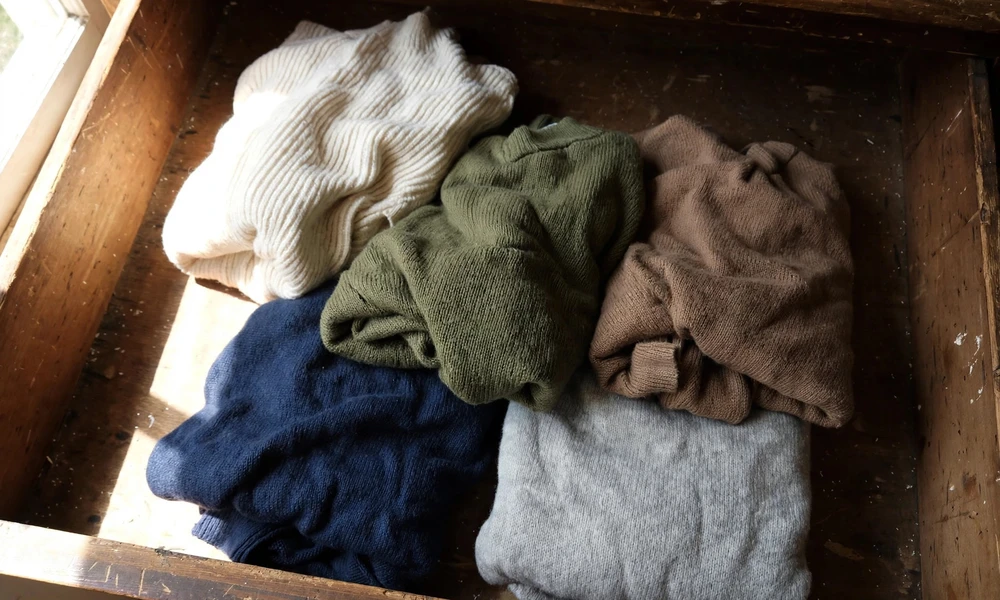
These steps come from the way knitwear is handled in shops and ateliers, where a sweater may sit folded for months before it is sold. The method is the retail fold: face down, sleeves in, body in thirds, then folded in half. It works because it puts the fewest creases into the garment and keeps the thickest parts, the sleeves and the hem, evenly distributed instead of bunched in one place.
What to look for in a good fold is a flat rectangle with smooth edges and no bulges. The shoulders should sit square, the sleeves should lie flat without bunching, and the hem should line up with the top edge.
The steps below assume a standard crew-neck or V-neck sweater. A cardigan follows the same fold, with the buttons or zip done up first so the fronts cannot shift. A very chunky sweater may need a looser fold, since thick knits resist tight creases and spring back. A fine-gauge sweater, by contrast, folds crisply and holds its shape well, so it is the easiest kind to fold neatly.
The 9 steps to fold a cashmere sweater
1. Start with a clean, flat surface
What to Do: Lay the sweater on a clean bed, table or ironing board. Brush off any lint or dust first, and check the pockets and cuffs for anything left inside.
What to Avoid: Do not fold on a rough or dirty surface. A wooden table with splinters or a bed covered in crumbs can snag or soil the knit, and a damp surface can leave a mark that takes a wash to remove.
Best For: Every sweater, every time. Time Needed: 30 seconds. Standout Tip: A white sheet or towel under the sweater makes it easier to see lint and loose threads before you fold.
2. Button and zip it up first
What to Do: If the sweater is a cardigan, do up all the buttons or the zip before you start. This keeps the two fronts aligned so the fold stays even.
What to Avoid: Do not fold a cardigan open. The fronts will slide apart as you fold, the shoulders will end up uneven, and the finished rectangle will be lopsided.
Best For: Cardigans and zip-neck sweaters. Time Needed: 15 seconds. Standout Tip: If a button is loose, sew it on before storing the sweater, since a hanging button can catch on other knits in the drawer.
3. Lay the sweater face down and smooth it flat
What to Do: Place the sweater face down with the back facing up, and run your hands gently from the centre outward to smooth out wrinkles. The shoulders should sit flat and the hem should lie straight.
What to Avoid: Do not stretch the knit while smoothing. Pulling the fabric sideways can distort the shape, and cashmere that has been stretched often does not spring fully back.
Best For: All sweaters, especially fine-gauge knits that wrinkle easily. Time Needed: 20 seconds. Standout Tip: Smooth with the flat of your palm, not your fingertips, to avoid pressing marks into the fibre.
4. Fold the sleeves in toward the centre
What to Do: Fold each sleeve straight across the back of the sweater, so the cuff sits near the opposite side seam. The sleeves should lie flat and parallel, not crossed over each other.
What to Avoid: Do not fold the sleeves at an angle or let them hang over the edge. An angled sleeve creates a diagonal crease that shows when the sweater is worn, and a sleeve left hanging gets caught when the sweater is stacked.
Best For: Long-sleeved sweaters of every gauge. Time Needed: 20 seconds. Standout Tip: For very long sleeves, fold the cuff back once so it sits within the width of the body.
5. Fold the body in thirds
What to Do: Fold one side of the body in to the centre, then fold the other side over it, so the sweater is one third of its original width. The side seams should sit close to the centre line.
What to Avoid: Do not fold the sides in unevenly. If one side is wider than the other, the finished rectangle will be crooked and the stack will lean.
Best For: Standard crew necks and V-necks. Time Needed: 20 seconds. Standout Tip: Aim for the folded width to match the width of the drawer or shelf it will sit on, so the stack fills the space neatly.
6. Fold it in half once more
What to Do: Bring the hem up to meet the shoulders, folding the sweater in half. Smooth the fold gently with your palm so the edge is soft rather than sharp.
What to Avoid: Do not press the fold hard or iron it. A sharp crease pressed into cashmere can become a permanent line, and heat from an iron can damage the fibre.
Best For: Storage in drawers and on shelves. Time Needed: 15 seconds. Standout Tip: For a chunky sweater, fold it in half loosely rather than tightly, since thick knits resist a tight fold and will spring open anyway.
7. Smooth the edges and check the shape
What to Do: Run your hands over the folded sweater, smoothing the edges and checking that nothing is bunched inside. The finished shape should be a flat rectangle with even thickness throughout.
What to Avoid: Do not leave a sleeve or cuff trapped in the middle of the fold. A trapped cuff creates a bulge that presses a crease into the layers above and below it.
Best For: The final check before storage. Time Needed: 15 seconds. Standout Tip: Turn the folded sweater over and check the other side too, since a bulge is often easier to feel than to see.
8. Choose the right place to store it
What to Do: Place the folded sweater in a clean, dry drawer or on a shelf, with a little space around it. Put heavier sweaters at the bottom of the stack and lighter ones on top.
What to Avoid: Do not pack the drawer so full that you have to force sweaters in, and do not store cashmere near a damp wall or in a plastic bag that traps moisture.
Best For: Seasonal storage and everyday drawers alike. Time Needed: 30 seconds. Standout Tip: A cedar block or lavender sachet in the drawer helps keep moths away without the smell of mothballs.
9. Refold it every few weeks
What to Do: Every few weeks, take the sweaters out, shake them gently, and refold them with the fold in a slightly different place. This stops a crease from setting permanently.
What to Avoid: Do not leave a sweater folded in exactly the same place for a whole season. The crease will deepen over time, and a deep crease in cashmere can take a wash and a steam to relax out.
Best For: Sweaters stored for a season or longer. Time Needed: 2 minutes per sweater. Standout Tip: Refolding is also a good moment to check for moths, since early signs are easiest to catch when the sweater is out of the drawer.
Which fold suits your storage
The fold above is the standard retail fold, and it suits most storage. But the best fold depends on where the sweater will live. A shallow drawer suits a fold in half, as described, because the rectangle is compact and the stack stays low.
For travel, a roll often works better than a fold. Rolling a cashmere sweater puts fewer sharp creases into the knit and fits the shape of a suitcase. Lay the sweater face down, fold the sleeves in, then roll it loosely from the hem to the shoulders. Place it in the suitcase with the roll upright so it does not get crushed under heavier items. A rolled sweater will have soft curves rather than straight lines when you unpack it, and those relax quickly once the sweater is hung for an hour or laid flat overnight.
Whatever the storage, the rule is the same: the sweater should rest flat, with its weight spread out, and nothing should press on it unevenly. What a cashmere sweater is matters here too, because the fibre is what makes the fold necessary in the first place. Cashmere has almost no elasticity compared with wool, so it holds whatever shape it is left in for far longer.
The caveats that matter
| Detail | What is known |
|---|---|
| Fold vs hang | Hanging stretches cashmere shoulders out of shape within weeks; folding keeps the weight spread flat. |
| Sleeves | Sleeves folded at an angle leave diagonal creases that show when the sweater is worn. |
| Storage surface | A clean, dry drawer or shelf is best; damp walls and sealed plastic bags trap moisture and invite mildew. |
| Cedar and lavender | Cedar blocks and lavender sachets help deter moths; mothballs work too but leave a strong smell that is hard to remove. |
| Moth risk | Moths eat cashmere and other animal fibres; check stored sweaters every few weeks and clean the drawer before the season starts. |
| Creases | A fold left in the same place all season can set permanently; refolding in a different place stops this. |
| Stacking height | Keep stacks to four or five sweaters so the ones at the bottom are not crushed and creased. |
| Travel fold | Rolling suits travel better than folding, since a roll leaves soft curves that relax quickly instead of sharp lines. |
Checklist: folding a cashmere sweater honestly
- Work on a clean, flat surface and brush off lint before you start.
- Button or zip cardigans so the fronts stay aligned.
- Lay the sweater face down, smooth it flat, and fold the sleeves in straight.
- Fold the body in thirds, then in half, and smooth the edges gently.
- Store in a cool, dry drawer or shelf with space to breathe, heavier sweaters at the bottom.
- Refold every few weeks with the crease in a different place, and check for moths while you do it.
Frequently asked questions
Should I ever hang a cashmere sweater?
No, not for storage. A hanger puts all the weight of the sweater on two small points at the shoulders, and cashmere stretches under that pressure. If you need to air a sweater out, hang it for an hour or two at most, then fold it away. Padded hangers are gentler than wire ones, but they still leave the sweater hanging, so they are not a solution for a whole season.
Can I fold a cashmere sweater the same way as a cotton one?
The basic fold is the same, but cashmere needs a gentler hand. Cotton springs back from a crease, while cashmere holds it. Smooth the fold with your palm rather than pressing it hard, and avoid ironing a crease into the knit. The steps are the same; the pressure is what changes.
How do I fold a cashmere sweater for travel?
Roll it instead of folding it. Lay it face down, fold the sleeves in, then roll loosely from the hem to the shoulders. A roll leaves soft curves rather than sharp lines, and those relax within an hour of unpacking. Pack the roll upright in the suitcase so heavier items do not crush it flat.
What should I put between folded sweaters?
Nothing is needed between layers, but a sheet of acid-free tissue paper between sweaters can help if you are storing them for a long time. The tissue stops fibres from catching on each other and makes the stack easier to separate.
My folded sweater has creases. How do I remove them?
Hang the sweater in a steamy bathroom for twenty minutes, or hold a steamer a few inches away and let the steam relax the fibres. Do not press the crease with an iron, which can flatten the knit and leave a shine. If the crease is deep, a gentle hand wash followed by drying flat will usually remove it.
How many cashmere sweaters can I stack?
Four or five is a sensible limit. More than that and the weight of the stack starts to crush the sweaters at the bottom, pressing creases into them that are hard to remove. If you own more, split them into two stacks or use a second shelf. Lighter sweaters should always sit on top of heavier ones.
The bottom line
Folding a cashmere sweater well takes two minutes and saves a garment that can cost several hundred pounds. The method is simple: face down, sleeves in, body in thirds, fold in half, and store it flat in a cool, dry place. The details matter more than the effort. Smooth the knit instead of stretching it, keep the fold loose rather than pressed, and move the crease every few weeks so it never sets.
A cashmere sweater is an investment, and why cashmere sweaters are worth the price comes down to how long they last when they are looked after. A sweater that is folded, stored and refolded properly will look good for years, while one left on a hanger or crushed in a drawer will not survive a single season in good shape. The fold is a small habit, but for cashmere it is the habit that matters most.