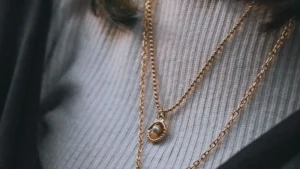
Layered necklaces look effortless in photographs and feel like a small disaster by lunchtime. By midday the chains have drifted together, twisted into a knot at the back of the neck, and the pendant is hiding behind a collar. Most women blame the jewellery. Usually, the jewellery is fine: the stack was built in the wrong order, at the wrong lengths, with chains that were always going to fight each other.
Tangling is not bad luck. It is physics. Two chains that hang at the same level rub against each other every time you move your head, lean forward, or reach for something. Fine chains are the worst offenders because they are light enough to drift and thin enough to slip through each other’s links.
This guide is about the wearing, not the storing. It covers choosing pieces that stay apart, spacing lengths, the order to put necklaces on, the small tools that help, and how to undo a tangle safely.
Key takeaways
- Space each necklace at least two inches, about five centimetres, from the next, so every chain hangs in its own space.
- Put the longest necklace on first and work up to the shortest, fastening each clasp before the next layer goes on.
- Mix chain weights and textures rather than stacking several fine chains of the same length, and let one heavier piece anchor the stack.
- A necklace spacer bar or a layered clasp is the most reliable fix for chains that will not stay separated.
- No method makes every combination tangle-proof, and very fine chains, heavy pendants on delicate links, and knitwear will still catch sometimes.
What this guide actually covers
Layering jewellery without tangling it means wearing two or more necklaces at once and having them still sit in separate lines at the end of the day. This guide is concerned with the whole day: walking, sitting, leaning over a desk, taking a coat on and off.
How to choose pieces that stay apart
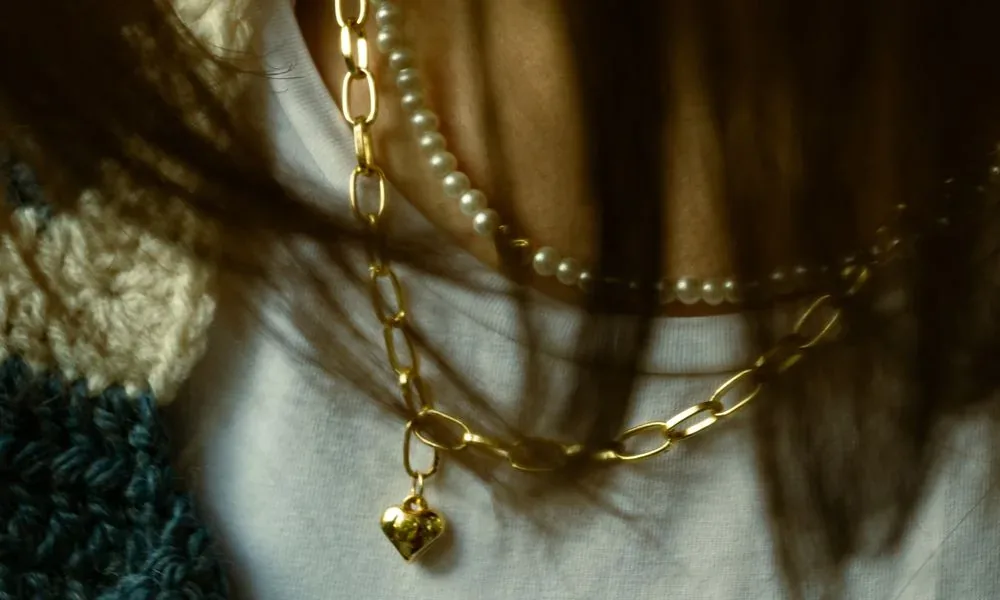
Most tangles are decided before a necklace ever touches the neck, at the moment of choosing. Three fine cable chains of the same length will tangle whatever you do with them, because they occupy the same space, weigh almost nothing, and have nothing to hold them apart. The first rule of a tangle-free stack is a rule of selection: never build a stack from pieces that are all the same.
Vary the length first. A choker at 14 to 16 inches, a princess length at 18 inches, and a matinee at 20 to 24 inches gives each chain its own territory on the chest. The classic rule is a gap of at least two inches between each necklace. Two chains one inch apart will spend the day sliding into each other; two inches apart, they have room to move without meeting.
Vary the weight and the texture second. A heavier chain, such as a curb, rope or Figaro link, resists drifting and acts as a quiet barrier between finer pieces. If you love delicate chains, anchor them with one substantial piece, and let the heaviest piece sit at the longest length, where its weight pulls downward and keeps the stack settled. Think of pendants as weights, not just decoration: a heavy pendant on a very fine chain pulls that chain down into the layer below it, which is where tangling starts. A statement necklace works well as the longest layer for exactly this reason.
Why chains tangle in the first place
A chain is a series of small loops, and a loop can pass through another loop. When two chains hang close together, every movement of the head or shoulders moves them relative to each other. The links catch, one slips through the other, and a twist forms; twist enough times and the twist becomes a knot. Three things speed it up: similarity of length and weight, lightness, and the clasp, which is heavier than the chain and slides to the front of the neck. Knitwear makes it worse, because a fine chain catches on loops of wool.
The order to put them on
The order matters more than most people expect, and it is the cheapest fix in this guide because it costs nothing. Lay the chosen necklaces flat on a clean surface, shortest to longest, before any of them goes on. Check each clasp while they are still on the table.
Put the longest necklace on first. Drape it around the neck, fasten it, and let it settle. Then add the next longest, and the next, working upward until the shortest piece goes on last. Fasten every clasp before the next necklace goes on, and never try to fasten a clasp with two other chains already around the neck. That is the moment most tangles begin, because the hands are working blind, close to the other chains, and a loose end slips through a neighbour. Then do a movement check: turn your head, lean forward, and walk a few steps. If two chains catch during that check, they will do it all day. For a stack of three, a reliable combination is a 16-inch choker, an 18-inch pendant, and a 22-inch chain with a small charm.
Spacer bars, layered clasps and other small tools
When spacing and order are not enough, a small piece of hardware does what technique cannot. A necklace spacer bar, sometimes sold as a layering clasp or detangler, is a slim bar with two or three hooks that clips onto the back of several chains and holds them apart at a fixed distance. The chains still hang at their different lengths at the front, but at the back they are held in parallel lines, which stops them from twisting around each other.
Spacer bars come in two, three and four-strand versions. Buy the one that matches the number of necklaces you usually wear, in the same metal tone as the stack so it disappears against the skin. The bar sits at the nape of the neck, so it is invisible from the front. The only real drawback is comfort: a rigid bar can feel odd for the first few wears, and it does not suit very short chokers. The alternative is a layered clasp, a single clasp with several rings that replaces the individual clasps of the stack. A silicone stopper bead near the clasp limits how far it can slide, and a short extender can create a missing two-inch gap. Our guide to gold jewellery for everyday wear covers which pieces are sturdy enough for daily layering.
Undoing a tangle without breaking the chain
Even a well-built stack tangles sometimes, and the way you undo it decides whether the chain survives. The first rule is to take the necklaces off before attempting anything. Trying to untangle chains while they are still around the neck pulls the knot tighter and risks snapping a fine link. Remove the stack, lay it flat on a clean, hard surface, and work in good light.
Start by finding the ends. A knot is usually a loop that has passed through another loop, and the way out is to reverse that path, not to pull. Hold the clasp of one chain and follow it gently until you reach the tangle, then work the loop back through the opening it came from. A straight pin or sewing needle helps: slide the point into the centre of the knot and wiggle it gently to loosen the loops. Never pull both ends of a knotted chain at once; that is how fine chains kink, and a kinked chain will snap at the kink sooner or later.
What can go wrong, at a glance
Not every combination is worth fighting for. Some stacks are tangle-prone by design.
| Problem | What causes it | Fix that works |
|---|---|---|
| Chains twist by midday | Lengths less than two inches apart | Re-space lengths or add an extender to the longest layer |
| Clasps migrate to the front | Clasp heavier than the chain | Spacer bar, layered clasp, or silicone stopper bead |
| Fine chains knot together | Several light chains of the same style | Separate them with a heavier chain or a pearl strand |
| Pendant sinks into the layer below | Heavy pendant on a fine chain | Move the pendant to a longer, stronger chain |
| Chains catch on knitwear | Fine links snagging on wool loops | Wear smoother, heavier chains over knits; check after removing a coat |
| Stack looks like one thick line | All chains the same length and tone | Vary lengths, textures and metals so each layer reads separately |
| Necklace comes undone in a stack | Worn or loose clasp | Check clasps monthly; prefer lobster clasps over tired spring rings |
| Skin irritation under layers | Metal sensitivity or trapped moisture | Wear fewer layers, choose hypoallergenic metals, remove at night |
Checklist: before you leave the house
- Lengths are spaced at least two inches apart, measured clasp to clasp, and the stack is three necklaces or fewer for a normal day.
- Each clasp is checked and fastened, with the longest necklace put on first and the shortest last.
- One heavier piece anchors the stack, and heavy pendants sit on the longest, strongest chain.
- A spacer bar or layered clasp is in place for long days, travel, or any stack with more than two fine chains.
- The movement check is done: head turns, a lean forward, and a few steps, with no catching or twisting.
- Necklaces are taken off one at a time at the end of the day, shortest first, and laid flat rather than dropped in a heap.
Frequently asked questions
How many necklaces can you layer without tangling?
Three is the practical maximum for most people on most days, provided the lengths are spaced at least two inches apart and the weights are varied. Four works when one piece is substantial and a spacer bar is used.
Does a necklace spacer actually stop tangling?
Yes, for the most common cause, which is chains twisting around each other at the back of the neck. A spacer bar or layered clasp holds the chains in parallel lines behind the neck, so they cannot cross.
Why do my necklaces always tangle at the back?
Because the clasps are the heaviest part of a fine chain, and they slide to the lowest point they can reach, which pulls the chains together at the nape. A spacer bar fixes this directly, and a silicone stopper bead near the clasp helps too.
Can you layer necklaces over a jumper?
Yes, but choose smoother, heavier chains for knitwear days, because fine links catch on wool loops. Keep the stack to two or three pieces, space the lengths generously, and check the chains after taking a coat on or off, which is when most snagging happens.
What is the best clasp for layered necklaces?
A lobster clasp is the most secure common choice, because it snaps shut positively and holds under the extra weight of a stack. Spring rings loosen over time and are more likely to come undone inside a stack. Magnetic clasps can detach under strain, so they are a poor choice for layering.
Should fine chains and diamond necklaces be layered at all?
Fine chains can be layered, but they need a heavier piece between them and a spacer at the back, or they will knot. Diamond necklaces deserve extra care: a diamond pendant on a fine chain should sit as the shortest layer, where it moves least, or on its own. Our guide to the best diamond necklaces for 2027 covers which settings suit daily wear.
The bottom line
Layering jewellery without tangling it comes down to three decisions made before you leave the house: lengths spaced at least two inches apart, weights and textures varied on purpose, and the longest necklace put on first. Everything else, the spacer bar, the clasp check, the movement test, supports those three decisions. Get them right and a stack of three necklaces will still be sitting in separate lines at the end of the day.
Start with the pieces you already own. Lay them out, measure them, and find the combination with the widest gaps between lengths.
Note: This guide covers everyday costume and fine jewellery. Very fine chains, antique pieces, and necklaces with fragile settings need gentler handling, and a jeweller should check any piece that has kinked, snapped, or lost a clasp before it is worn again. If a metal irritates your skin, stop wearing it and speak to a dermatologist or a jeweller about hypoallergenic alternatives.
Meet our experts
BrassSmile’s fashion editors write our jewellery and style guides from hands-on testing and published styling advice, and we update them when new pieces, clasps and layering tools appear. We do not invent tester names or results.
Why trust BrassSmile
We test the advice in our guides against real pieces worn through real days, and we say plainly where a method has limits. Where a claim rests on a brand or a published source, we name it.
Sources
General layering and necklace-length guidance from published jewellery styling guides, including Pexels photography of layered necklaces, and BrassSmile’s own jewellery guides.