Planning a carrot farm escape is simpler than planning most farm holidays, because the crop sets the calendar. Carrots are pulled before the first hard frost, the work starts at dawn, and the week follows the field rather than a timetable. Your job is to pick a region, land inside its pulling window, and arrive ready to work a little and eat very well.
The nine steps below cover the whole trip, from choosing a colour of carrot to getting home with a jar of pickles and a notebook full of recipes. None of them is complicated. The mistakes people make are the simple ones: booking a beautiful farmhouse a month after the harvest, arriving in city shoes, or forgetting to tell the kitchen about a gluten-free table until the first supper. All of those are avoidable, and this guide is built to avoid them.
What follows is a practical plan for a week on a working carrot farm in 2027. It assumes you want to join the harvest, not watch it from a veranda, and that you would rather eat what the field produced than eat out every night. If that sounds like your kind of week, the steps below will get you there.
Key takeaways
- Count back from the first frost: a carrot farm outside its harvest window is a farmhouse with nothing to do.
- Pick your region by soil and season, not by photographs: deep sandy ground and the right dates matter most.
- Arrive through the nearest town, not the nearest city, and let the farm arrange the last leg.
- Pack for soil, not for show: sturdy boots, gloves and clothes you do not mind getting muddy.
- Carrots are naturally gluten-free, but farm kitchens bake wheat bread daily, so settle the bread question before you pay.
What a carrot farm escape involves
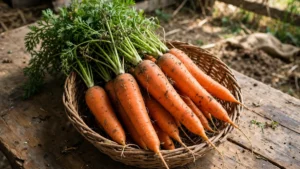
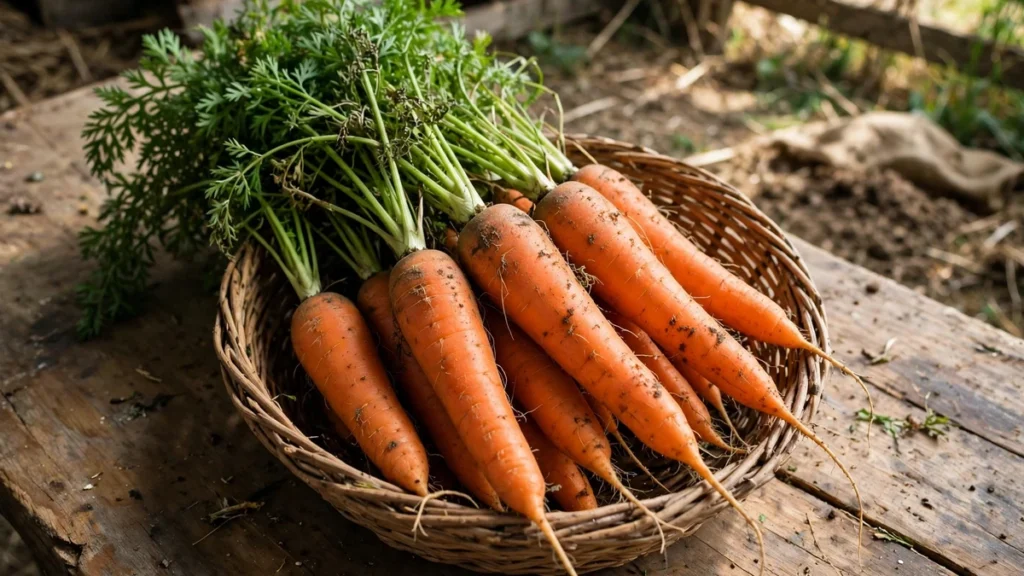
A carrot farm escape is a week on a working farm where the harvest is the main event. Mornings begin early, with pulling in the beds before the heat builds. You learn to read the shoulders of the roots at the soil line, to pull straight so the root does not snap, and to trim the green tops at the field edge. The roots go to the wash station, then to the kitchen, where they appear raw, grated, roasted, pickled and baked across the week.
The afternoons are slower. There is usually a walk through the beds, a look at the seed drill and the wash house, and time to sit with a book or walk to the village. Evenings are built around the farm table, and the food is the point: a carrot pulled an hour ago tastes nothing like a bagged one, and a good farm kitchen knows how to prove it. The luxury is the quiet, the space and the cooking, not a spa menu or a concierge desk. Our guide to planning a pumpkin farm escape follows the same rhythm for a different field crop, and the shape of the days is much the same.
How to plan it, and what to ask first
Start with the pulling dates, not the flights. Every region on the carrot map has its own window, and a stay that misses it by a fortnight is a stay with nothing to do. Ask the host for the exact pulling weeks, then build the trip around them. The best farms will tell you plainly when the harvest starts and ends, and will steer you away from the weeks either side of it.
Next, ask about the group. A stay with fewer than a dozen guests is a retreat; a stay with thirty is a tour. Ask how many people will be on the farm in your week, and whether the pulling groups are split by experience. Then ask about the kitchen. Carrots are naturally gluten-free, but farm kitchens bake wheat bread every day, so anyone who needs a gluten-free table should confirm it in writing before paying. Our guide to planning a corn farm escape asks the same three questions first, because they separate a real working stay from a pretty one. A pea farm escape in the same price range makes a useful comparison too, because the same questions about season, group size and transfers apply there.
The 9 steps to plan a carrot farm escape
Start with the colour you want to pull
What to do: Decide whether you want orange, purple, yellow or white carrots, then choose a region that grows your colour well. Kern County grows all four side by side, Holland Marsh is famous for orange, and Chiba grows fine purple varieties.
What to avoid: Choosing a region from a photograph without checking what it actually grows. Best For: Travellers deciding where to go first. Time Needed: An evening of reading. Standout Tip: A farm that grows three colours in one bed teaches you more in a morning than a single-colour farm teaches in a week.
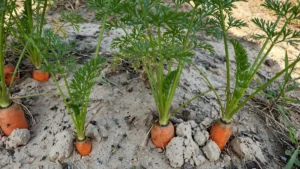
Colour is the fun way in, but soil is what decides the trip. Once you know your colour, check the region’s soil: deep, loose and sandy is what you want, because heavy clay makes carrots fork and split.
Count back from the first frost
What to do: Ask the host for the exact pulling dates and book inside them. Northern farms pull from late summer into autumn, desert valleys pull through the winter, and southern hemisphere farms pull in their summer.
What to avoid: Booking a month either side of the harvest and hoping the farm will find you something to do. Best For: Anyone fixing dates. Time Needed: One email and a reply. Standout Tip: The middle of the pulling window is better than the first or last week, when the beds are either unripe or nearly done.
Arrive through the nearest town, not the city
What to do: Fly or train to the nearest town and let the farm arrange the last leg. The transfer is usually a short drive, and the farm knows the roads, the times and the cost.
What to avoid: Landing in a big city and assuming a taxi or a bus will get you to the farm. Best For: Travellers sorting transport. Time Needed: An hour of planning. Standout Tip: Ask the farm for the last collection time before you book the flight, not after.
Farm country is not city country. The nearest town is almost always the right gateway, and the farm’s own transfer is almost always cheaper and simpler than anything you arrange yourself.
Pack for soil, not for show
What to do: Pack sturdy boots, gloves, a hat and clothes you do not mind getting muddy. The muck in Holland Marsh stains, the sand in Kern County gets everywhere, and the soil in the Landes clings to fabric.
What to avoid: Packing light-coloured clothes, city shoes, or anything you would mind ruining. Best For: Anyone packing a bag. Time Needed: An evening. Standout Tip: Two pairs of boots are worth more than two nice outfits: one for the beds, one for the table.
Raise the wheat question when you enquire
What to do: Tell the host about any gluten-free needs when you book, and confirm the arrangements in writing. Most farm kitchens can bake a separate loaf or set aside a gluten-free table, but only if they know in advance.
What to avoid: Mentioning it for the first time at the first supper, when the bread is already on the table. Best For: Gluten-free travellers. Time Needed: One sentence in the booking email. Standout Tip: Ask what the kitchen bakes with, not just whether it can cope: a farm that mills its own flour will know the answer immediately.
Carrots are naturally gluten-free, and most of the cooking is vegetable-led, so the table is easy once the kitchen knows. The bread is the only real problem, and it is solved by a single sentence sent early.
Learn the shoulder test on the first morning
What to do: On the first morning, ask the grower to show you the shoulder test: the broad, rounded shoulder of a mature root where it meets the soil, with full green tops above it. Pull a dozen with the grower watching, and learn to read the bed yourself.
What to avoid: Pulling hard at the tops without checking the shoulder, which snaps the root and leaves half of it in the ground. Best For: First-time pullers. Time Needed: Half a morning. Standout Tip: Grip low, pull straight, and let the soil do the work: a ripe carrot comes out clean if you pull it the way the grower shows you.
Put every colour on one plate at lunch
What to do: Ask the kitchen to serve the colours side by side, raw and grated, so you can taste the difference. Purple carrots are often spicier, yellow ones sweeter, and white ones milder, and a tasting at lunch makes the differences plain.
What to avoid: Eating only the orange carrots and treating the rest as decoration. Best For: Food lovers. Time Needed: One lunch. Standout Tip: Taste raw before cooked: heat softens the differences, and the raw tasting is where the colours show their character.
Wander the village stalls on your day off
What to do: Take the rest day to walk to the village market, where the farm sells its surplus and the neighbours sell everything else. Buy seed, buy pickles, and ask the stallholders what they cook with their carrots.
What to avoid: Treating the rest day as a day off from the place, and spending it in your room. Best For: Travellers who like markets. Time Needed: A morning. Standout Tip: Go early, when the growers are setting up and have time to talk, not at noon when they are packing away.
Leave the roots behind and take the recipes
What to do: On the last day, ask the cook for the recipes that mattered: the roast, the pickle, the cake, the soup. Write them down in the farm’s own words, and buy a packet of seed if the farm sells it.
What to avoid: Trying to carry fresh roots home, which customs will take and which will wilt before you get there anyway. Best For: Anyone going home. Time Needed: An hour on the last day. Standout Tip: A jar of the farm’s pickles travels better than any root, and opens better too.
Picking the right season and region
Season decides the region, not the other way round. If you can travel in late summer or autumn, the northern farms are the choice: Kern County, Holland Marsh, Oceana County, Landes and Segovia all pull in those months, and the weather is kind. If you can only travel in winter, Holtville is the answer, with its desert valley harvest running while the rest of the country is frozen. If your summer is the southern summer, Ohakune is the one to book.
Region decides the style of the week. The American farms are big, open and practical, with long rows and straightforward days. The European farms are smaller and more food-led, with long lunches and village markets. The Japanese stay is the most structured and the quietest, and the Turkish stay is the most festive. None of these is better than the others; they are different weeks for different travellers, and the right choice is the one that matches your temperament.
The caveats that matter
Carrot farm escapes are simple holidays, and the caveats are practical. The pulling season is brief, the work asks for your body, and the weather has the final say, not the host. Rain turns the beds to mud and slows the pulling, while a hot spell pushes the start to dawn. None of this is a reason not to go, but it is a reason to pack properly, to book inside the pulling window, and to ask the host what a bad-weather day looks like before you pay.
| Detail | What is known |
|---|---|
| Best season | Late summer to autumn in the north; winter in desert valleys; summer in the southern hemisphere |
| Soil that matters | Deep, loose, sandy soil; heavy clay makes carrots fork and split |
| Harvest window | Pull before the first hard frost; tops are trimmed at the field edge |
| Group size | Best under a dozen guests; larger groups turn a retreat into a tour |
| Gluten-free eating | Carrots are naturally gluten-free, but farm kitchens bake wheat bread daily, so confirm in advance |
| What to pack | Sturdy boots, gloves, a hat, and clothes you do not mind getting muddy |
| Colours to expect | Orange, purple, yellow and white, all grown the same way |
| What it does not offer | No spa menu, no nightlife, and no sightseeing programme beyond the farm and the village |
If you have a bad back or bad knees, say so when you book. Pulling keeps you bent double, so tell the host if your back or knees are trouble: the wash station or the kitchen is a proper job too. Children are welcome on some farms and not on others, so ask about ages when you book: the rule often comes from the insurer, not the host.
Checklist: before you book a carrot farm escape
Use these checks before you book, and again before you pack.
- Check the pulling dates: confirm your stay falls inside the harvest window, not beside it.
- Check how many guests share the farm: ask for the number in your week, and favour a stay under a dozen.
- Check the gluten-free table: get the kitchen’s arrangements confirmed in writing if you need them.
- Check the transfer: confirm the farm collects you from the nearest town, and at what time.
- Check your footwear: pack sturdy, mud-proof boots, and gloves that grip wet roots.
- Check the price: confirm what is included, from meals and beds to transfers and market trips.
Frequently asked questions
Gluten-free and heading to a carrot farm: what should I expect?
Yes, as long as the kitchen knows before you arrive. Carrots carry no gluten, and the cooking leans on vegetables, but the daily bread is wheat, so the kitchen needs warning. Get it confirmed in writing when you book, then remind the host the day you arrive.
How soon before harvest should I book?
As early as you can, and at least two months before the pulling window. The best weeks are short, the groups are small, and the popular farms book out well before the harvest. A last-minute booking usually means the weeks either side of the pull, which are not worth the trip.
What should I pack for a week in carrot country?
Sturdy boots, gloves, a hat, and clothes you do not mind getting muddy. Add sunscreen, a water bottle, and a notebook for the recipes. Leave the city shoes and the light-coloured clothes at home.
Can children come along to a carrot farm?
Some do and some do not, and the answer varies by farm and by insurance. Ask when you book, and be honest about ages. A farm that welcomes children will have a role for them at the wash station; a farm that does not will say so plainly, and that is better than finding out on arrival.
What makes a good souvenir from a carrot farm?
A jar of the farm’s pickles, the cook’s recipes, and a packet of seed if the farm sells it. Fresh roots do not travel well and are often taken at customs, so leave them behind and take the things that last.
What will a week on a carrot farm set me back?
The stays on this list run from $65–$95 a night at the simplest working farms to $345–$380 at the small mountain lodges. Meals, beds and farm activities are usually included, but transfers and market trips vary, so confirm the price covers what you expect before you pay.
The bottom line
Planning a carrot farm escape comes down to three decisions: the pulling week, the region, and the kitchen. Get the dates right, pick a region whose soil and season suit your trip, and tell the kitchen what you need before you pay. Everything else, the boots, the transfer, the market, follows from those three.
Book inside the harvest window, pack for soil rather than show, and go ready to work a little. The field will do the rest, and the farm table will make you glad you came.