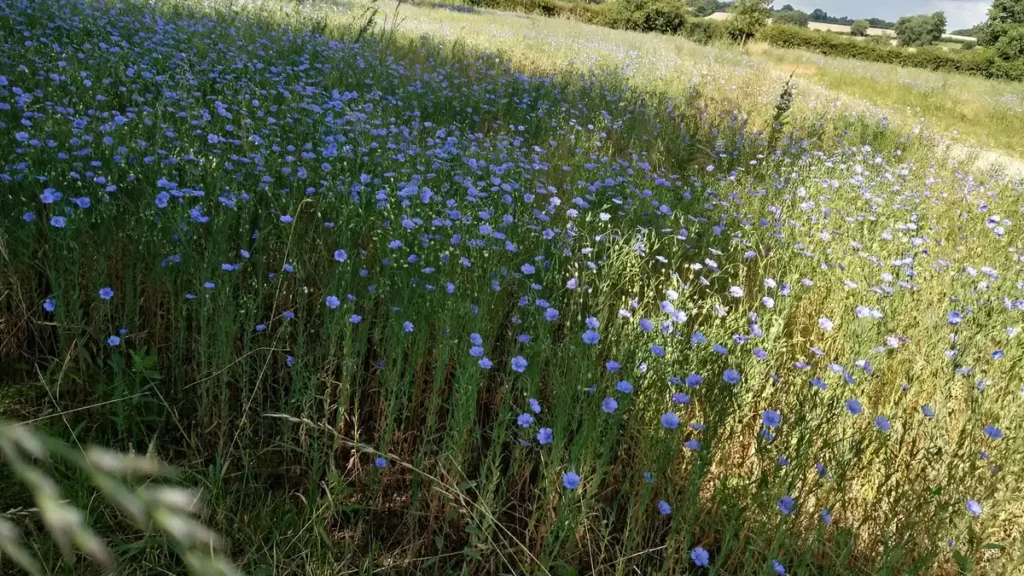
A flax farm escape is a holiday built around a crop that flowers for only a few weeks. The field turns blue in June, the flowers drop by the afternoon, and the rest of the year is harvest, retting, scutching, spinning, and weaving. Plan it well and you get a week inside the oldest cloth-making chain in the world.
A flax farm is a working farm, not a hotel with a field attached, and the farms that welcome guests best are the ones that treat the crop as the point of the stay, not as a backdrop. This guide walks through the nine decisions that shape the trip, in the order you should make them.
Follow the steps in order and you will arrive in the bloom weeks, sleep close to the fields, watch the retting and the loom, and bring home linen that was grown outside your bedroom window.
Key takeaways
- Book the bloom weeks, not just a month, because the blue flowers last two to four weeks and each flower opens for a single day.
- Fibre flax and seed flax are different crops with different farms, and only fibre flax leads to linen.
- Ask the farm for the flowering dates of the last two years before you pay anything.
- Stay on the farm, not in the nearest town, so you can walk the fields at dawn when the flowers are open.
- Flax country is muddy, remote, and weather-dependent, so pack for the farm you are visiting, not the holiday you imagined.
What a flax farm escape actually is
A flax farm escape is a stay on a farm that grows flax, built around the crop’s short season. You sleep in a farmhouse room, a converted barn, or a stone cottage, and the farm invites you into the work: walking the fields at dawn, watching the harvest, seeing the retting pools and the scutching mill, and sitting at a loom while the host shows you how the fibre becomes yarn and the yarn becomes cloth.
It is not a resort holiday, and it should not be sold as one. What there is, instead, is a working landscape and a craft chain that has barely changed in thousands of years.
The bloom decides the dates, the harvest decides the work you can join, and the weather decides what you wear.
How to plan around the flax calendar
Start with the bloom, because everything else follows it. Flax flowers in early summer, usually June in northern Europe, and the field stays blue for two to four weeks.
Then work out which season you actually want. The bloom weeks suit travellers who want the colour and the photographs. Late summer suits travellers who want the harvest, when the stalks are pulled and laid in rows to dry. Autumn suits travellers who want the craft, because the retting and scutching and weaving happen after the harvest, when the farm has time to show you the work properly. A hemp farm escape runs on a similar rhythm, with tall stalks and a harvest season of its own, so the same habit of asking for last year’s dates works there too.
Finally, lock in the room before the travel. The farms that grow fibre flax and welcome guests usually have only a handful of rooms, and the bloom weeks sell out first.
The 9 steps to a flax farm escape
Learn the difference between fibre flax and seed flax before you book
What to do: Ask the farm which kind of flax it grows, and choose fibre flax if you want linen, seed flax if you want oil and food. Fibre flax is sown dense, grows tall and straight, and is pulled whole so the long fibres stay intact. What to avoid: Do not assume every flax farm makes linen, because many grow seed flax and sell the crop on, and you will arrive expecting a loom and find an oil press instead. Best For: Every traveller, before anything else is booked. Time Needed: One email, ten minutes. Standout Tip: If the farm cannot tell you which kind it grows, it is probably not the farm for a flax escape.
Time your trip to the blue flower bloom, not the harvest
What to do: Ask for the flowering dates of the last two years and book inside that window, aiming for the middle of the bloom rather than the start or the end. What to avoid: Do not book by the calendar month alone, because a cold spring pushes the bloom late and a hot one brings it early, and a week either way can mean the difference between blue and green. Best For: Travellers who want the colour and the photographs. Time Needed: One afternoon of planning, once the dates are confirmed. Standout Tip: Walk the fields at dawn, when the flowers are open and the light is soft, rather than at midday, when the colour fades.
Choose a working linen farm, not a farm with a linen shop
What to do: Look for a farm that rets, scutches, or spins on site, and ask whether you can watch the work. A retting pool, a scutching mill, or a loom in the barn is the clearest sign that the farm is serious about linen. What to avoid: Do not book a farmhouse that sells linen in a shop but grows nothing, because the stay will be a countryside holiday with a gift shop, not a flax farm escape. Best For: Travellers who want the craft, not just the view. Time Needed: Half an hour of reading farm websites and sending one email. Standout Tip: Ask what the farm does with its own crop, and be wary of any answer that ends at the field gate.
Book the retting and scutching demonstration first
What to do: Once the room is booked, ask the farm to fix a time for the retting pool and the scutching mill, because these are the parts of the chain most guests never see, and they run on the farm’s schedule, not yours. What to avoid: Do not leave the demonstration to the last day, because the farm may be busy with harvest or weather, and a missed demonstration cannot be rescheduled once you have gone home. Best For: Travellers who want to understand how linen is made. Time Needed: Two to three hours on the day. Standout Tip: Bring a notebook, because the retting times and the scutching order are the details you will want to remember.
Stay close enough to walk the fields at dawn
What to do: Choose a room on the farm, in the farmhouse or a converted barn, so you can walk out at dawn when the flowers are open and the field is at its bluest. What to avoid: Do not stay in town and drive in for the day, because the flowers close by the afternoon, and a morning spent driving is a morning lost. Best For: Early risers and photographers. Time Needed: No extra time, just the right room. Standout Tip: Ask for a room that faces the field, so you can see the colour from the window before you get dressed.
Ask the farmer which field jobs guests can actually join
What to do: Ask what guests can do in the field, and when. At harvest, it can mean pulling stalks and laying them in rows. In autumn, it can mean helping with the retting and the scutching. What to avoid: Do not assume you can join the harvest, because pulling flax is hard, skilled work, and some farms keep guests out of the field for safety and for the sake of the crop. Best For: Travellers who want to work with their hands. Time Needed: A morning or an afternoon, depending on the job. Standout Tip: Offer to help and accept the answer gracefully, because a farmer who says no is protecting the crop, not refusing the guest.
Pack for mud, dew, and long mornings in the field
What to do: Pack sturdy shoes with grip, layers for cool mornings and warm afternoons, a waterproof jacket, and clothes you can wash, because the farm lanes are muddy after rain and the dew soaks through thin shoes before breakfast. What to avoid: Best For: Every traveller, whatever the season. Time Needed: One evening of packing, done properly. Standout Tip: Pack a spare pair of socks in your day bag, because wet feet end a field walk faster than anything else.
Set aside an afternoon for the spinning wheel and the loom
What to do: Keep one afternoon free for the spinning and weaving, and sit at the wheel and the loom with the host. What to avoid: Do not fill every afternoon with day trips, because the spinning and weaving are the heart of the stay, and a trip to the nearest town can wait until another day. Best For: Travellers who want to make something with their hands. Time Needed: One afternoon, three hours. Standout Tip: Ask to keep the strip of cloth you weave, because it is a better souvenir than anything in the farm shop.
Buy linen cloth and cold-pressed flaxseed oil on the last day, not the first
What to do: Wait until the last day to buy, when you have seen the cloth made and you know what you are looking at. What to avoid: Do not buy on the first day, because you will carry the cloth around all week and you will not yet know the difference between good linen and stiff, over-finished cloth. Best For: Travellers who want honest souvenirs. Time Needed: Half an hour in the farm shop. Standout Tip: Pack the linen flat in your case, and check the care label, because linen softens with washing and should not be tumble-dried hard.
How flax becomes linen
Flax becomes linen through a chain of steps that has barely changed in eight thousand years. The plant is pulled, not cut, so the full fibre length is kept. The stalks are laid in dew or in water to ret, which is a controlled rot that loosens the woody core from the fibre. Then they are broken, scutched, and hackled, which removes the woody pieces and combs the fibres into line. The fibres are spun into yarn, and the yarn is woven into cloth.
Scutching is noisy, with the wooden blades thudding against the stalks. A cotton farm escape has its own chain, with the gin mill doing the work that scutching does here, and comparing the two is a good way to understand why linen feels different from cotton: the fibre is longer, the cloth is cooler, and the work is closer to the hand.
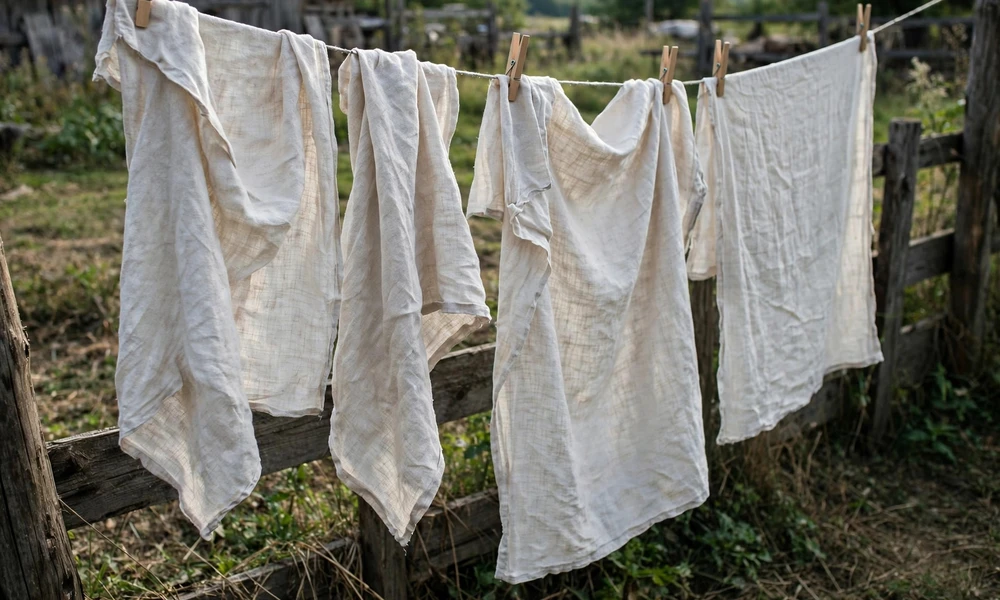
The cloth itself tells you whether the chain was done well. Good linen is soft, slightly slubbed, and cool to the touch, with a weave you can see if you look closely. Stiff, over-finished linen has been treated to hide a poor fibre, and it will not soften with washing the way good linen does.
The caveats that matter
The caveats of a flax farm escape are practical, and they are all worth knowing before you book. The bloom is short and weather-dependent, the farms are remote, the lanes are muddy, the retting smells, and the processing work runs on the farm’s schedule, not yours.
| Detail | What is known |
|---|---|
| Best time to visit | June for the blue bloom; late summer for the harvest; autumn for retting and weaving |
| How far ahead to book | Three to six months for the bloom weeks, because the small farms have few rooms |
| How long to stay | Three to five nights, which covers the bloom, the harvest, and one craft afternoon |
| Getting there | A car is usually needed, because most flax farms sit down narrow lanes with no bus |
| What the work smells like | Retting smells damp and earthy, like a compost heap; it is normal and it passes |
| Who should plan carefully | Travellers with limited mobility, because farm lanes are uneven and there are few lifts |
| What to pack | Sturdy shoes, layers, a waterproof jacket, and clothes you can wash after a muddy walk |
| What to buy | Linen cloth and cold-pressed flaxseed oil, bought on the last day, packed flat |
If you have a pollen allergy, check with the farm before you book, because a flowering flax field in June is a high-pollen place, and the dust from scutching can irritate sensitive lungs. The best luxury hemp farm retreats carry the same warning, because any working farm in flower season is a dusty, pollen-heavy place, and a simple check with the host avoids a spoiled week.
Checklist: before you book a flax farm escape
Use these checks before you pay, and again before you travel.
- Check the crop: ask whether the farm grows fibre flax for linen or seed flax for oil.
- Check the bloom dates: ask for the flowering dates of the last two years, not just a month.
- Check the processing: ask whether there is a retting pool, a scutching mill, or a loom on site.
- Check the room: confirm it is on the farm, faces the field if possible, and includes breakfast.
- Check the transfer: confirm how you get from the nearest station or airport, and book the taxi early.
- Check the packing list: sturdy shoes, layers, a waterproof jacket, and a spare pair of socks.
Frequently asked questions
How long does the blue bloom last?
Two to four weeks, usually in June in northern Europe, with each flower open for a single day. The field is bluest in the second week, when the most flowers are open at once, and the mornings are the best time to see it, because the flowers drop by the afternoon.
Fibre flax or seed flax — which farm should I choose?
Choose fibre flax if you want linen, because it is grown tall and dense for the long fibres in its stems. Choose seed flax if you want oil and food, because it is grown shorter and bushier for the oil-rich seeds. Ask the farm which kind it grows before you book, because the two stays feel very different.
What is retting, and why does it smell?
Retting is the soaking of the pulled stalks in dew or water, which loosens the woody core from the fibre. It is a controlled rot, so it smells damp and earthy, like a compost heap. The smell is normal, it passes, and it is a sign the process is working, not a problem with the farm.
Can I visit a flax farm in winter?
Yes, and winter has its own appeal, because the farm is quiet, the weaving continues indoors, and the linen shops are open. You will not see the bloom or the harvest, so a winter visit suits travellers who want the craft and the quiet rather than the colour.
Is the field work suitable for children?
Walking the fields and watching the retting and the loom suit children well, and most farms welcome them. The harvest work is harder and less suitable for small children, because pulling flax is heavy and the lanes are muddy, so ask the farmer what is safe for your child’s age before you promise them a job.
How do I get linen cloth home without creasing it?
Buy on the last day, fold the cloth flat, and lay it at the bottom of your case under your other clothes, where it will stay pressed rather than crushed. Linen creases naturally and softens with washing, so a few creases are nothing to worry about, but a flat fold keeps it looking its best on arrival.
The bottom line
A flax farm escape works when you plan around the crop, not around the calendar. Learn the difference between fibre flax and seed flax, ask the farm for the flowering dates of the last two years, book a room on the farm, and keep an afternoon free for the spinning wheel and the loom.
Book the bloom weeks three to six months ahead, pack for mud and weather, and buy your linen on the last day, when you have seen it made.