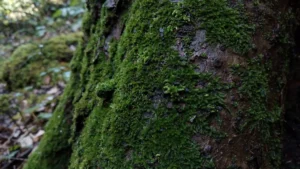
Moss is the most misunderstood note in perfumery. Ask someone what a moss perfume smells like and they will usually guess fresh grass, or a garden, or something clean and green. The real answer is stranger and more interesting. Moss in a perfume smells of damp earth, shaded stone, and the cool air under trees, and it is the note that gives the great classic perfumes their depth, their weight, and their staying power.
It is also a note with a complicated history. The moss used in perfume is not the soft green carpet on a forest floor, but a lichen that grows on oak branches, and it contains two compounds that can cause skin allergy.
This guide explains what a moss perfume actually is, where the note comes from, why it matters so much to the structure of a scent, and how to wear it well in 2027. Along the way it covers the two mosses that matter, the chypre family they built, and the safety rules that reshaped them.
Key takeaways
- A moss perfume is built on oakmoss or tree moss, both lichens, and the note gives a scent its damp, green, forest-floor depth.
- Moss is the backbone of the chypre family, the structure invented by Coty Chypre in 1917, where citrus, florals and moss work in three layers.
- Oakmoss is restricted in modern perfumery because of the allergens atranol and chloroatranol, so many classics have been reformulated.
- Moss is a base note and a fixative, which means it holds the other notes together and makes a perfume last for hours.
- No moss perfume is a photograph of a forest, and the note that smells sharp on paper can turn soft and warm on skin, so a moss perfume should always be tested on the wrist before buying.
What a moss perfume actually is
A moss perfume is a scent in which moss, usually oakmoss or tree moss, is a central part of the structure, not a decoration. That distinction matters, because many perfumes contain a little moss in the base to add depth, while only a few are built around it. In a true moss perfume the green, earthy character is present from the middle of the wear through to the end, and it shapes how the whole scent behaves.
Most moss perfumes are chypres, and that is no accident. The chypre structure was designed around moss: bergamot and citrus on top, rose or jasmine in the heart, and oakmoss and patchouli in the base.
Not every moss perfume is a chypre, though. Modern perfumers also use moss in green florals, where it adds a damp depth under the flowers, and in woody scents, where it softens the dryness of cedar or vetiver.
How to tell real moss from a green accord
The first test is time. A real moss note is a base note, which means it appears slowly and stays for hours. Spray a perfume on your wrist and check it after one hour, then after three. If the green, earthy character is still there at hour three, growing warmer and softer, that is moss doing its work.

The second test is the smell itself. Real moss smells damp and slightly bitter, with a mineral edge, like wet stone or soil after rain. A lab-made green accord can smell green, but it usually smells cleaner and simpler, like fresh leaves or a cucumber, without the earthy depth.
The third test is the label and the price. A perfume that lists oakmoss or tree moss, or that is sold as a chypre, is more likely to carry real moss character than one that only mentions green notes. Our guide to what a petrichor perfume is explains a related earthy note, and comparing the two is useful, because petrichor smells of rain on dry ground while moss smells of damp shade, and your nose can learn the difference in a single afternoon of testing.
9 facts about moss perfumes
Oakmoss is a lichen, not a plant, and it grows on trees, not soil
What it shows: The moss in a perfume bottle starts life as Evernia prunastri, a lichen that grows on the branches of oak trees in southern Europe, not on the ground. What to consider: Because it is harvested from trees, the supply depends on the health of oak forests, and it is gathered by hand in a slow, seasonal trade. Best for: Anyone curious about where perfume ingredients actually come from. Material: Oakmoss lichen, Evernia prunastri. Price range: Oakmoss extract is one of the more expensive natural perfume materials. Standout feature: Its origin on oak bark, which gives it a woody depth no ground moss could match.
Tree moss is a different lichen, lighter and greener than oakmoss
What it shows: Tree moss comes from Pseudevernia furfuracea, a lichen that grows on conifers and other trees, and it smells greener and less earthy than oakmoss. What to consider: Perfumers use it when they want a mossy feel without the heaviness of oakmoss, especially in lighter green perfumes. Best for: Lovers of green florals who want moss without darkness. Material: Tree moss lichen, Pseudevernia furfuracea. Price range: Similar to oakmoss, and often used in smaller amounts. Standout feature: Its leafy greenness, which reads as fresh rather than damp.
Moss built the chypre family, starting with Coty Chypre in 1917
What it shows: The chypre, the most important perfume structure of the twentieth century, was created around oakmoss by François Coty in 1917, and its name comes from Cyprus, the island of Aphrodite. What to consider: Every chypre since then, from Mitsouko to modern niche chypres, is a variation on the same three-layer idea. Best for: Anyone who wants to understand why classic perfumes smell the way they do. Material: Bergamot, rose, oakmoss, patchouli. Price range: Chypres exist at every price, from drugstore to luxury. Standout feature: The structure itself, which has lasted for more than a century.
Two allergens changed moss perfumery, and reformulation is still going on
What it shows: Oakmoss contains atranol and chloroatranol, two compounds that can cause skin allergy, and the International Fragrance Association now limits how much oakmoss can be used. What to consider: The great moss classics have been reformulated to stay within the limits, and some smell noticeably lighter than they used to. Best for: Anyone who has wondered why a favourite perfume smells different now. Material: Atranol and chloroatranol, the restricted compounds. Price range: Reformulation has not made the classics cheaper, only lighter. Standout feature: The way a safety rule reshaped an entire perfume family.
Moss is a fixative, which means it holds a perfume together
What it shows: Moss is a fixative, a material that slows down how fast the other notes evaporate, which is why moss perfumes last so much longer than light, citrus-only scents. What to consider: A perfume with a moss base will still be detectable eight hours after spraying, while a scent without a fixative can fade in two. Best for: Anyone who wants a perfume that lasts all day. Material: Oakmoss and tree moss extracts, used as fixatives. Price range: Longevity is free, in the sense that you need fewer sprays. Standout feature: Its staying power, the practical reason moss has survived every trend.
Moss smells of damp shade, not of fresh grass
What it shows: The green of moss is a wet, shaded green, the smell of soil under trees and stone that has been out of the sun, not the bright green of a cut lawn. What to consider: People who expect a fresh, grassy scent are often surprised by how dark and earthy moss actually is. Best for: Anyone learning to describe what they smell in a perfume. Material: Oakmoss, tree moss, and the damp-earth accord they create. Price range: No price difference, only a difference in expectation. Standout feature: The dampness, which is the note that makes moss smell like a place.
Moss, vetiver and galbanum are three different greens with three different jobs
What it shows: Moss is damp and earthy, vetiver is dry and smoky, and galbanum is sharp and leafy, and each one does a different job in a perfume. What to consider: Perfumers combine them to build a complete green picture, the way a painter mixes three greens to paint a forest. Best for: Anyone who wants to train their nose to tell green notes apart. Material: Oakmoss, vetiver root, galbanum resin. Price range: All three exist at every price level. Standout feature: The contrast between them, which is the whole lesson in one fact.
Moss does its real work in the drydown, hours after the opening has gone
What it shows: The opening of a moss perfume is mostly citrus and florals, and the moss only takes over in the drydown, two or three hours after spraying. What to consider: Judging a moss perfume on the first five minutes is like judging a book by its first page. Best for: Patient testers who are willing to wait for the real scent. Material: Oakmoss and tree moss, which are base notes by nature. Price range: Patience costs nothing, and it saves the cost of a wrong bottle. Standout feature: The slow reveal, which is the most rewarding part of wearing moss.
Warm skin softens moss, and cold air sharpens it
What it shows: Moss smells warmer and softer on warm skin, and cooler and sharper in cold air, so the same perfume can smell different on a summer evening and a winter morning. What to consider: A moss perfume that feels too sharp in a cold shop may smell perfect once it has warmed on your wrist. Best for: Anyone who has ever been surprised by how a perfume changes with the weather. Material: Oakmoss, which responds strongly to temperature. Price range: No cost, only a change in how you test. Standout feature: Its sensitivity to temperature, which makes it a four-season note in two different bottles.
How moss works in a perfume’s structure
Moss works at the bottom of a perfume, and that position decides everything about how the scent behaves.
That grounding is what makes moss so valuable to a perfumer. A perfume without a base note smells thin and fleeting, like a flower pressed in a book. A perfume with a moss base smells like a place you have been, and it stays with you because the moss holds the lighter notes in place and releases them slowly. Without that slow release, even the prettiest floral heart can smell thin and forgettable within an hour of spraying.
The structure also explains why moss is so often paired with citrus. Bergamot and lemon are bright and volatile, and they need something heavy underneath to keep them from vanishing. Moss provides that weight without adding sweetness, which is why the classic chypre pairs the brightest possible opening with the darkest possible base. A rain perfume works differently, because rain is a watery, mineral accord rather than a base note, and comparing the two shows how differently perfumers build an earthy scent when the earth is wet from above rather than damp from below.
The caveats that matter
Moss is a wonderful note, but it is not a simple one, and there are three things to be honest about before you buy. The first is taste. Moss smells earthy and a little bitter, and some people simply do not like it.
| Detail | What is known |
|---|---|
| What moss is | Oakmoss or tree moss, both lichens that grow on trees, used as a base note |
| The classic structure | The chypre, invented in 1917, with citrus on top, florals in the middle, moss underneath |
| Why it is restricted | Oakmoss contains atranol and chloroatranol, which can cause skin allergy |
| How long it lasts | Often eight hours or more, because moss is a fixative that slows evaporation |
| How to test it | Spray once on your wrist and wait at least an hour, because the moss only appears in the drydown |
| Who should be careful | Anyone with sensitive skin or a known fragrance allergy should patch-test first |
| Best season | Autumn and winter for dark chypres, spring for green moss florals |
| What it does not do | It does not smell like fresh-cut grass, and it does not suit sweet or fruity tastes |
The second is allergy. Oakmoss contains atranol and chloroatranol, and a small number of people are sensitive to them. Modern perfumes are made to stay within safe limits, and the restriction exists precisely to keep them safe, but if you have sensitive skin or a history of fragrance allergy, patch-test on your inner arm before wearing a moss perfume on your neck or wrists. A driftwood perfume is the closest comparison, because driftwood is also an earthy, woody base note, but it is dry and sun-bleached where moss is damp and shaded, and trying the two side by side is the quickest way to understand what moss really is.
Checklist: understanding a moss perfume honestly
Use these checks before you buy, and again after a full day of wear.
- Check the note: a true moss perfume keeps its green, earthy character into the drydown, not just the opening.
- Check the structure: look for a chypre, with citrus on top, florals in the middle, and moss underneath.
- Check the timing: spray once on your wrist and wait at least an hour before deciding, because the moss only appears late.
- Check the season: test in the season you plan to wear it, because cold air sharpens moss and warm skin softens it.
- Check your skin: patch-test on your inner arm first if you have sensitive skin or a fragrance allergy.
- Check your taste: if you prefer sweet, fruity or clean scents, a moss perfume may not be for you, and that is fine.
Frequently asked questions
Is oakmoss safe to wear?
Yes, in modern perfumes, which are made to stay within the limits set by the International Fragrance Association for the allergens atranol and chloroatranol. If you have sensitive skin or a known fragrance allergy, patch-test on your inner arm first, and stop using a perfume if redness or itching appears.
Is moss a natural ingredient?
The moss itself is natural, a lichen harvested from oak and conifer branches, but modern perfumes often use a blend of natural moss extracts and lab-made moss accords, because the natural material is restricted and expensive.
What is the difference between oakmoss and tree moss?
Oakmoss comes from Evernia prunastri and smells deep, dark and earthy, like damp soil. Tree moss comes from Pseudevernia furfuracea and smells lighter and greener, like crushed leaves. Oakmoss is the classic chypre base, and tree moss is the lighter, greener alternative used in modern green perfumes. Many of the best modern moss perfumes use both, letting the tree moss open green and fresh while the oakmoss takes over in the drydown.
Why is moss used in so many classic perfumes?
Because it is a base note and a fixative. It gives a perfume depth, holds the lighter notes in place, and makes the scent last for hours.
Does a moss perfume stain clothes?
It can leave a faint mark on very light fabrics if sprayed directly and heavily, because moss perfumes are often dark in colour and rich in base notes.
How do I store a moss perfume?
Keep it in a cool, dark place, away from light and heat, and use it within two to three years of opening. Moss is a base note, so it ages more slowly than a citrus perfume, but heat and light will still change it over time.
The bottom line
A moss perfume is a scent built on damp earth and shaded stone, and it is the note that gives the great classic perfumes their depth and their staying power. Oakmoss and tree moss are lichens, not plants, and they work at the base of a perfume, holding the brighter notes together and revealing themselves slowly, hours after you spray.
If you want to understand moss, test a chypre on your wrist, wait an hour, and pay attention to what is left when the citrus and the florals have gone.